Fine Motor Skills Adding up to 1000 Misc Worksheets for Ages 4-8
5 filtered results
-
From - To
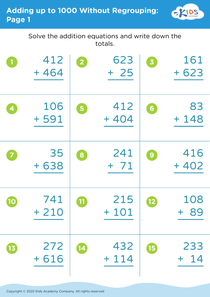
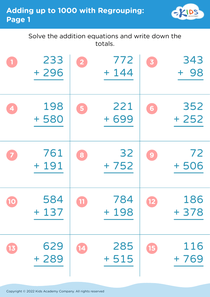
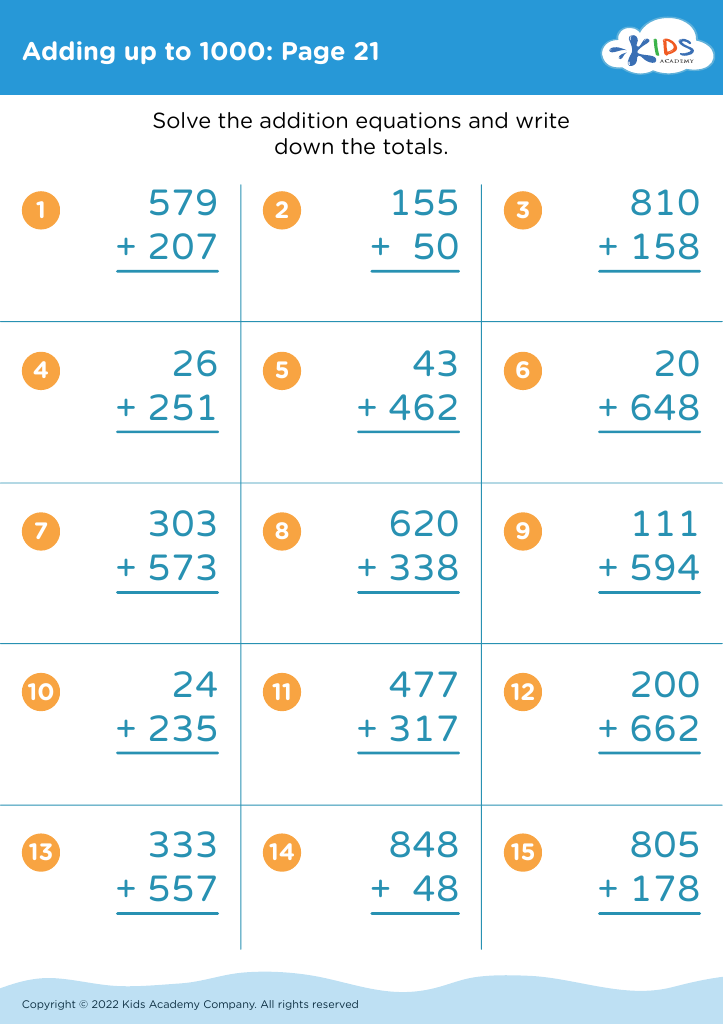
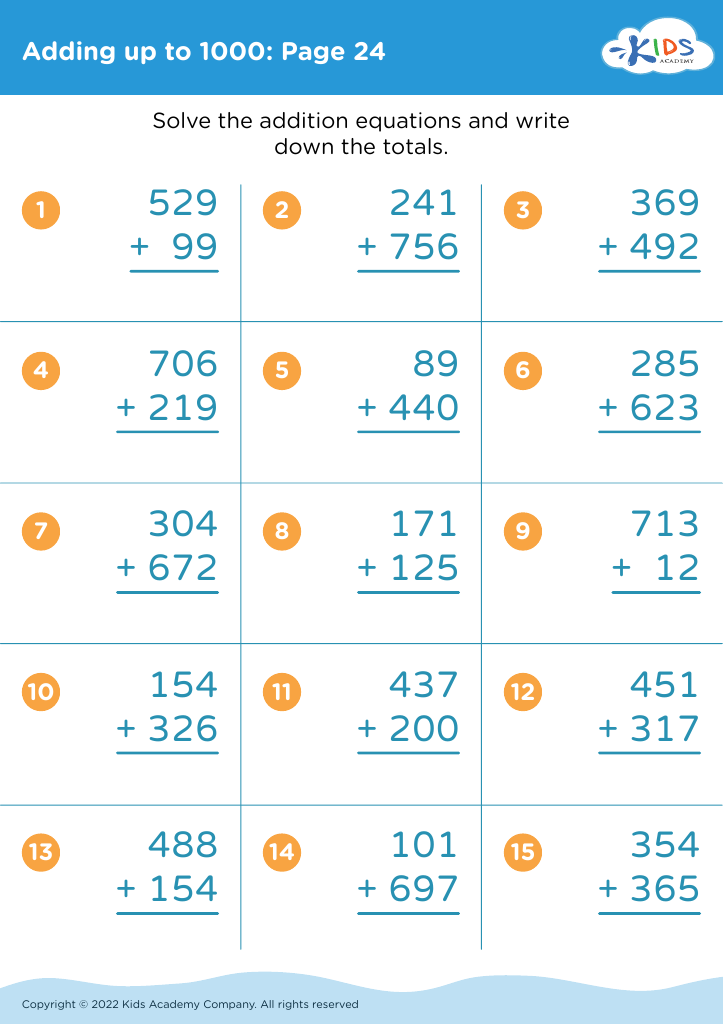
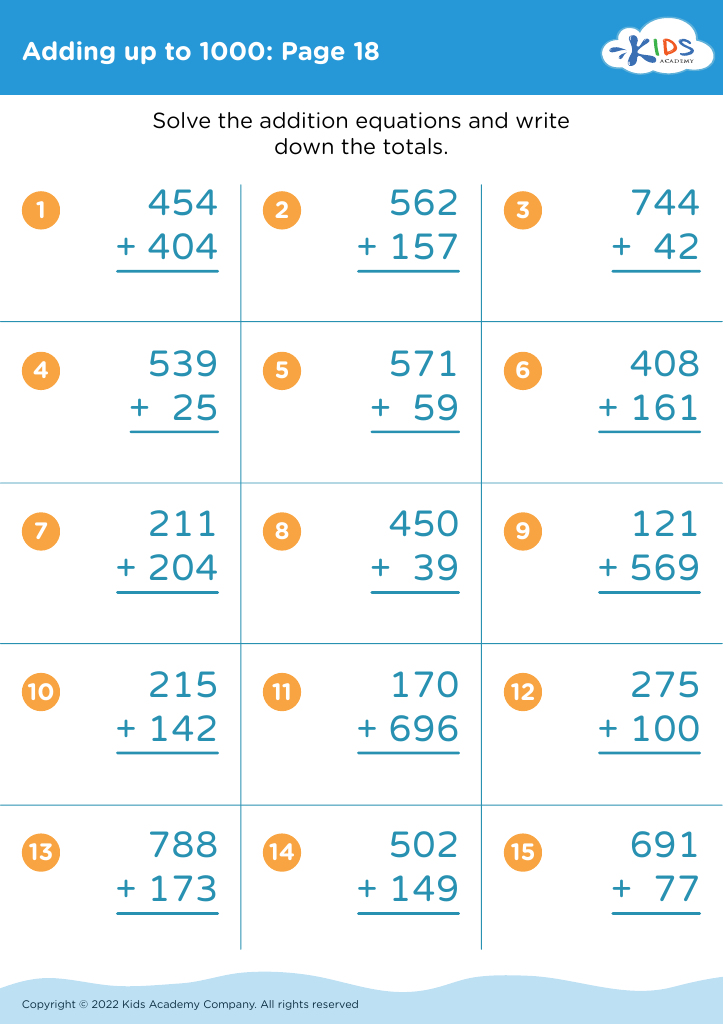
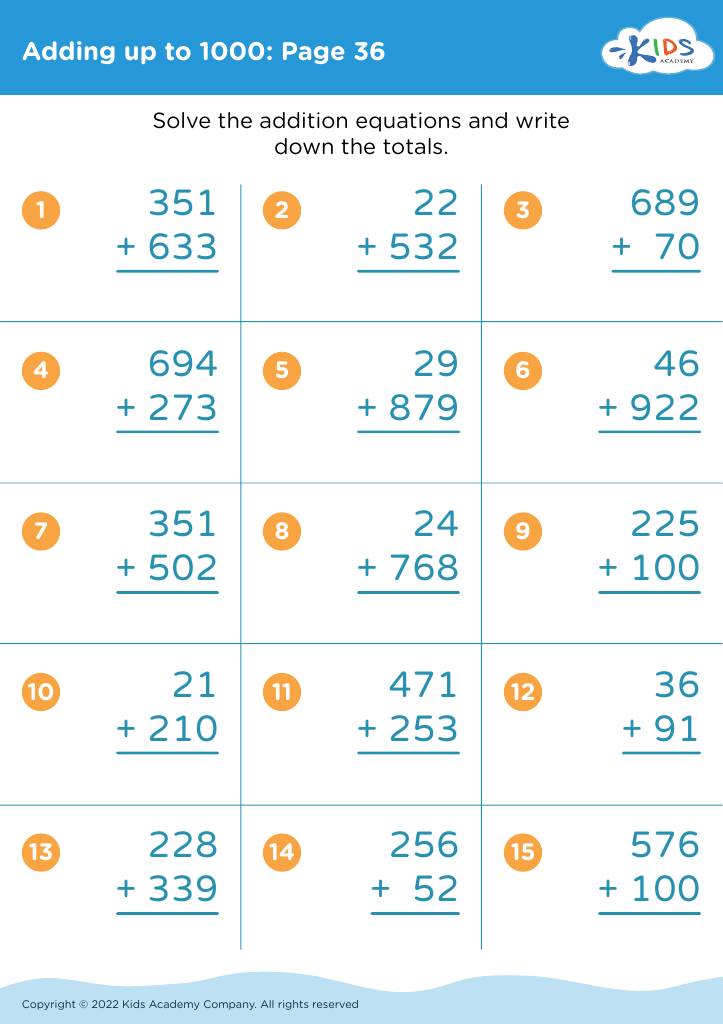
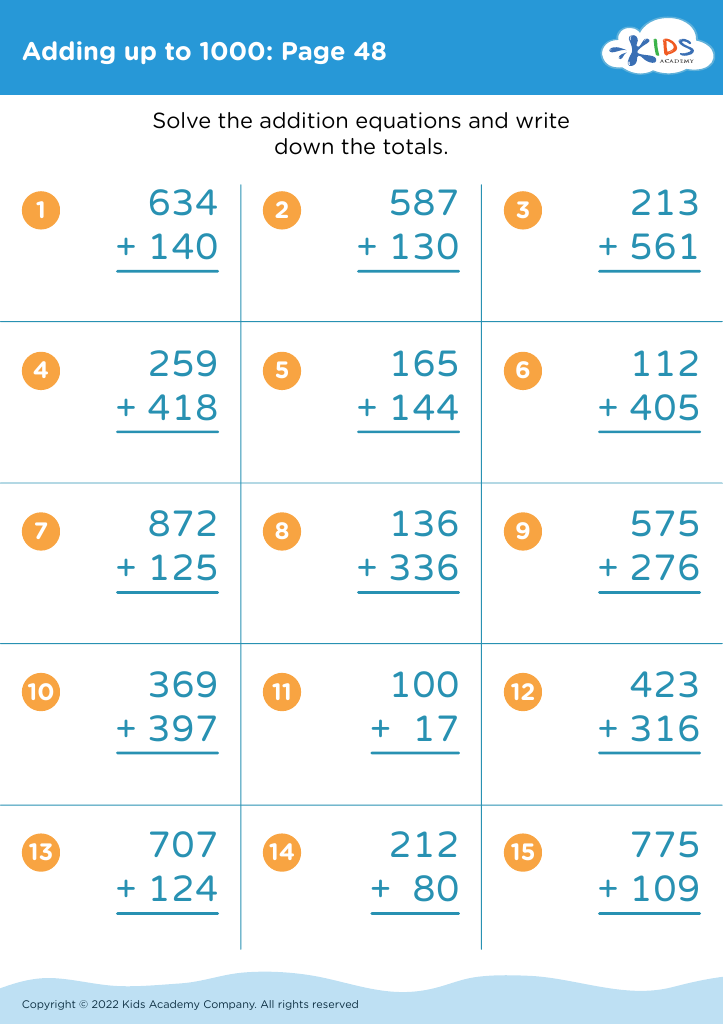
Welcome to our collection of “Fine Motor Skills Adding up to 1000 Misc Worksheets” designed specifically for children aged 4-8. These engaging printable worksheets help young learners enhance their fine motor skills while diving into mathematical concepts up to 1000. From counting and addition exercises to tracing and coloring activities, our worksheets provide diverse challenges that promote dexterity and hand-eye coordination. Each activity is crafted to keep kids motivated and make learning fun! Perfect for teachers, parents, and caregivers, these resources support early math education and fine motor development, paving the way for confident little learners. Start exploring today!


Fine motor skills are crucial for children's overall development, particularly between the ages of 4 to 8 when they are experiencing significant growth in their abilities. These skills, which involve the small muscles of the hands and fingers, enable children to complete everyday tasks such as writing, cutting, and buttoning clothes. Parents and teachers should care about nurturing fine motor skills for several reasons.
Firstly, fine motor skills are foundational for academic success. Children with strong fine motor skills typically find it easier to hold writing tools effectively, which lays the groundwork for good handwriting and other educational tasks involving manipulation of objects.
Secondly, fine motor skills contribute to a child's independence and self-confidence. Mastering tasks like tying shoelaces or using utensils empowers children, fostering a sense of accomplishment and agency.
Moreover, developing fine motor skills enhances cognitive development. Activities that require manipulation, such as puzzles or building blocks, promote problem-solving and critical thinking.
Lastly, fostering these skills encourages social interactions. Group activities that involve crafting or games allow for collaboration, enhancing social skills. In summary, investing in fine motor skill development pays dividends in educational, social, and personal growth, making it essential for both parents and teachers.