Number Recognition Adding up to 1000 Misc Worksheets for Ages 4-8
13 filtered results
-
From - To
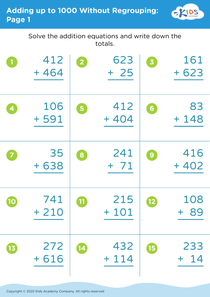
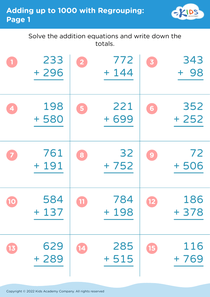
Welcome to our "Number Recognition Adding Up to 1000 Misc Worksheets" page for ages 4-8! Here, you'll find a treasure trove of fun and engaging worksheets designed to enhance your child's number recognition skills. Our colorful worksheets are perfect for beginners and support their journey to confidently identifying numbers up to 1000. These activities not only promote early numeracy but also foster critical thinking and problem-solving skills. Parents and educators alike will appreciate the variety of formats, including puzzles, activities, and games that make learning enjoyable. Dive into our resources today to help your child build a solid mathematical foundation!
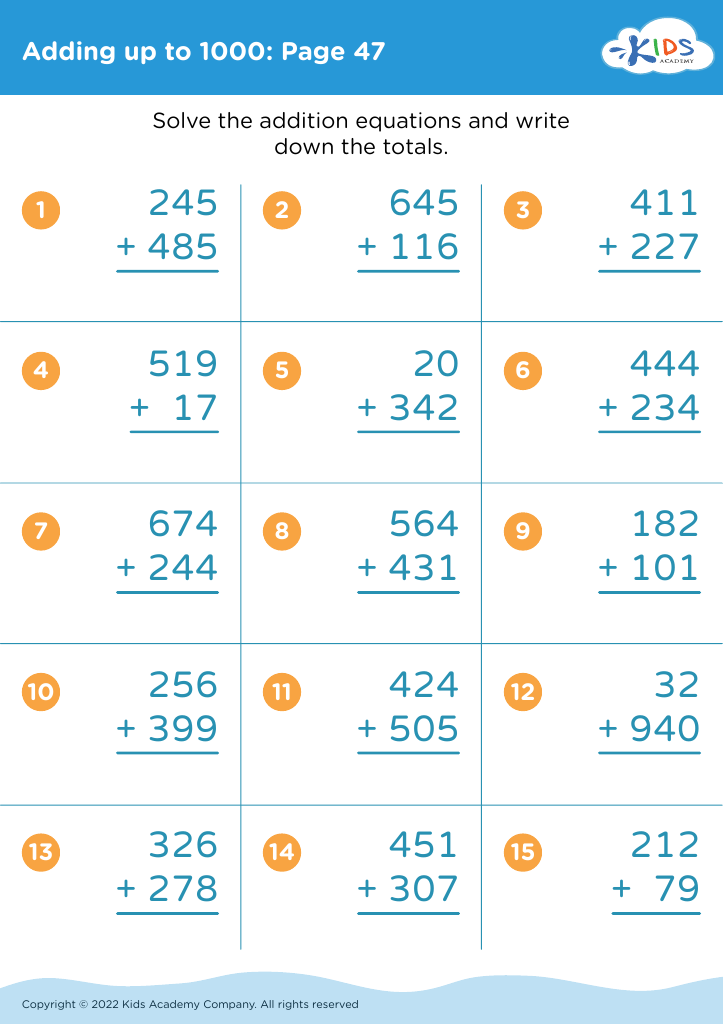
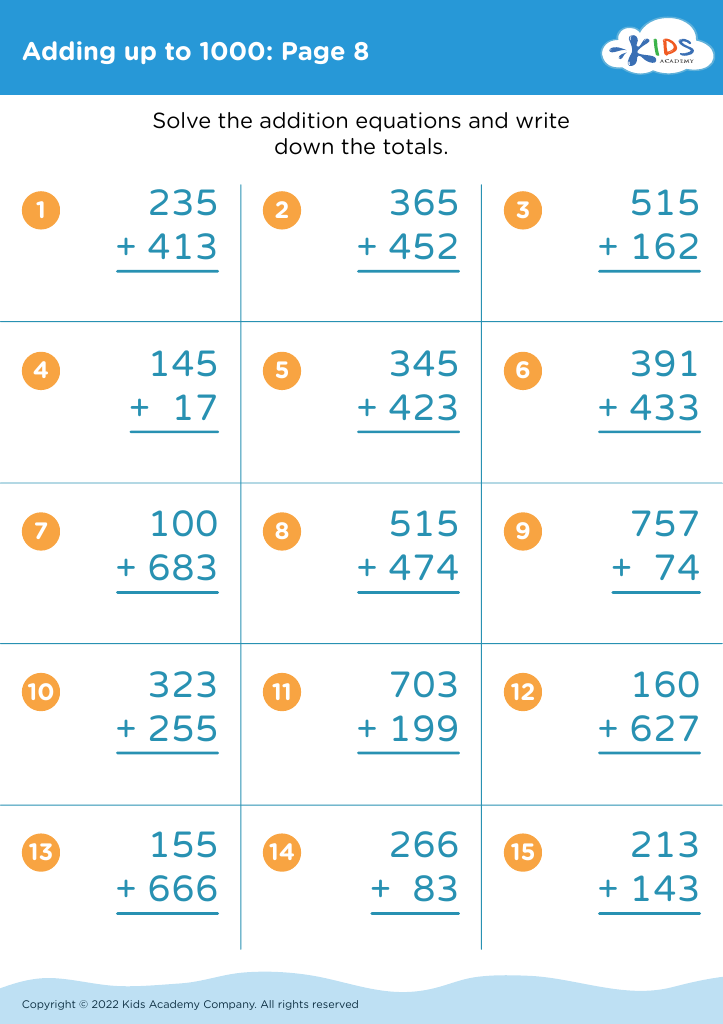
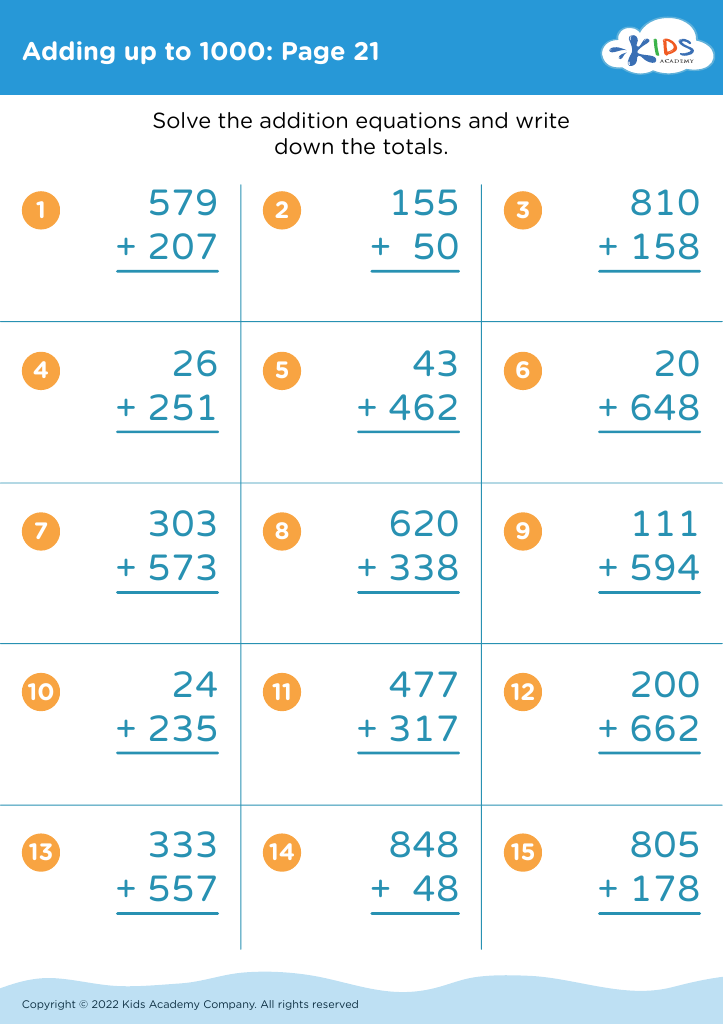
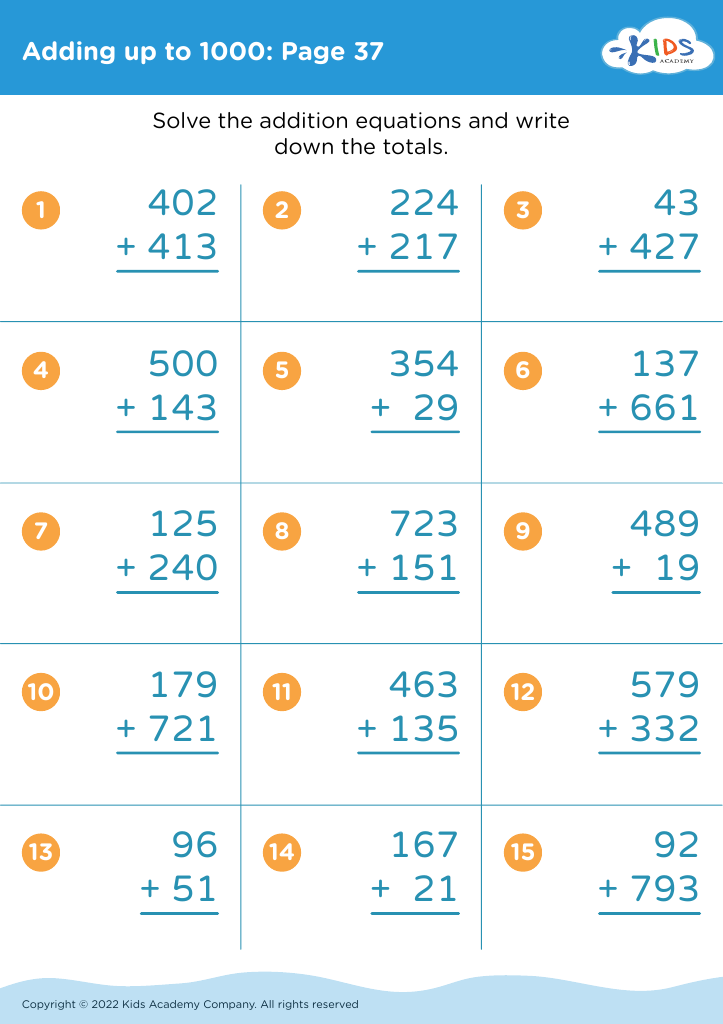
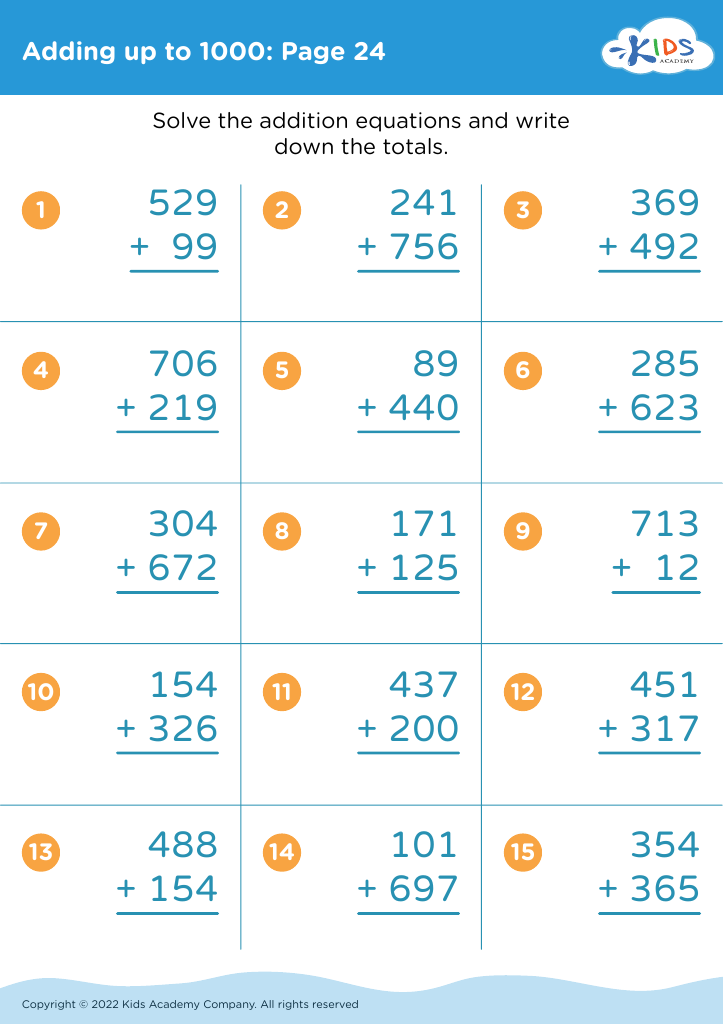
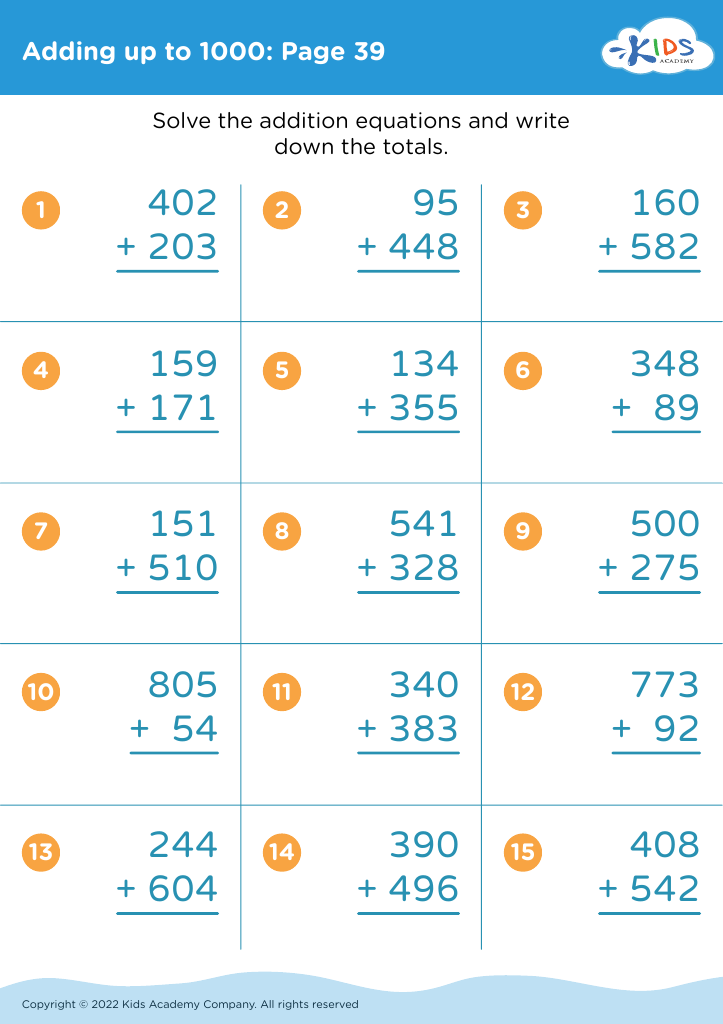
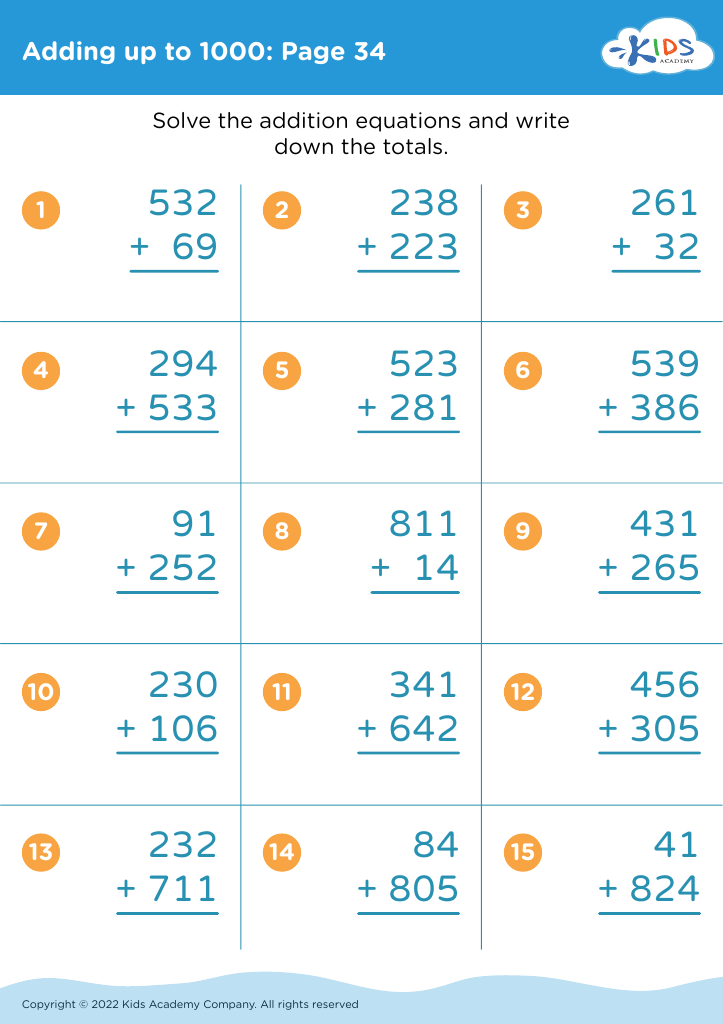
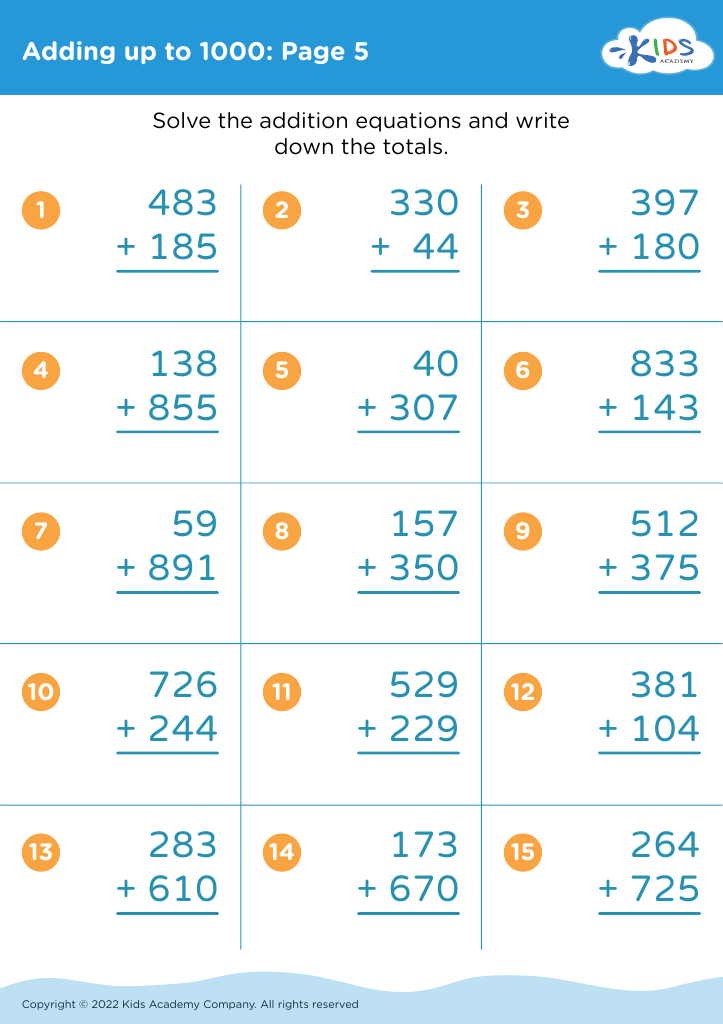
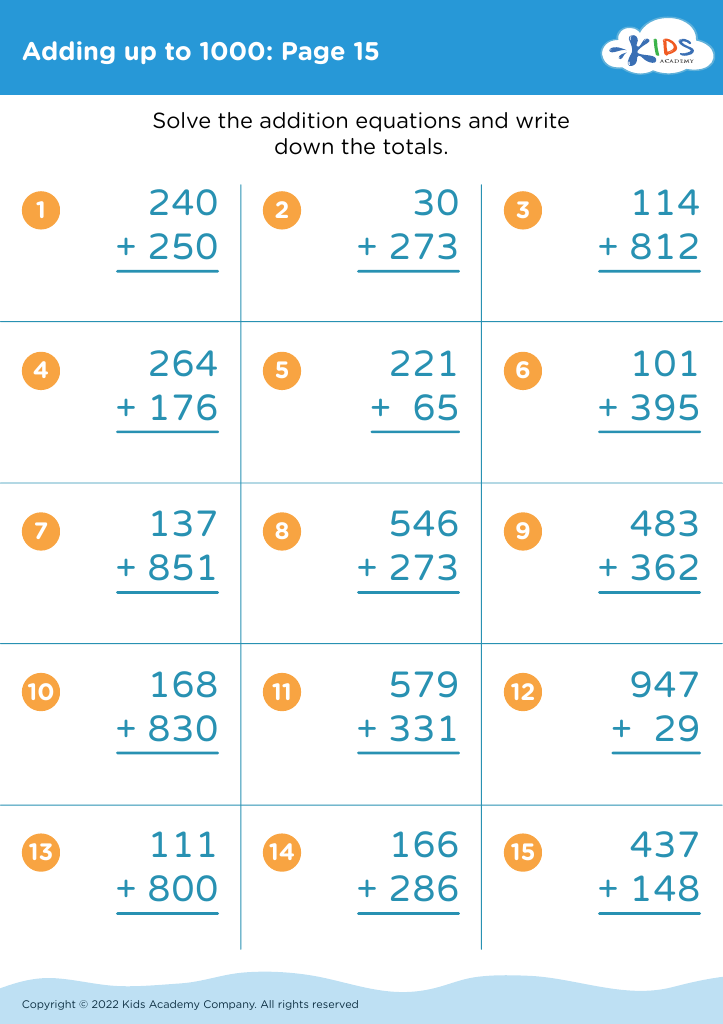
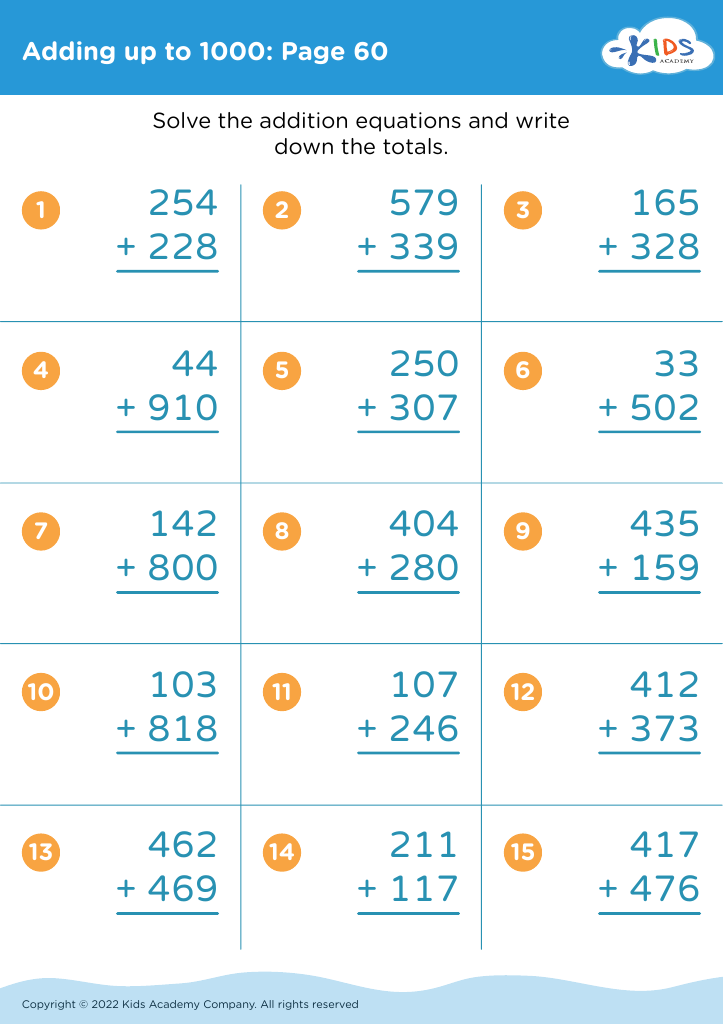
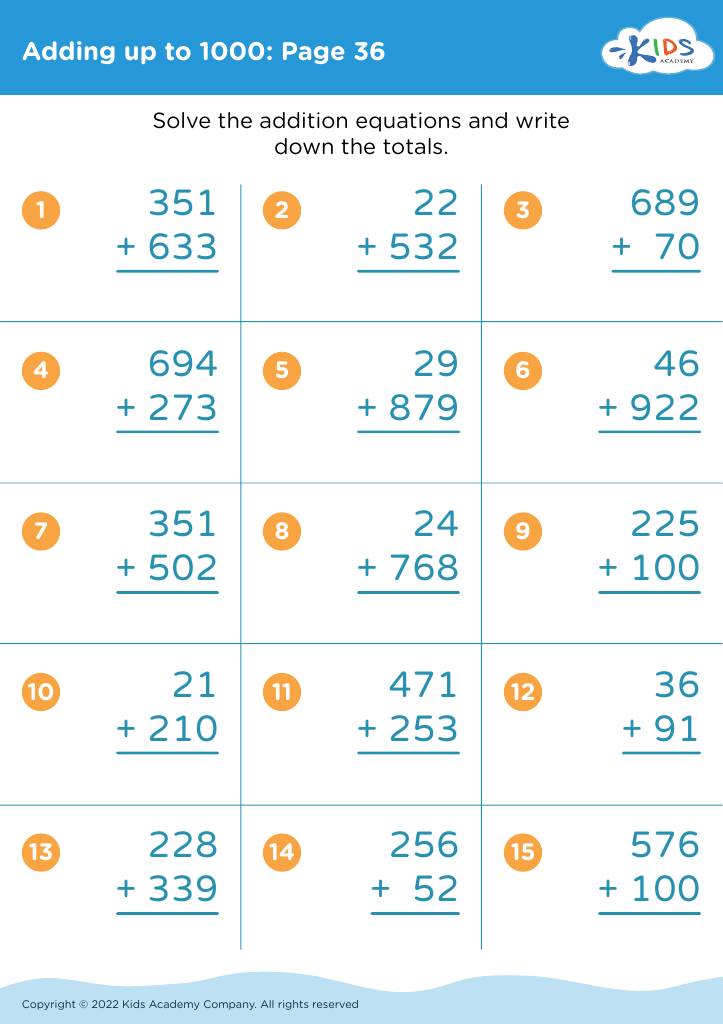
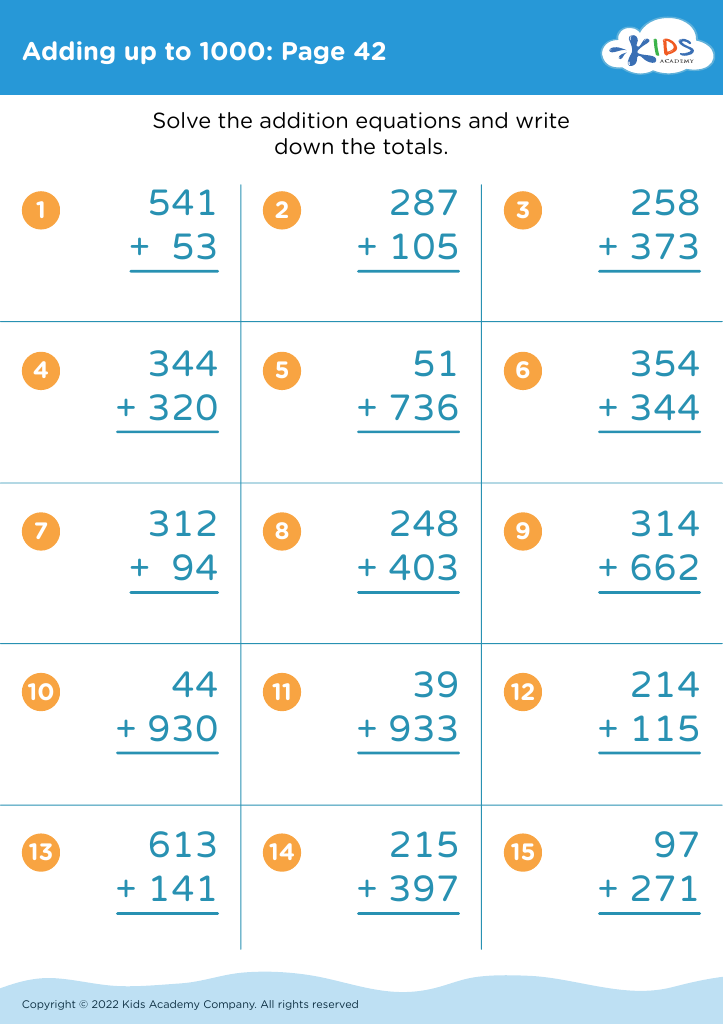
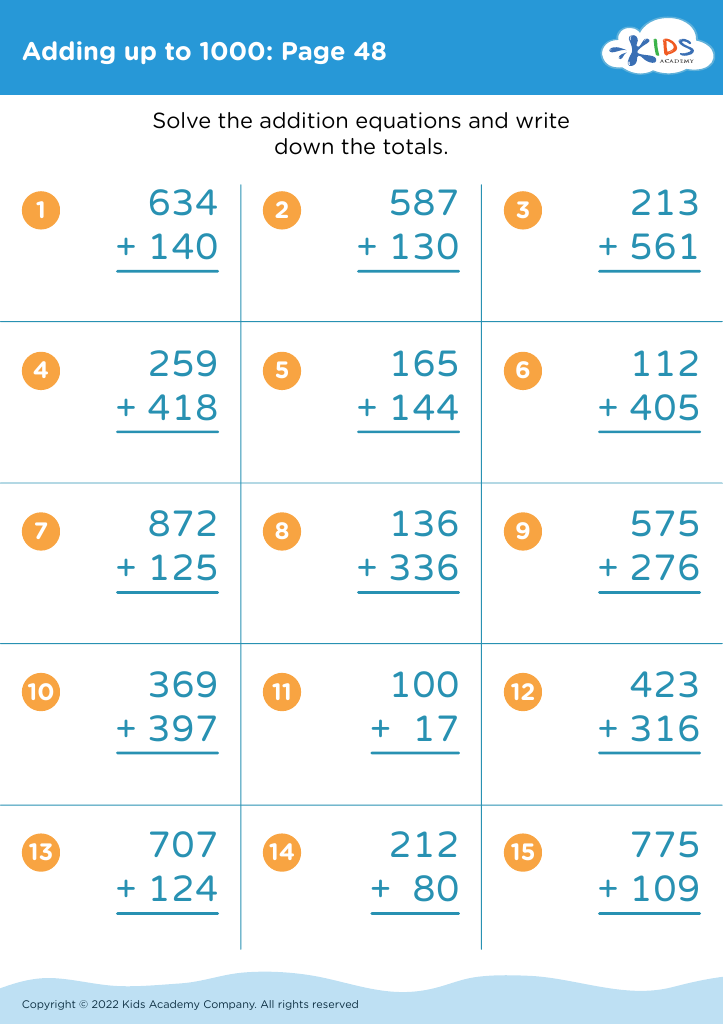


Number recognition is a crucial foundational skill for young learners aged 4-8, serving as the building block for mathematics and critical thinking. Mastery of numbers up to 1000 is essential as it encourages children's understanding of quantity, sequencing, and basic arithmetic operations. When children can recognize numbers, they become equipped to engage with more complex mathematical concepts such as addition, subtraction, and later, multiplication and division. This skill enhances their confidence and reduces math anxiety, paving the way for positive experiences in future learning.
Parental and teacher involvement in fostering number recognition can significantly impact a child's academic growth. By introducing engaging activities and hands-on experiences, adults can promote a love for math and create a stimulating learning environment. Moreover, recognizing numbers correctly aids children in real-life situations, such as telling time, handling money, or engaging in simple problem-solving, making math relevant and meaningful to their lives.
Ultimately, early intervention in number recognition ensures that children are better prepared for future academic pursuits. When parents and teachers prioritize this skill, they not only enhance children's mathematical aptitude but also support their overall cognitive development, preparing them to tackle more advanced concepts as they progress in their education.