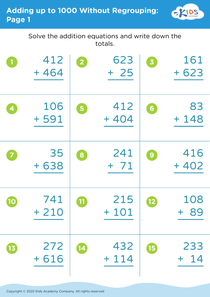
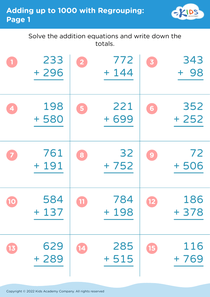
Understand fractions Adding up to 1000 Misc Worksheets for Ages 4-8
3 filtered results
-
From - To
Welcome to our "Understand Fractions: Adding Up to 1000 Misc Worksheets" page, designed specifically for children ages 4-8! Our comprehensive collection of worksheets introduces young learners to the fundamentals of fractions in a fun and engaging way. You'll find colorful, interactive exercises that help kids understand how fractions work, reinforcing essential math skills. These worksheets promote hands-on learning, allowing children to visualize and manipulate fractions, making complex concepts easier to grasp. Perfect for home or classroom use, our resources empower children to build confidence in their math abilities while having fun on their educational journey. Start exploring today!
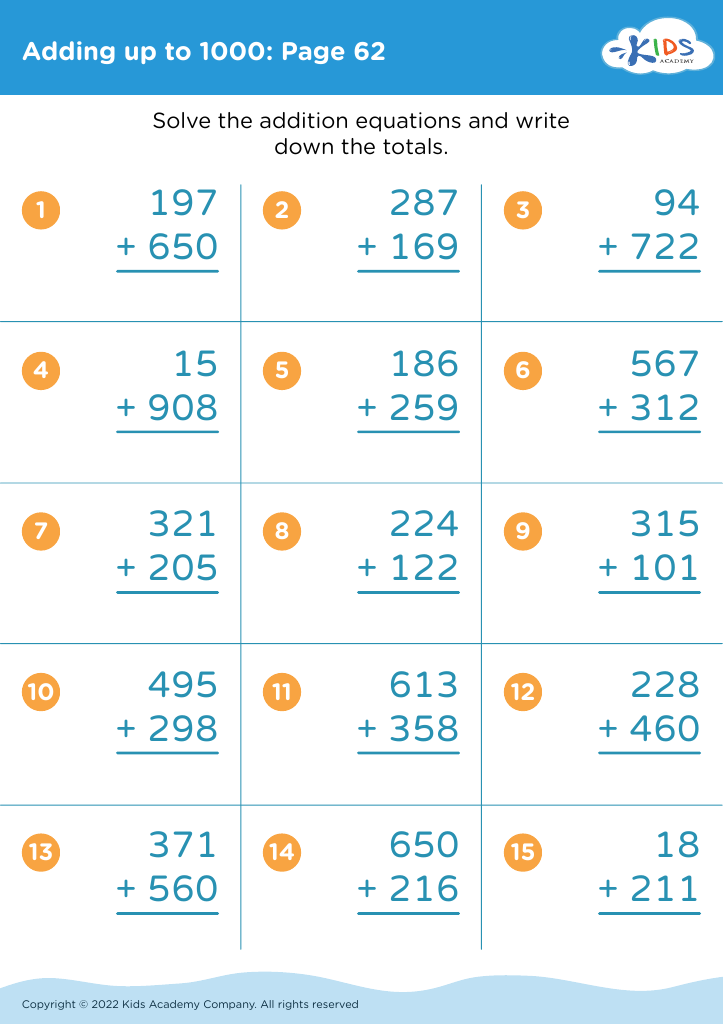
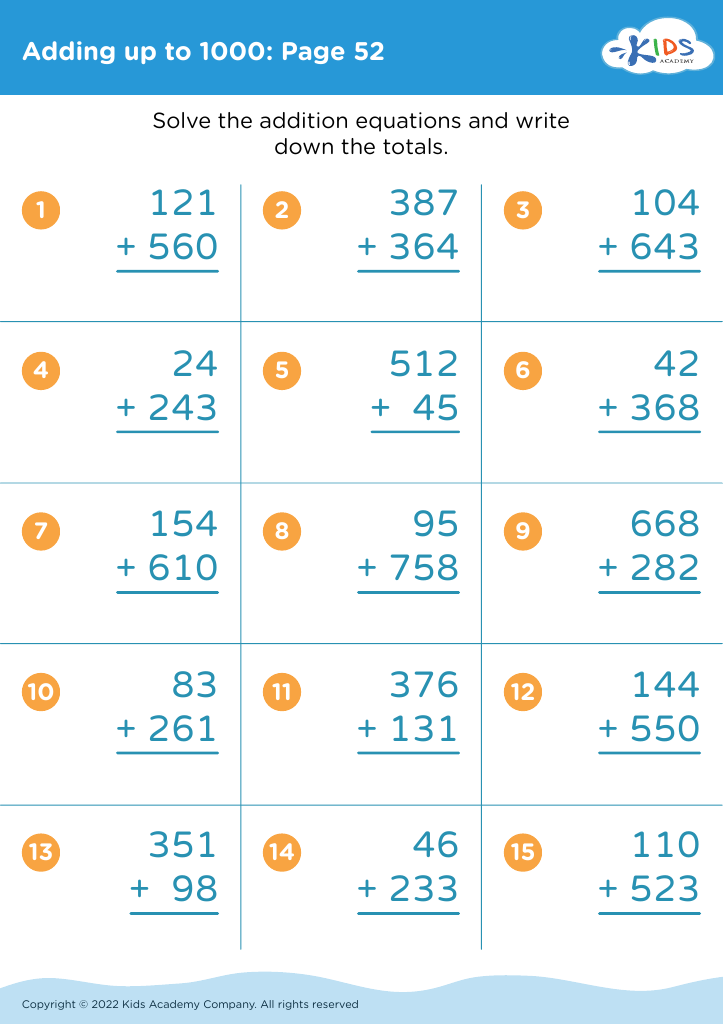
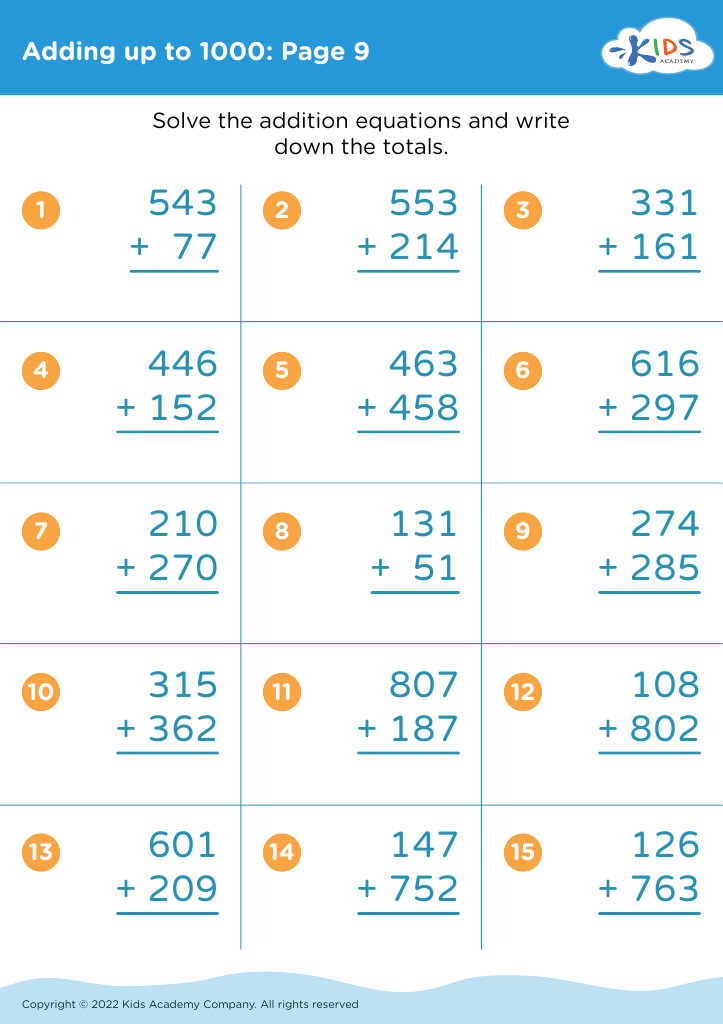


Understanding fractions and basic math concepts like addition is crucial for children aged 4-8 as it lays the foundation for their future learning. These early lessons help develop critical thinking, problem-solving skills, and cognitive abilities essential for success in math and everyday situations. When children grasp the concept of fractions, they learn to divide whole units into smaller, manageable parts, which is vital in both academic and real-world contexts.
Teaching children to add up to 1000 using fractions reinforces their understanding of number relationships, patterns, and the concept of part-to-whole. It equips them with the ability to comprehend how numbers compose larger groups, essential for advanced mathematics. By approaching math through engaging, age-appropriate activities, parents and teachers can foster a positive attitude towards learning while alleviating math anxieties that may develop later.
Furthermore, understanding fractions enhances children's ability to navigate sharing and cooperation activities, such as cooking, dividing snacks, or group projects. It promotes social interactions and strengthens their ability to articulate and understand complex ideas. Overall, nurturing mathematical comprehension at a young age sets the stage for lifelong learning, empowers children to approach challenges confidently, and instills an appreciation for math as an integral part of their lives.