Fine Motor Skills Adding up to 1000 with Regrouping Worksheets for Ages 4-8
4 filtered results
-
From - To
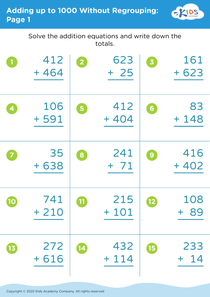
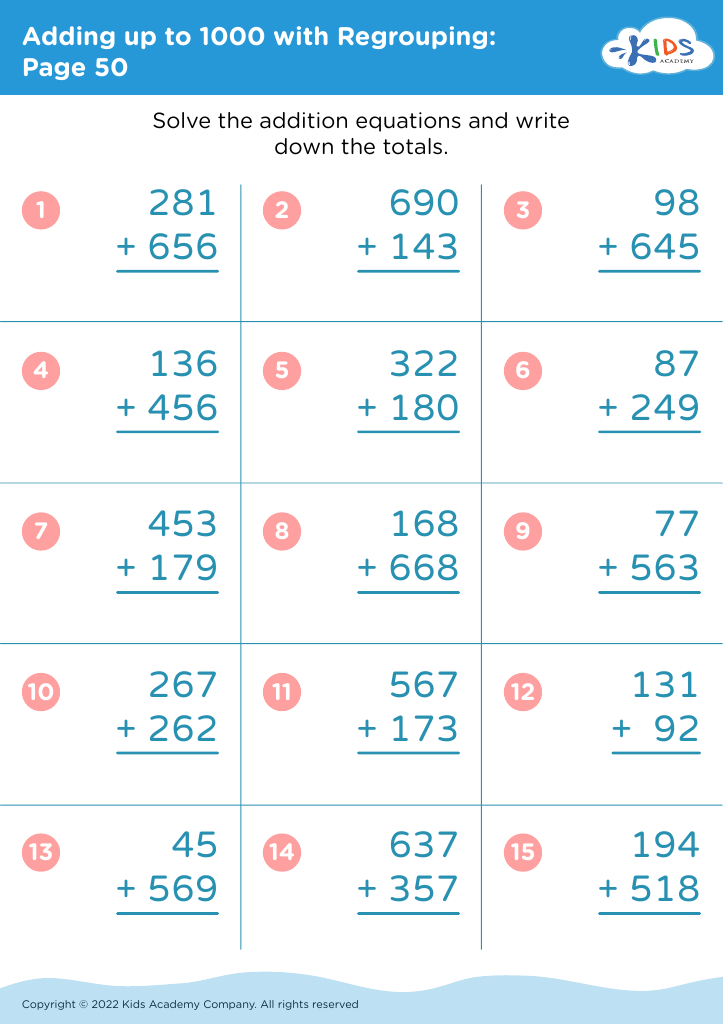
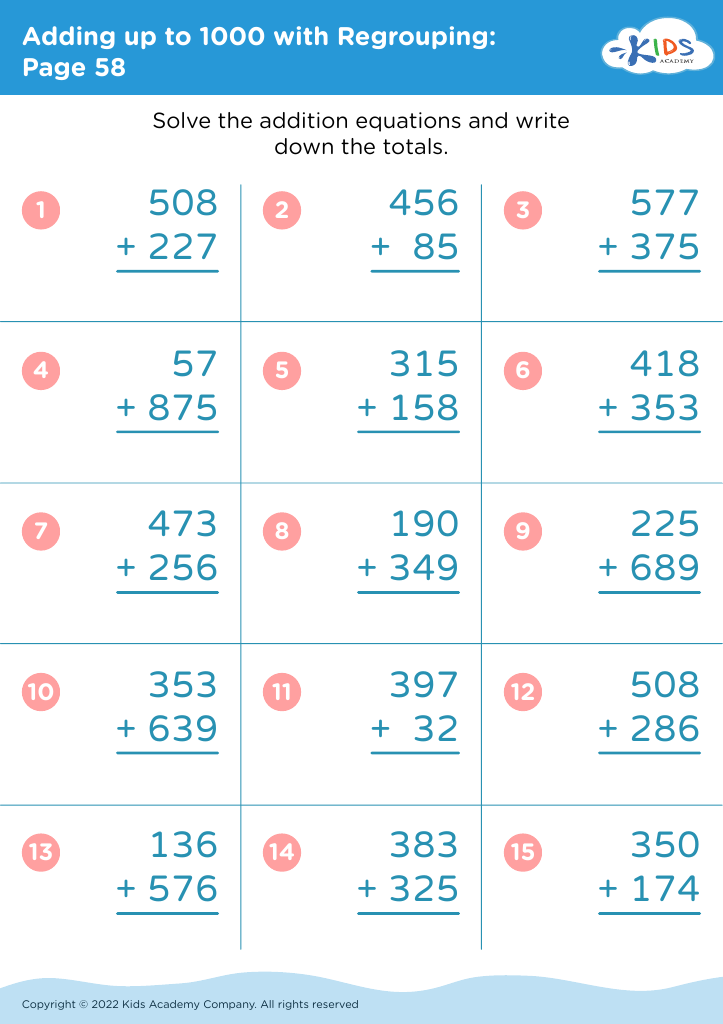
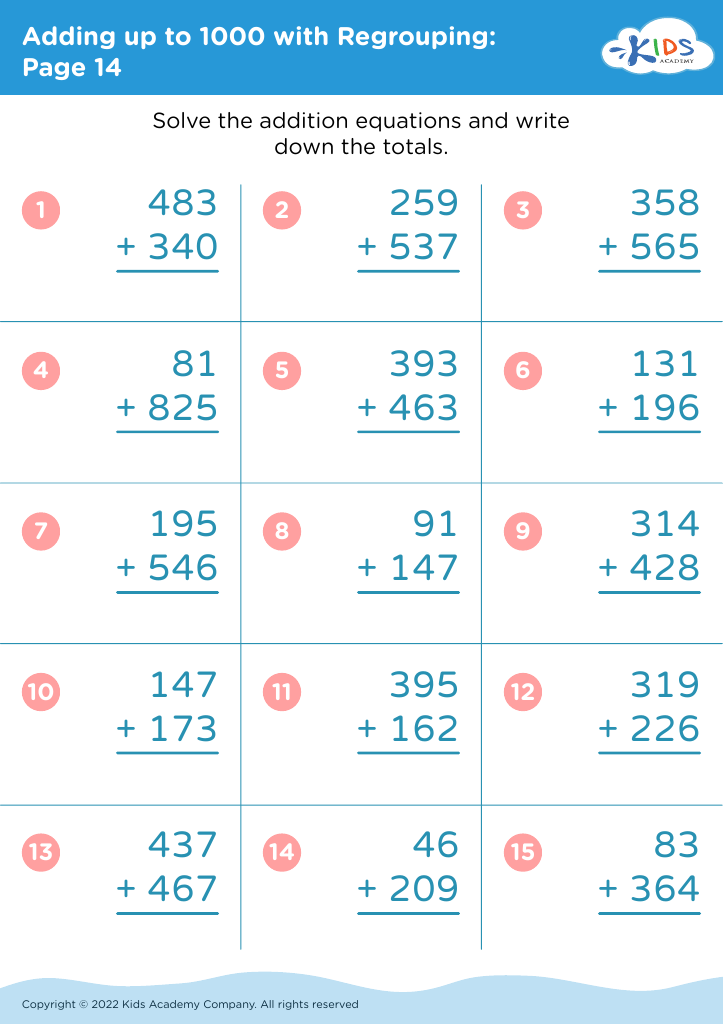
Enhance your child's fine motor skills while reinforcing their math abilities with our "Fine Motor Skills Adding Up to 1000 with Regrouping Worksheets" designed for ages 4-8. These interactive worksheets not only introduce young learners to the concept of addition with regrouping but also provide countless opportunities for hand-eye coordination and dexterity development. Each page encourages children to trace numbers, manipulate shapes, and practice writing, making math fun and engaging. Perfect for classrooms or home learning, our worksheets promote both cognitive skills and physical development, ensuring your child grows confident in math while refining essential motor skills. Explore our collection and watch your child excel!
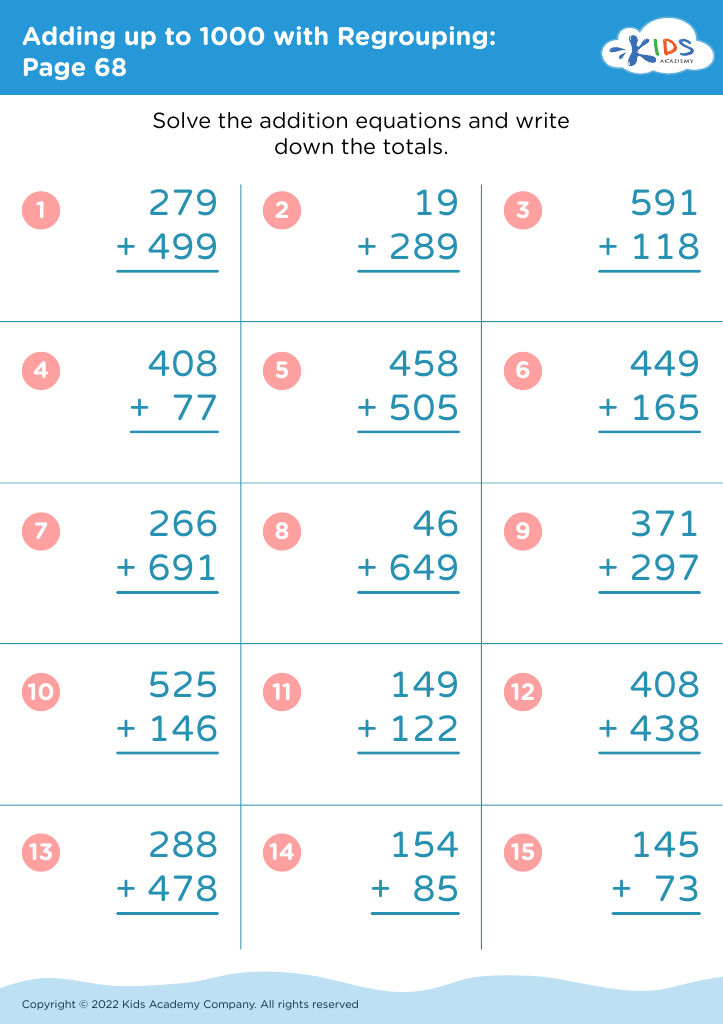


Fine motor skills and understanding addition with regrouping are crucial competencies for children aged 4-8, deeply interconnected in facilitating overall development.
Fine motor skills involve the coordination of small muscles in the hands and fingers, essential for tasks like writing, buttoning shirts, and using scissors. For young learners, developing these skills enhances their ability to grasp and manipulate tools and materials, which is vital for classroom activities. When children engage in writing numbers and drawing, they strengthen the muscle control necessary for future academic tasks, including math.
Adding numbers up to 1000 with regrouping introduces children to crucial mathematical concepts such as place value, addition, and carrying over. Mastering this skill fosters problem-solving abilities, critical thinking, and logical reasoning. When they physically manipulate counting objects or use tools to map out problems, they practice their fine motor skills while learning to add.
Ultimately, fostering both fine motor skills and numerical understanding empowers children to tackle academic challenges confidently. Teachers and parents should collaborate to provide opportunities for practice in both areas, recognizing that skills developed in conjunction lead to a well-rounded, successful, and enjoyable learning experience. Skills acquired during these formative years form a solid foundation for future academic achievements.