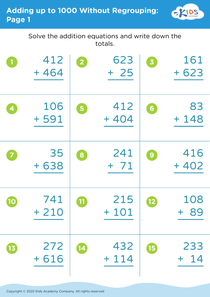
Improve reading skills Adding up to 1000 with Regrouping Worksheets for Ages 4-8
4 filtered results
-
From - To
Enhance your child's reading skills while mastering math with our "Improve Reading Skills: Adding up to 1000 with Regrouping Worksheets" designed for children aged 4-8. These interactive and engaging worksheets seamlessly integrate literacy and mathematics, ensuring a well-rounded learning experience. With fun scenarios and vocabulary, your child will strengthen their comprehension skills as they solve addition problems involving regrouping techniques. The worksheets promote critical thinking and problem-solving abilities, making math enjoyable while reinforcing essential reading skills. Perfect for home or classroom use, these resources help create confident learners who can tackle challenges in both reading and math effortlessly. Start the journey to academic success today!
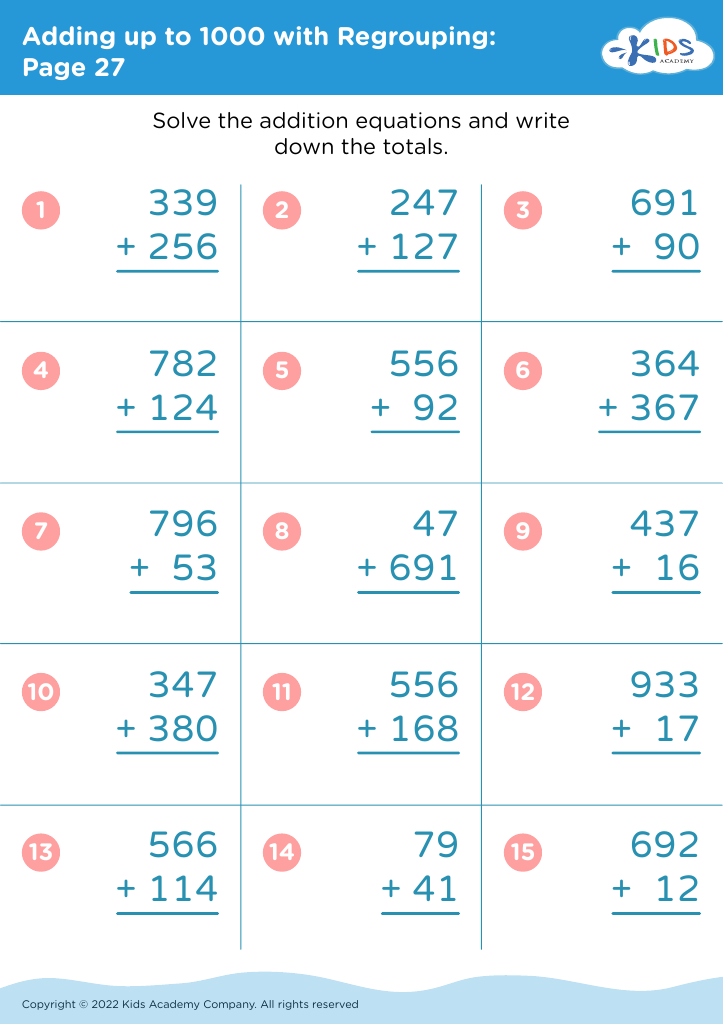
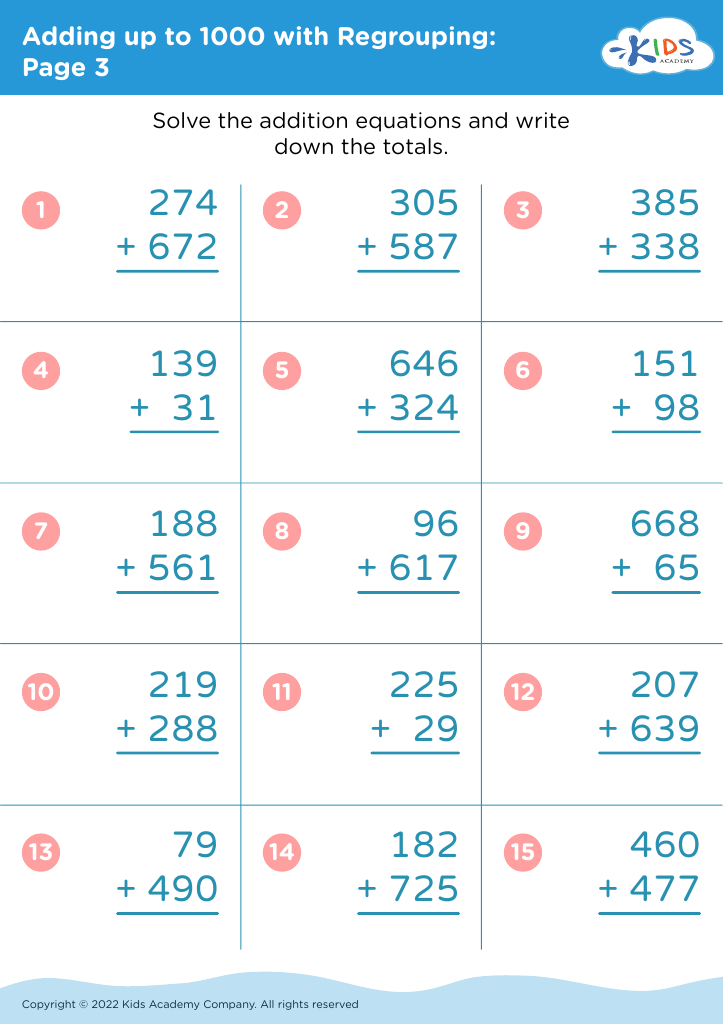
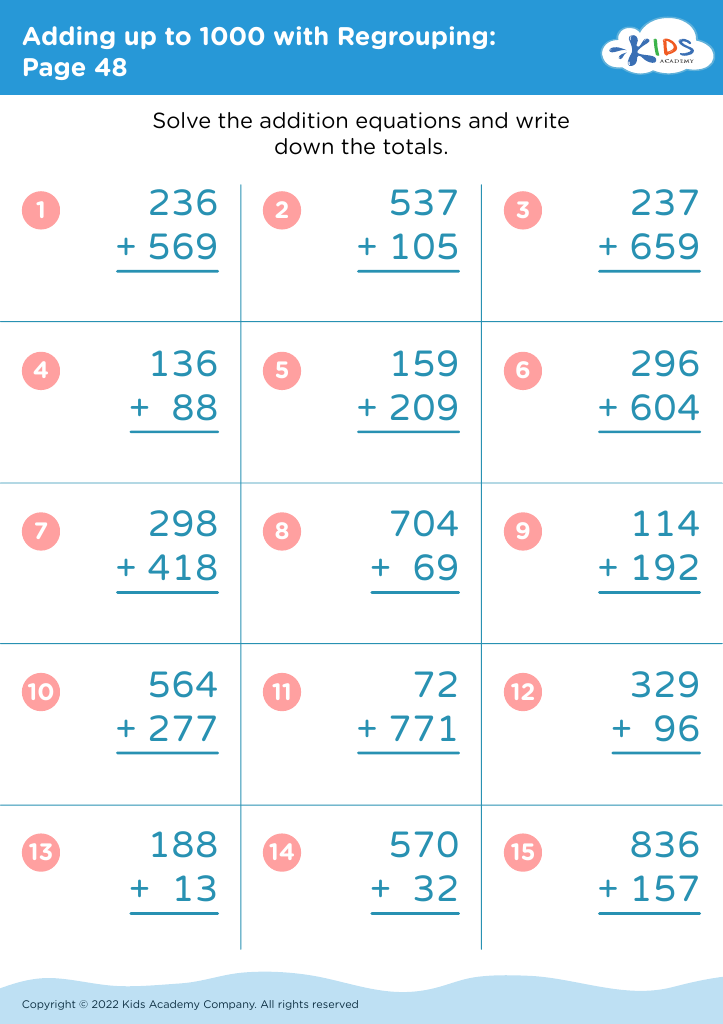
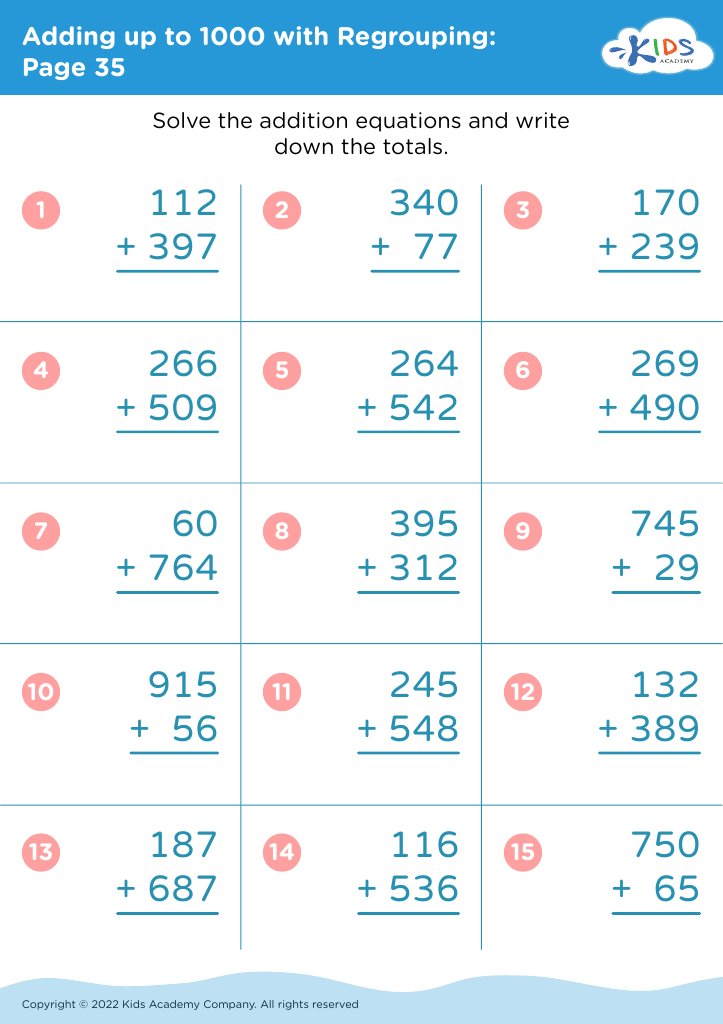


Parents and teachers should prioritize improving reading skills and math, including adding up to 1000 with regrouping, for children ages 4-8 because these foundational abilities are crucial for academic success and everyday life. Reading proficiency at an early age equips children with the language skills necessary to comprehend instructions and engage in classroom discussions, fostering their overall confidence and participation.
Simultaneously, mastering concepts like addition and regrouping enhances their numerical literacy, encouraging logical thinking and problem-solving skills. As children learn to regroup in addition, they develop a mathematical mindset that prepares them for more complex concepts in the future. When children can confidently add numbers that exceed 10 or even 100, they build endurance and resilience in facing challenges.
Moreover, these skills promote cognitive development and critical reasoning, essential for thriving in an increasingly complex world. By integrating engaging reading and math activities into early education, parents and teachers create a stimulating learning environment that nurtures curiosity and a love for learning. Addressing both literacy and numeracy helps create a well-rounded student, ready to tackle higher education challenges and equipped with vital skills for real-world situations. Therefore, parents and caregivers should invest time and resources to foster these abilities early on.