Understanding fractions Adding up to 1000 Without Regrouping Worksheets for Ages 4-8

Filters

13 filtered results

Clear all filters
Favorites
With answer key
Interactive

13 filtered results

Difficulty Level

Grade


Unlock the world of fractions with our "Understanding Fractions: Adding Up to 1000 Without Regrouping Worksheets" designed for children ages 4-8. These engaging worksheets help young learners grasp the concept of fractions while seamlessly integrating addition skills up to 1000 without regrouping. Perfect for home or classroom use, each worksheet offers a variety of exercises that promote critical thinking and mathematical confidence. Kids will explore fractions in a fun and supportive environment, allowing them to develop essential math skills with ease. Enhance your child's learning experience today and watch their understanding of fractions flourish!
Check out this FREE Trial Lesson on Adding up to 1000 Without Regrouping for age 4-8!

L

Favorites
With answer key
Interactive
  • 4-8
  • Understanding fractions
  • Adding up to 1000 Without Regrouping
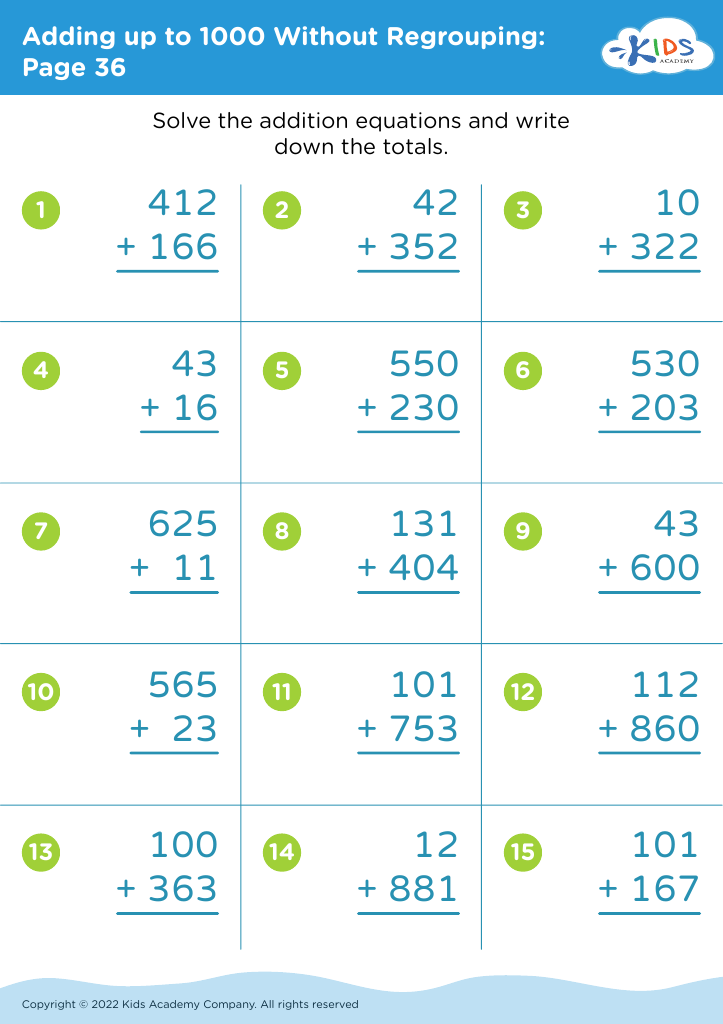
Adding up to 1000 Without Regrouping: Page 36
Worksheet
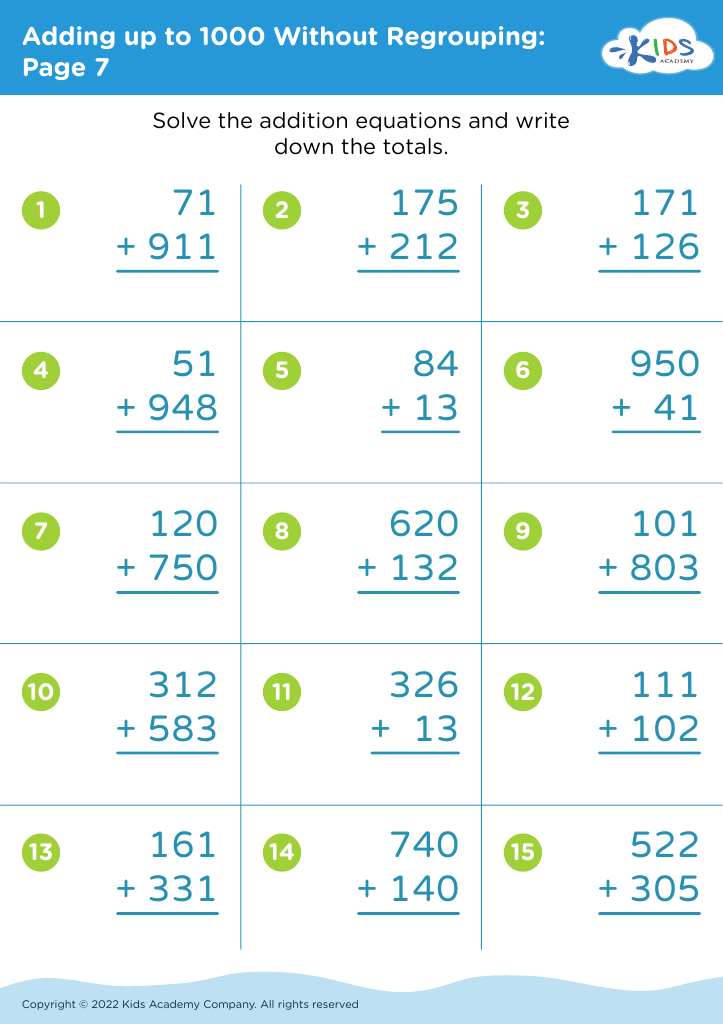
Adding up to 1000 Without Regrouping: Page 7
Worksheet
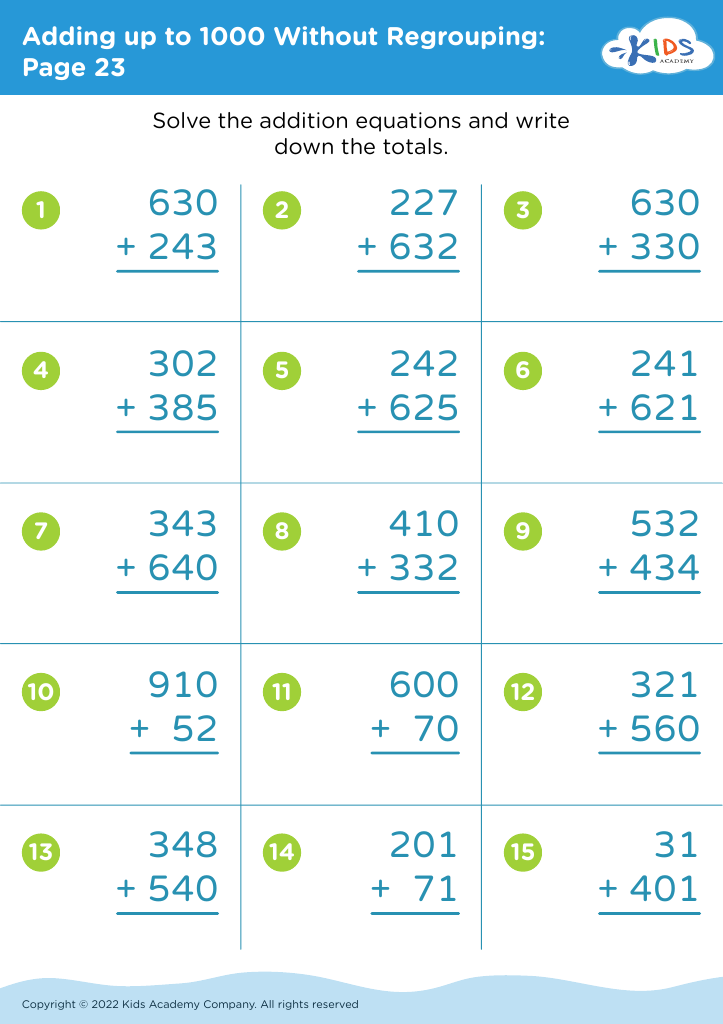
Adding up to 1000 Without Regrouping: Page 23
Worksheet
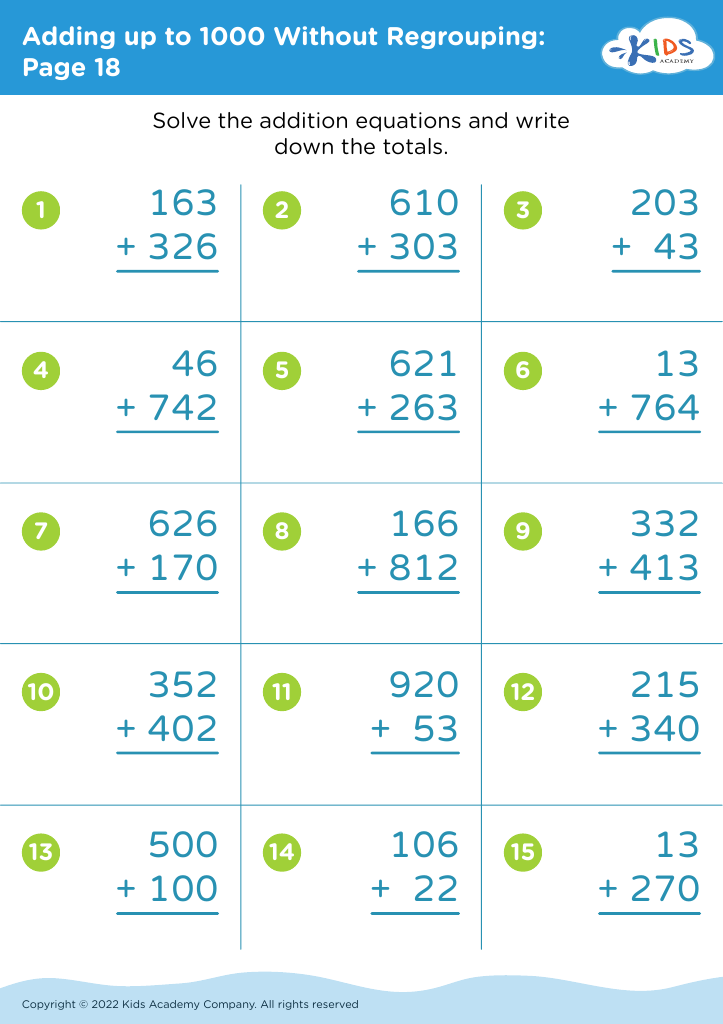
Adding up to 1000 Without Regrouping: Page 18
Worksheet
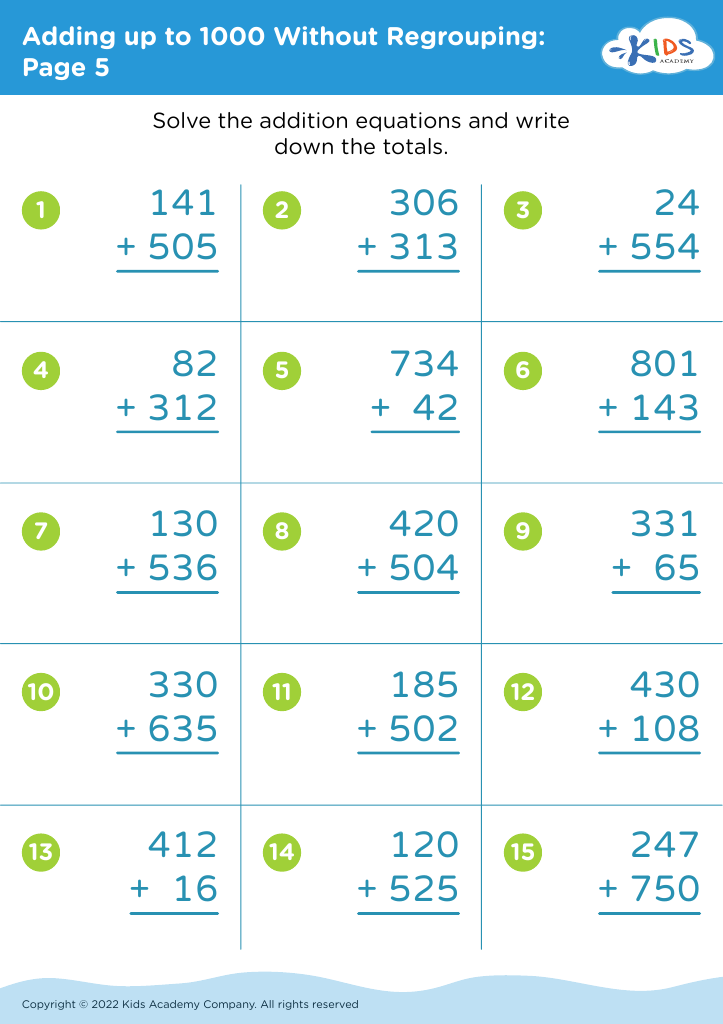
Adding up to 1000 Without Regrouping: Page 5
Worksheet
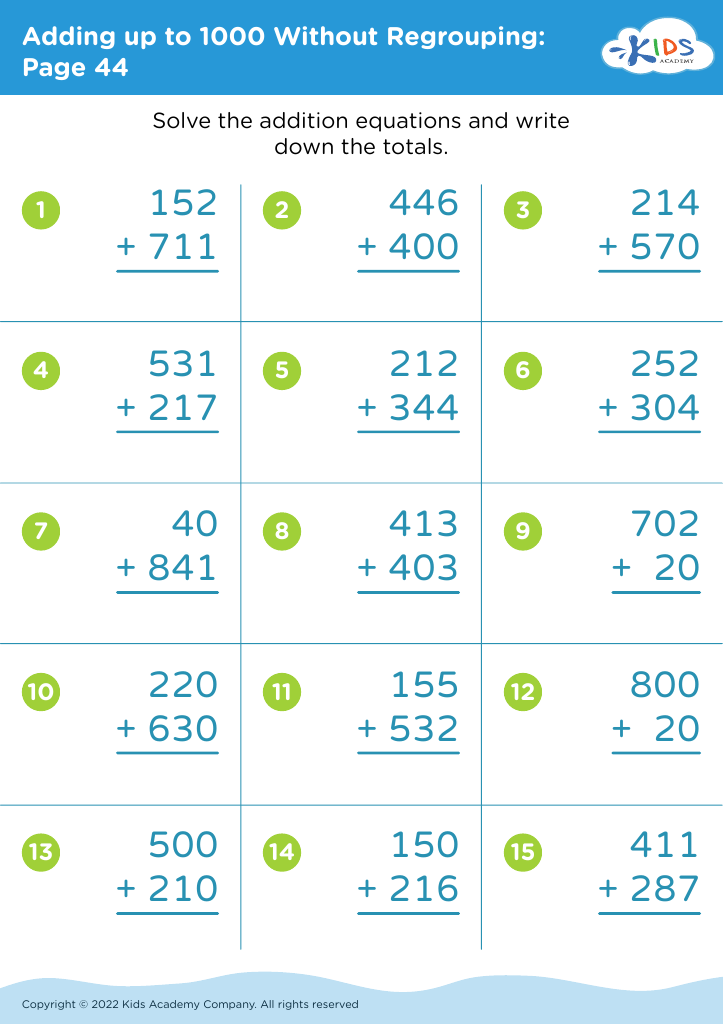
Adding up to 1000 Without Regrouping: Page 44
Worksheet
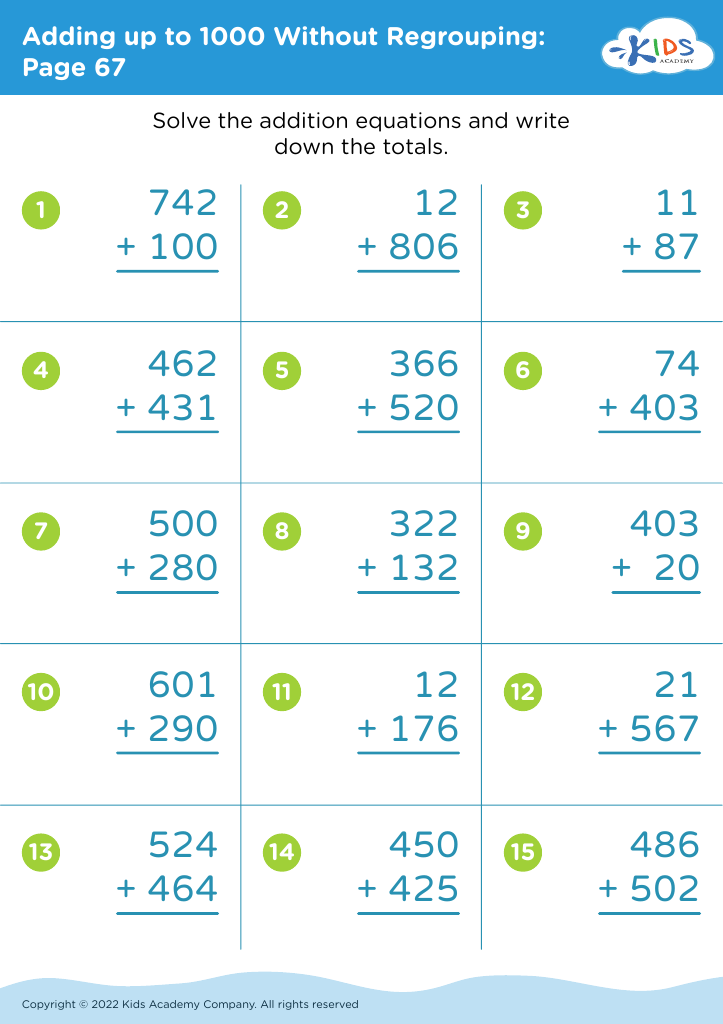
Adding up to 1000 Without Regrouping: Page 67
Worksheet
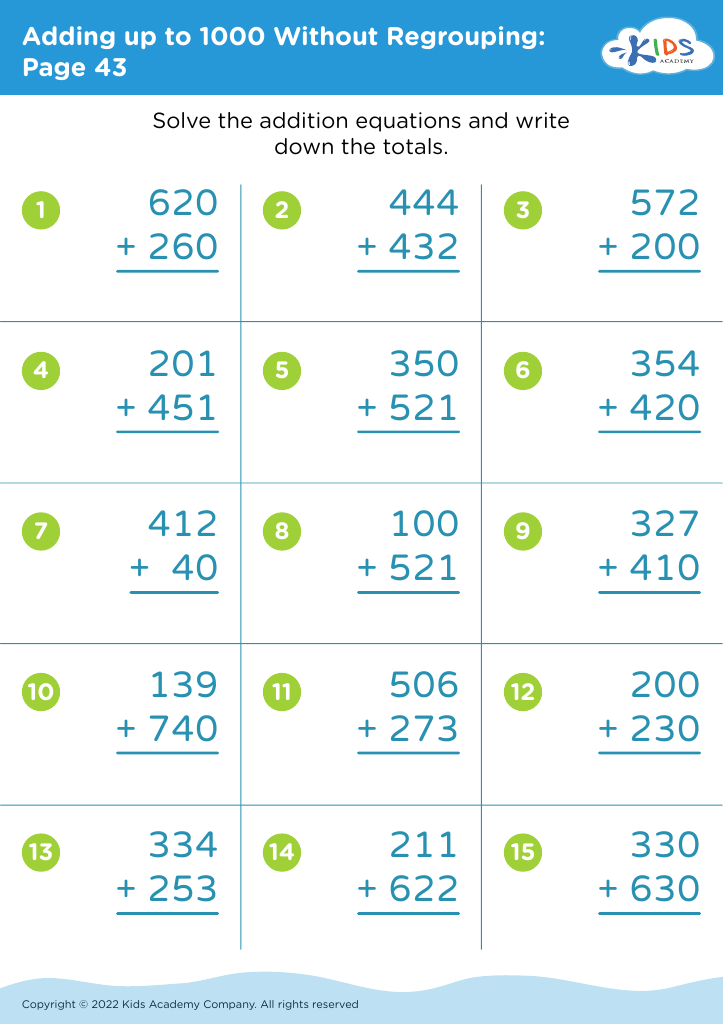
Adding up to 1000 Without Regrouping: Page 43
Worksheet
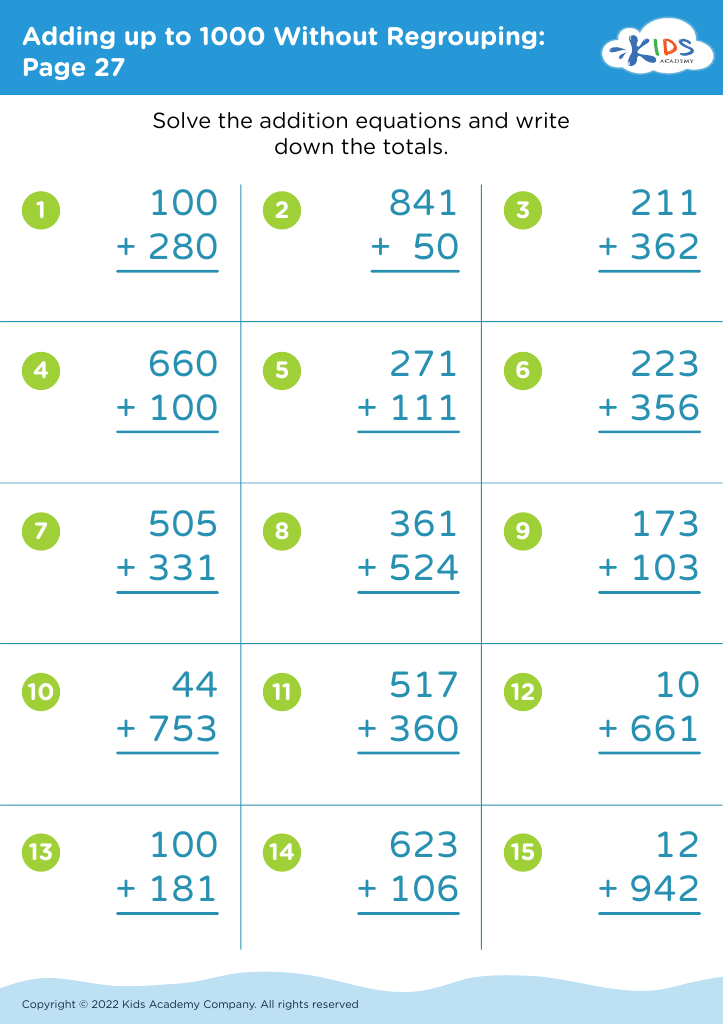
Adding up to 1000 Without Regrouping: Page 27
Worksheet
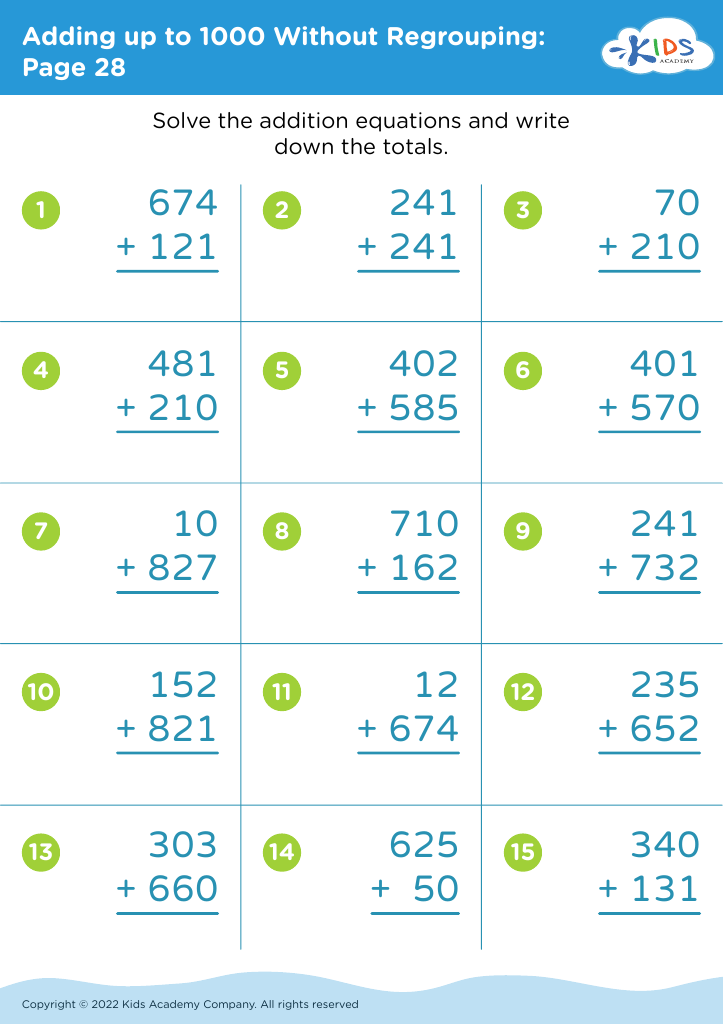
Adding up to 1000 Without Regrouping: Page 28
Worksheet
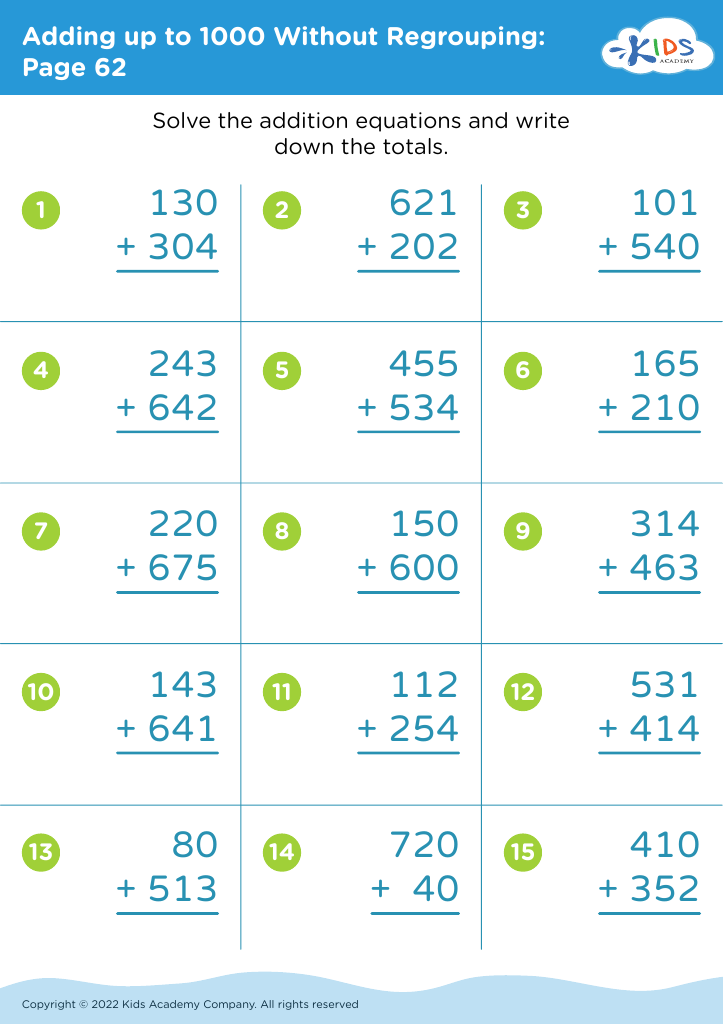
Adding up to 1000 Without Regrouping: Page 62
Worksheet
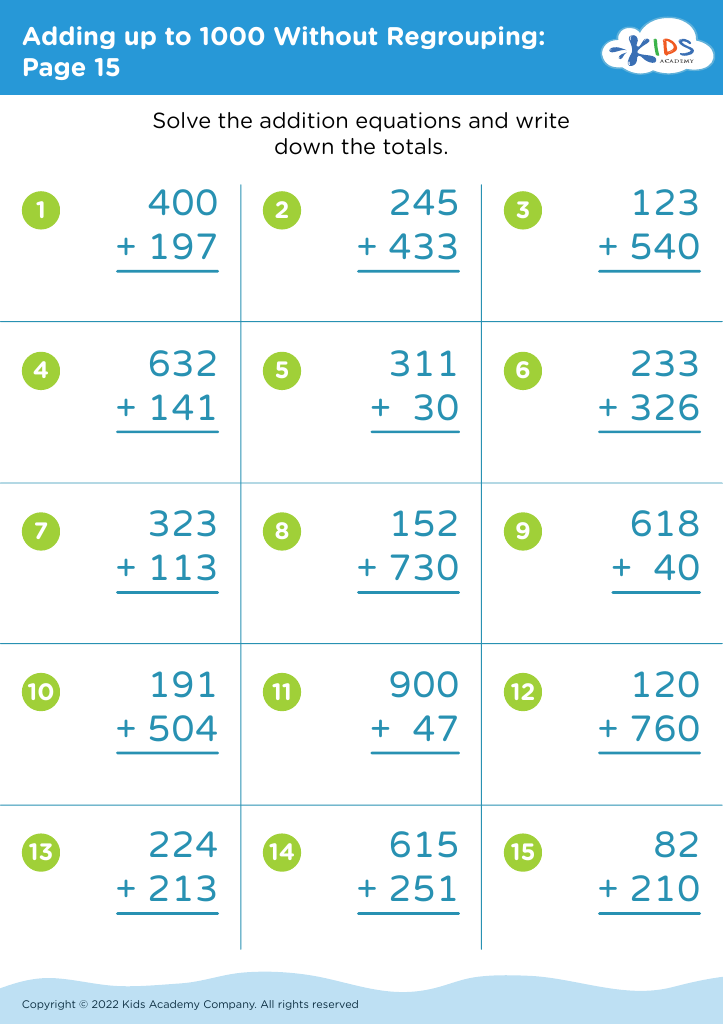
Adding up to 1000 Without Regrouping: Page 15
Worksheet
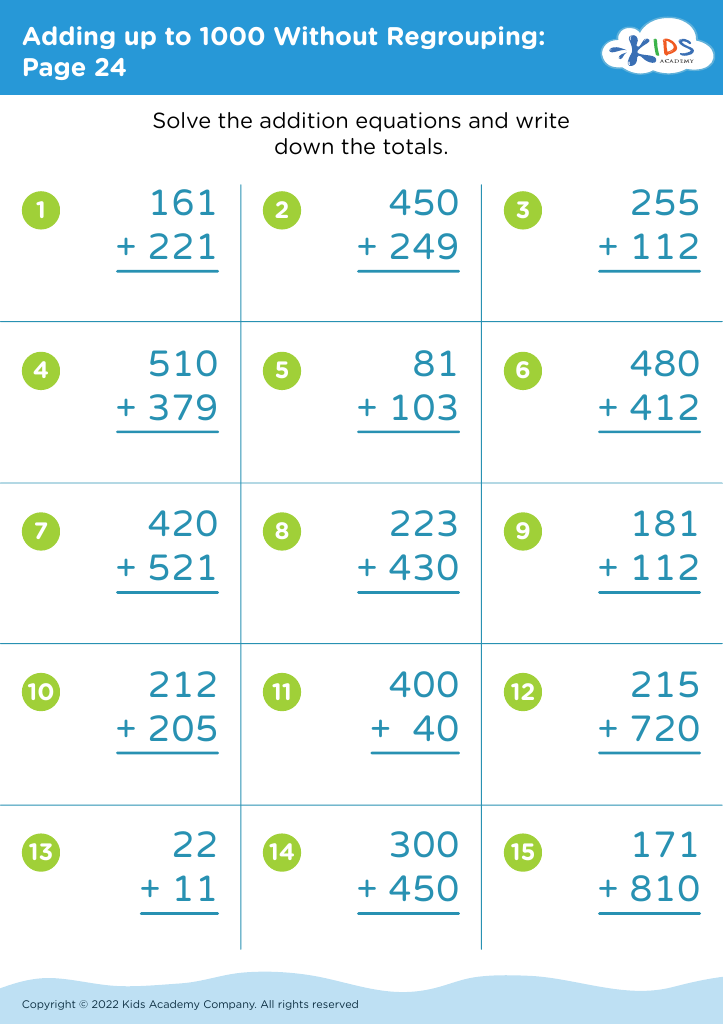
Adding up to 1000 Without Regrouping: Page 24
Worksheet


Understanding fractions is a foundational skill that sets the stage for more advanced math concepts later in a child’s education. For children ages 4-8, learning about fractions, particularly in contexts such as adding up to 1000 without regrouping, is crucial. It builds numerical literacy and helps children grasp the concept of part-to-whole relationships, which is essential for a solid understanding of math.

When children learn to add fractions to reach a total of 1000 without regrouping, it reinforces their ability to work with numbers efficiently and promotes critical thinking. They develop skills in adding and composing numbers, as well as gaining confidence in their mathematical abilities. These skills are not only instrumental in math but also enhance problem-solving abilities crucial in real-life situations.

Parents and teachers should care because mastering fractions allows children to approach more complex concepts with ease as they progress in school. Additionally, this early math competency can reduce math anxiety later on and enhance overall academic performance. By fostering a strong foundational understanding of fractions today, parents and teachers are preparing children for future success in both mathematics and everyday life. Engaging children in fun and meaningful fraction activities encourages a positive attitude towards learning.