Basic Addition Adding up to 1000 Worksheets for Ages 4-8
6 filtered results
-
From - To
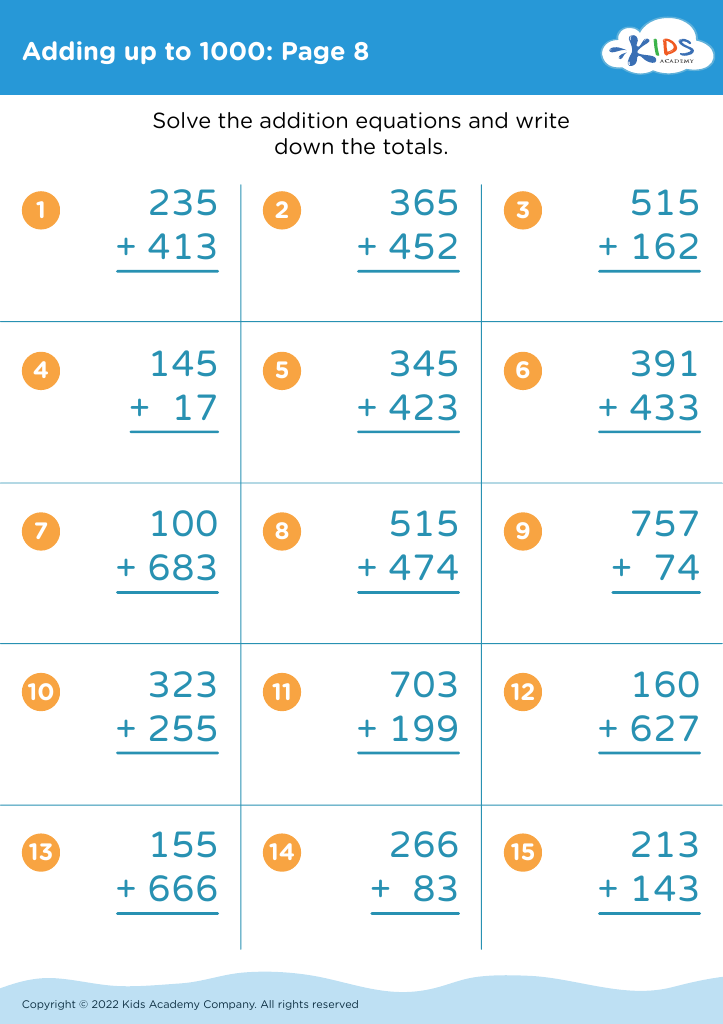
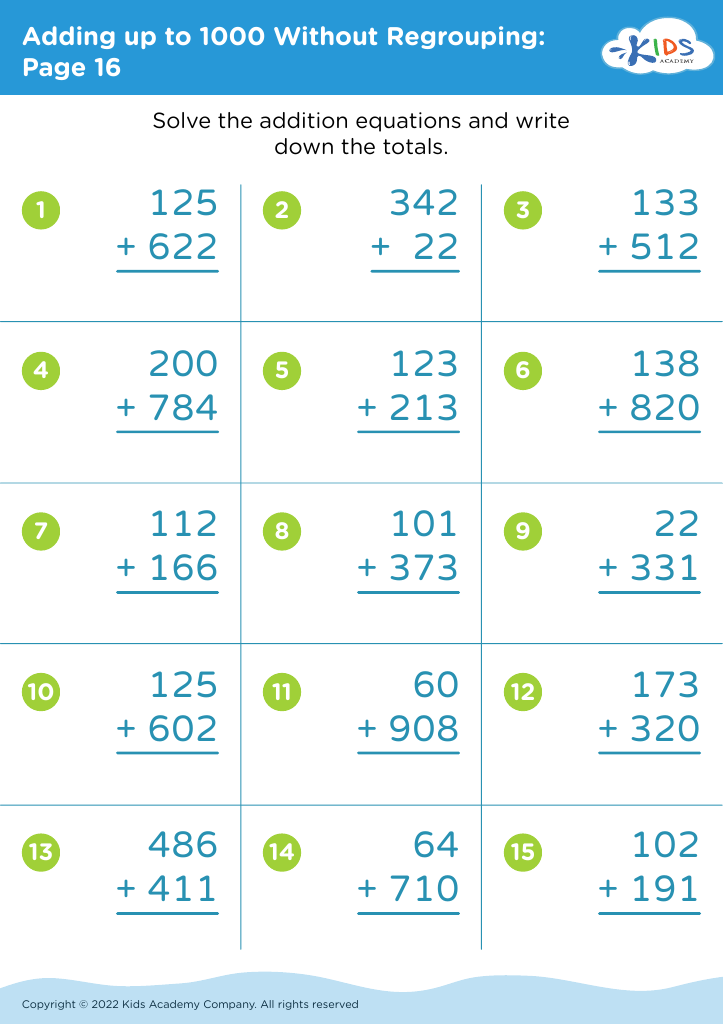
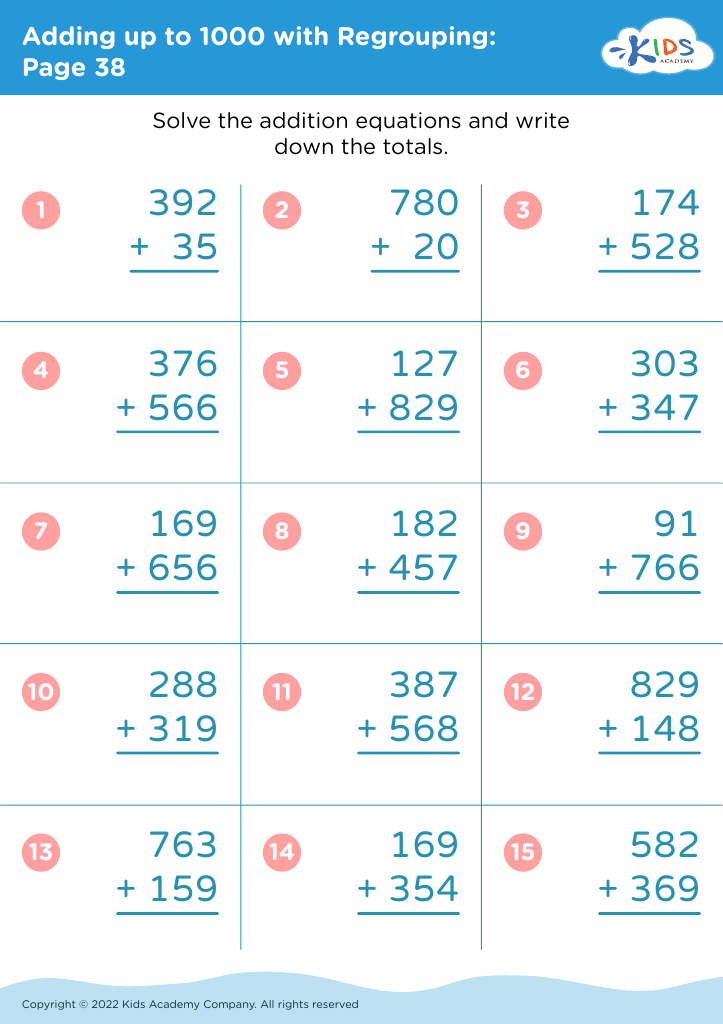
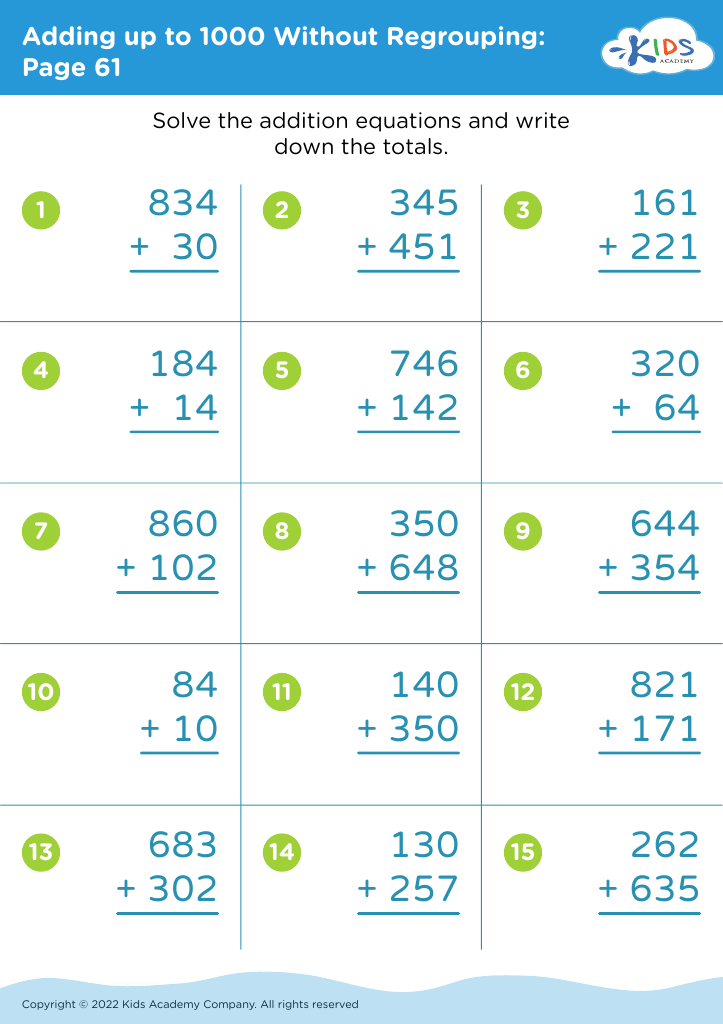
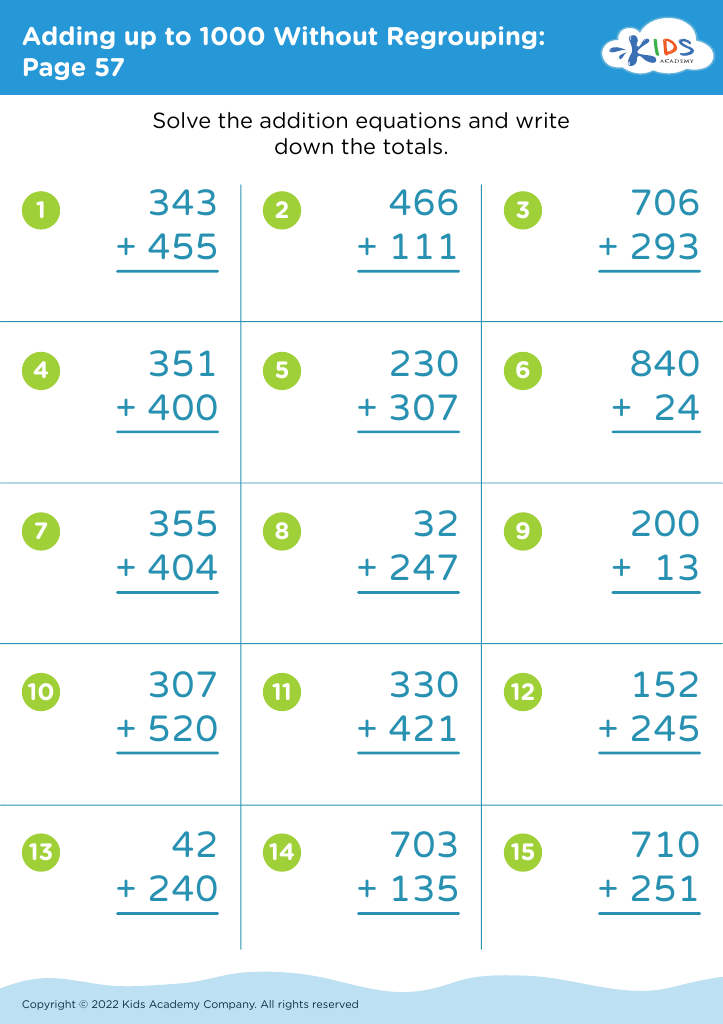
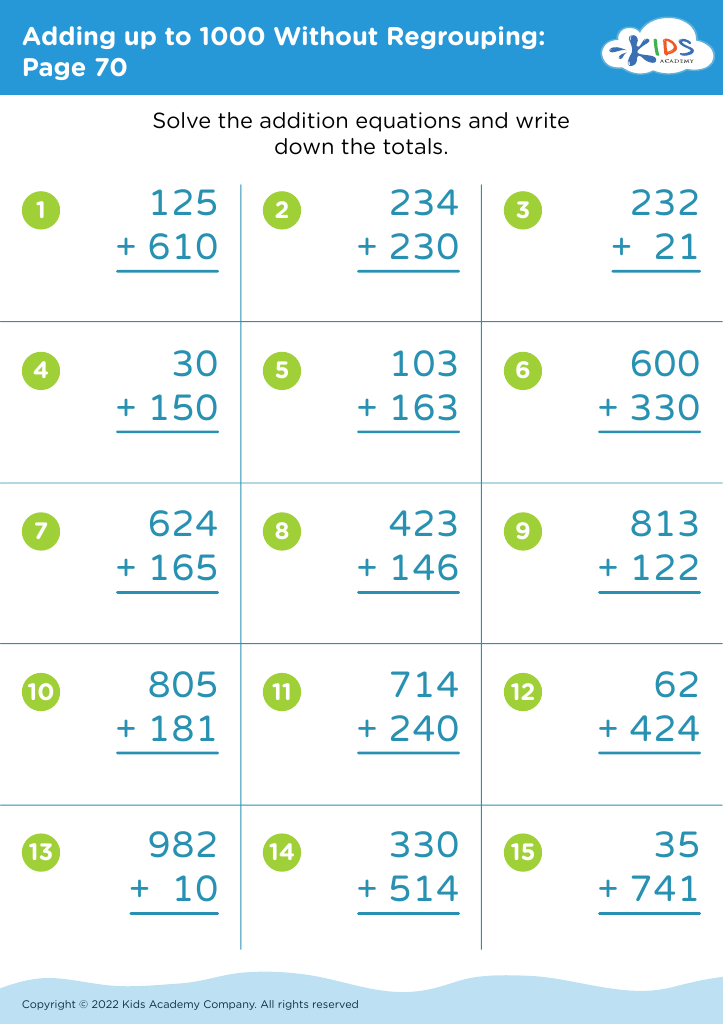
Unlock your child's math potential with our Basic Addition Adding up to 1000 worksheets designed for ages 4-8. Perfectly crafted to make learning fun and engaging, these worksheets help young learners build a strong foundation in basic addition. Whether your child is just beginning their math journey or honing their skills, these printable exercises are tailored to improve their number sense and boost confidence. With a variety of enjoyable activities and colorful visuals, mastering addition up to 1000 becomes an exciting adventure. Start today and watch your child excel with Kid’s Academy's expertly designed instructional materials!



Parents and teachers should care about basic addition up to 1000 for children ages 4-8 because foundational math skills are essential for future academic success and everyday problem-solving. At this critical developmental stage, young children are highly receptive to learning new concepts, making it the perfect time to instill strong numerical foundations.
Basic addition helps children understand quantities, numerical relationships, and patterns. Mastering addition within 1000 provides a solid groundwork for more complex math operations like subtraction, multiplication, and division, ensuring a smoother transition to advanced mathematical concepts in higher grades.
Moreover, math skills cultivate critical thinking and logical reasoning, which are necessary for upcoming subjects and real-life situations, such as managing money, cooking measurements, and time management. It enhances cognitive development and boosts confidence as children experience success.
Teachers and parents play an essential role by making learning engaging and interactive, fostering a love for math instead of fear or disinterest. Using visual aids, games, and everyday situations can make learning addition enjoyable.
Ultimately, early math proficiency is linked to academic achievement in other subjects. A strong grasp of basic addition helps set a positive trajectory for lifelong learning and problem-solving, equipping children with tools they’ll use throughout their education and beyond.








