Fine Motor Skills Adding up to 1000 Worksheets for Ages 4-8
12 filtered results
-
From - To
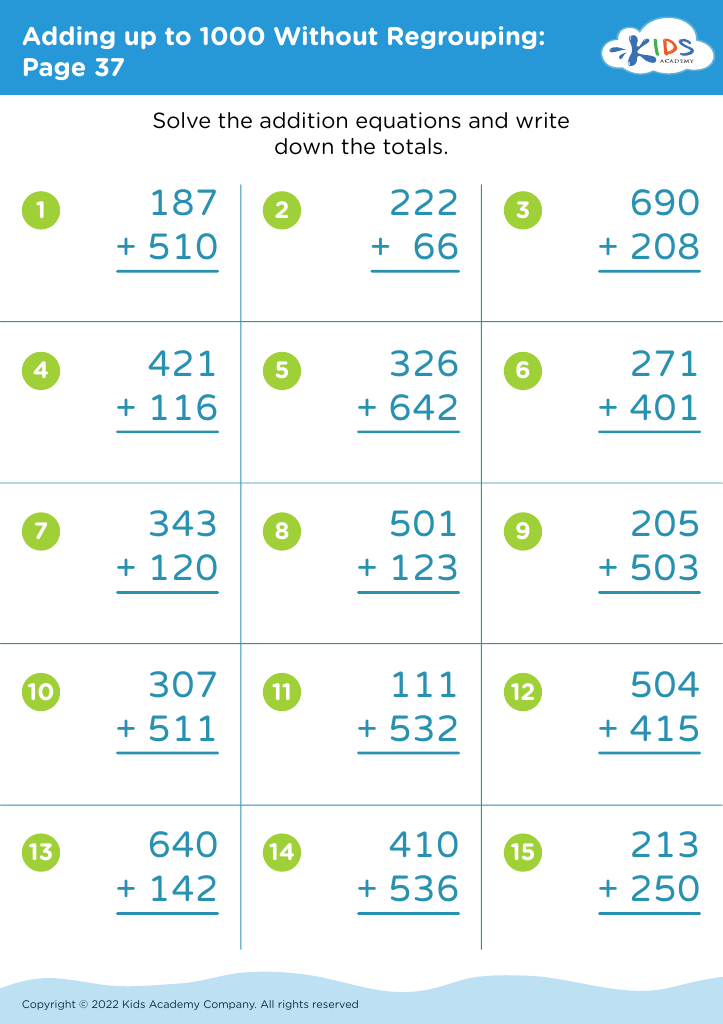
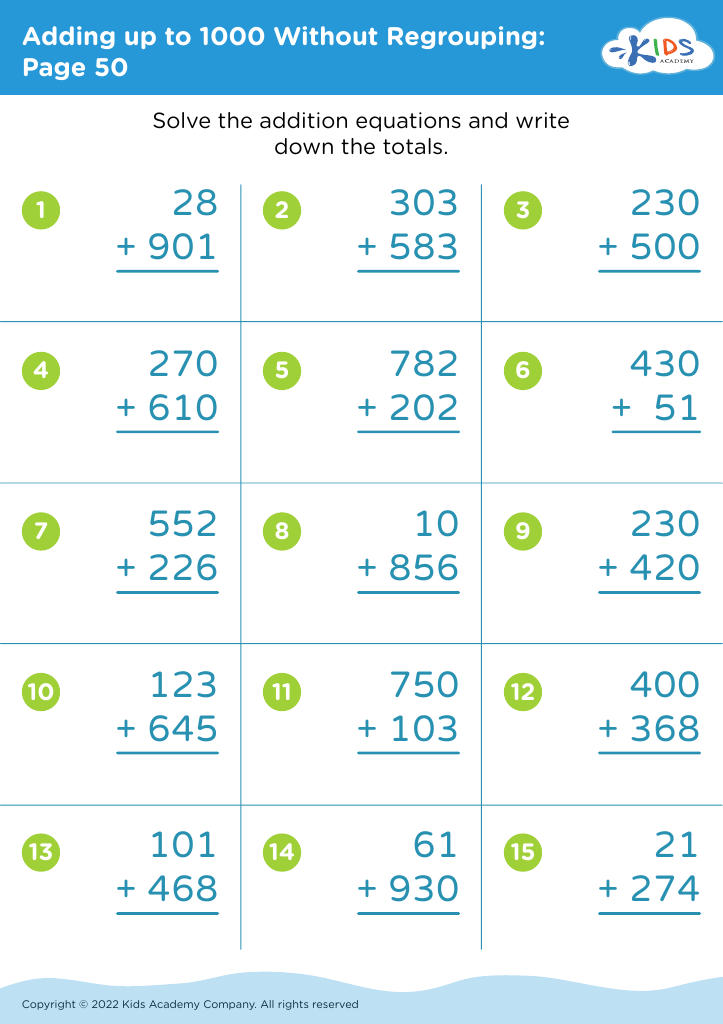
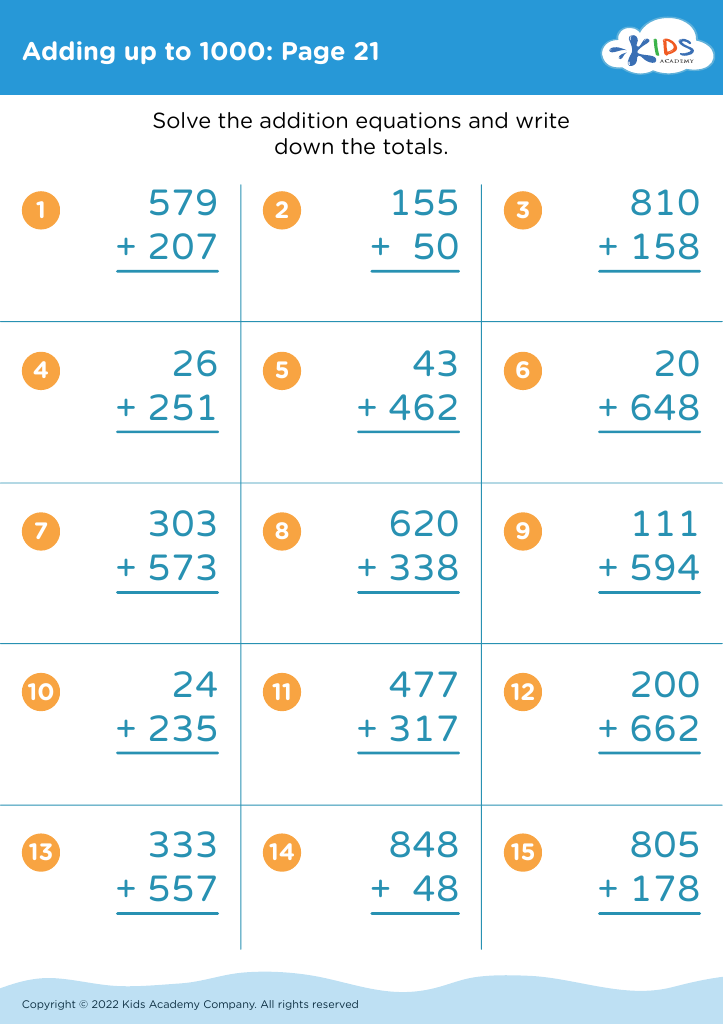
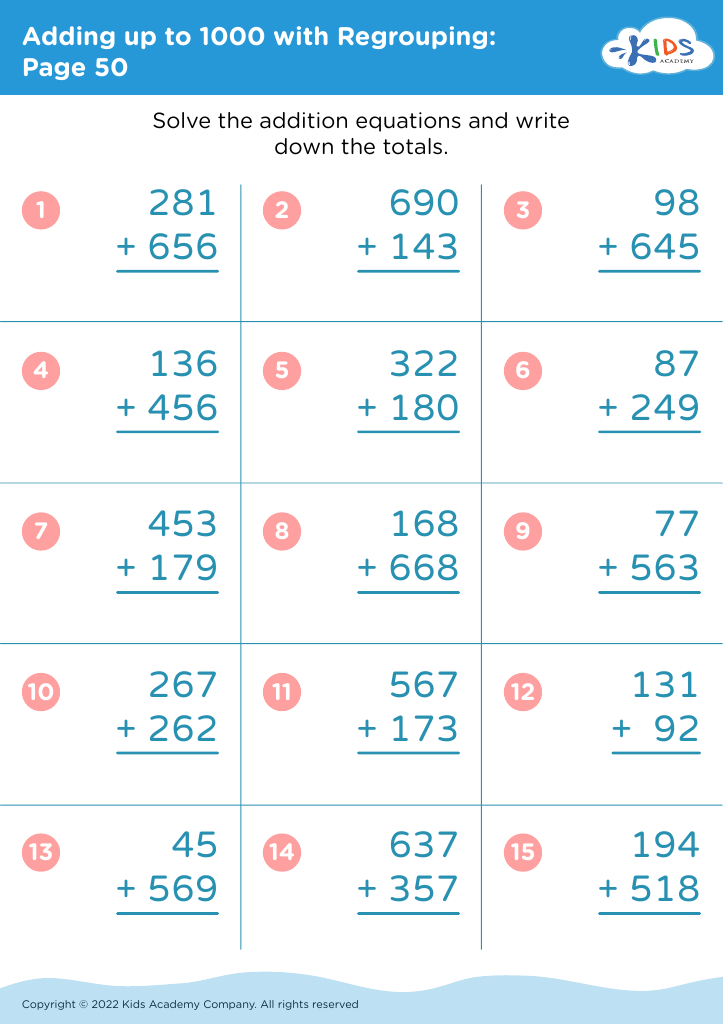
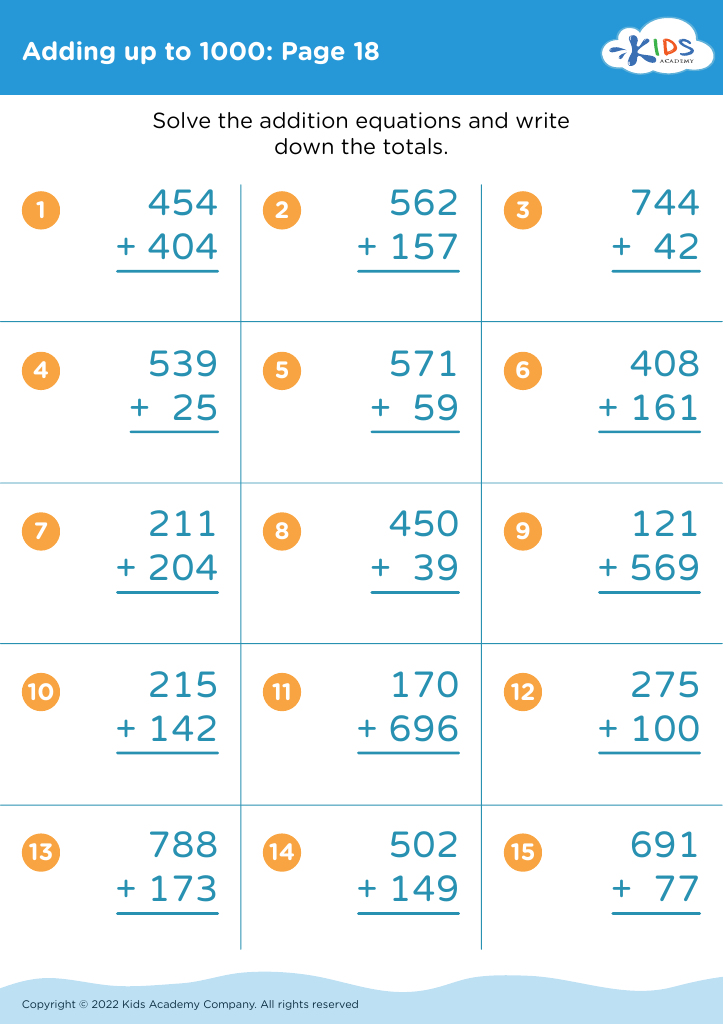
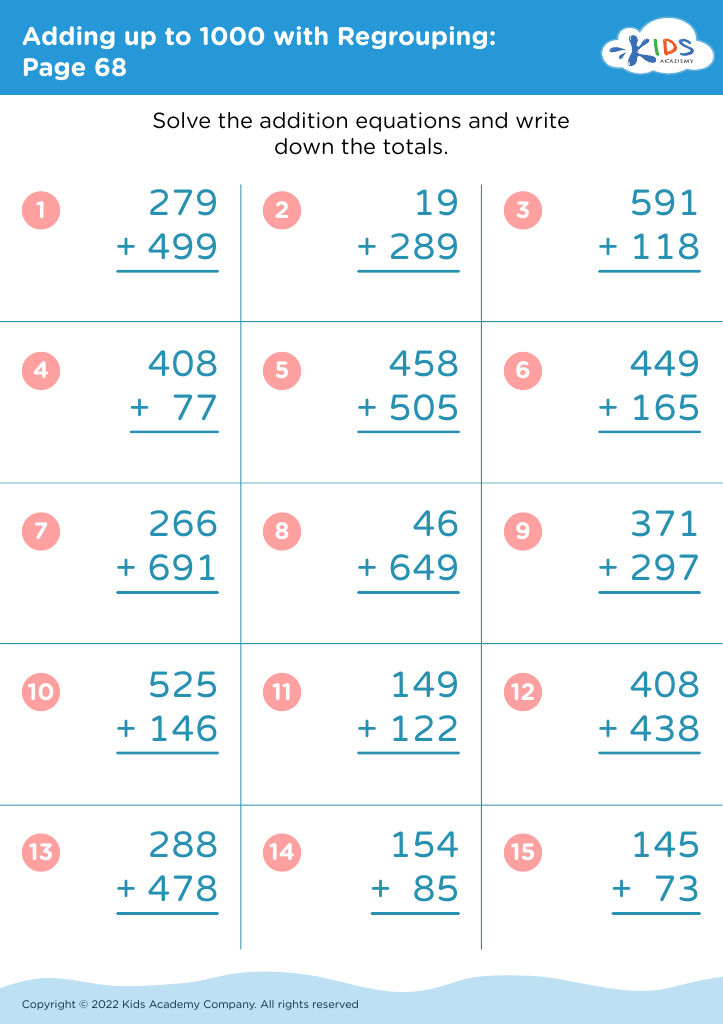
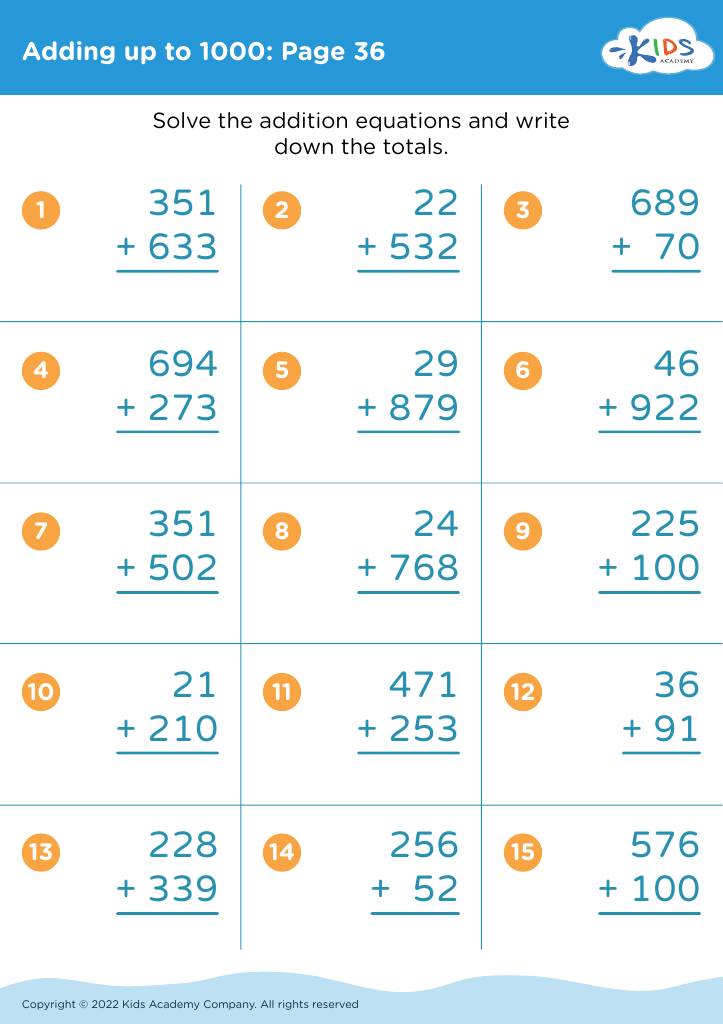
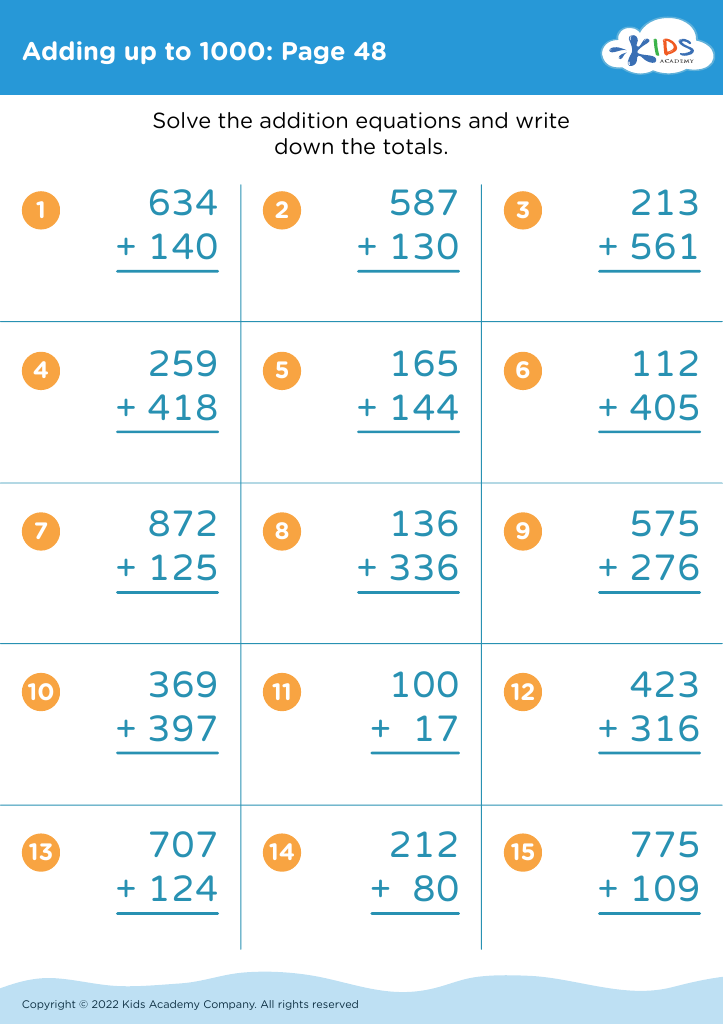
Explore our "Fine Motor Skills Adding up to 1000 Worksheets" specifically designed for children aged 4-8! These engaging printable worksheets combine fun and education, helping young learners enhance their fine motor skills while mastering addition up to 1000. Each worksheet features vibrant illustrations and varied activities, encouraging kids to trace, cut, and color as they practice essential math concepts. Our resources not only boost numerical proficiency but also develop coordination, hand strength, and concentration. Perfect for at-home learning or classroom activities, these worksheets ensure that children enjoy the learning process as they refine both their math and motor skills. Start today!
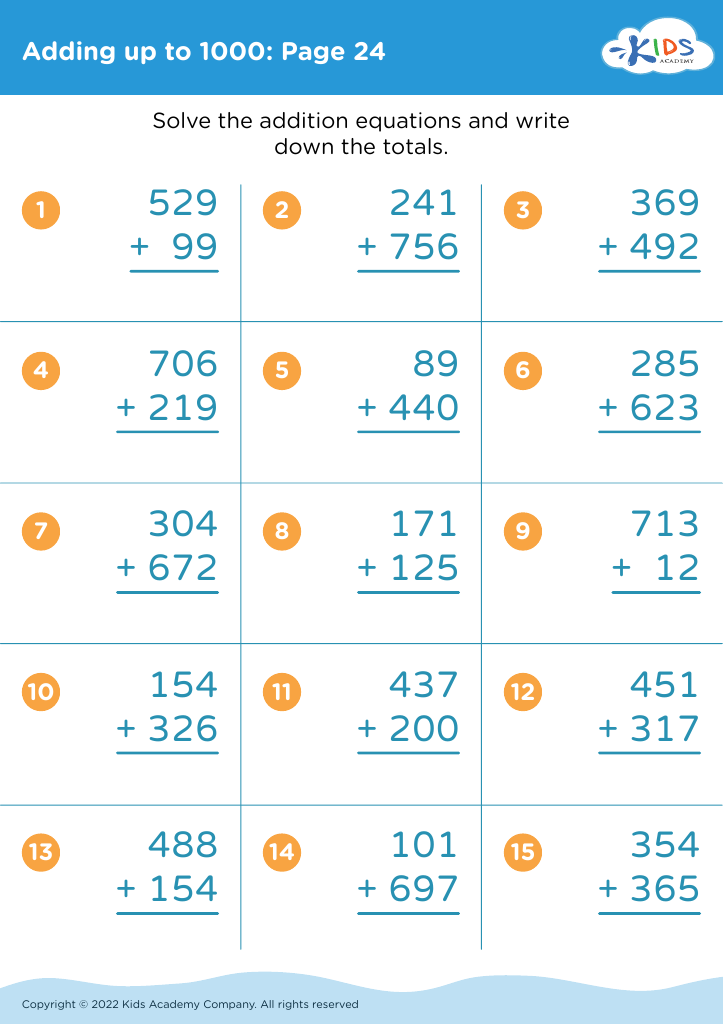
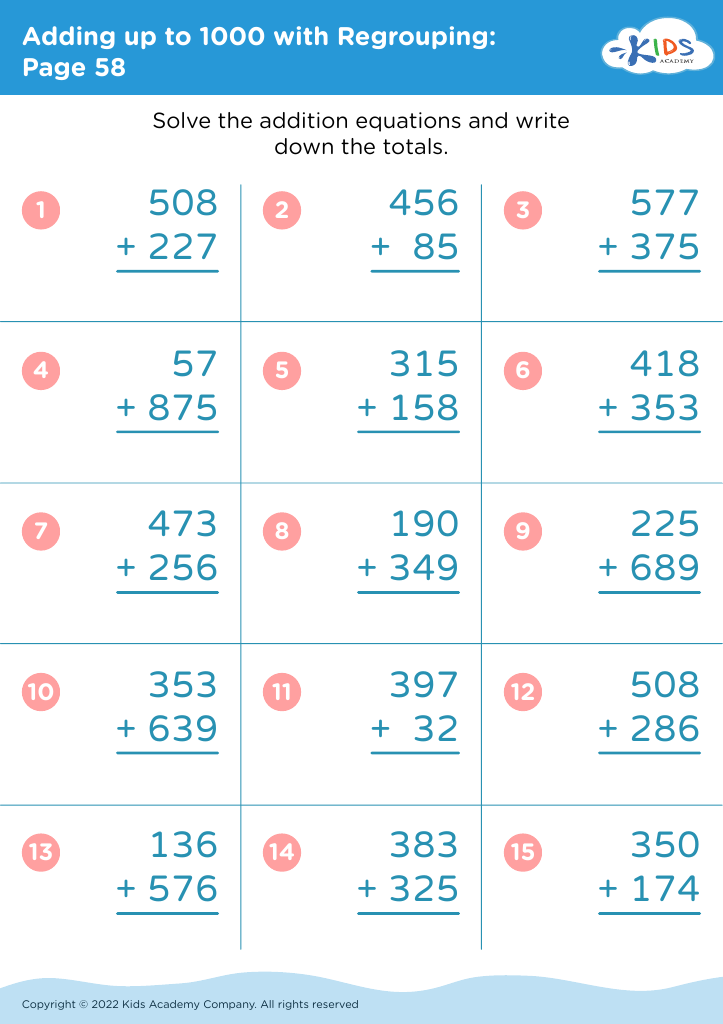
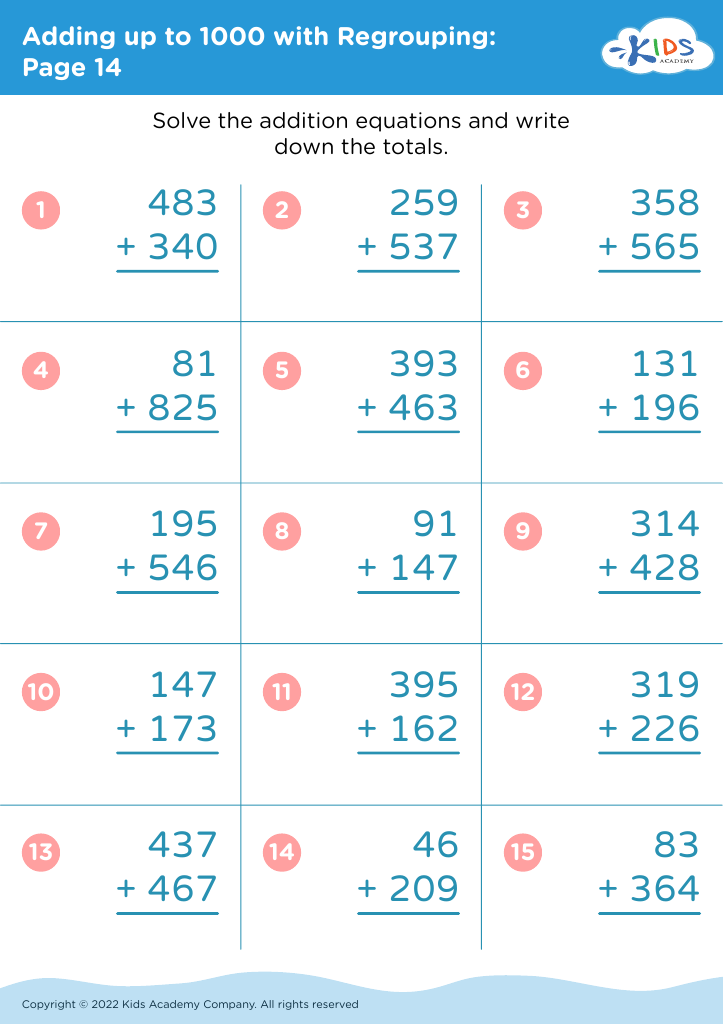
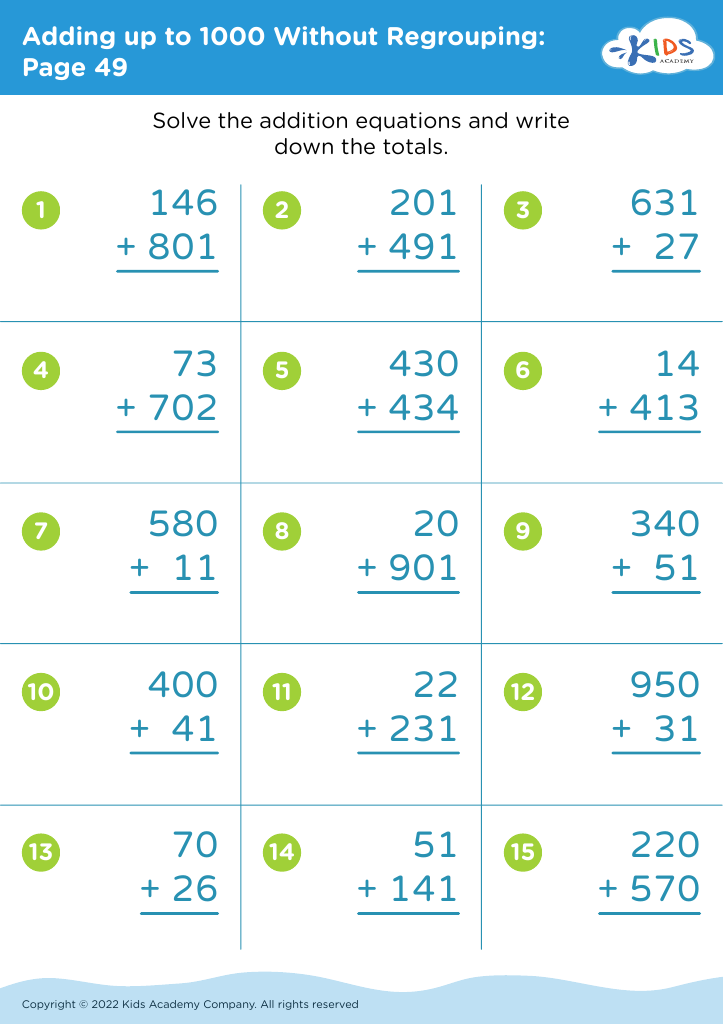



Fine motor skills refer to the precise movements of the small muscles in a child's hands and fingers, which are essential for everyday tasks and can significantly affect their overall development. For children aged 4-8, these skills are critical as they pave the way for success in academic settings and daily life.
Parents and teachers should prioritize the development of fine motor skills because they contribute to key activities such as writing, cutting with scissors, buttoning clothing, and even playing musical instruments. As children practice these skills, they not only gain independence but also higher self-esteem and a greater sense of accomplishment.
Additionally, fine motor skill development is linked to cognitive growth. Engaging in activities that strengthen these skills—like drawing, crafting, or manipulating playdough—can enhance a child’s problem-solving abilities and concentration levels. Furthermore, strong fine motor skills can prepare a child for more complex tasks as they progress in school.
By nurturing these skills from a young age, parents and teachers can help their children build a strong foundation for their future learning, reduce frustration during tasks, and foster a love for exploration and creativity, ultimately influencing their developmental journey positively.








