Recognizing Patterns Adding up to 1000 Worksheets for Ages 4-8
6 filtered results
-
From - To
Explore our "Recognizing Patterns Adding up to 1000 Worksheets" designed specifically for children ages 4-8! These engaging and interactive worksheets help young learners develop essential math skills by recognizing patterns in numbers. With a focus on adding up to 1000, children will enhance their understanding of numerical sequences and improve their addition skills through fun exercises. Each worksheet is crafted to align with developmental milestones, ensuring an enjoyable learning experience that builds confidence. Whether at home or in the classroom, these worksheets are a perfect educational tool to support your child’s journey in math. Start building a strong mathematical foundation today!
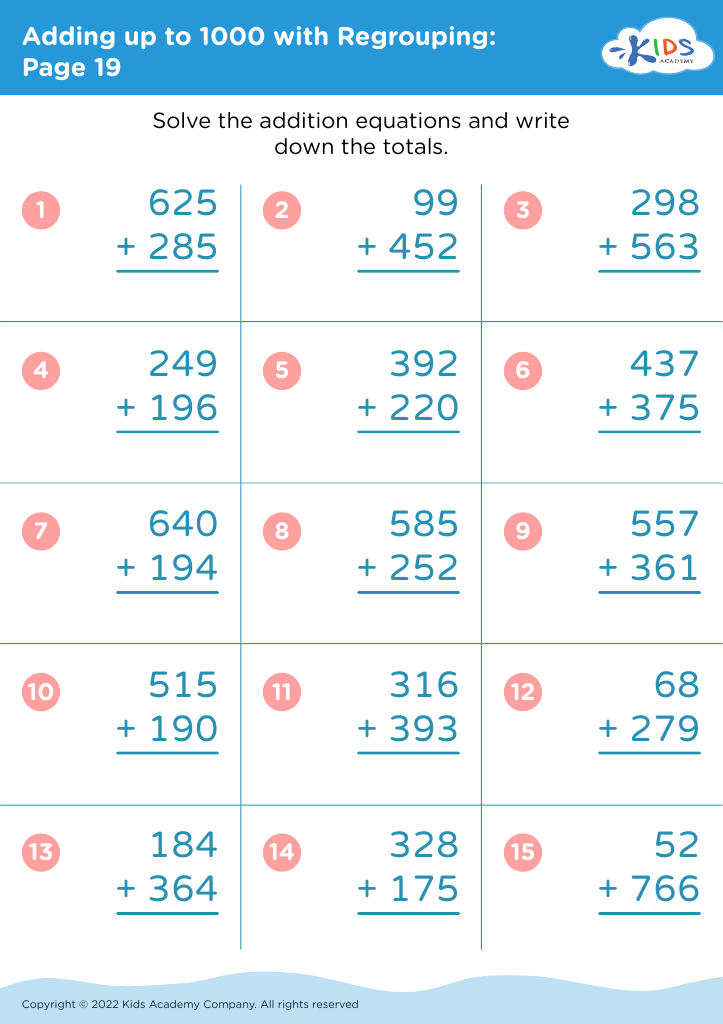
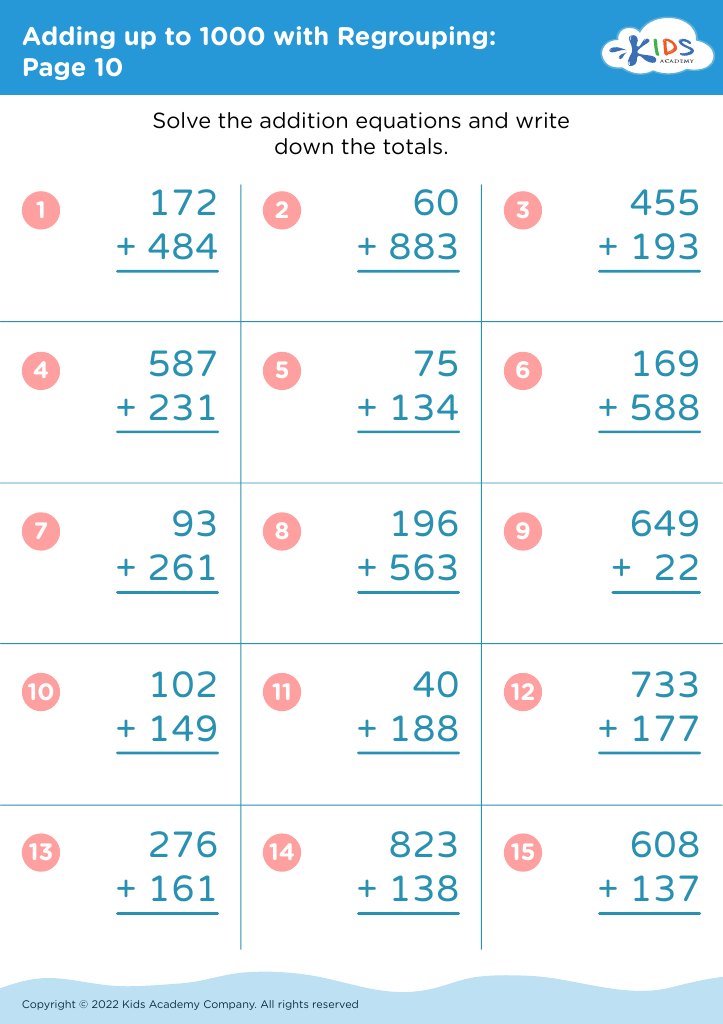
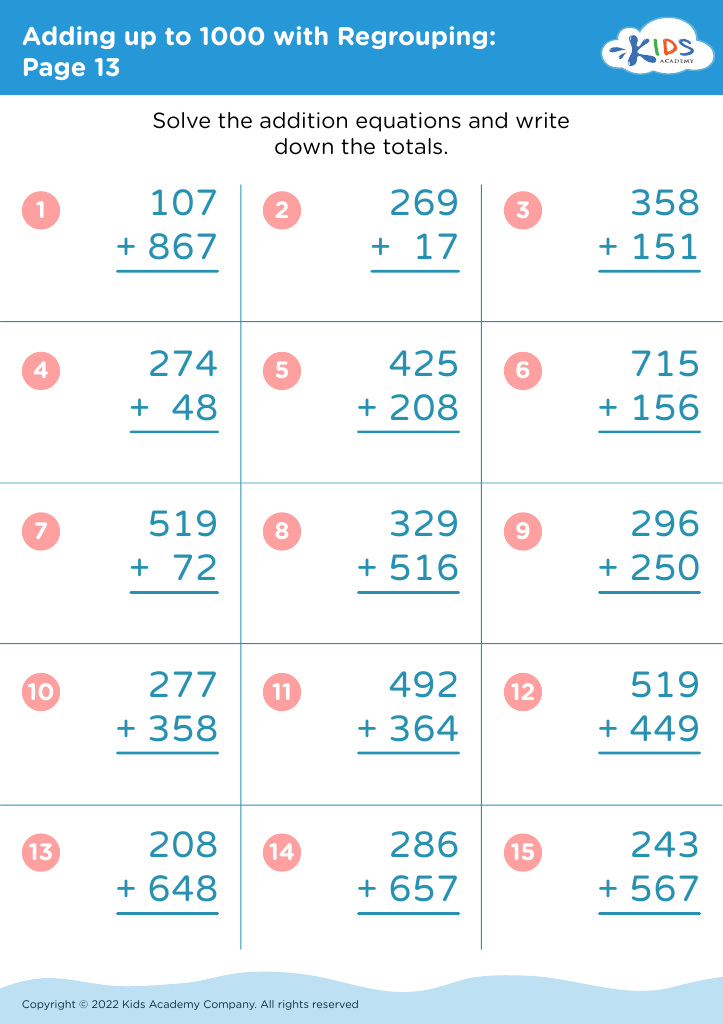
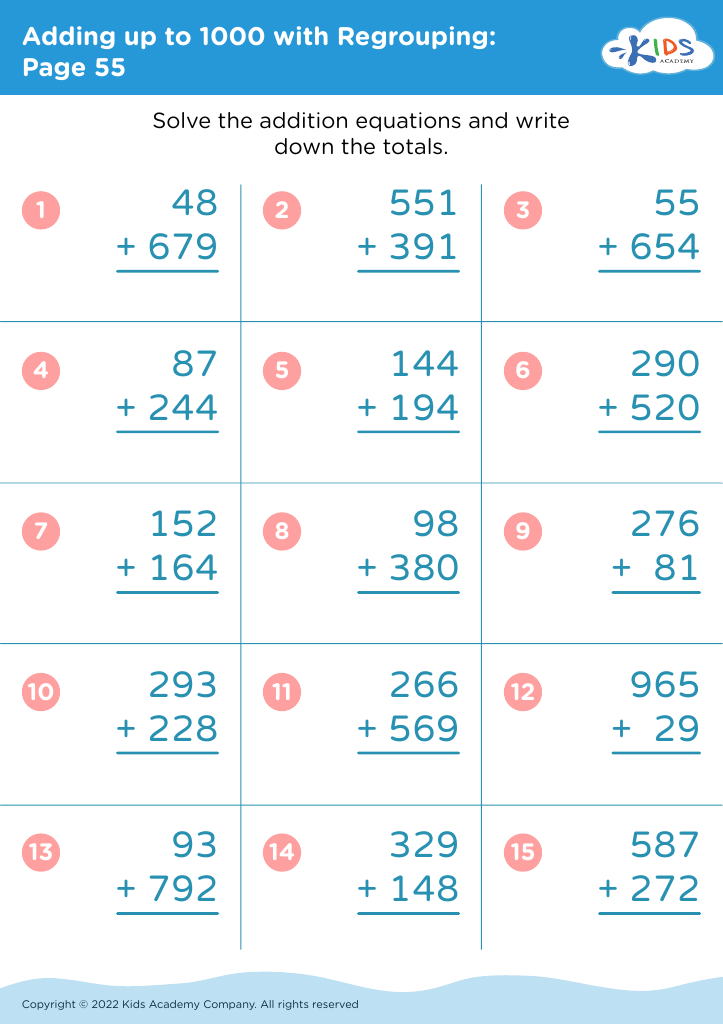
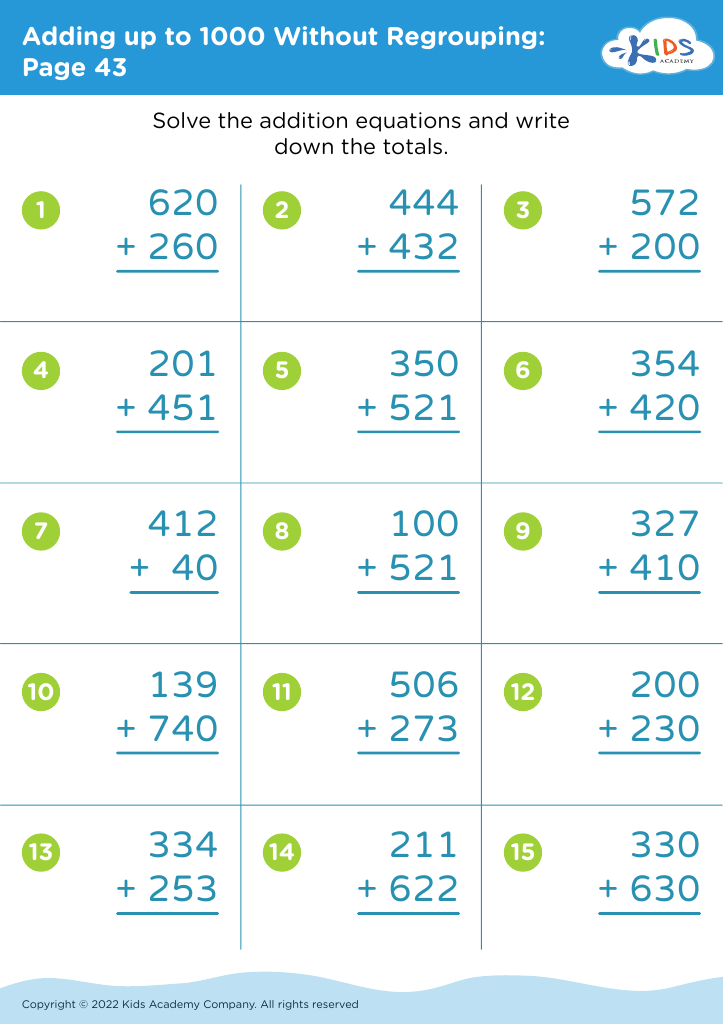
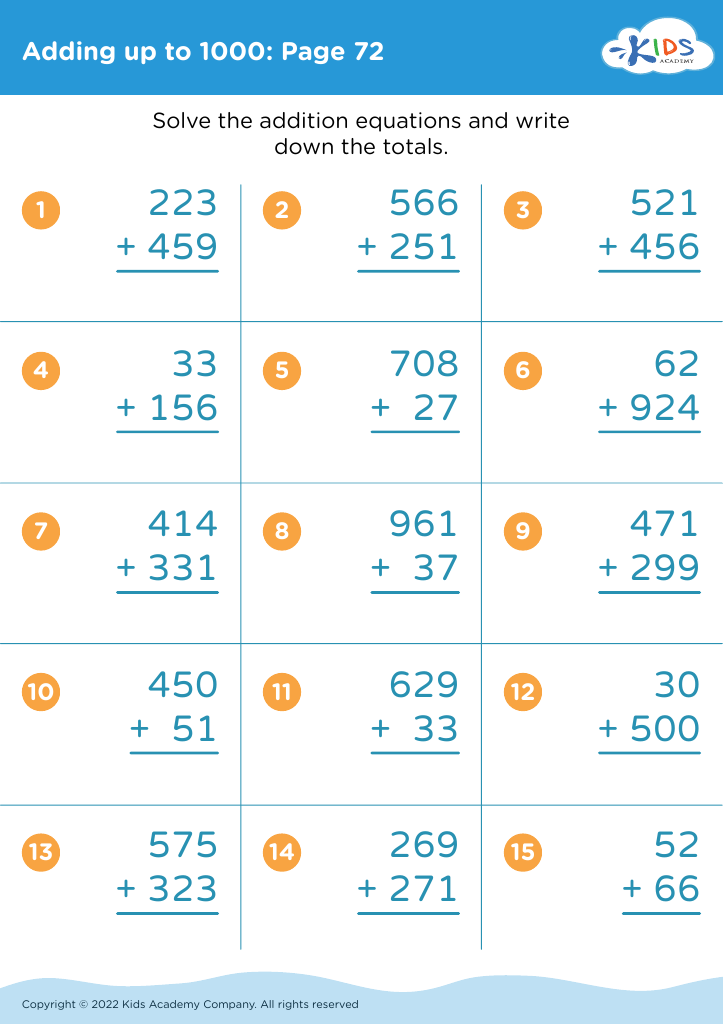



Recognizing patterns and understanding numbers up to 1000 is crucial for children aged 4-8 as it lays the foundational skills for advanced mathematical thinking. Early exposure to patterns, whether in numbers or shapes, helps young learners develop critical thinking and problem-solving abilities. When children recognize patterns, they learn to make predictions and understand relationships between numbers, which fosters logical reasoning.
Furthermore, counting and adding up to 1000 introduces students to place value, an essential concept that will benefit them in later arithmetic operations. Mastering these skills early on builds confidence and reduces anxiety around math, making them more likely to engage with complex concepts in the future.
Parents and teachers who promote pattern recognition also cultivate children's ability to connect math to real-life experiences. Simple activities like counting objects, creating patterns with toys, or grouping items can facilitate this learning. Emphasizing this skill not only aligns with educational standards but also creates a supportive environment that encourages exploration and curiosity.
Ultimately, recognizing patterns and mastering adding up to 1000 prepares children not only for success in mathematics but also enhances their cognitive development and analytical skills, vital for their overall academic journey.








