Simplifying Fractions Adding up to 1000 Worksheets for Ages 4-8
6 filtered results
-
From - To
Looking for an engaging way to teach your little ones about simplifying fractions? Our "Simplifying Fractions Adding up to 1000 Worksheets" is perfect for ages 4-8! These worksheets offer fun and interactive ways to help young learners grasp the concept of simplifying fractions while practicing their addition skills. With colorful illustrations and age-appropriate problems, your child will enjoy honing their math abilities in a creative environment. Designed to build confidence and competence, these resources make learning fractions fun and effective. Download our worksheets today and watch your child's math skills soar as they explore the world of fractions!
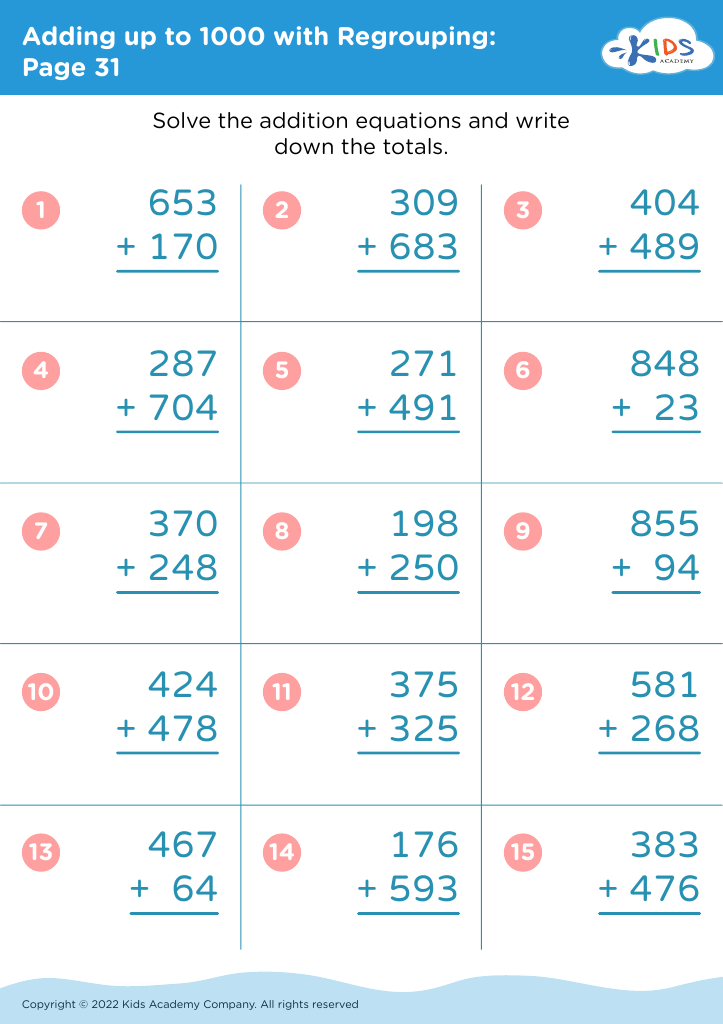
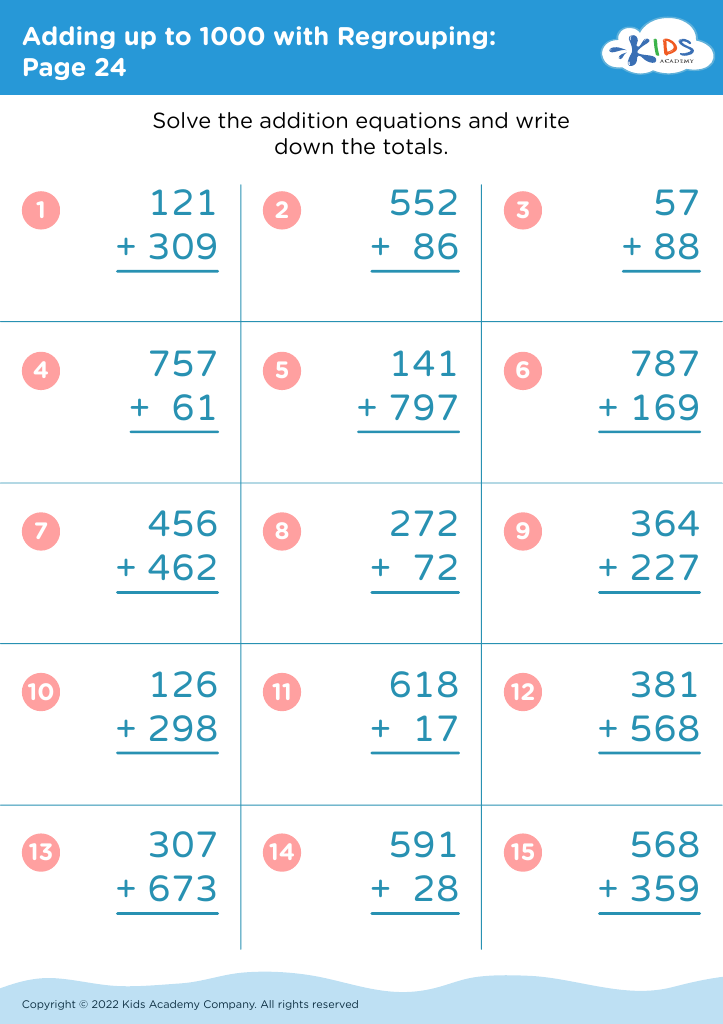
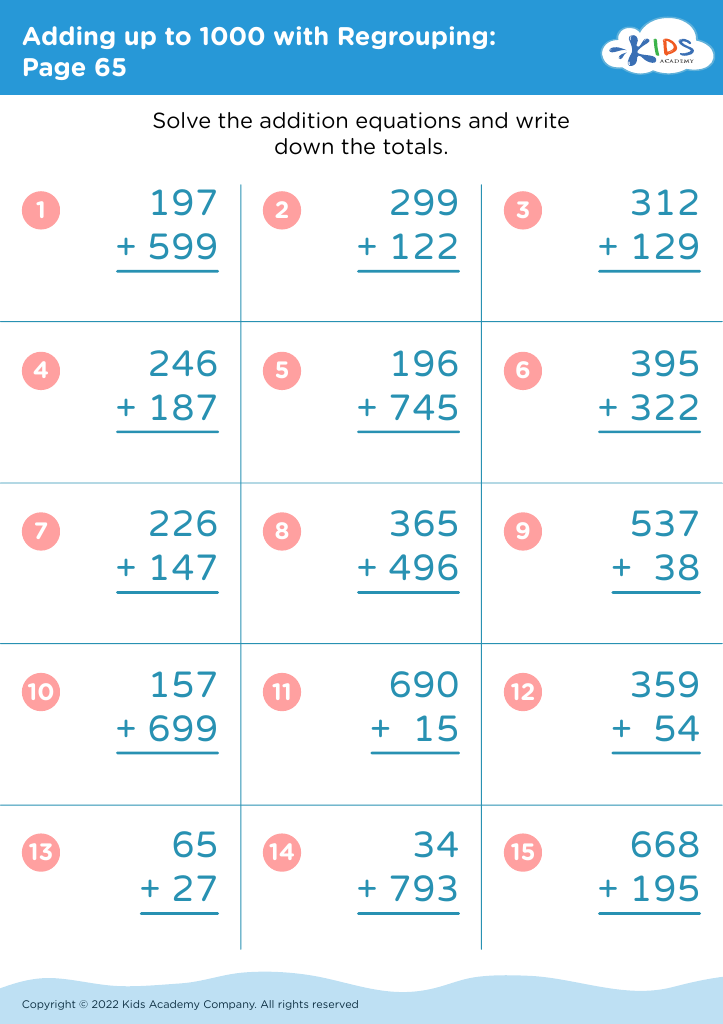
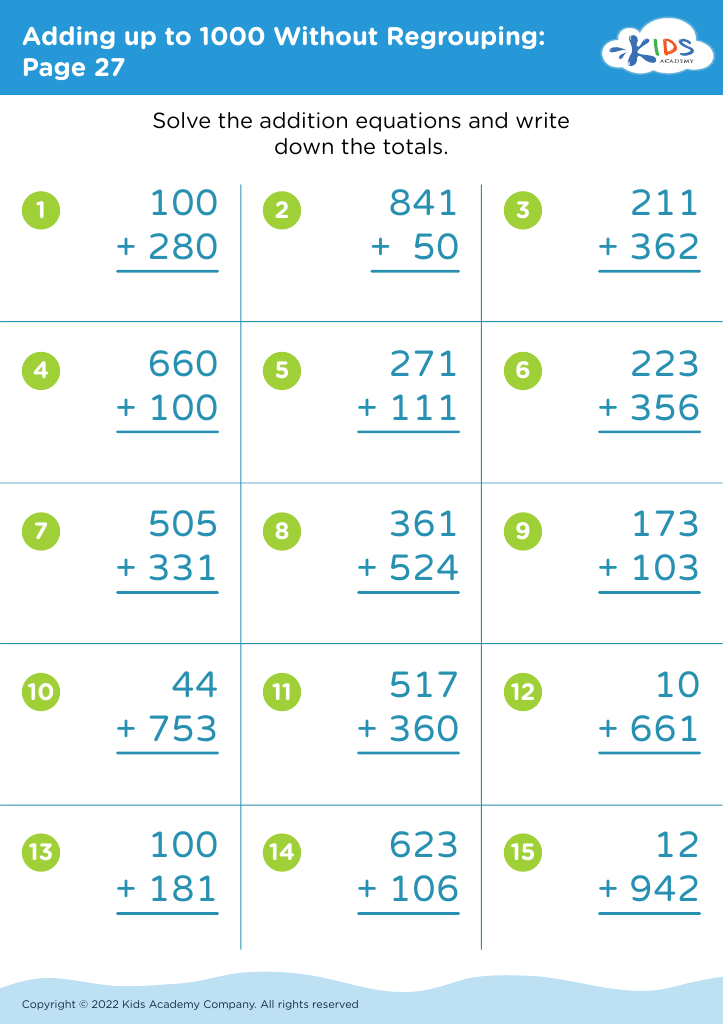
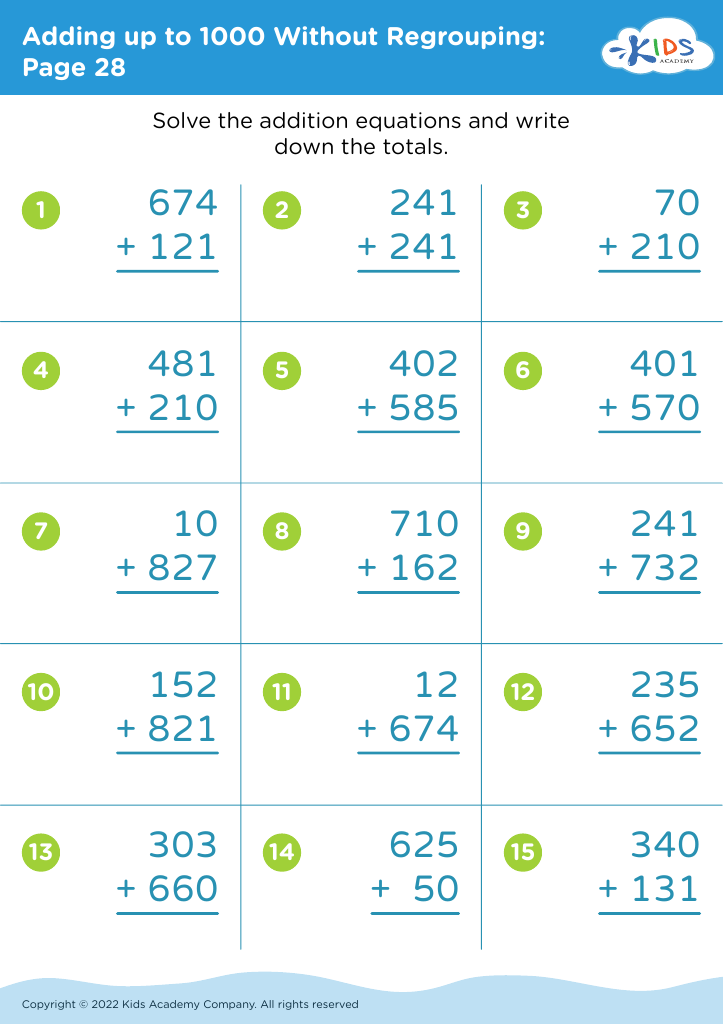
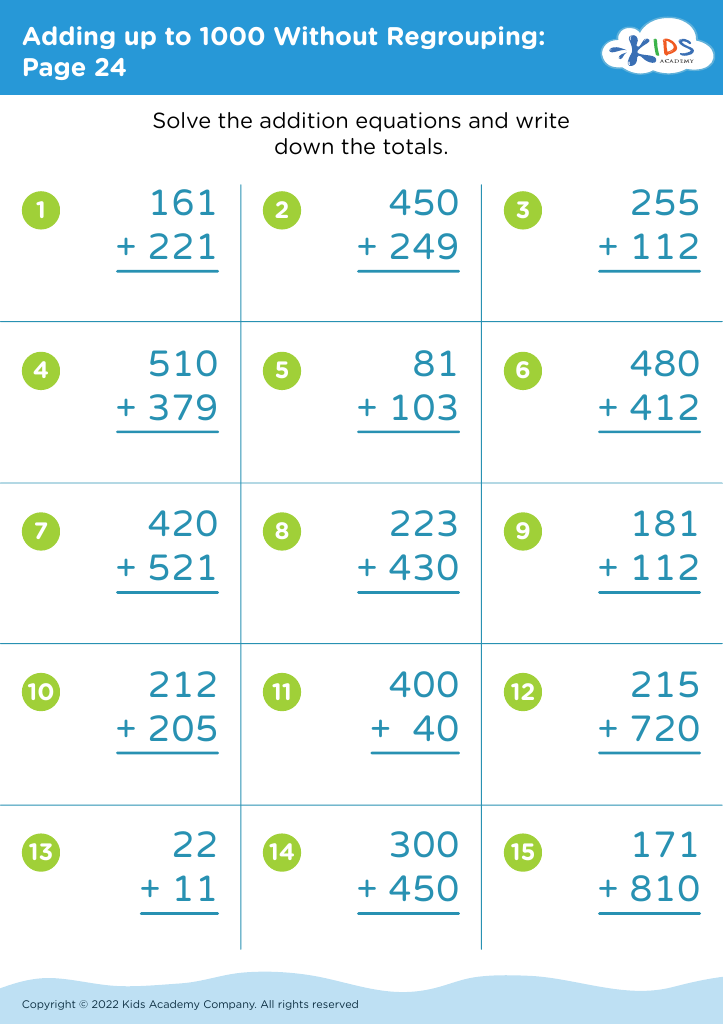



Simplifying fractions is a fundamental mathematical skill that can significantly impact a child's overall understanding of numbers and problem-solving abilities. For children aged 4-8, mastering the concept of fractions lays a strong foundation for future math learning. Simplifying fractions helps them comprehend parts of a whole, comparing quantities, and ultimately fosters critical thinking.
When parents and teachers engage kids with activities that involve adding up to 1000 with simplified fractions, they promote numeracy in a fun and approachable way. This also allows children to practice their addition skills and understand place values, strengthening their arithmetic capabilities. Learning through games or practical activities makes mathematics enjoyable and relatable, which is crucial for maintaining engagement.
Additionally, focusing on such foundational skills in a collaborative environment encourages positive attitudes towards mathematics. Confidence in fractions can enhance performance in higher-level math and is key for real-world applications, such as baking, shopping, and understanding measurements. By prioritizing this aspect of their education, parents and teachers equip children with essential skills that support not only their academic journey but also daily life skills as they grow.








