Filters

44 filtered results

Clear all filters
Favorites
With answer key
Interactive

44 filtered results

Difficulty Level

Grade


Check out this FREE Trial Lesson on Adding up to 1000 for age 4-8!

Match Objects that Fit Together

Favorites
With answer key
Interactive
  • 4-8
  • Understanding fractions
  • Adding up to 1000
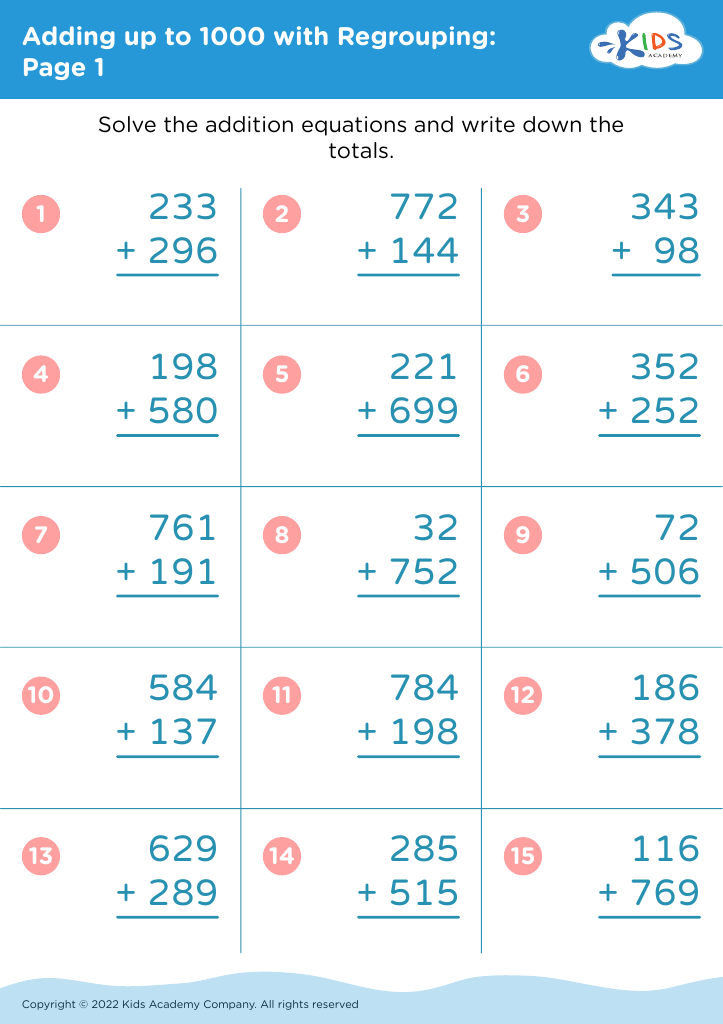
Adding up to 1000 with Regrouping: Page 1
Worksheet
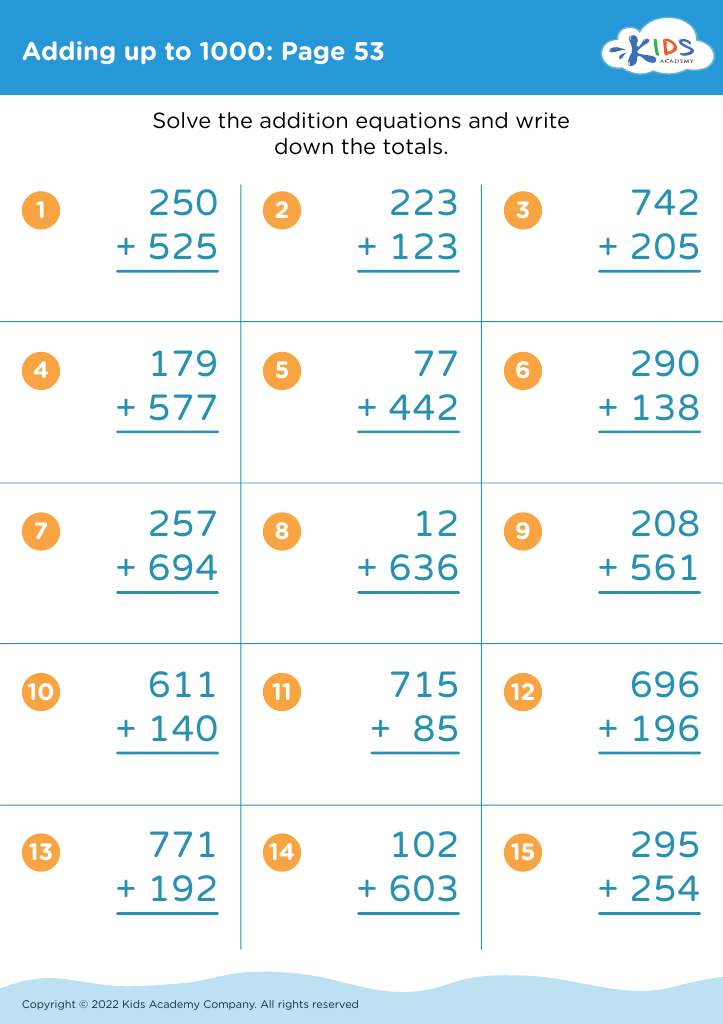
Adding up to 1000: Page 53

Adding up to 1000: Page 53

Adding up to 1000: Page 53
Worksheet
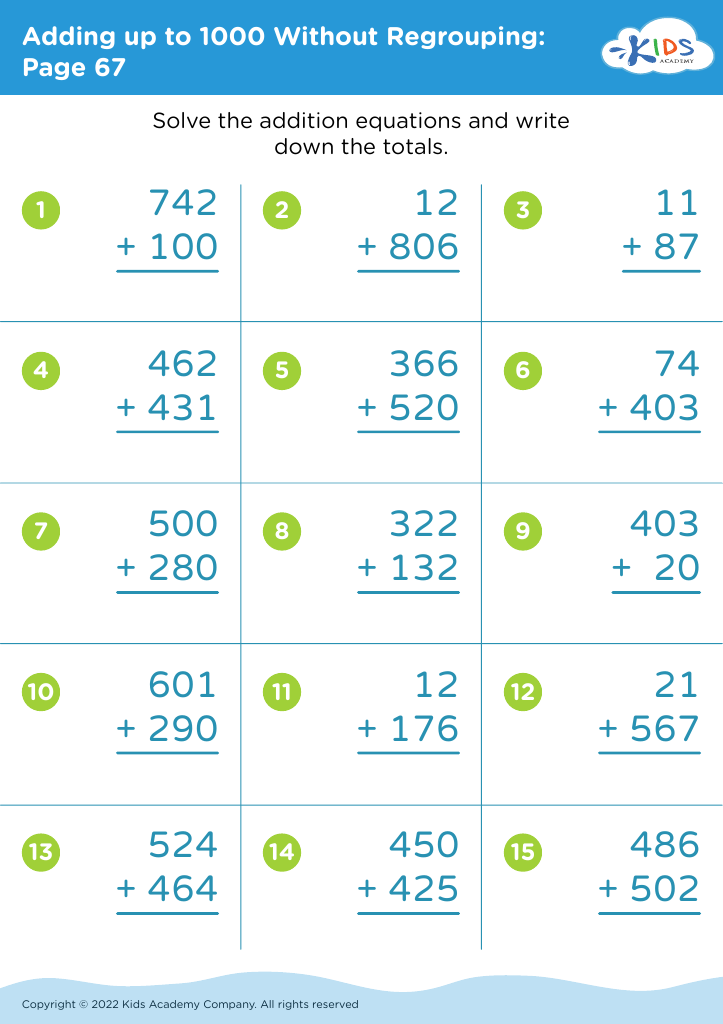
Adding up to 1000 Without Regrouping: Page 67
Worksheet
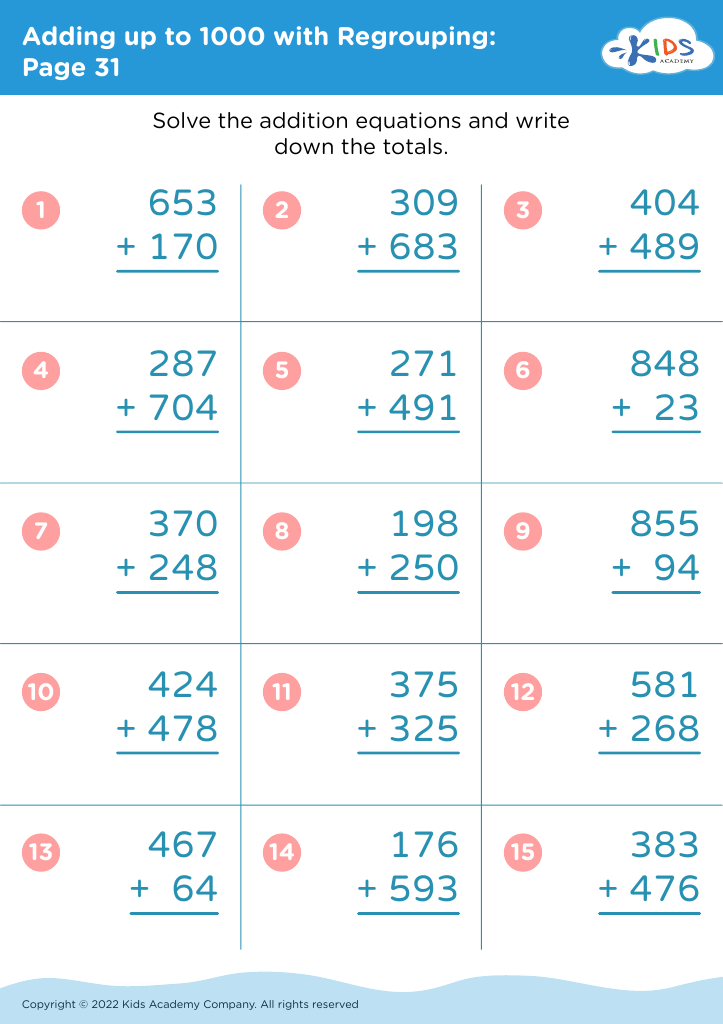
Adding up to 1000 with Regrouping: Page 31
Worksheet
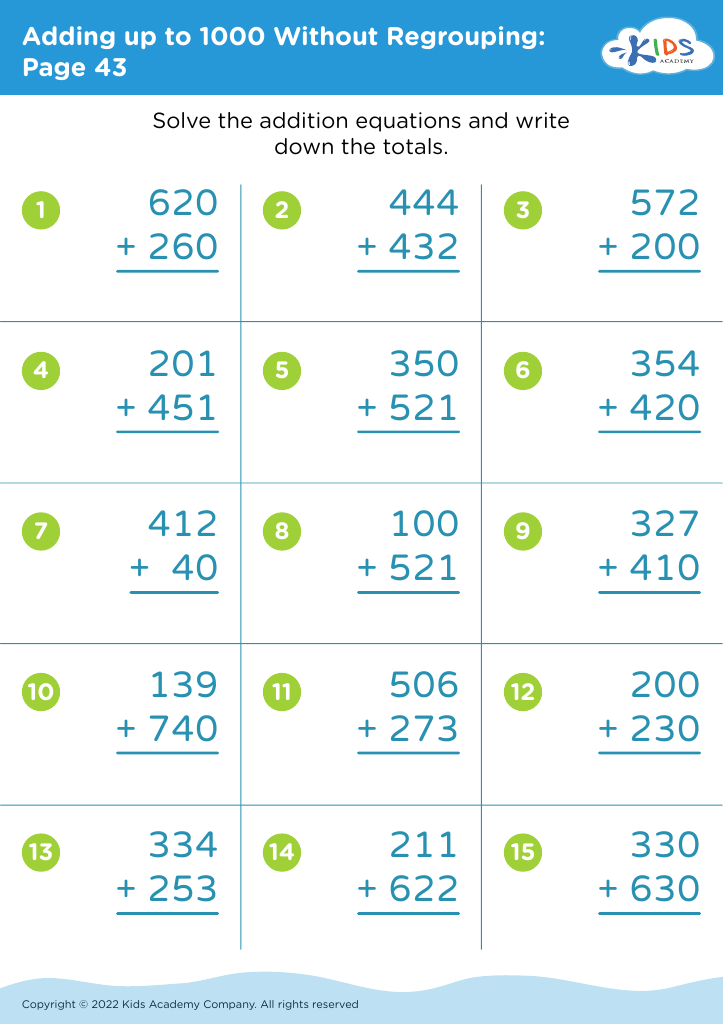
Adding up to 1000 Without Regrouping: Page 43
Worksheet
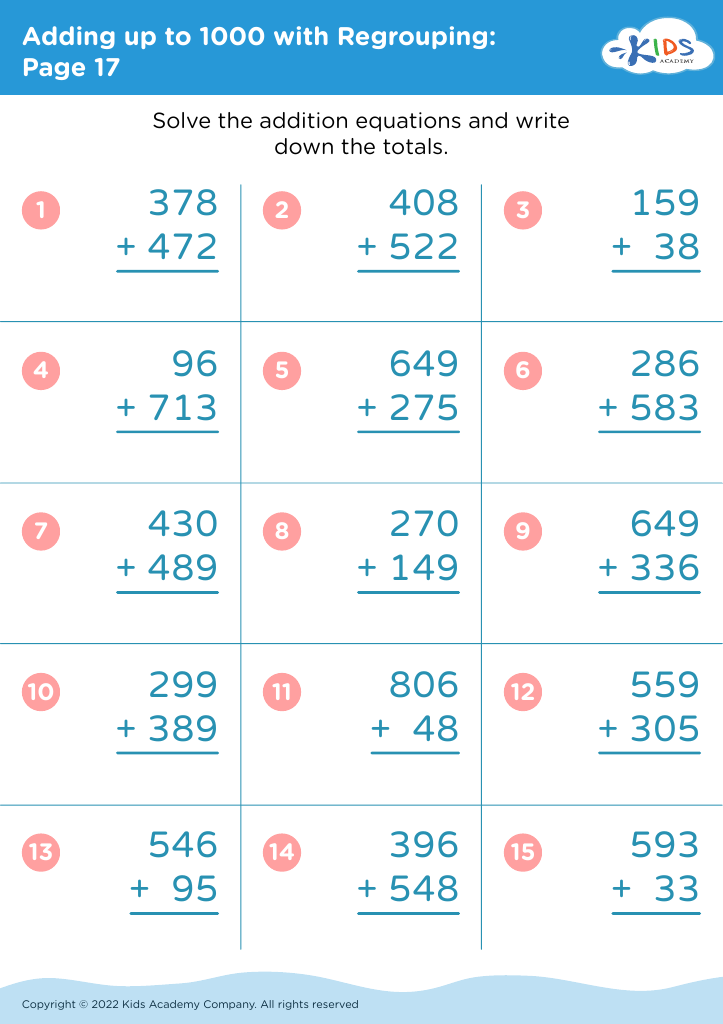
Adding up to 1000 with Regrouping: Page 17
Worksheet
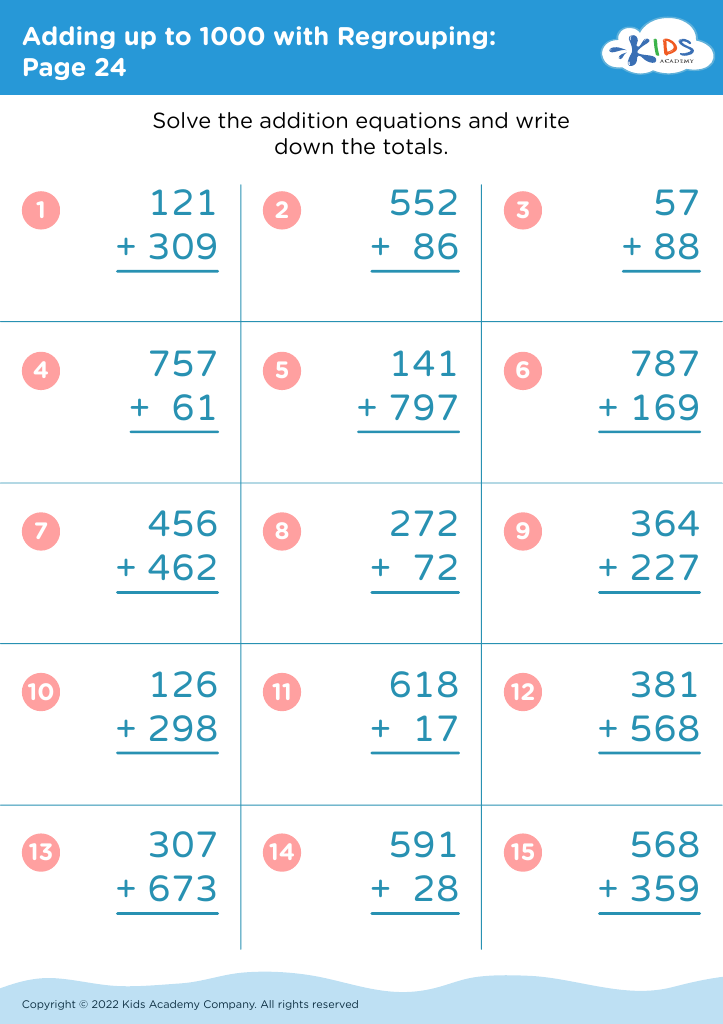
Adding up to 1000 with Regrouping: Page 24
Worksheet
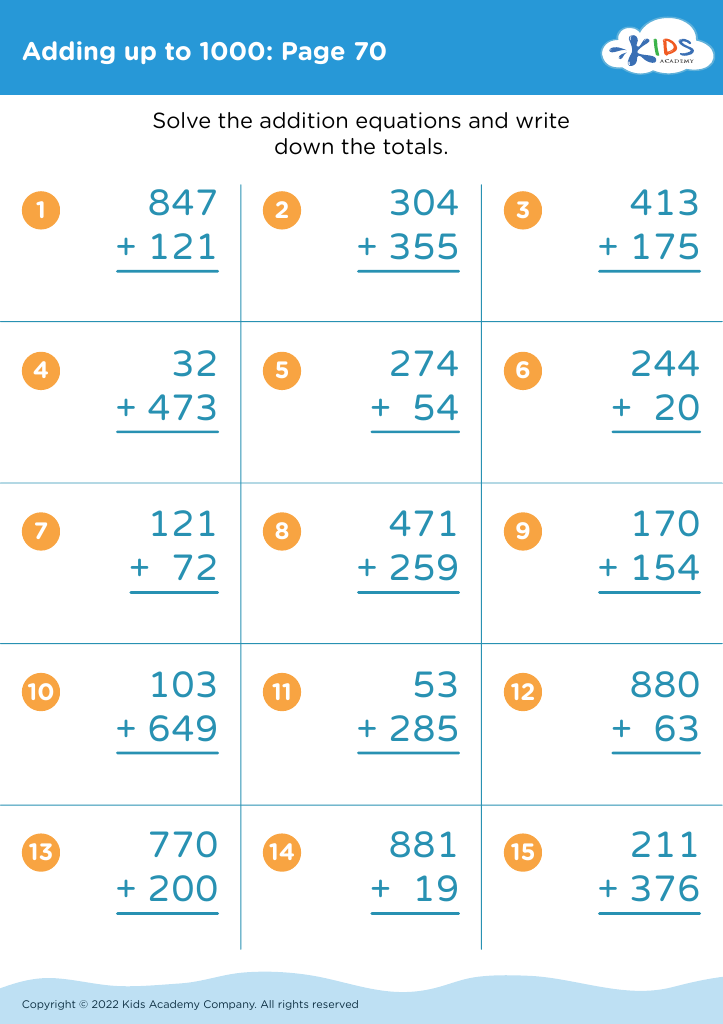
Adding up to 1000: Page 70

Adding up to 1000: Page 70

Adding up to 1000: Page 70
Worksheet
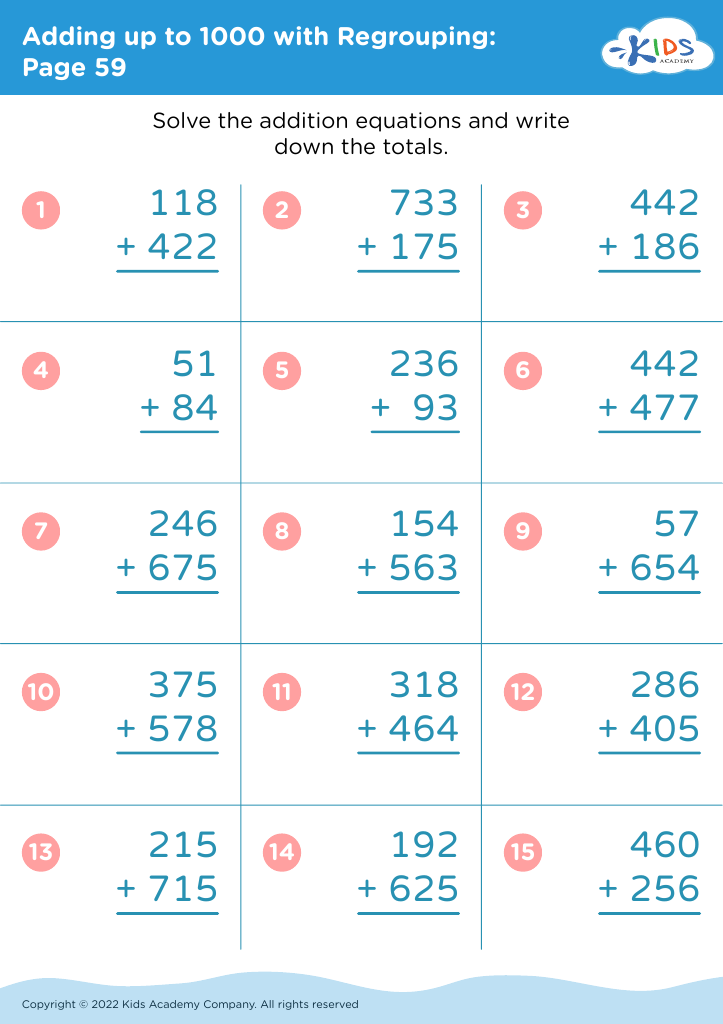
Adding up to 1000 with Regrouping: Page 59
Worksheet
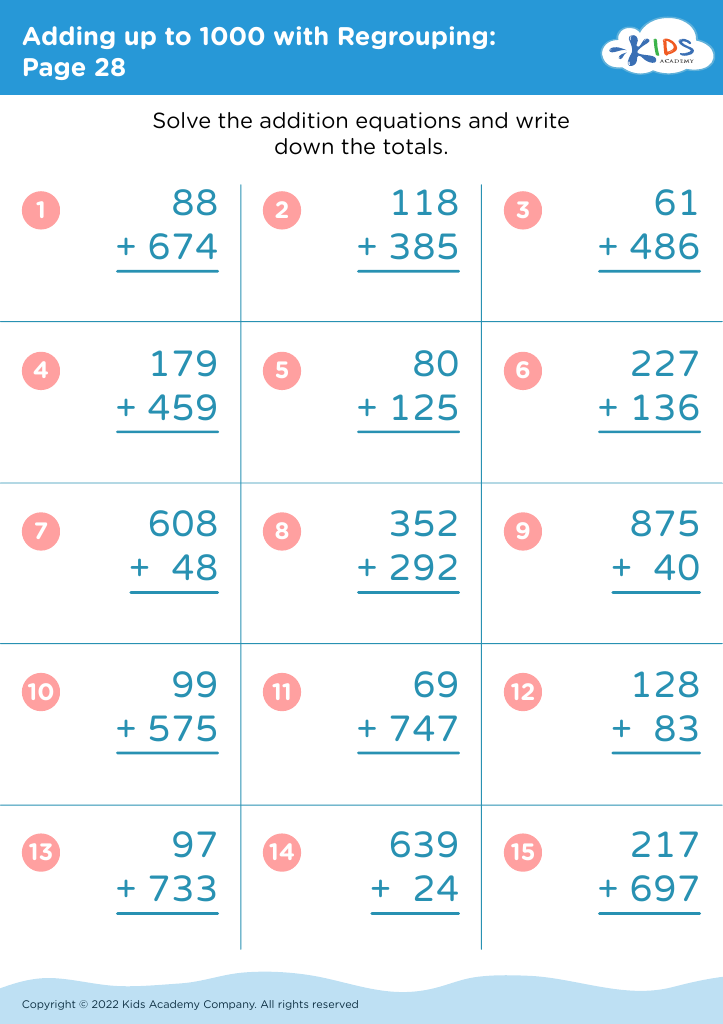
Adding up to 1000 with Regrouping: Page 28
Worksheet
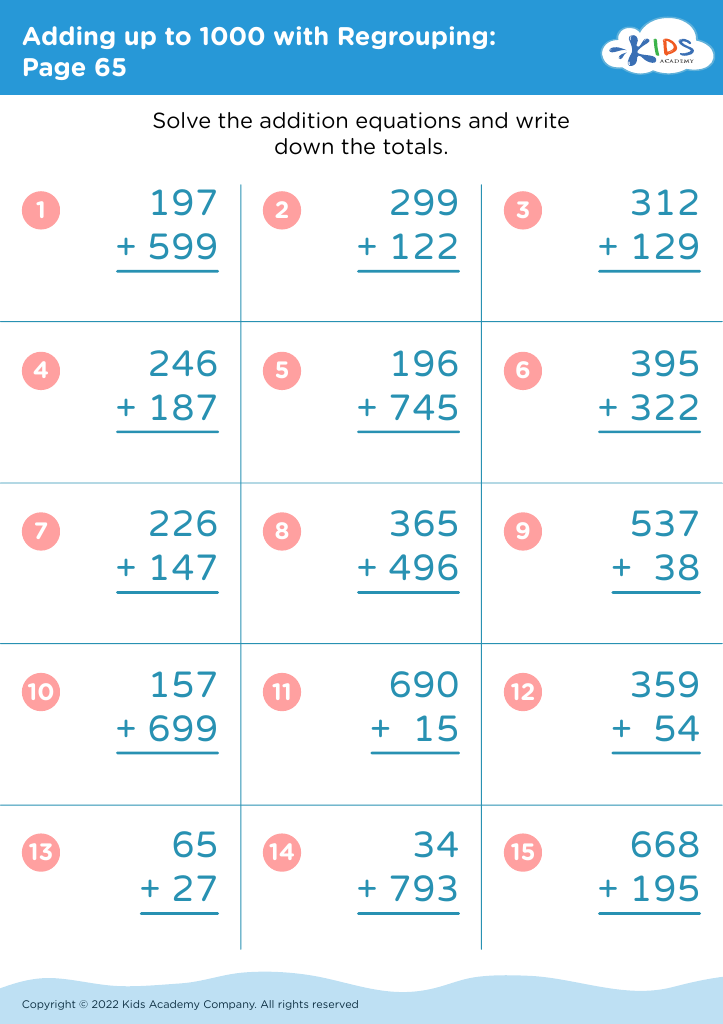
Adding up to 1000 with Regrouping: Page 65
Worksheet
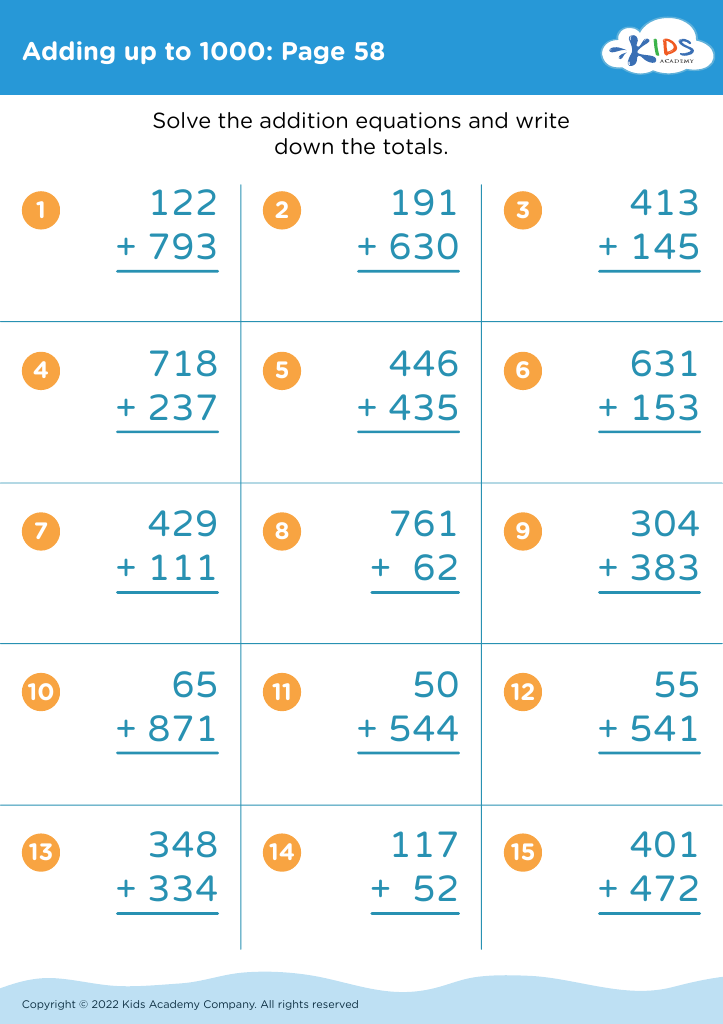
Adding up to 1000: Page 58

Adding up to 1000: Page 58

Adding up to 1000: Page 58
Worksheet
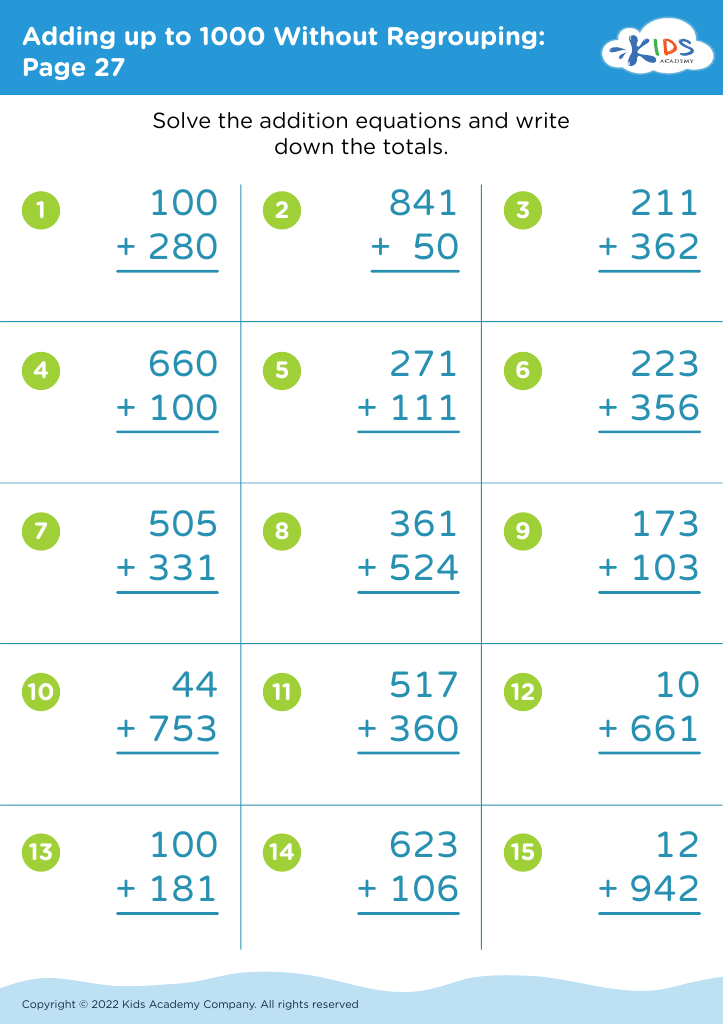
Adding up to 1000 Without Regrouping: Page 27
Worksheet
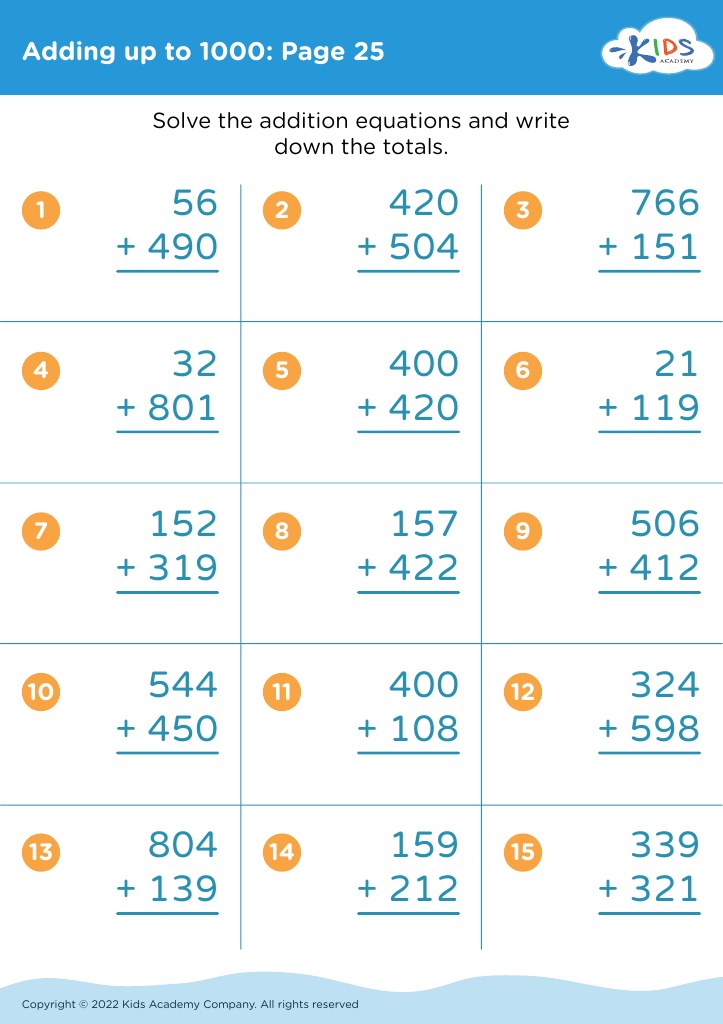
Adding up to 1000: Page 25

Adding up to 1000: Page 25

Adding up to 1000: Page 25
Worksheet
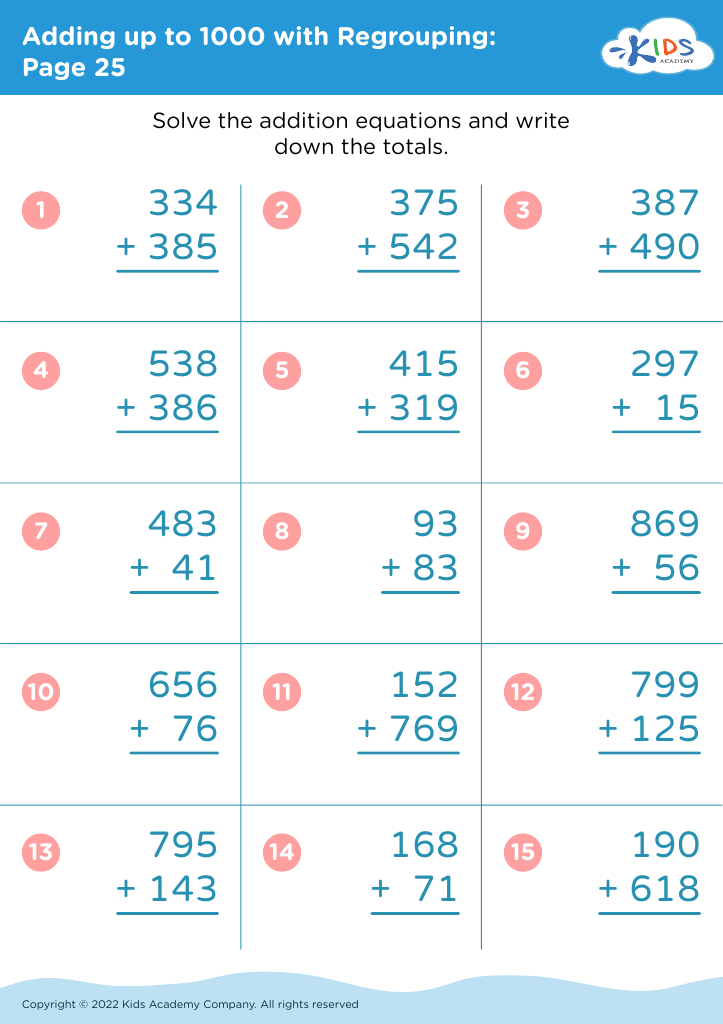
Adding up to 1000 with Regrouping: Page 25
Worksheet
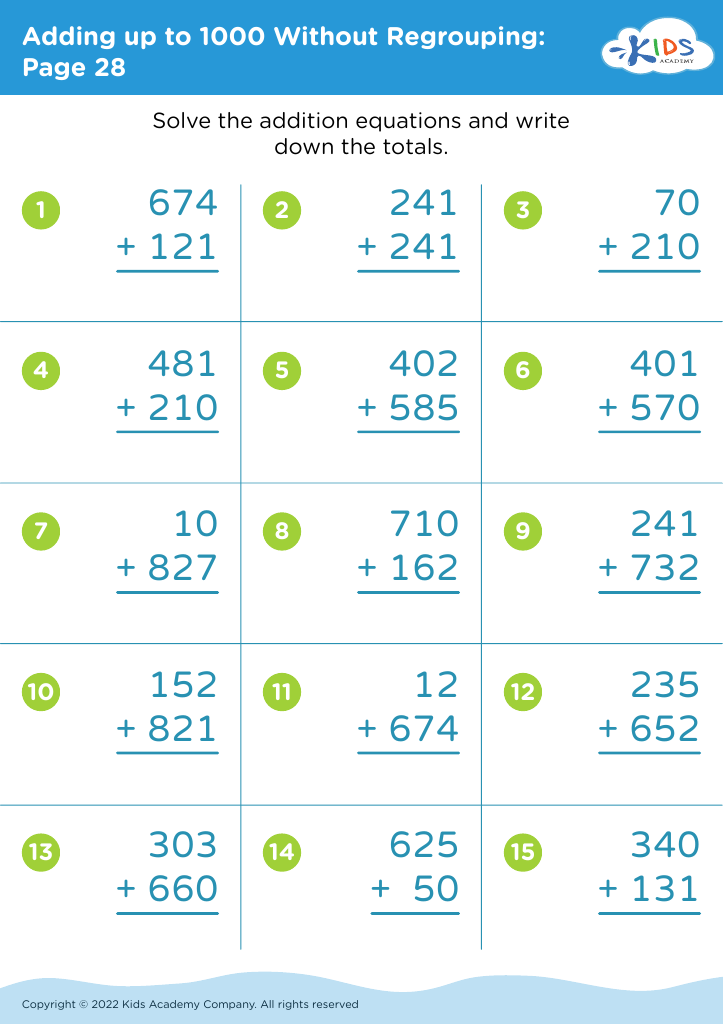
Adding up to 1000 Without Regrouping: Page 28
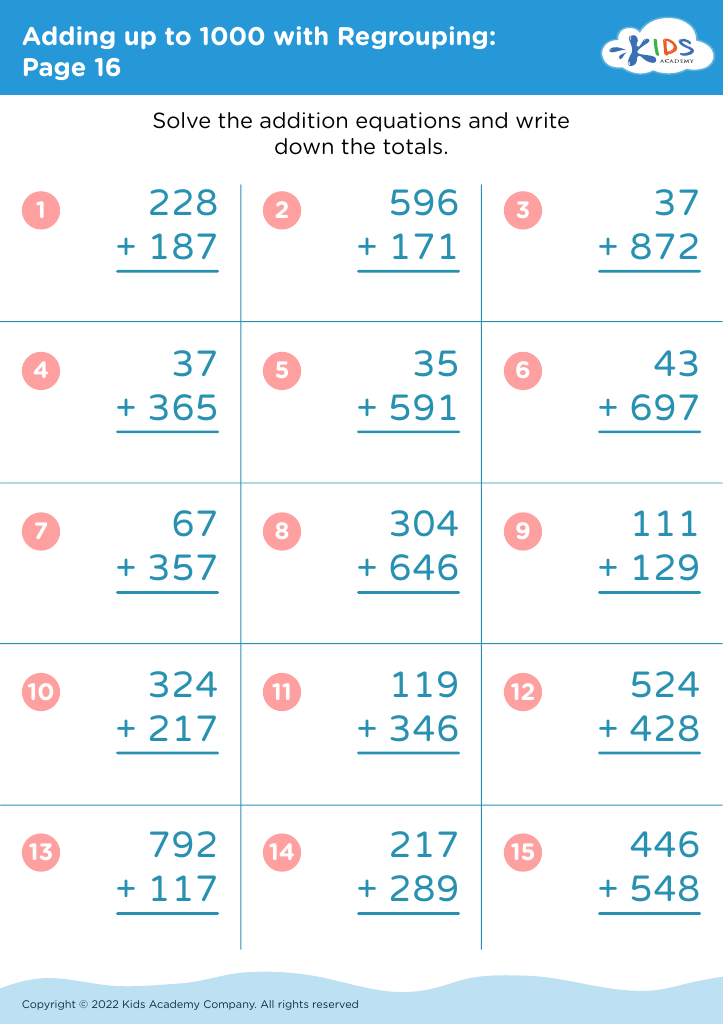
Worksheet
Adding up to 1000 with Regrouping: Page 16
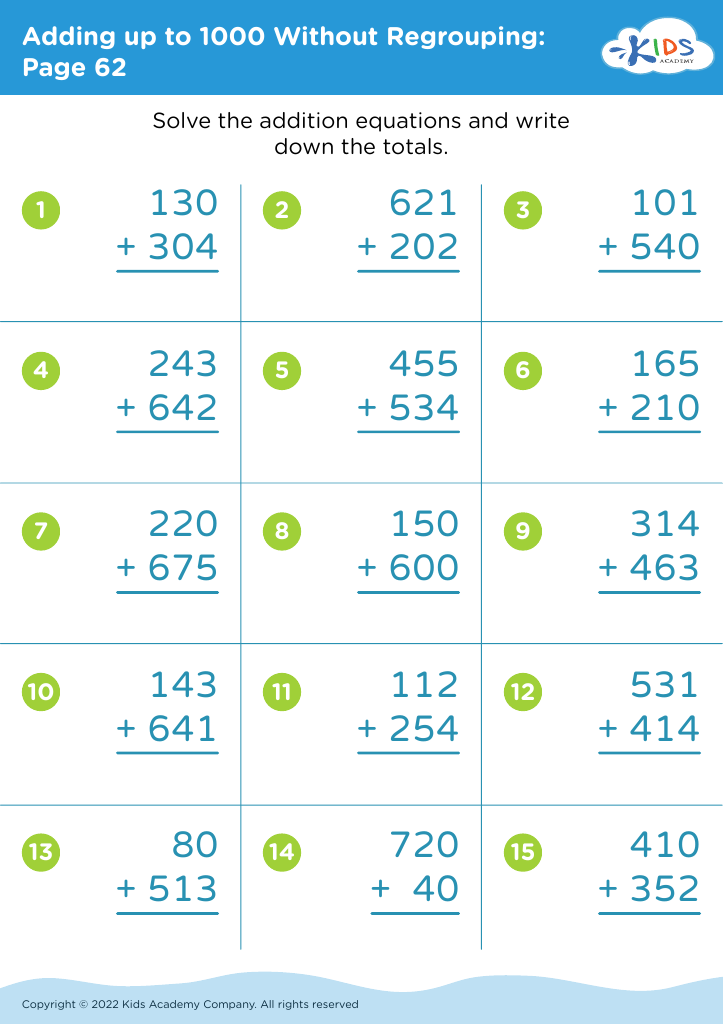
Worksheet
Adding up to 1000 Without Regrouping: Page 62
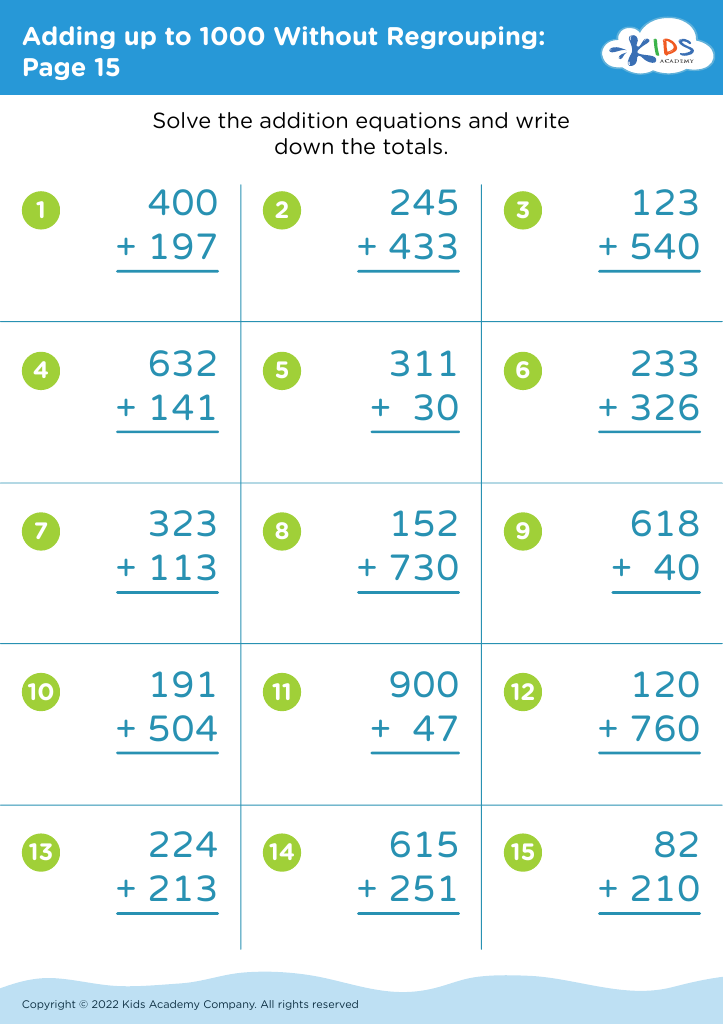
Worksheet
Adding up to 1000 Without Regrouping: Page 15
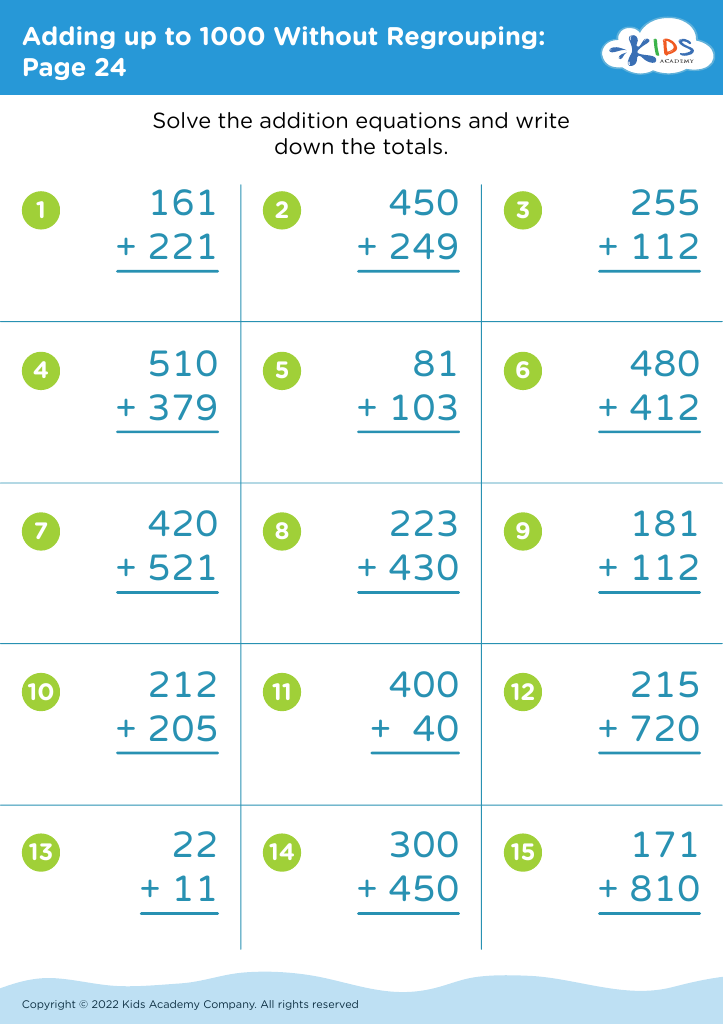
Worksheet
Adding up to 1000 Without Regrouping: Page 24
Worksheet


Understanding fractions is crucial for children ages 4-8, as it lays the groundwork for their future mathematical abilities and critical thinking skills. Fractions help children grasp essential concepts of part-whole relationships, which are fundamental in both math and real-world scenarios. For example, when children understand fractions, they can better manage sharing, cooking, and even splitting time for activities.

In addition, the concept of adding fractions to make up a whole number—including distributions that add up to 1000—empowers students to see math beyond mere calculations. It encourages them to engage in problem-solving and reasoning. Introducing fractions at this stage can also cultivate a positive attitude towards math, demystifying the subject and making it less intimidating.

Parents and teachers should care about teaching fractions because it promotes abstract thinking and helps nurture a child’s confidence in mathematics. By understanding fractions, children learn to view quantities holistically and recognize that numbers can be broken down and combined in various ways to yield desired results. This skill is incredibly valuable as they advance in their education, equipping them to tackle more complex mathematical challenges while building a foundation for lifelong learning.