Addition up to 5 Adding Up to 5 Worksheets for Ages 4-8
4 filtered results
-
From - To
Discover the perfect resource for young learners with our "Addition up to 5" worksheets designed for kids ages 4-8. These engaging, printable activities help children master basic addition skills in a fun and interactive way. Each worksheet is thoughtfully crafted to build confidence and improve math abilities through colorful visuals and simple exercises. Ideal for both classroom and home use, these worksheets support children as they practice adding numbers up to 5. Foster a love for learning and math with resources from Kids Academy that make foundational math concepts enjoyable and accessible for all early learners.
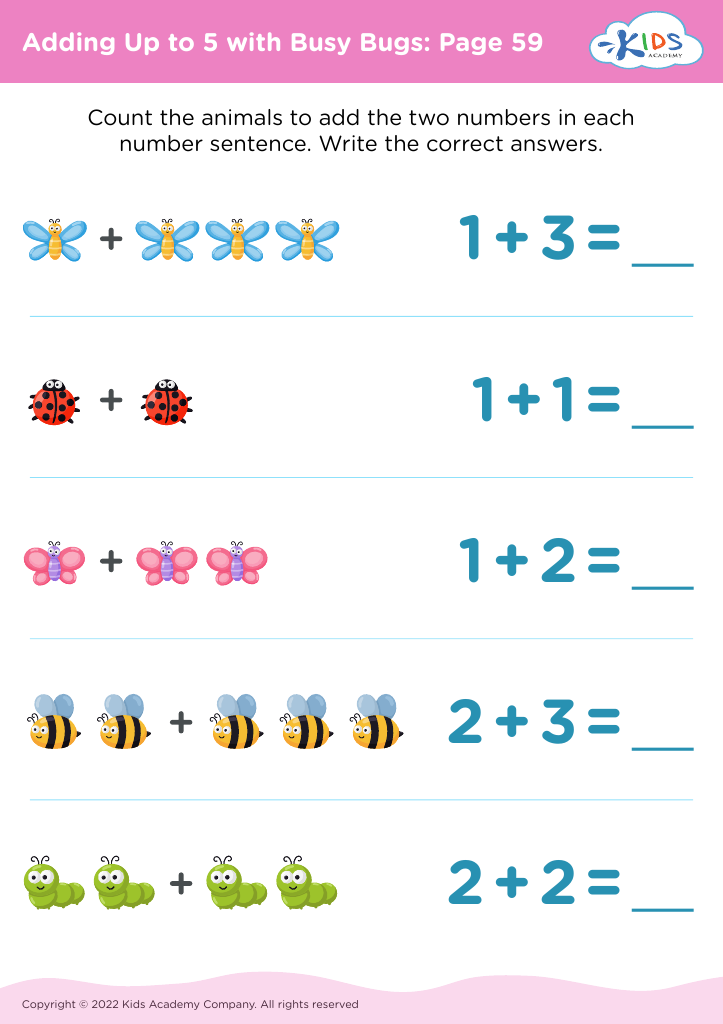
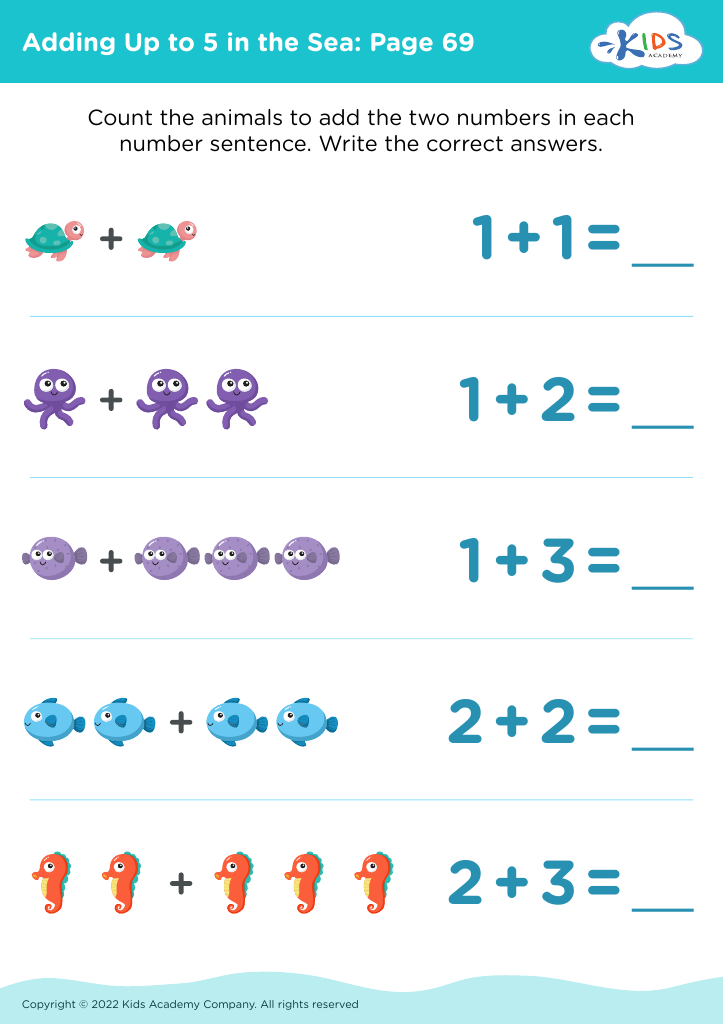
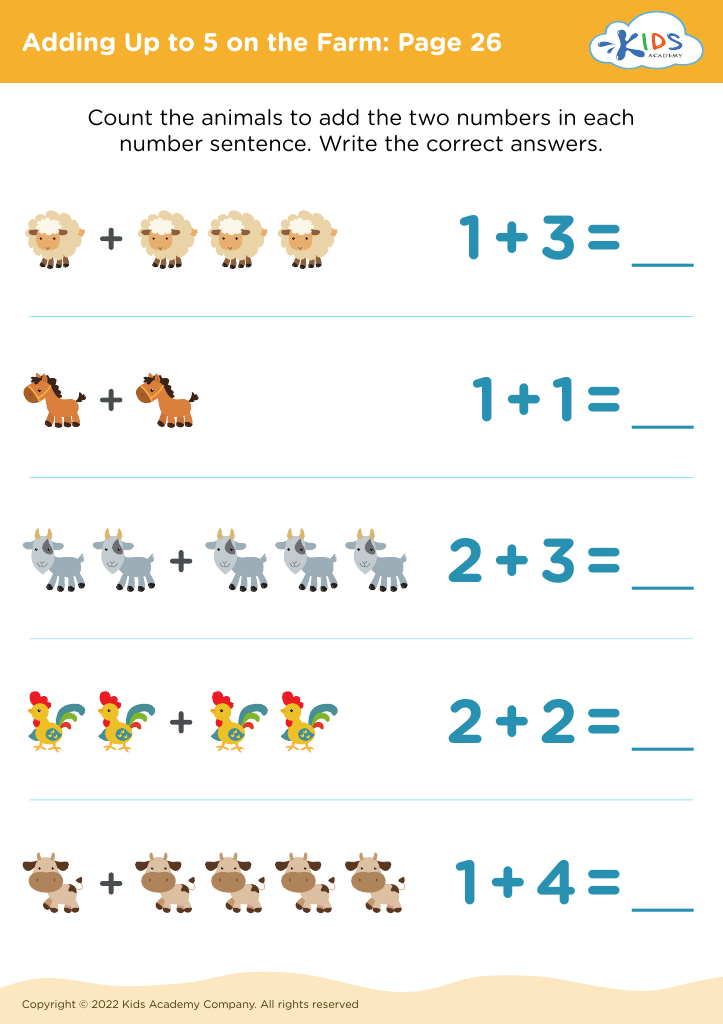
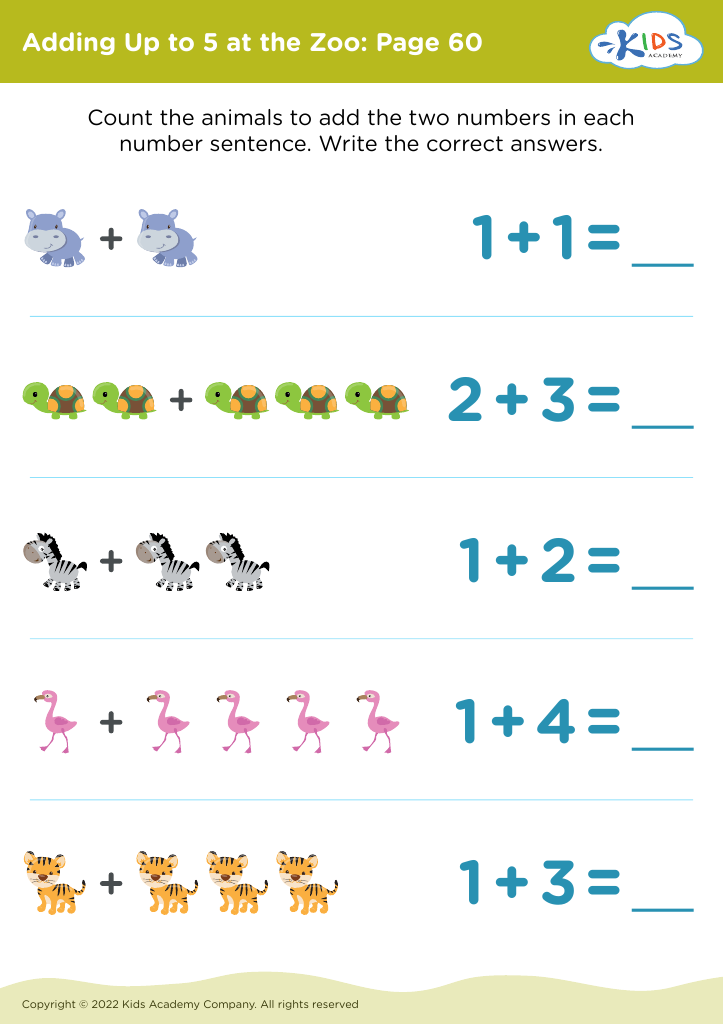








Fostering early math skills such as addition up to 5 for children ages 4-8 is crucial, and should be a priority for parents and teachers. These foundational skills play a considerable role in shaping a child’s academic journey and cognitive development. Learning basic addition aids in building number sense, which is the ability to understand numbers and their relationships, an essential skill for all future math learning.
At this age, children’s brains are exceptionally plastic and can form new neural connections rapidly. Teaching addition up to 5 encourages problem-solving skills, logical thinking, and boosts memory as children recall and utilize basic addition facts in various scenarios.
Additionally, early math skills can influence success across other subjects. For example, counting and adding can be integrated into science lessons by tallying objects or understanding time in reading activities. This integration helps to form a holistic educational experience, ensuring that children see real-world applications of their new skills.
Early successes with simple math problems can also foster a positive attitude toward learning and a growth mindset. This positivity can lead to higher self-esteem and the enthusiasm needed to tackle more challenging concepts as they grow. Therefore, mastering addition up to 5 sets a solid foundation that impacts a child's academic trajectory and confidence.








