Basic arithmetic practice Adding Up to 5 Worksheets for Ages 4-8
8 filtered results
-
From - To
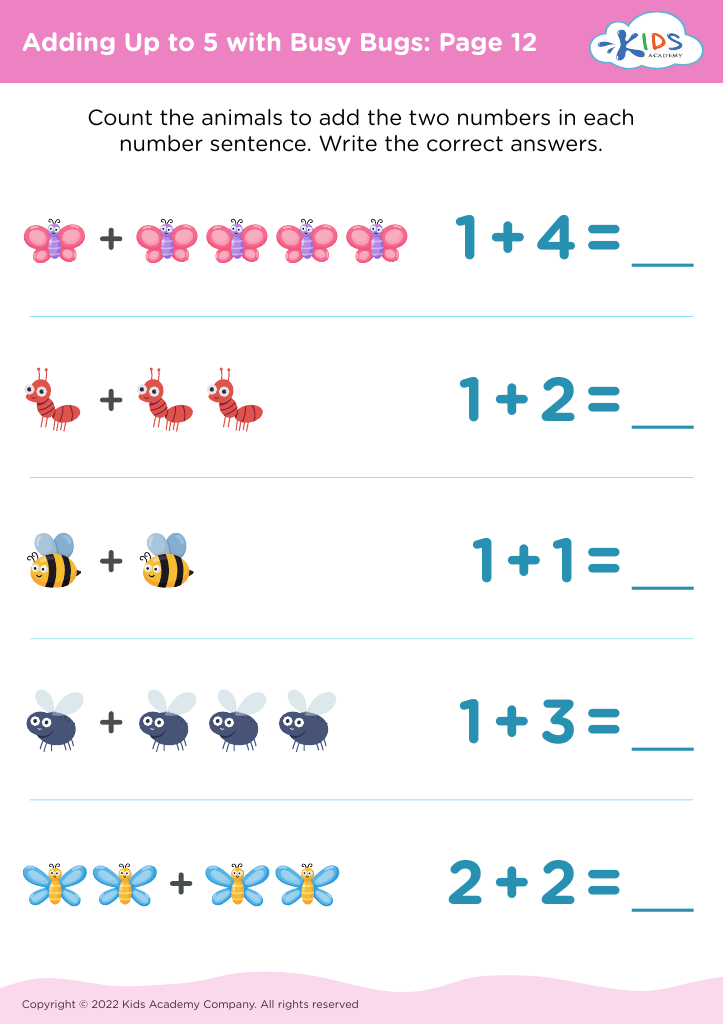
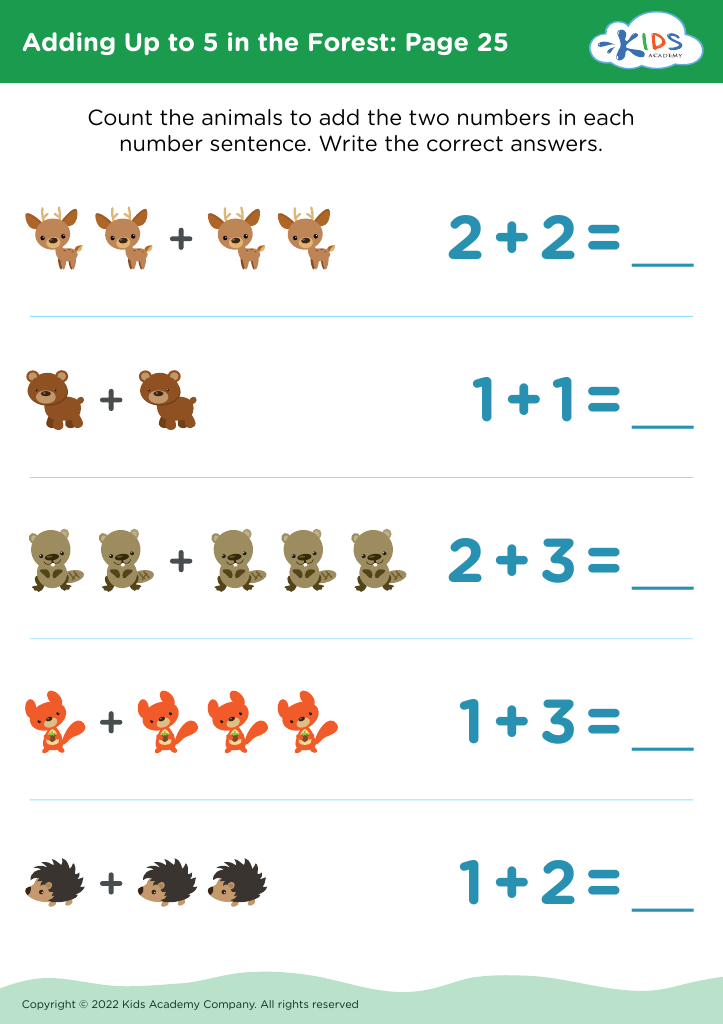
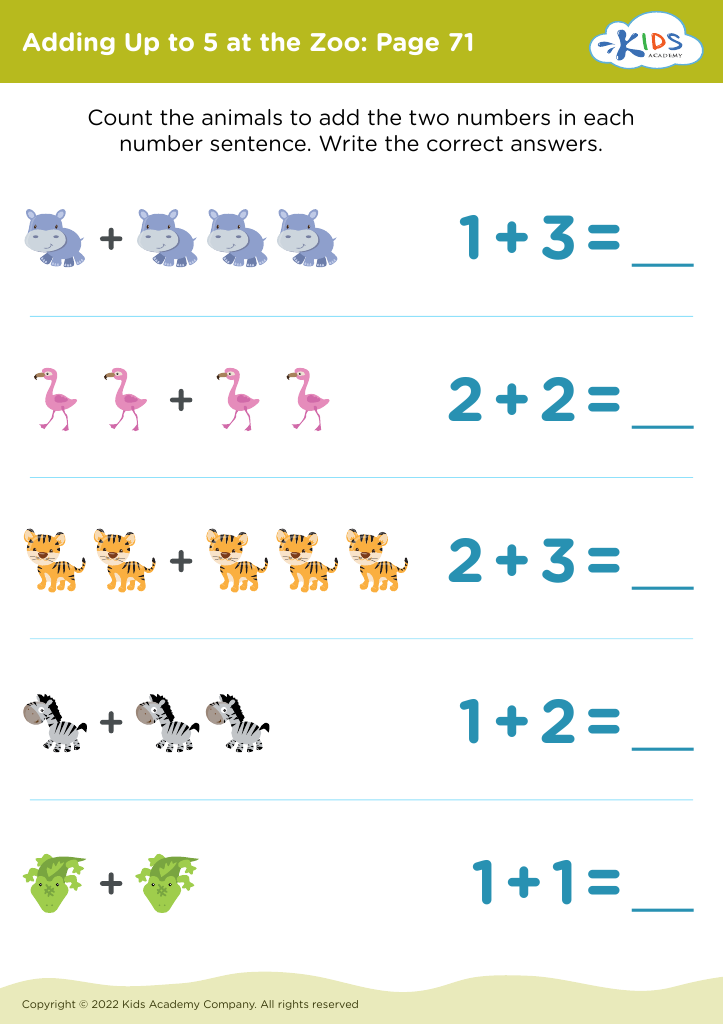
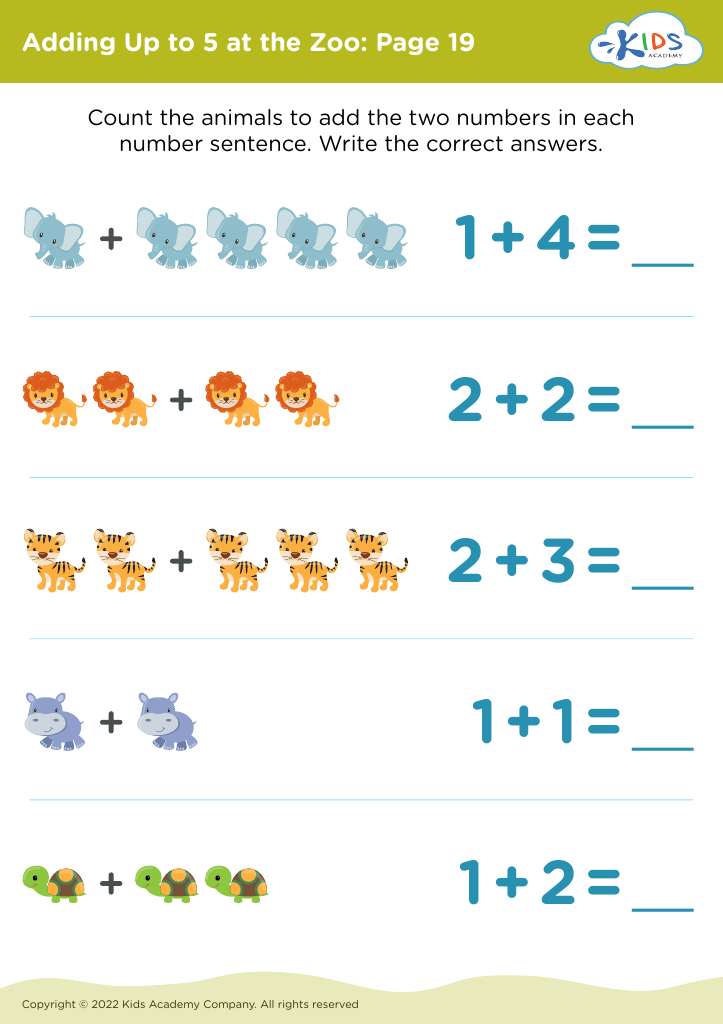
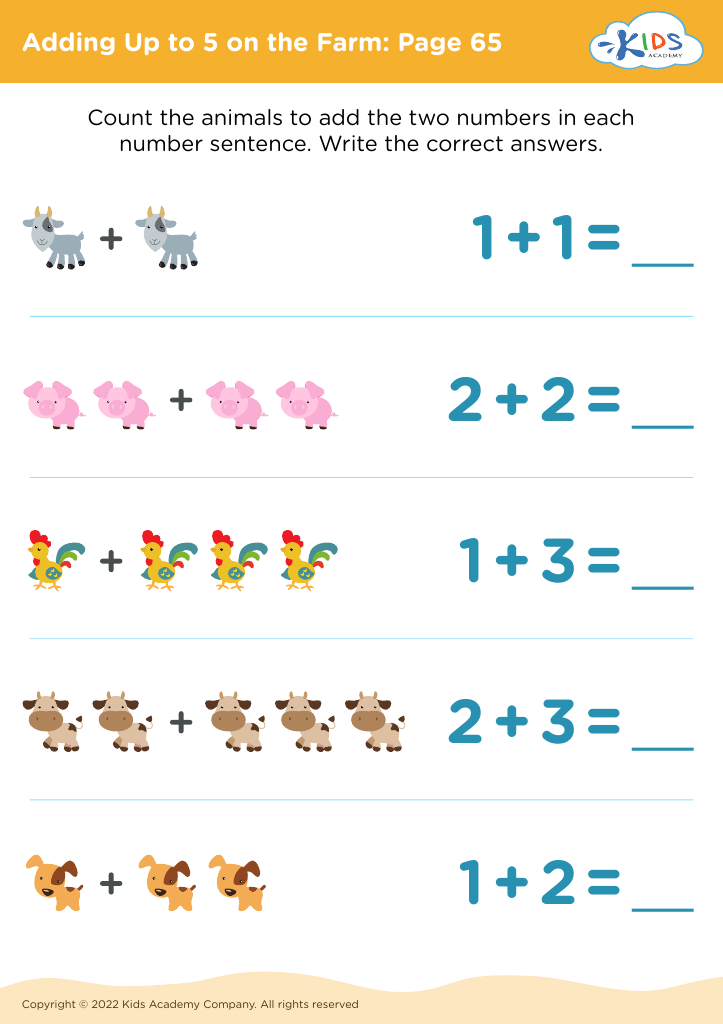
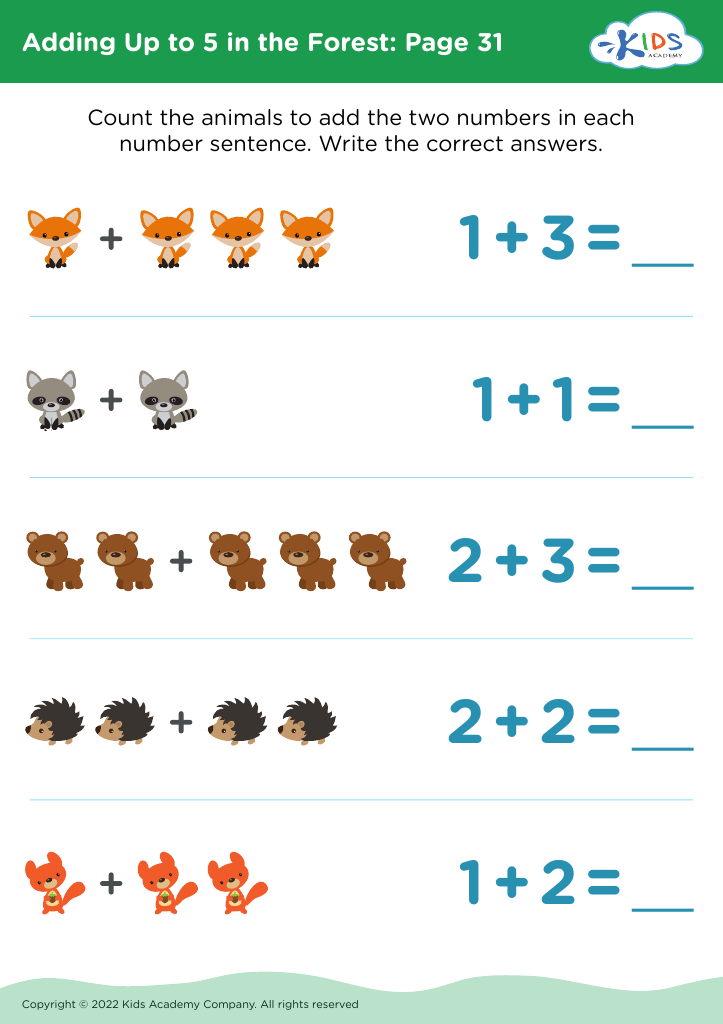
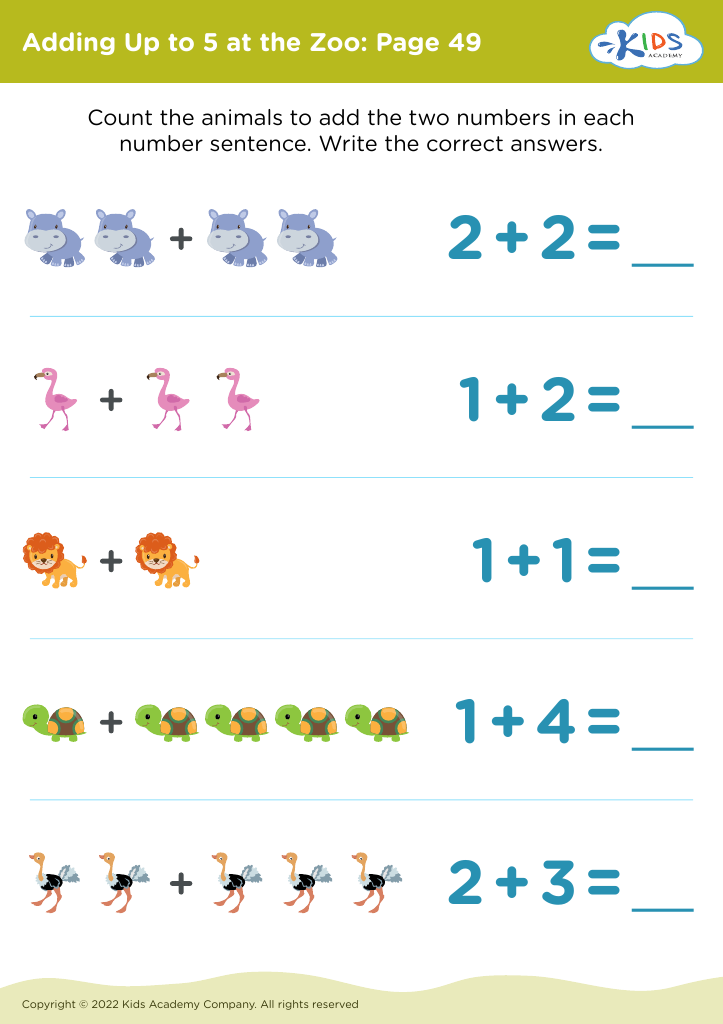
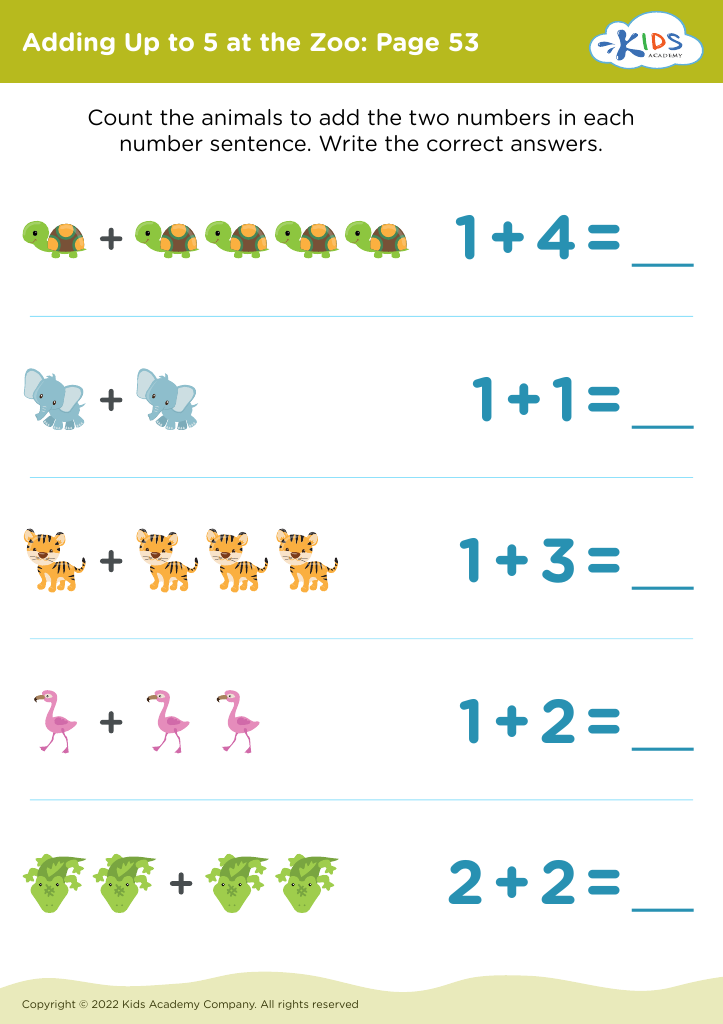
Welcome to our "Basic Arithmetic Practice: Adding Up to 5 Worksheets" for ages 4-8! These engaging worksheets are designed to help young learners build a solid foundation in basic math skills through fun and interactive activities. Each worksheet features colorful illustrations and simple exercises that make adding up to 5 enjoyable and accessible. Perfect for home or classroom use, our materials promote critical thinking and enhance number recognition. Help your child develop confidence in their math abilities while enjoying learning with our thoughtfully crafted resources. Download your worksheets today and watch your little ones excel in basic arithmetic!





.jpg)


Parents and teachers should prioritize basic arithmetic practice, particularly adding up to 5, for children aged 4 to 8 for several essential reasons. Firstly, mastering simple addition forms the foundation for all future mathematical learning. Understanding how to combine numbers within this range aids in cognitive development and enhances problem-solving skills—tools that children will use throughout their educational journey.
Secondly, practicing addition early helps build a strong sense of number sense, which is crucial for understanding more complex math concepts later on. Recognizing that quantities can be combined fosters an intuitive understanding of larger numbers and operations.
Additionally, consistent practice instills confidence in students. When children successfully add numbers together, they feel a sense of achievement that encourages a positive attitude toward math. This confidence can reduce math anxiety as they progress through school.
Furthermore, engaging with addition tasks can promote important social skills, especially when working with peers or caregivers. Collaborative learning activities can make math more enjoyable and interactive, helping to maintain children's interest and motivation.
In summary, focused arithmetic practice supports foundational skills, boosts confidence, and promotes engagement, making it essential for holistic early childhood development.








