Fine Motor Skills (coloring) Adding Up to 5 Worksheets for Ages 4-8
3 filtered results
-
From - To
Introduce your child to the world of numbers and colors with our "Fine Motor Skills (coloring) Adding Up to 5 Worksheets" tailored for ages 4-8. These expertly crafted worksheets merge the fun of coloring with basic addition skills, helping young learners develop their fine motor skills. Each activity features engaging images to color, combined with simple math problems that nurture early arithmetic understanding. These worksheets are perfect for little hands, enhancing dexterity while reinforcing addition concepts up to 5. Boost your child’s confidence and learning enthusiasm with our enjoyable, educational resources designed to brighten their mathematical journey.
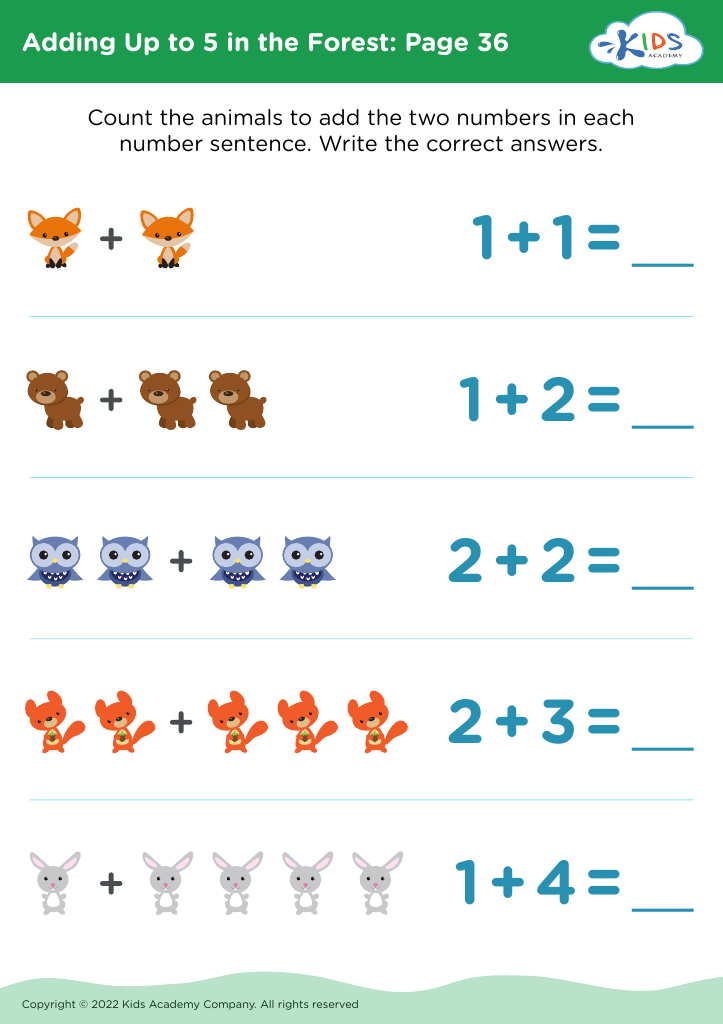
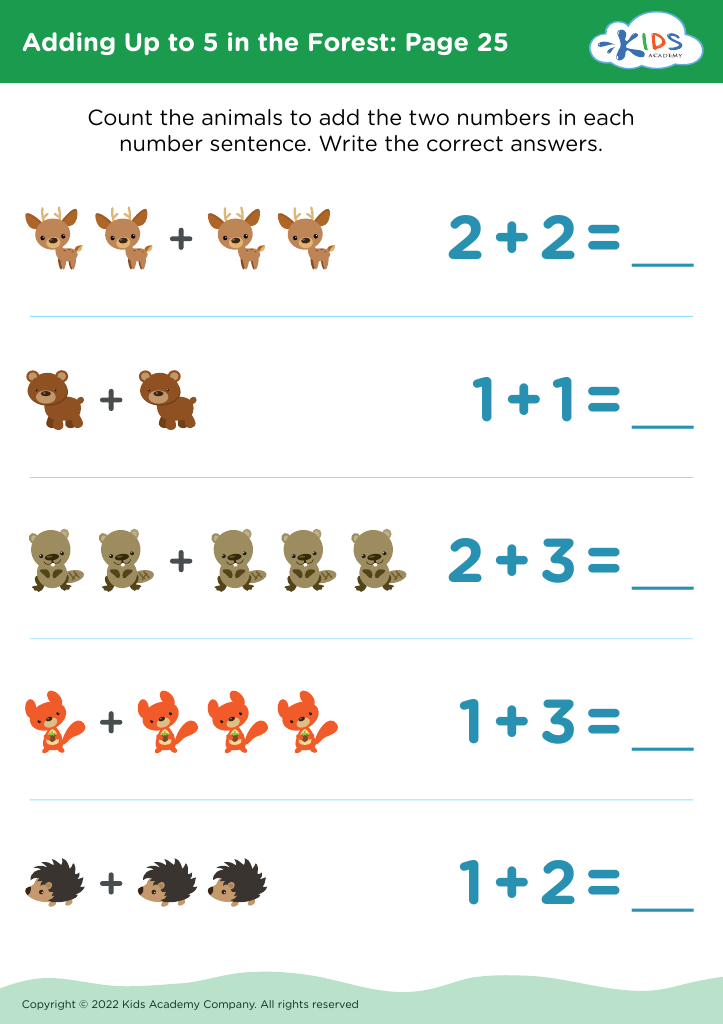
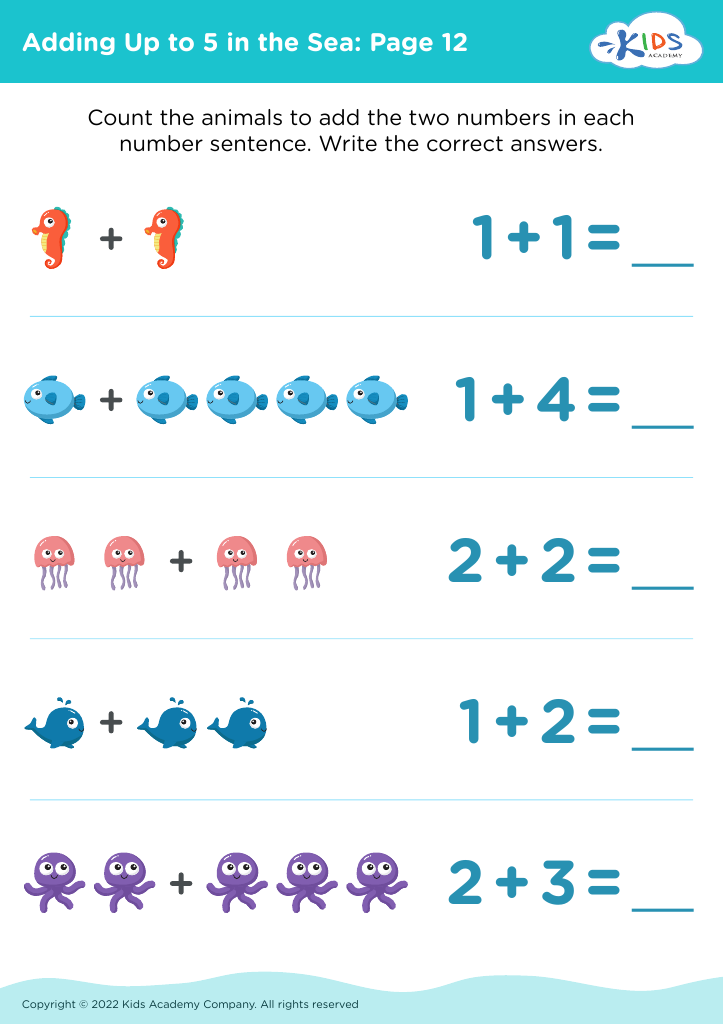






.jpg)

Fine motor skills, including tasks such as coloring and basic addition within 5, are crucial for children aged 4-8 and significantly impact their early development. Mastering these skills supports various aspects of a child's growth and learning.
First, coloring helps enhance dexterity and hand-eye coordination, vital for writing skills they will need throughout their education. As children practice holding crayons and controlling their movements, they develop the muscle strength and precision necessary for forming letters and numbers.
Second, incorporating basic math like adding up to 5 during these activities intertwines motor skills with cognitive development. It introduces children to foundational math concepts in a playful and engaging context, making learning enjoyable and effective. This early exposure sets the stage for more complex math skills and problem-solving abilities later.
Additionally, fine motor activities like coloring require focus and patience, fostering attention spans and perseverance. Completing these tasks boosts self-confidence as children see tangible evidence of their progress.
For teachers and parents, nurturing these skills is integral to supporting academic preparedness and overall developmental milestones. Providing opportunities for activities that enhance fine motor skills, combined with fundamental math, creates a well-rounded approach to early childhood education. This holistic development is essential for children to thrive academically and in daily life.








