Improve concentration Adding Up to 5 Worksheets for Ages 4-8
7 filtered results
-
From - To
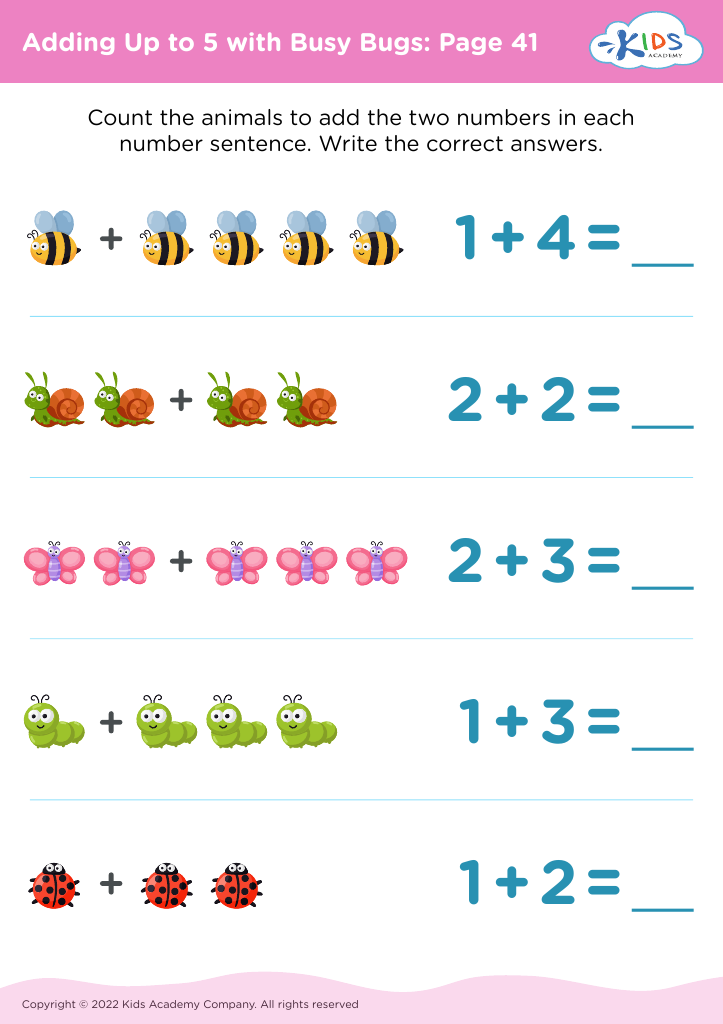
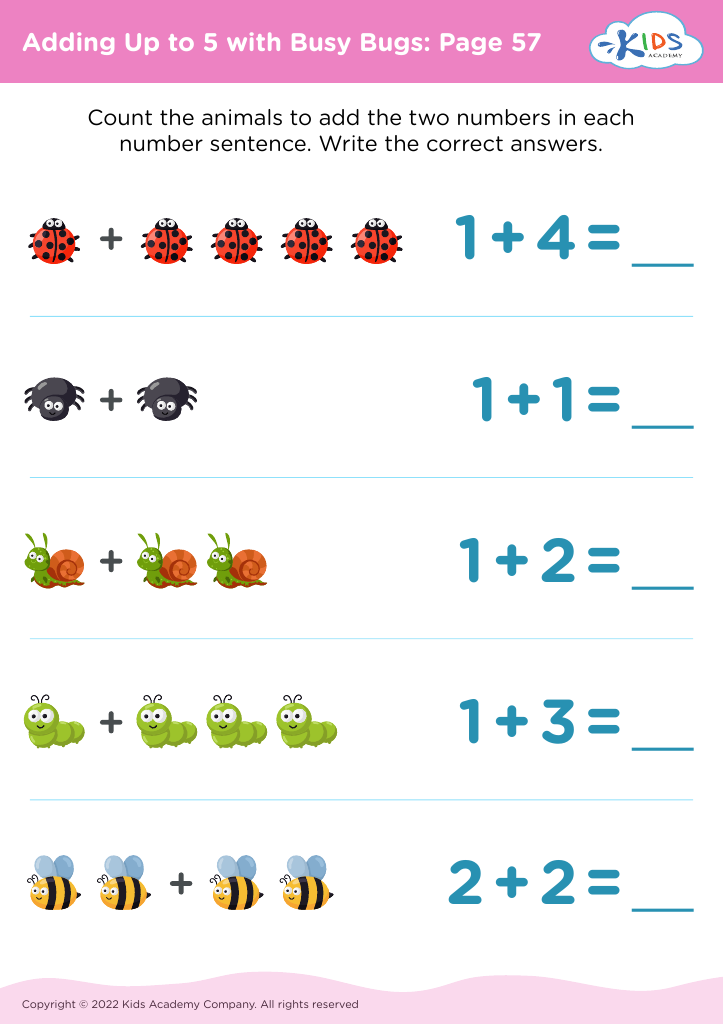
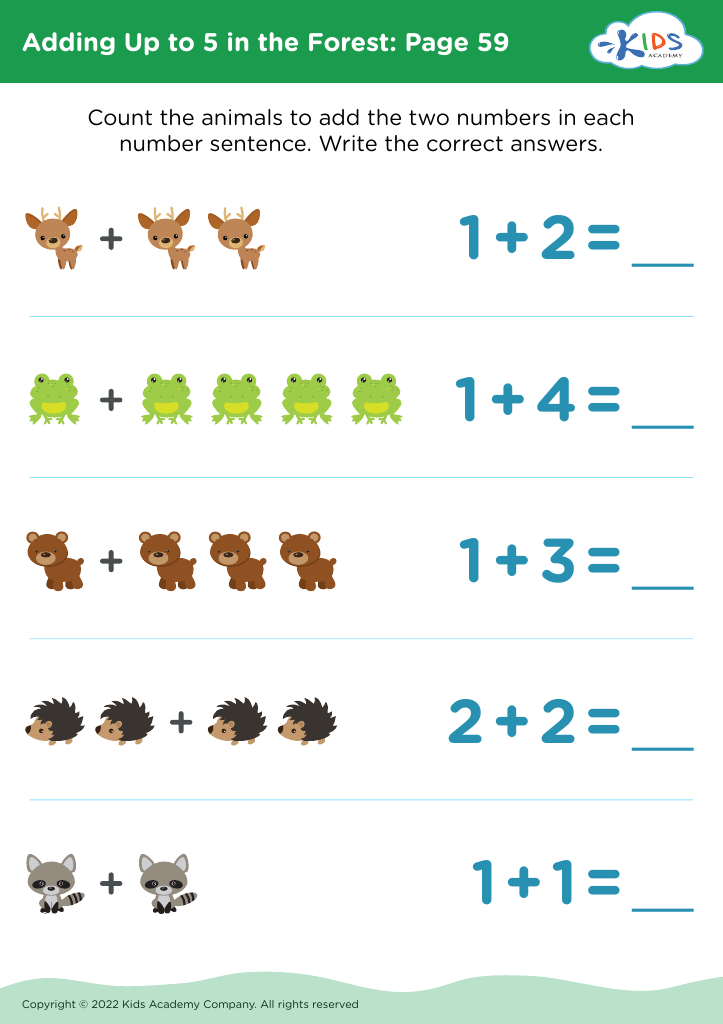
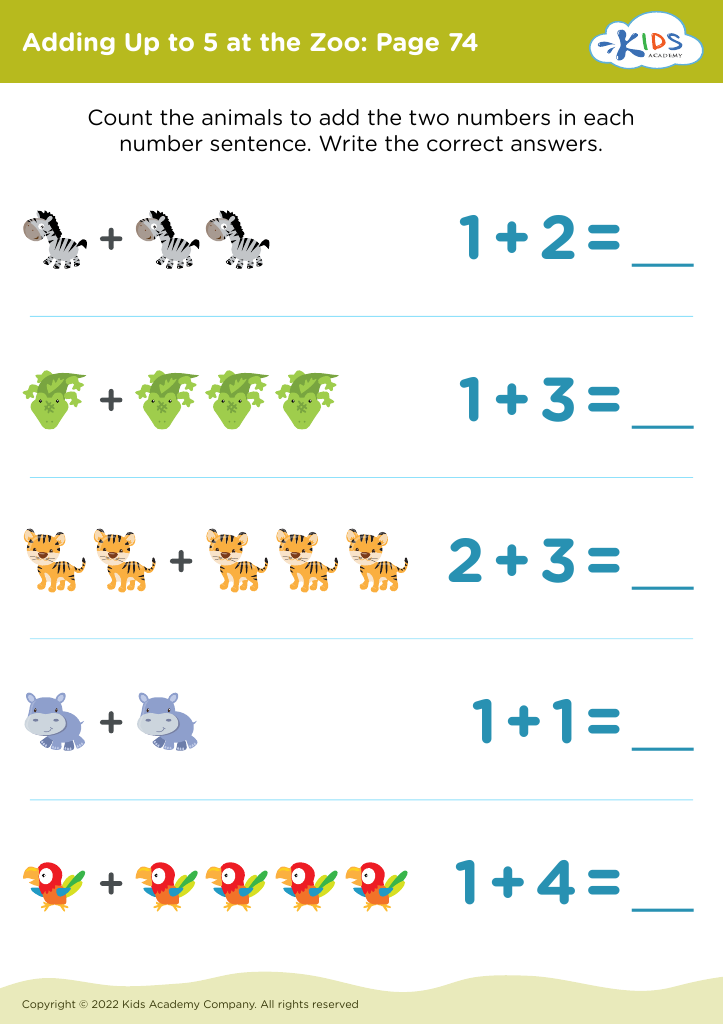
Enhance your child's concentration with our "Adding Up to 5 Worksheets" designed for ages 4-8! These engaging, printable worksheets provide a fun way for young learners to practice their addition skills while boosting focus and attention. Each worksheet features vibrant illustrations and straightforward exercises that make learning enjoyable. As children practice adding numbers up to 5, they develop essential cognitive abilities, strengthen problem-solving skills, and gain confidence in their mathematical understanding. Perfect for home or classroom use, these worksheets support early childhood education by fostering concentration and enhancing foundational math skills. Download the worksheets now and watch your child thrive!
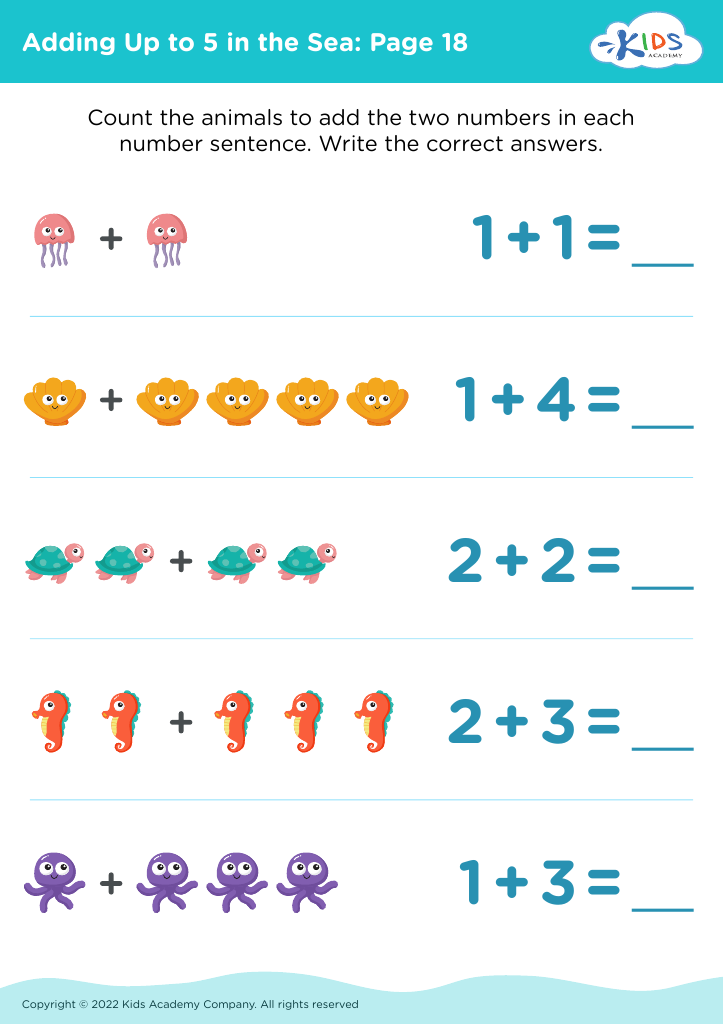
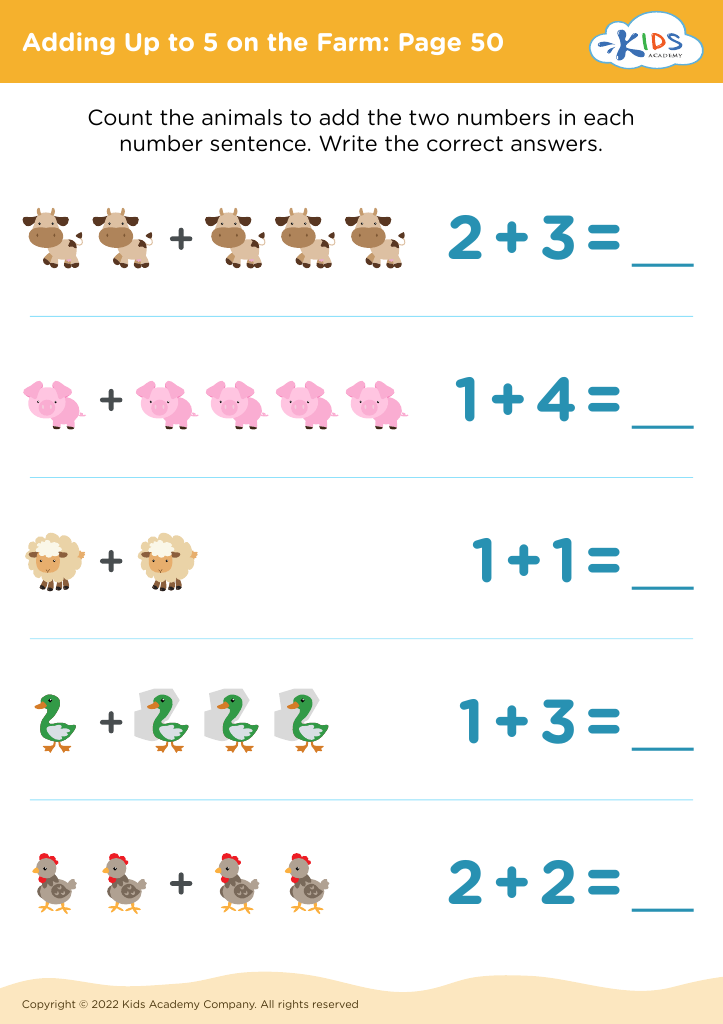
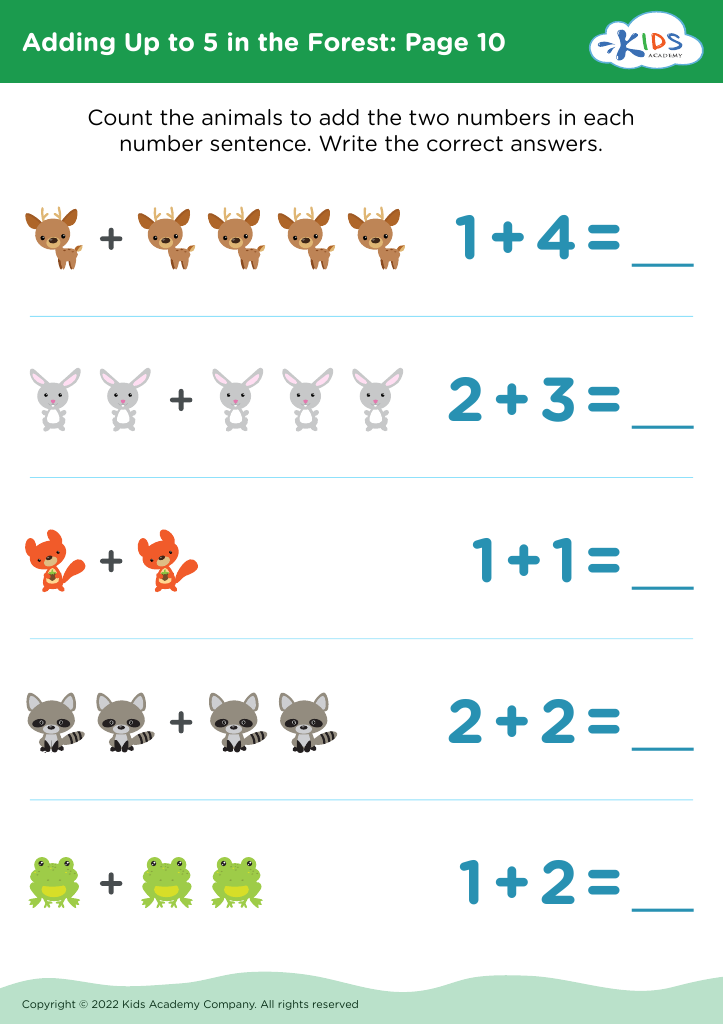




%20(1).jpg)



Improving concentration in young learners, particularly while mastering foundational skills like adding numbers up to 5, is crucial for several reasons. First, concentration directly impacts a child's ability to grasp mathematical concepts. When children can focus, they are more likely to understand basic operations such as addition, which lays the groundwork for future mathematical learning.
Secondly, enhancing concentration skills can lead to increased academic success. Young students who develop the ability to concentrate are more engaged during lessons and more likely to complete tasks accurately and efficiently. This engagement fosters a positive learning experience, reinforcing their confidence in their capabilities.
Thirdly, concentration skills extend beyond mathematics. These abilities contribute effectively to overall cognitive development, affecting how children approach challenges in reading, writing, and problem-solving.
Moreover, fostering concentration helps cultivate a love for learning. When children experience satisfaction from successfully solving math problems, they develop intrinsic motivation that encourages them to tackle more complex subjects.
Ultimately, parents and teachers should care about improving concentration during early educational experiences because it not only supports mathematical proficiency but also improves overall learning readiness and cultivates critical life skills that will benefit children throughout their educational journey and beyond.








