Underwater animal identification Adding Up to 5 Worksheets for Ages 4-8
3 filtered results
-
From - To
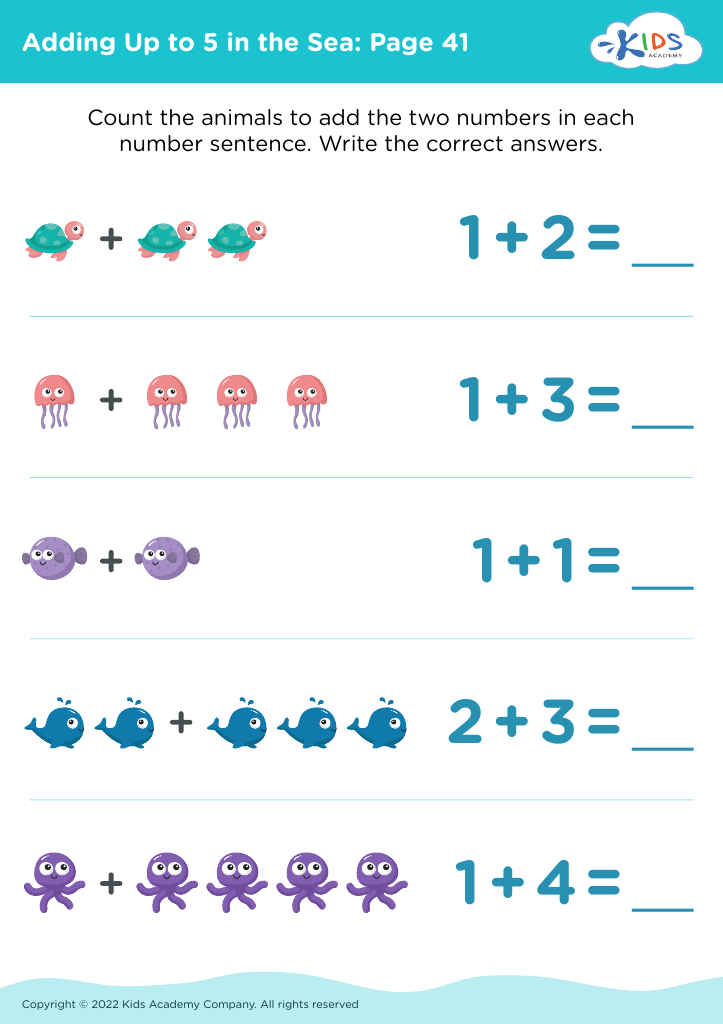
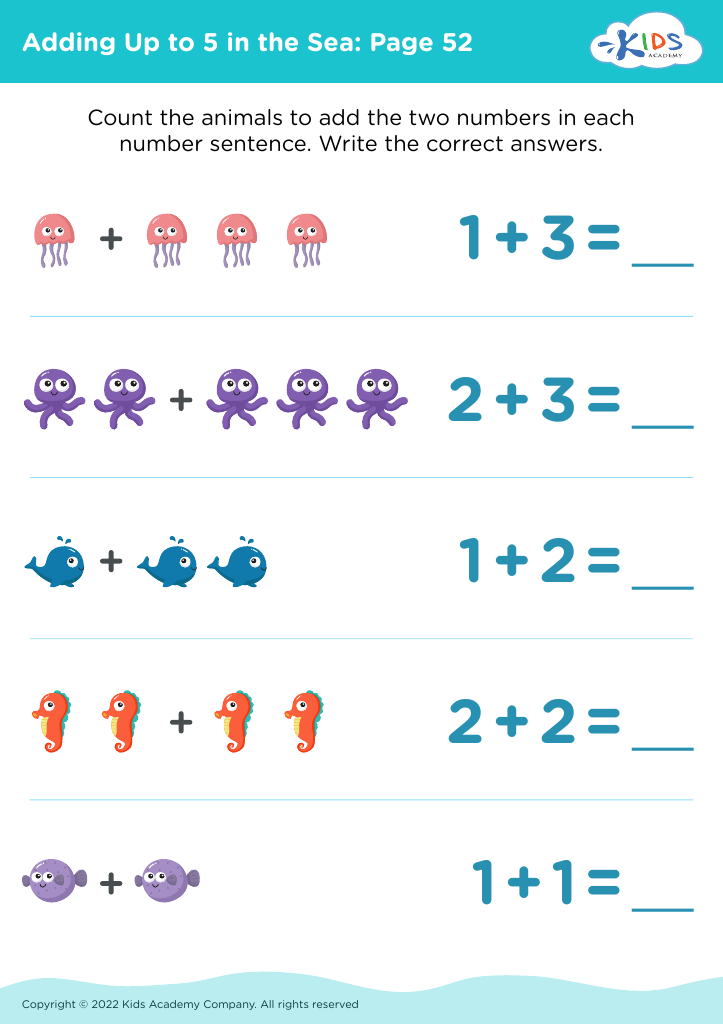
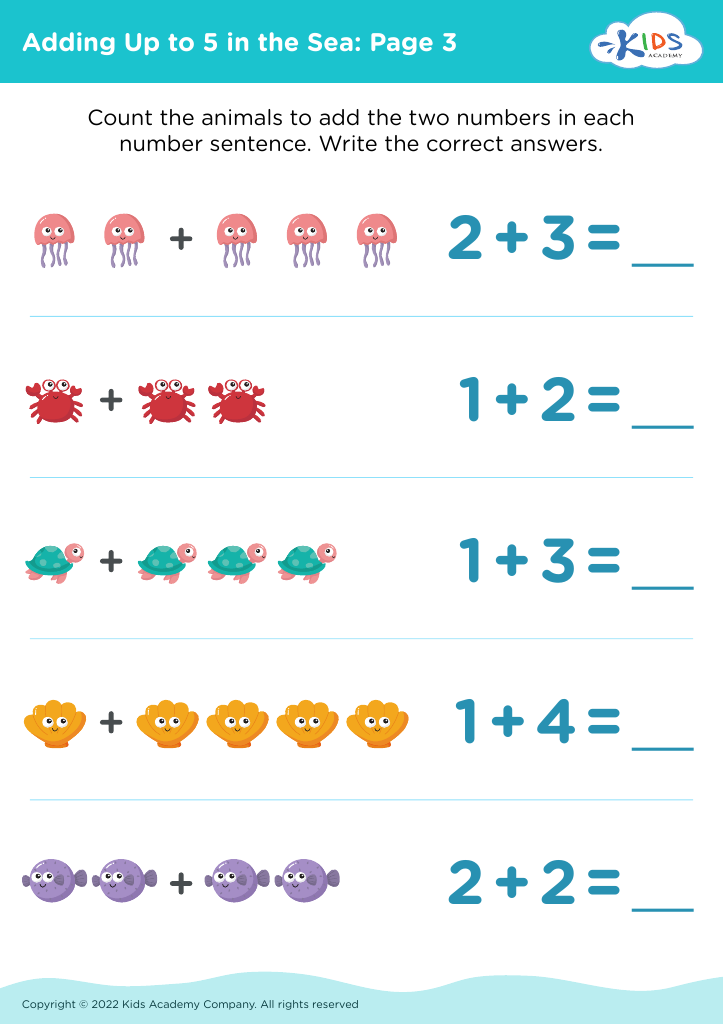
Dive into fun with our "Underwater Animal Identification: Adding Up to 5 Worksheets" designed for ages 4-8! Perfect for young marine explorers, these printable worksheets combine basic math skills and engaging underwater animal recognition. Kids will practice adding up to five in a vibrant underwater world, helping them strengthen their counting, addition, and observation abilities while discovering fascinating sea creatures. Great for both classroom and at-home learning, these activities are designed to foster a love for math and marine life. Enhance your child's learning experience with this captivating and educational resource today!






%20(1).jpg)
Underwater animal identification adding up to 5 is a unique and engaging educational activity designed for children ages 4-8. This activity integrates basic math skills with marine biology, making learning both fun and informative. Parents and teachers should care about it because it offers a holistic learning experience that fosters cognitive development in multiple subject areas.
First, at this foundational age, children are developing their numerical abilities. Counting underwater animals encourages hands-on learning where kids can visualize and manipulate objects, leading to better number sense and arithmetic skills. When children are asked to add up to 5, it helps with early math proficiency, teaching them the basics of addition in a compelling context.
Secondly, knowing about underwater animals cultivates an early interest in science and the natural world. It broadens children's knowledge about different species and habitats, sparking curiosity and promoting environmental awareness.
Moreover, such multidisciplinary activities support the development of critical thinking, problem-solving, and categorization skills as children learn to identify and sort various marine animals. They also enhance language skills as kids often engage in discussions and storytelling about their underwater finds.
Integrating fun, educational activities like this into learning schedules can encourage a more rounded and enthusiastic approach to education, helping to build a strong, diverse knowledge base and a lifelong love of learning.








