Visual learning enhancement Adding Up to 5 Worksheets for Ages 4-8
4 filtered results
-
From - To
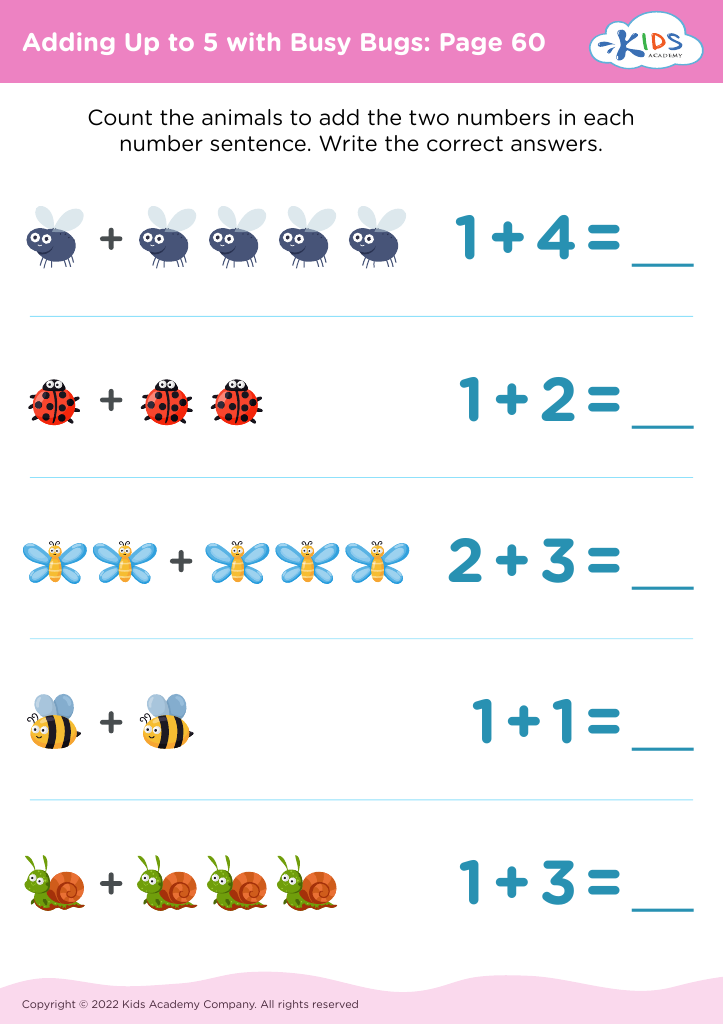
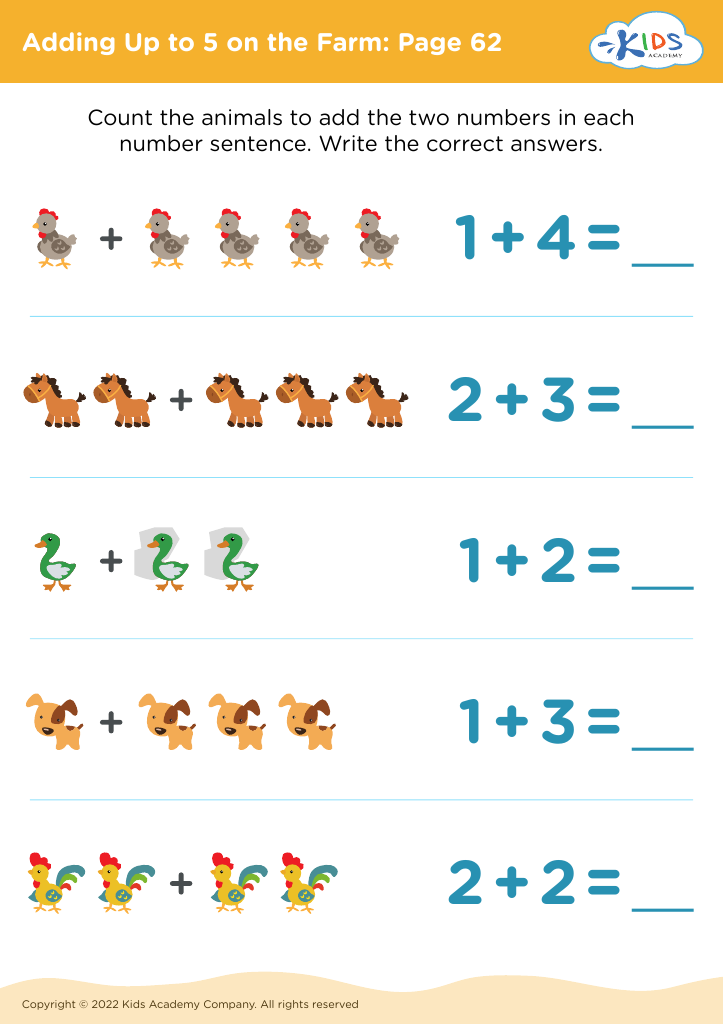
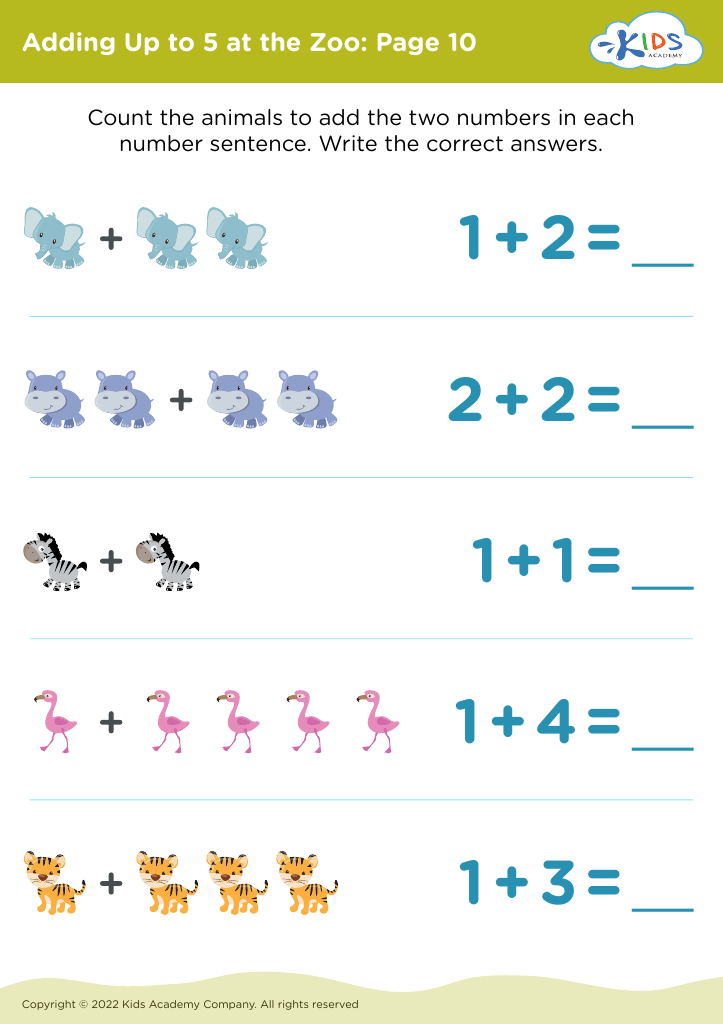
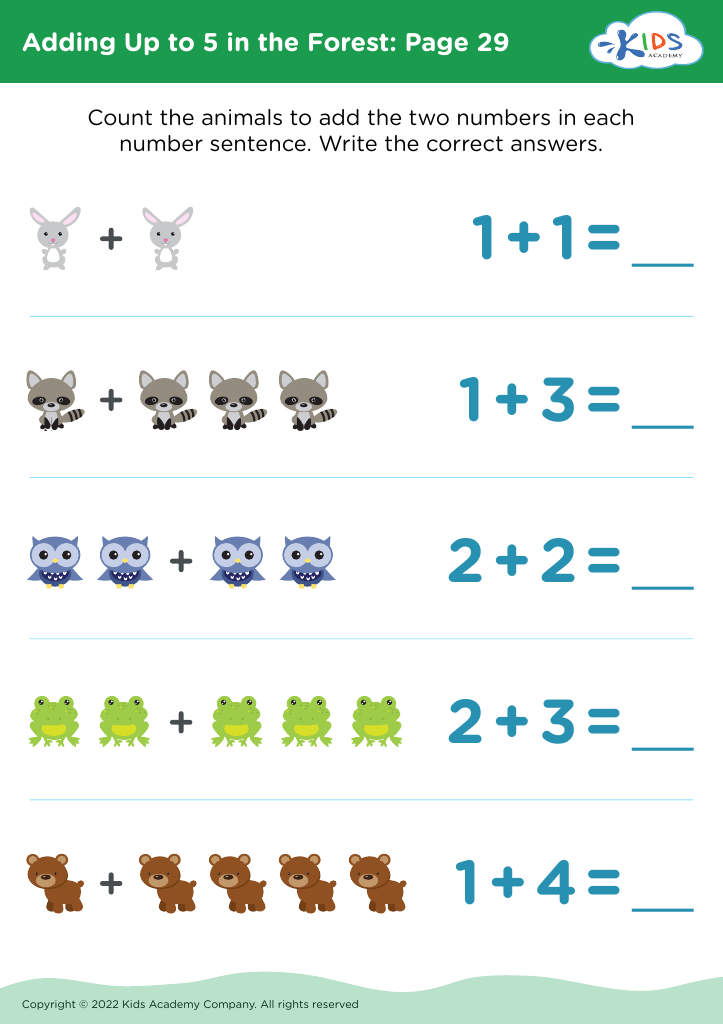
Enhance your child's understanding of early math concepts with our "Adding Up to 5 Worksheets" designed for ages 4-8. These engaging visual learning enhancement worksheets utilize colorful illustrations and interactive exercises to reinforce addition skills. By connecting numbers with fun visuals, children can grasp the fundamentals of adding small quantities efficiently. Each worksheet is crafted to promote independent learning while nurturing critical thinking and problem-solving abilities. Perfect for home or classroom use, our resources support various learning styles, making math enjoyable. Download now to inspire a love for learning while building confidence in your child's mathematical journey!





.jpg)

%20(1).jpg)
Visual learning enhancement for young children, particularly in mastering concepts like adding up to 5, is crucial in foundational education. For ages 4-8, visual aids can transform abstract notions of numbers and arithmetic into tangible experiences. Children in this age group are naturally inclined to learn through seeing and interacting with their environment. Visual tools, such as counters, colorful charts, and interactive games, make the process engaging and enjoyable, thereby increasing interest and motivation.
Parents and teachers should recognize that visual learning not only aids in comprehension but also helps in retention. For instance, using visuals enables children to quickly grasp the concept of summation by demonstrating how individual units combine to form a larger whole. It caters to diverse learning styles, ensuring that all children, whether visual or kinetic learners, can participate and succeed.
Moreover, enhancing visual learning lays the groundwork for critical thinking and problem-solving skills essential in future math topics. It instills a positive attitude toward mathematics, builds confidence, and fosters a love for learning. Therefore, integrating visual learning strategies is vital for effectively teaching fundamental math concepts like adding up to 5, supporting children's academic growth and personal development during these formative years.








