Visual learning reinforcement Adding Up to 5 Worksheets for Ages 4-8
5 filtered results
-
From - To
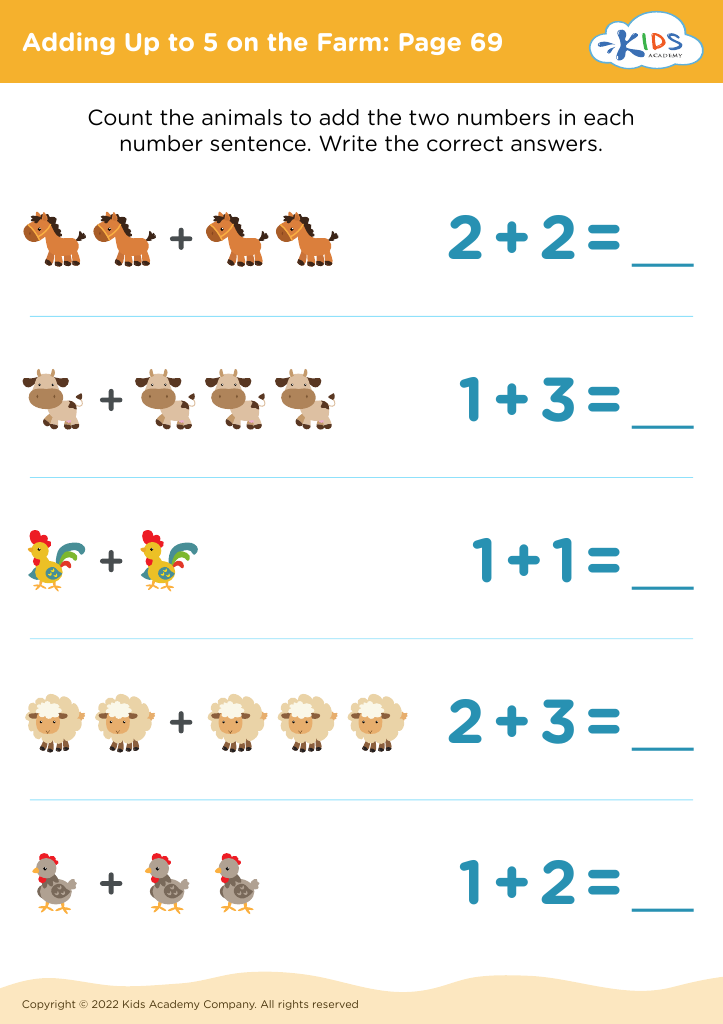
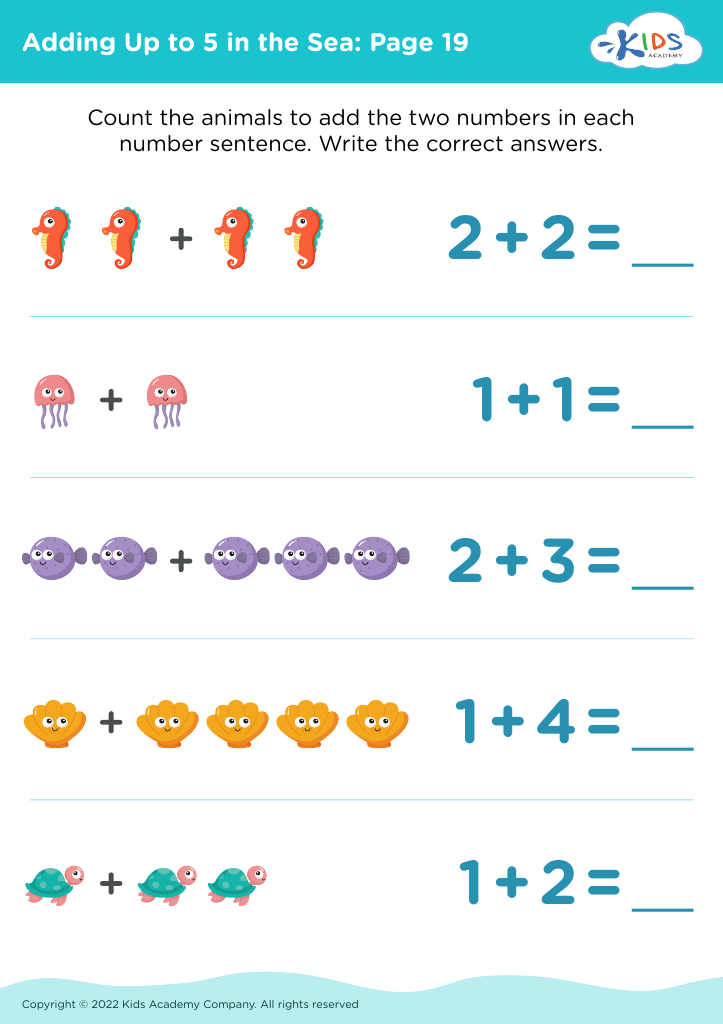
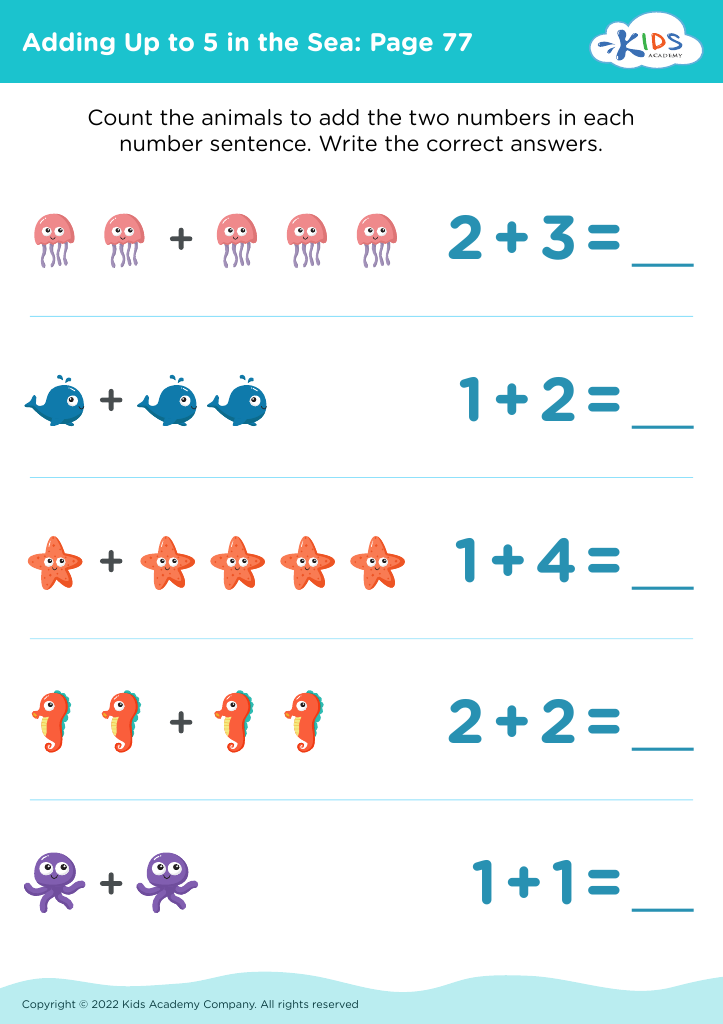
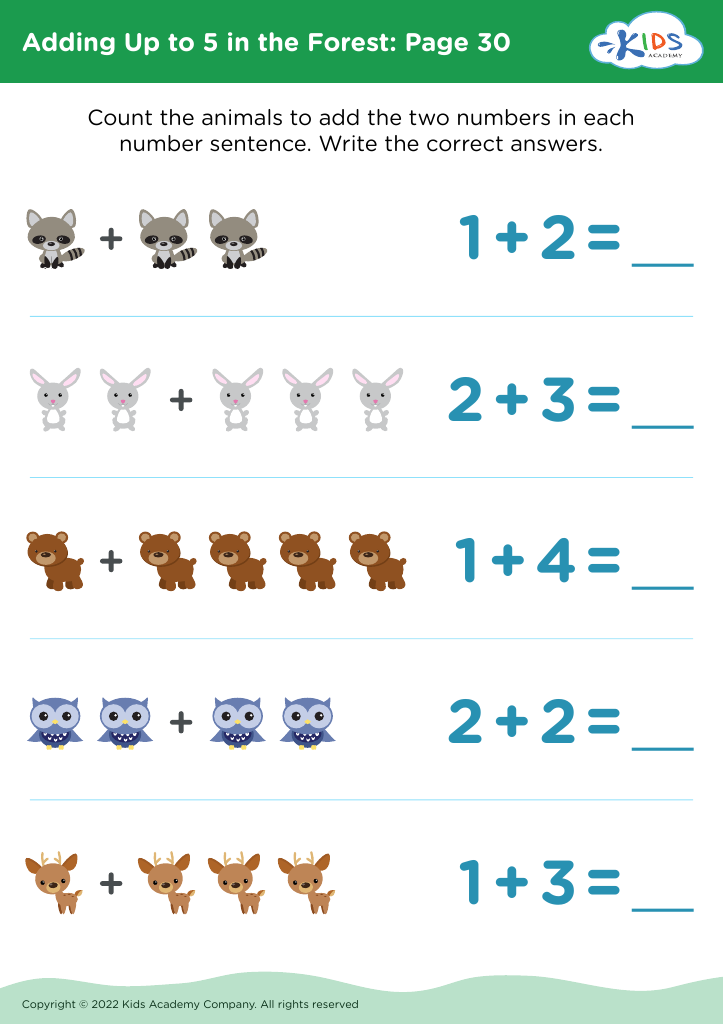
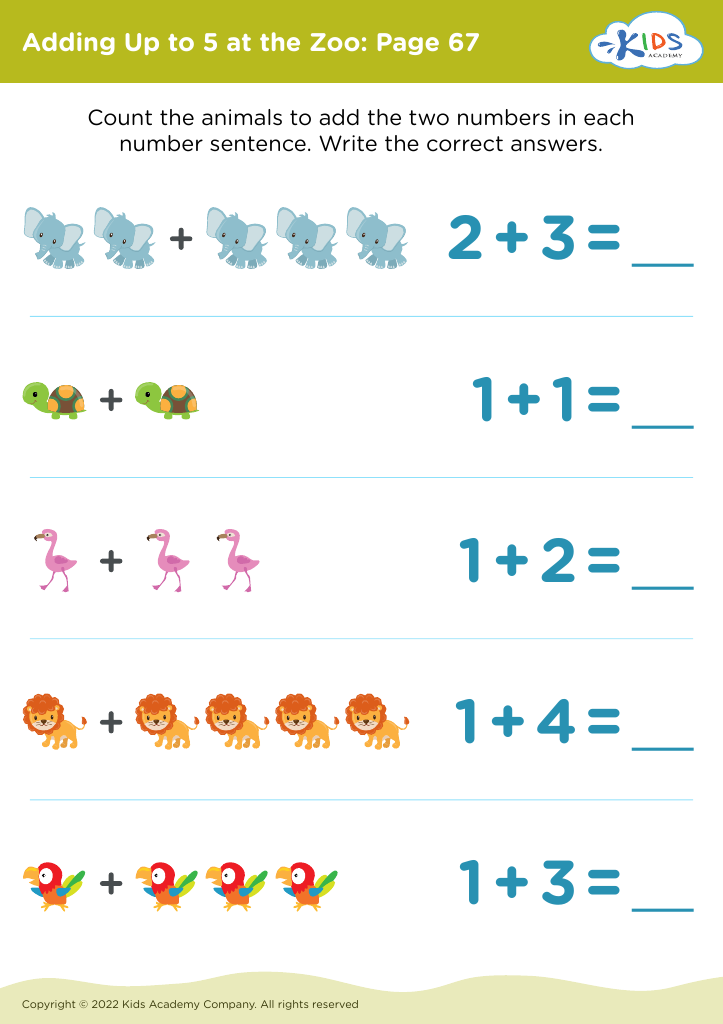
Discover the power of visual learning with our "Adding Up to 5 Worksheets" designed specifically for children aged 4-8. These engaging and interactive worksheets reinforce basic addition skills through colorful visuals and fun activities that captivate young learners. By incorporating pictures and diagrams, we aim to enhance understanding and retention of mathematical concepts. Perfect for teachers and parents alike, our worksheets provide a structured yet enjoyable way for kids to learn addition in a visual format. Enhance your child’s confidence and ability in math as they master adding up to 5, making learning a playful experience!







%20(1).jpg)
Visual learning reinforcement, especially for adding numbers up to 5, is crucial for children aged 4-8 for several reasons. At this age, children are naturally curious and often learn best through engaging and interactive methods. Visual aids, such as counters, number lines, and colorful illustrations, can make abstract mathematical concepts more concrete and understandable.
Using visual supports helps young learners to recognize and manipulate numbers, enhancing their memory and allowing them to visualize sums better. This method can make learning more enjoyable, promoting positive attitudes towards math and reducing anxiety surrounding the subject. When children see the visual representation of addition—like groups of apples or blocks—they can grasp the concept that addition is not just about numbers, but also about real-world situations and problem-solving.
Moreover, visual learning accommodates different learning styles. While some children may thrive on auditory methods, others need that visual cue to make connections. Reinforcement through visuals can also encourage independent learning. Parents and teachers should prioritize incorporating these techniques to boost comprehension and instill foundational skills, ultimately supporting overall academic success. When young learners can confidently add, it lays the groundwork for more complex mathematical concepts in the future.








