Visual-motor skills Adding Up to 5 Worksheets for Ages 4-8
3 filtered results
-
From - To
Enhance your child's visual-motor skills with our engaging "Adding Up to 5" worksheets, designed specifically for ages 4-8. These thoughtfully crafted activities blend fun and learning, helping young learners develop essential skills such as hand-eye coordination and fine motor control. As children solve addition problems up to 5, they'll practice essential writing techniques while reinforcing their understanding of numbers. Our worksheets incorporate vibrant illustrations and interactive elements that captivate young minds, making math enjoyable and accessible. Start building your child's confidence and math proficiency today with these colorful worksheets, perfect for both home and classroom learning environments.
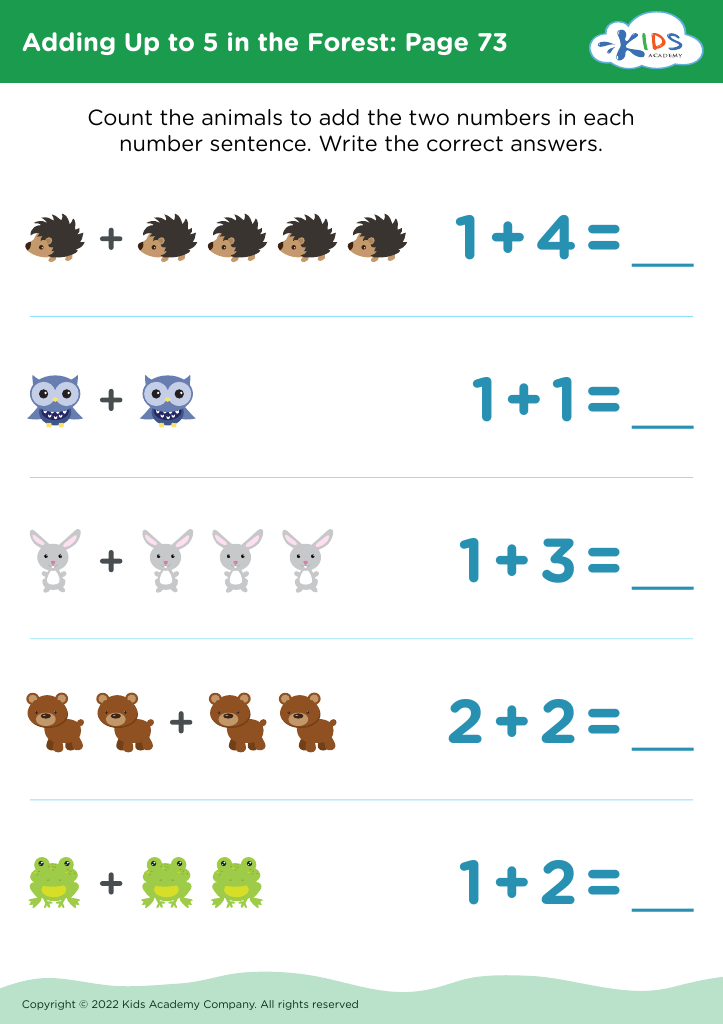
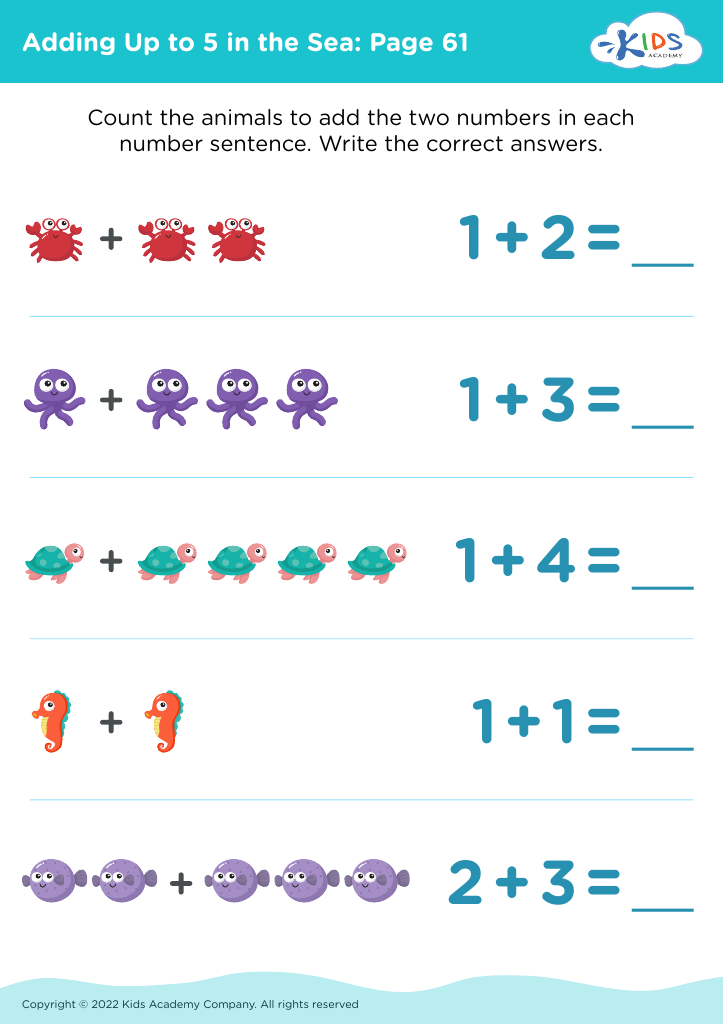
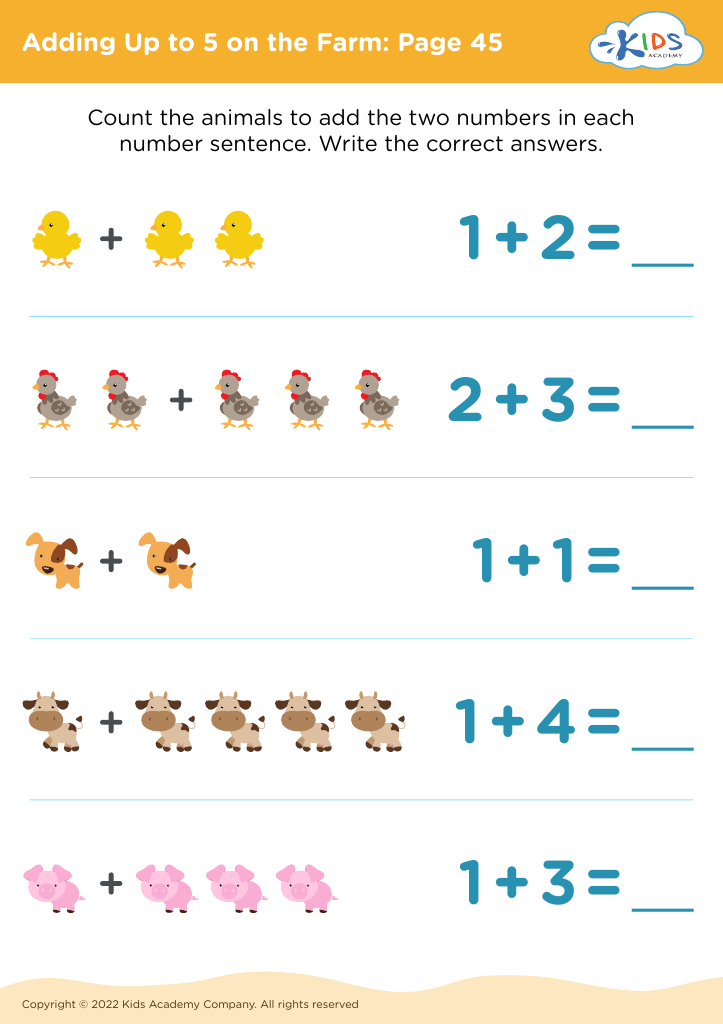




.jpg)



Visual-motor skills are essential for children aged 4-8 as they form a foundational component of their overall development. These skills involve the coordination of vision and physical movement, enabling children to perform tasks such as writing, drawing, and engaging in sports. Developing strong visual-motor skills during these early years is crucial for several reasons.
First, these skills are directly related to academic performance. As children learn to write letters, form numbers, and interact with educational materials, they rely heavily on their visual-motor integration. Without these skills, their ability to succeed in school can be hindered, leading to frustration and decreased confidence.
Additionally, visual-motor skills contribute to everyday tasks, from tying shoelaces to catching a ball. By fostering these skills, parents and teachers help children become more independent and active in their daily lives. Activities that strengthen visual-motor skills, such as puzzles, drawing, and cutting, also promote cognitive development, enhancing spatial awareness and problem-solving abilities.
Moreover, good visual-motor skills can connect to important social interactions, like team games. In summary, nurturing visual-motor skills in young children not only supports their academic journey but also encourages life skills that contribute to overall growth and confidence.








