Understanding multiplication Adding up to 50 Misc Worksheets for Ages 4-8
3 filtered results
-
From - To
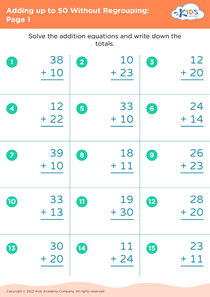
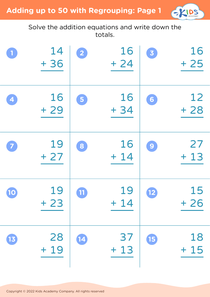
Boost your child's math skills with our "Understanding Multiplication Adding up to 50 Misc Worksheets" tailored for ages 4-8. Engaging and interactive, these worksheets help young learners grasp the basics of multiplication using fun, age-appropriate activities. With a variety of exercises, children will build a solid foundation in addition and multiplication, preparing them for more advanced math concepts. Perfect for at-home learning or classroom support, these worksheets combine education with enjoyment, ensuring a comprehensive understanding while keeping kids motivated. Join the journey toward math mastery with our expertly designed resources, fostering a love for numbers and problem-solving.
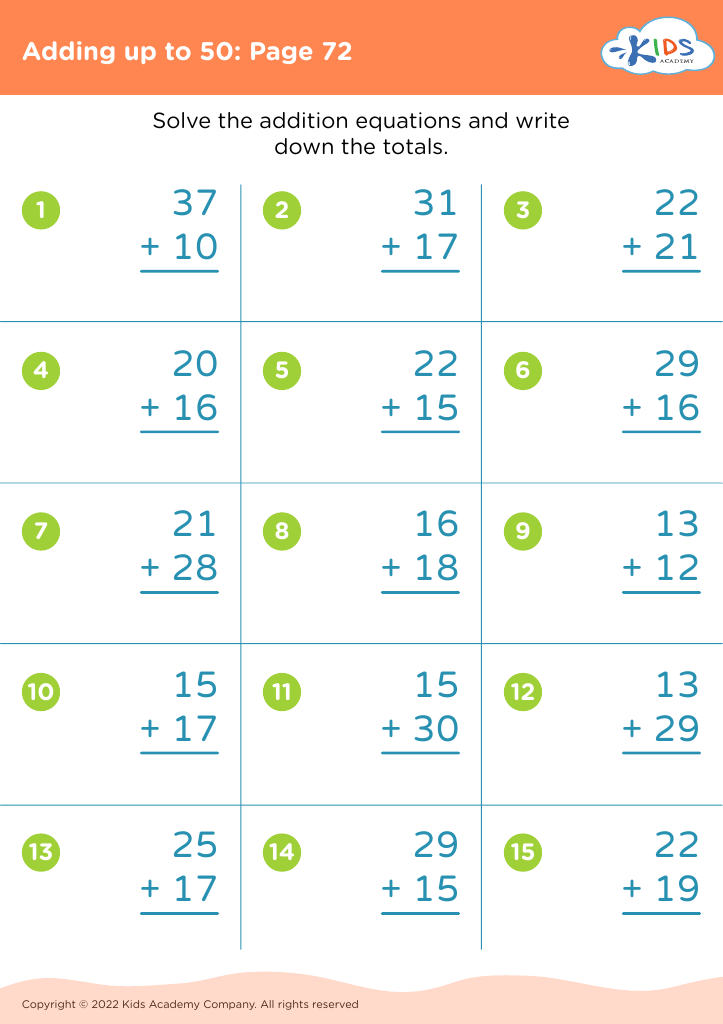
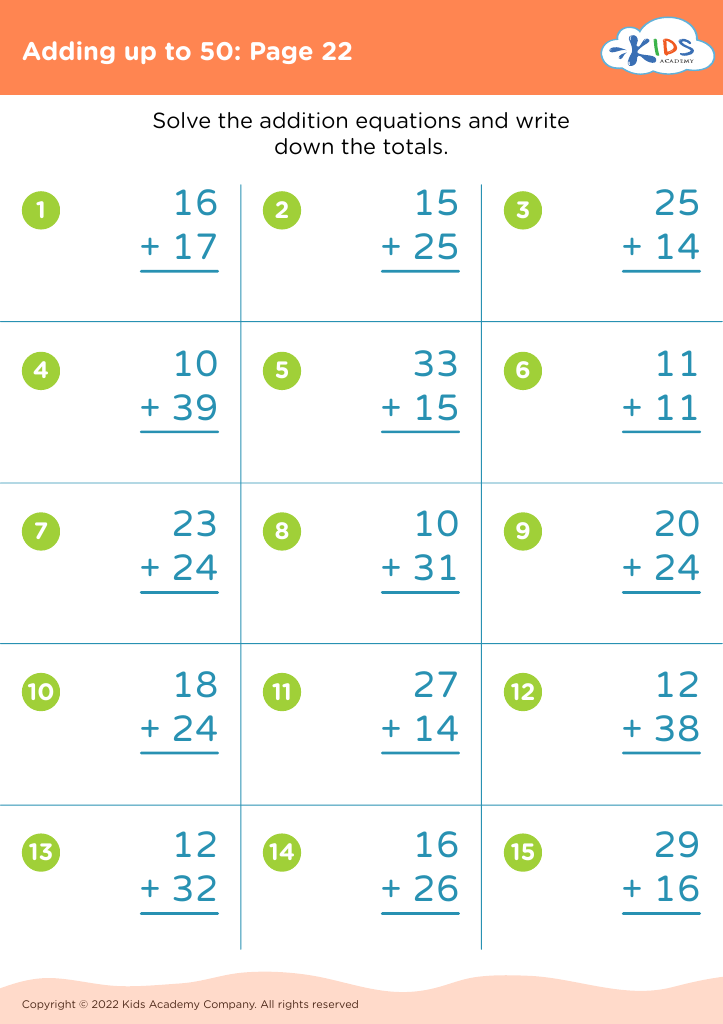
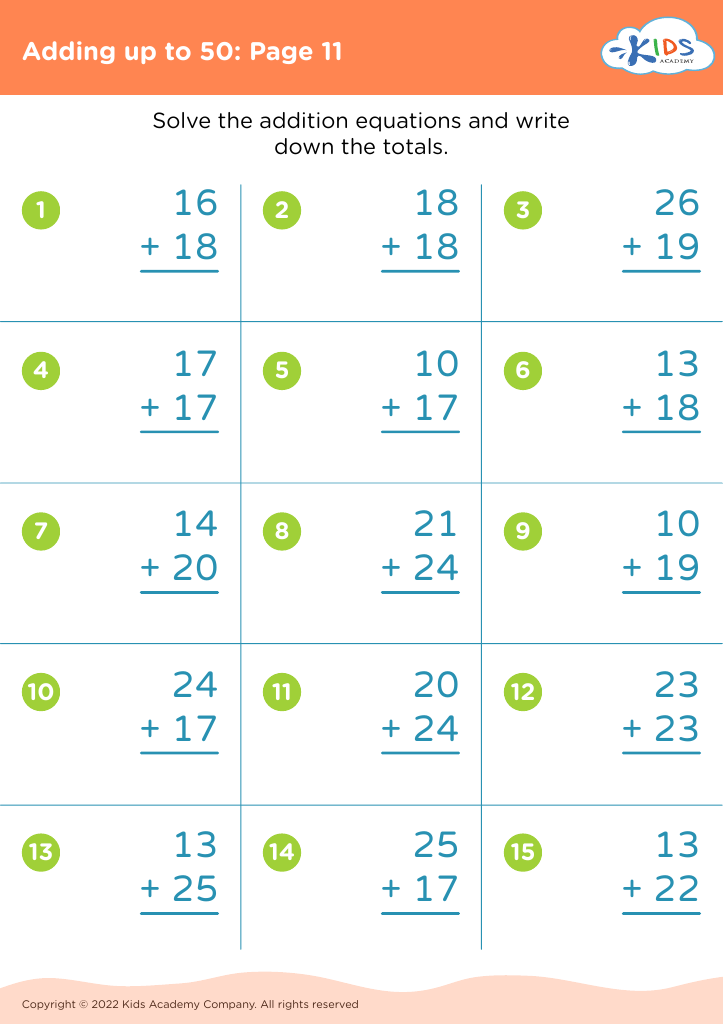


Understanding multiplication, adding up to 50, and general mathematical skills is crucial for children ages 4-8 for several reasons, and parents and teachers should deeply care about this aspect of their education.
Firstly, early mathematical skills lay the foundation for more complex concepts that children will encounter as they progress through their education. Multiplication and adding up to 50 help develop number sense and prepare children for future arithmetic and algebraic topics.
Secondly, mastering these basics fosters confidence in children. When they understand the principles of simple multiplication and addition, they are more likely to view math positively and feel capable of handling more challenging problems. This positive disposition towards math can extend to other areas of learning and boost overall academic performance.
Moreover, early math skills are not just about numbers; they enhance logical thinking and problem-solving abilities. Multiplication, for example, teaches patterns, grouping, and repetitive addition which are important cognitive skills. Adding up to 50 encourages mental arithmetic and efficiency.
Lastly, math is integrated into daily life. Whether it's sharing snacks equally (basic division and multiplication) or counting money, these early skills ensure that children grow up with the ability to navigate everyday tasks. Therefore, by focusing on these crucial early math skills, parents and teachers help children build a toolset for a successful future.