Understanding symmetry Adding up to 50 Misc Worksheets for Ages 4-8
3 filtered results
-
From - To
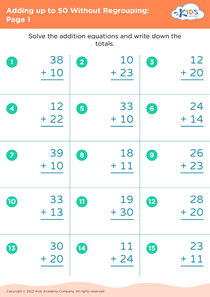
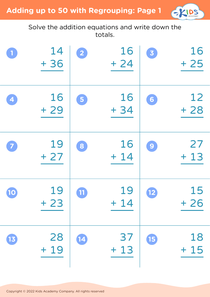
Our "Understanding Symmetry and Adding Up to 50" worksheets are designed for children aged 4-8 to build core math skills in a fun and engaging way. These printable exercises help young learners grasp the concept of symmetry and practice addition up to 50. Each worksheet combines creative activities with educational objectives, making learning enjoyable and effective. Perfect for home or classroom use, our collection supports early math development across a variety of skill levels, ensuring every child can progress at their own pace. Give your child the tools to succeed with our expertly crafted math resources!
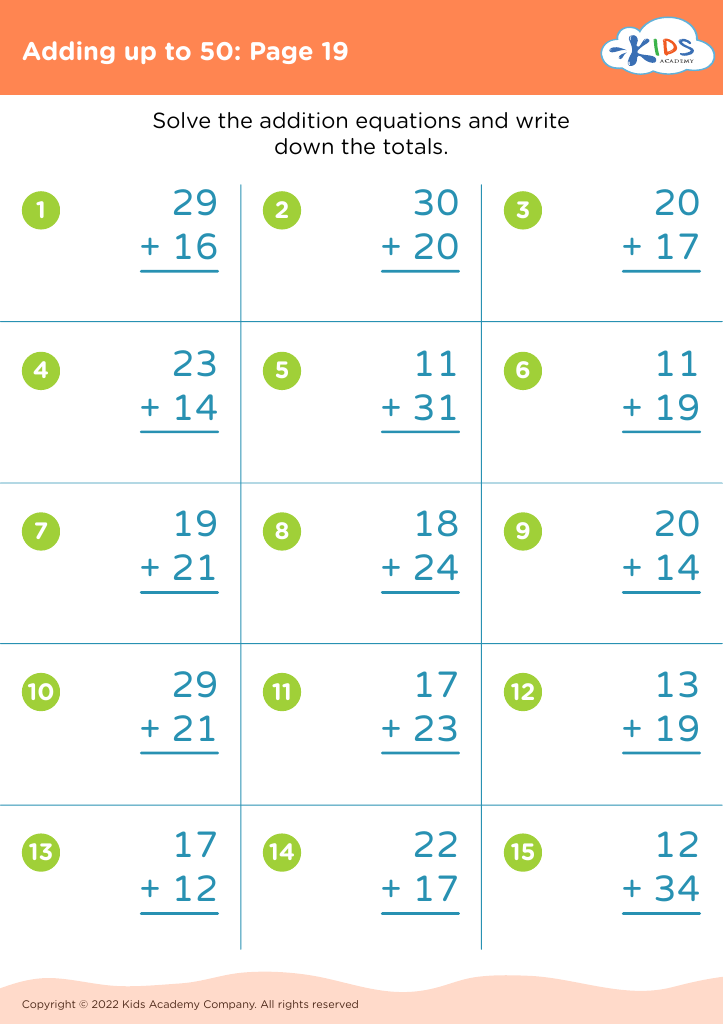
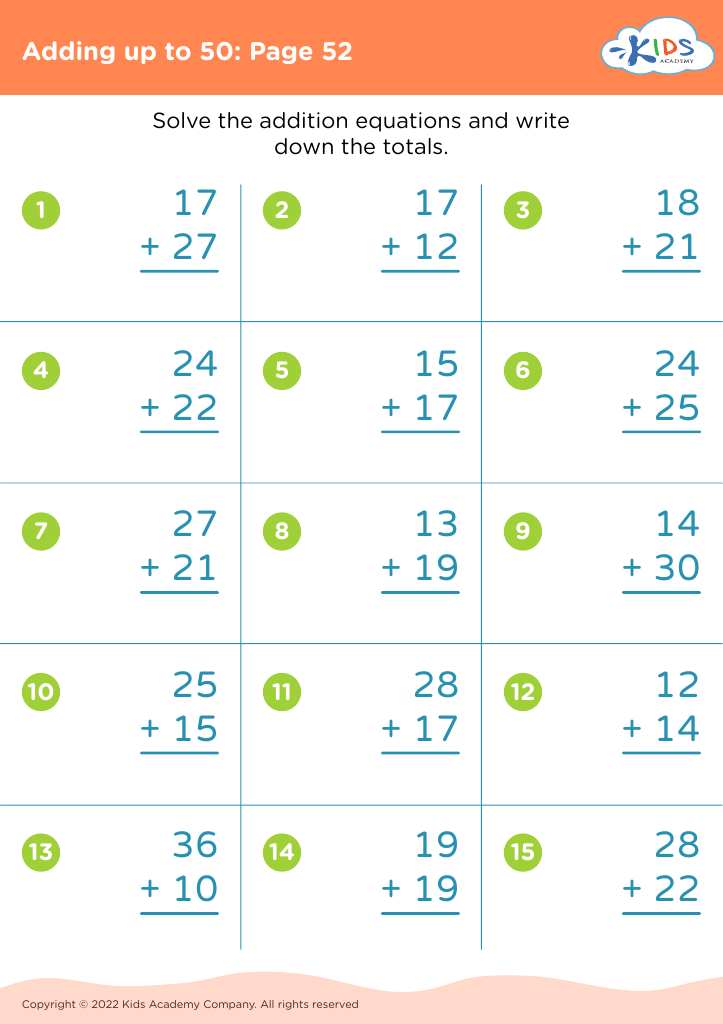
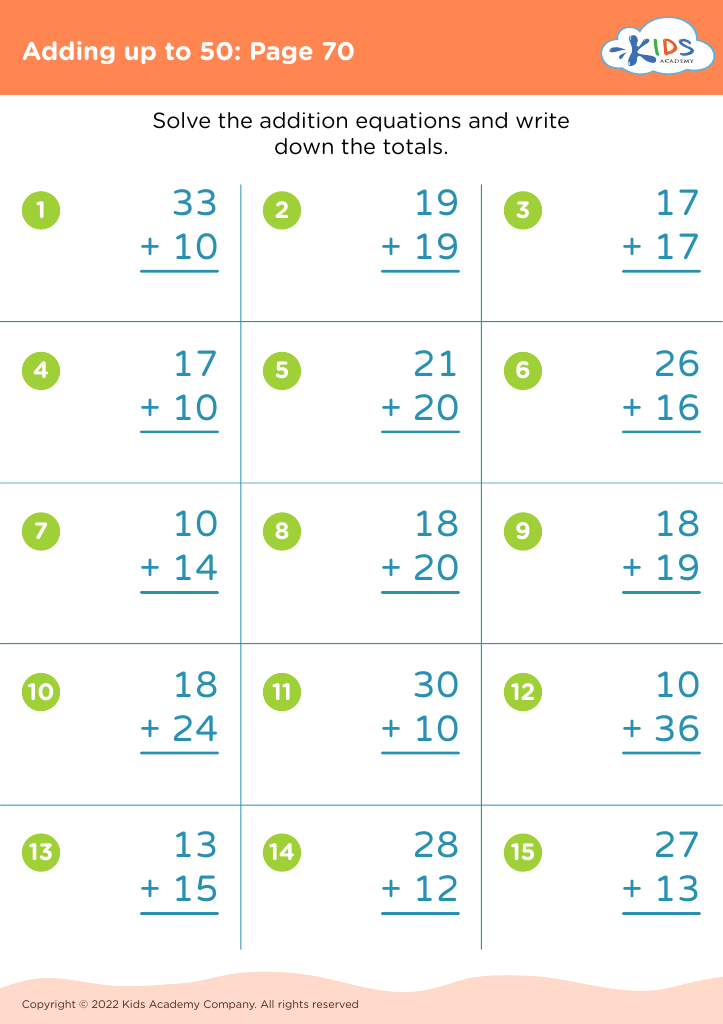


Understanding symmetry and learning basic arithmetic, such as adding up to 50, are crucial components of early childhood development, combining cognitive skills and fostering a love of learning.
Understanding Symmetry: Symmetry is not just an academic concept; it’s fundamental in developing spatial awareness and pattern recognition, which are vital cognitive skills. Recognizing symmetrical patterns aids in understanding geometry and builds the groundwork for more complex mathematical concepts encountered later on. It also stimulates cognitive development and helps children appreciate the balance and order in the world around them.
Adding Up to 50: Basic arithmetic like adding up to 50 lays the foundation for numeracy. This range is appropriate for young learners, allowing them to grasp the principles of addition without becoming overwhelmed. Mastery of these basic skills encourages confidence in math, making more complex mathematical concepts more accessible as they progress in their education. It also enhances problem-solving, logical reasoning, and computational skills, which are essential in everyday life.
Miscellaneous Benefits: Interacting with mathematical concepts from a young age encourages critical thinking, patience, and perseverance. For children aged 4-8, these activities support fine motor skills through writing and interacting with manipulatives, promote cooperation and communication when solving problems in groups, and nurture curiosity and a lifelong passion for learning.
Overall, a strong early foundation in math cultivates confidence, critical thinking, and a deeper understanding of the world, benefiting children in everyday activities and future academic pursuits.