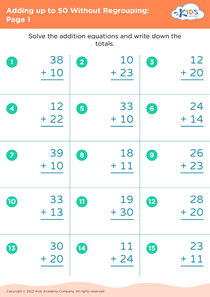
Comparing Fractions Adding up to 50 with Regrouping Worksheets for Ages 4-8
12 filtered results
-
From - To
Unlock your child's math potential with our "Comparing Fractions Adding up to 50 with Regrouping Worksheets," specifically designed for children ages 4-8. These engaging worksheets help young learners grasp the concept of comparing fractions while integrating addition skills that involve regrouping. Through fun activities and intuitive exercises, children will strengthen their understanding of fractions, enhancing their confidence and mathematical abilities. Our user-friendly resources promote active learning, encouraging kids to explore numerical relationships in a clear and enjoyable manner. Prepare them for future math challenges while experiencing a joyful learning journey with our carefully crafted worksheets!
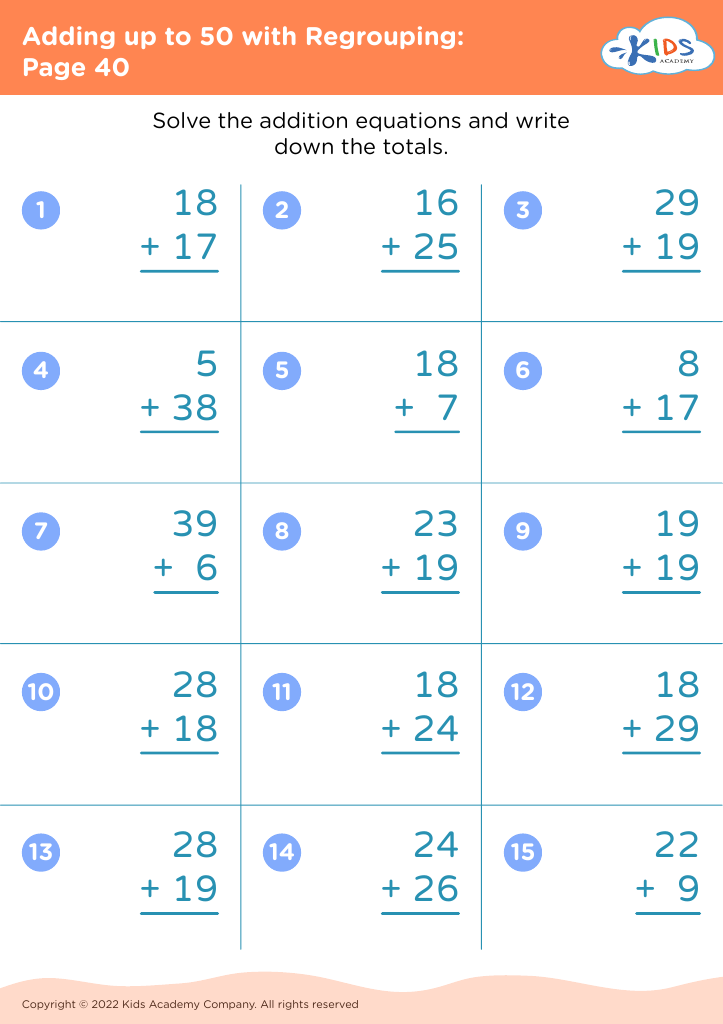
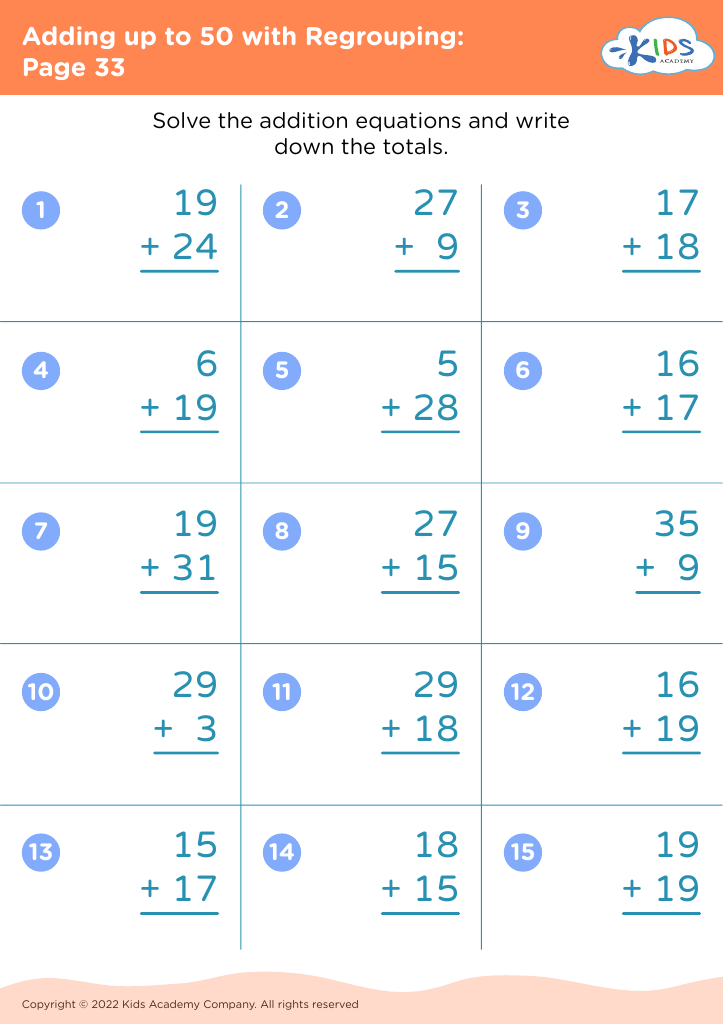
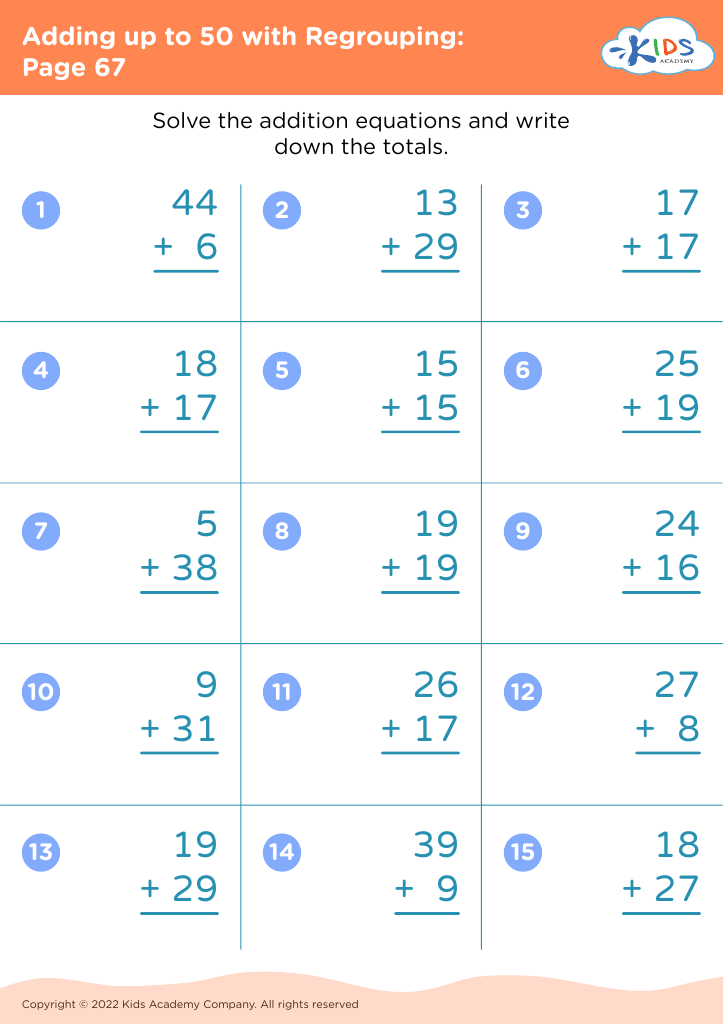
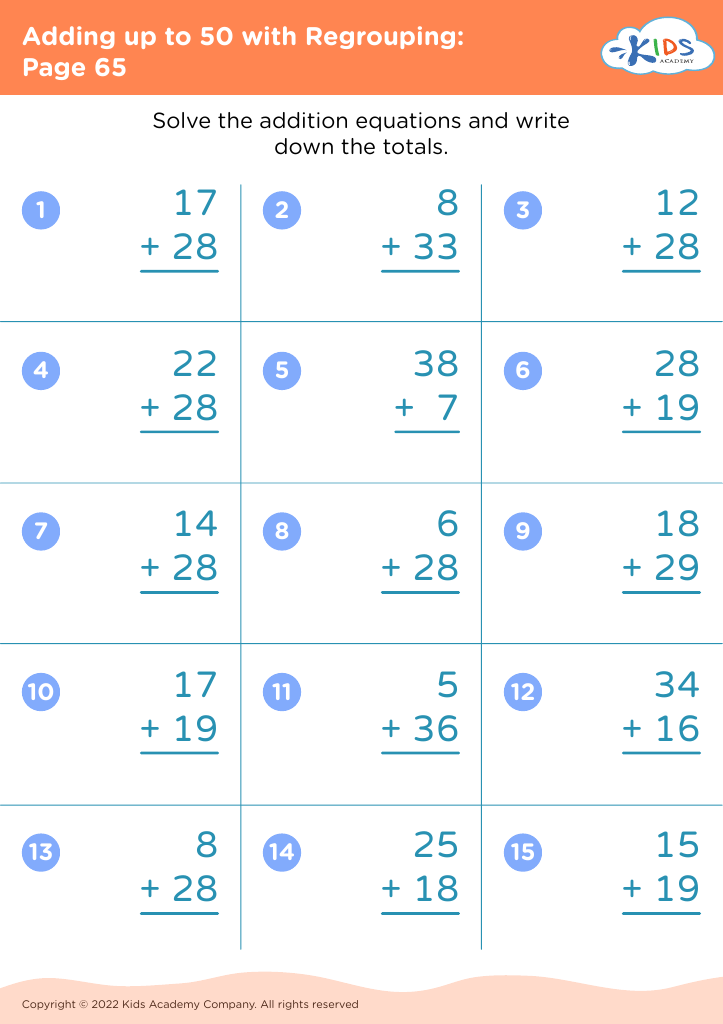
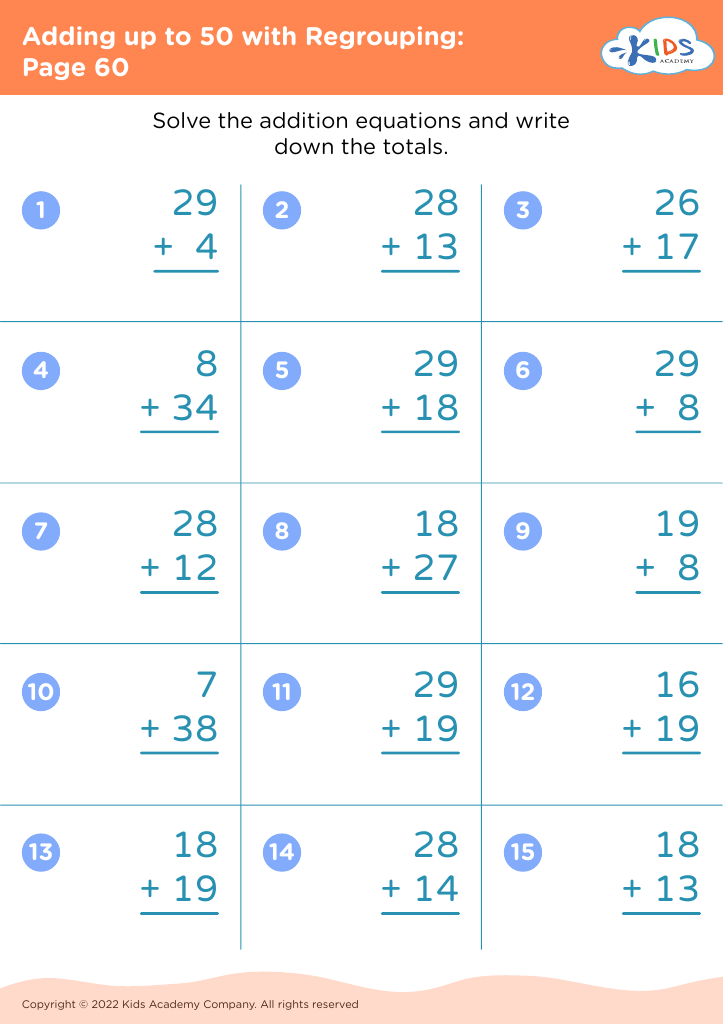
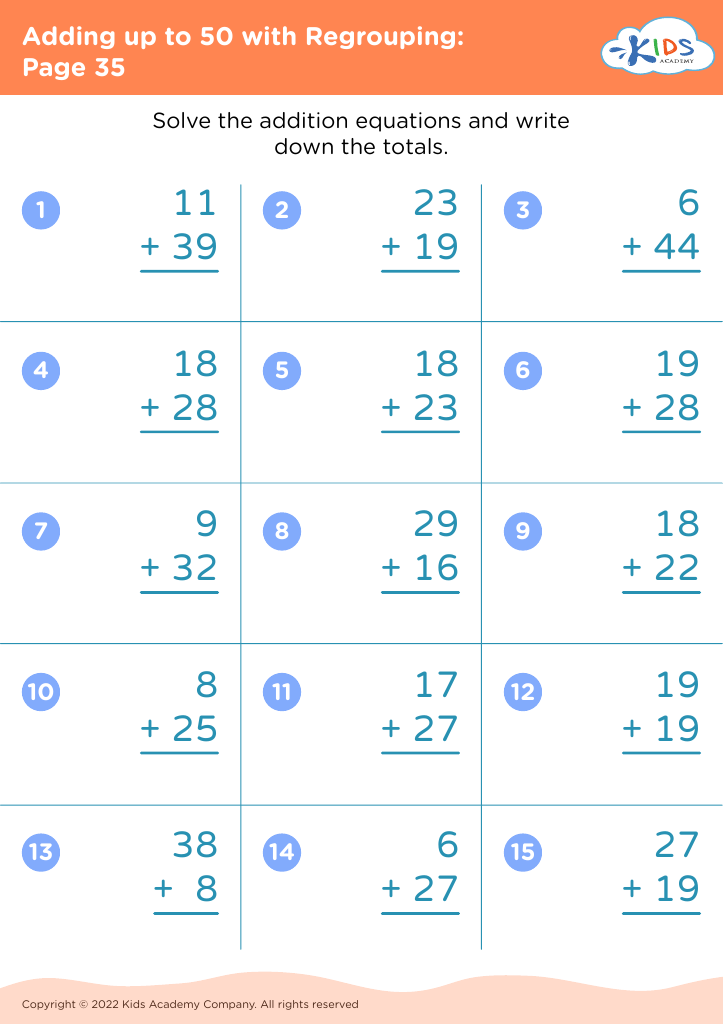
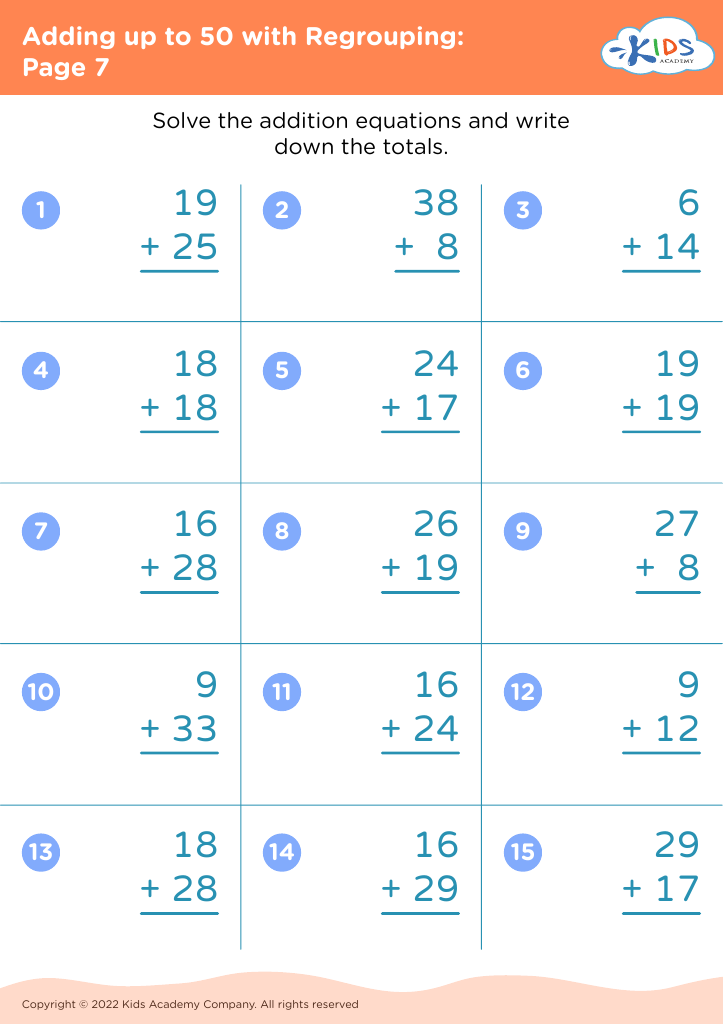
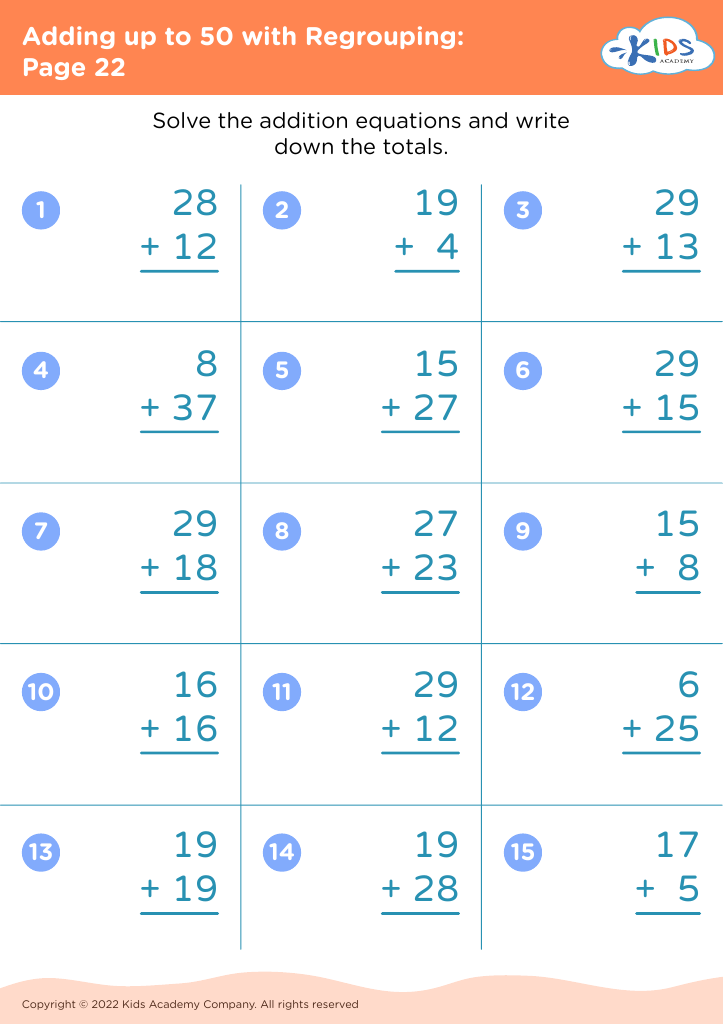
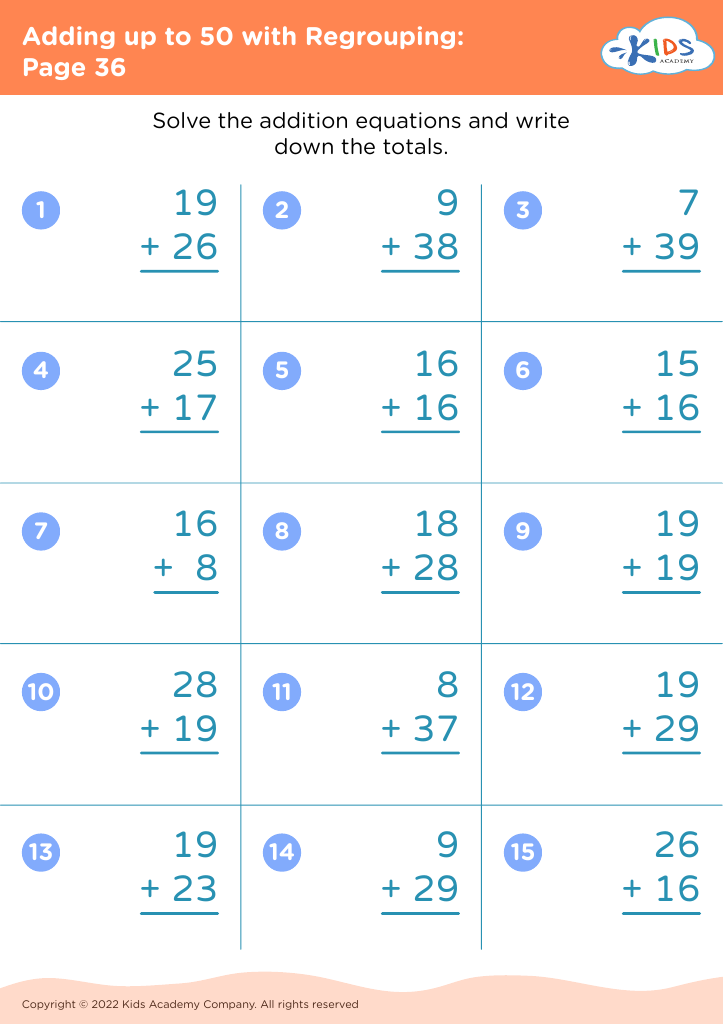
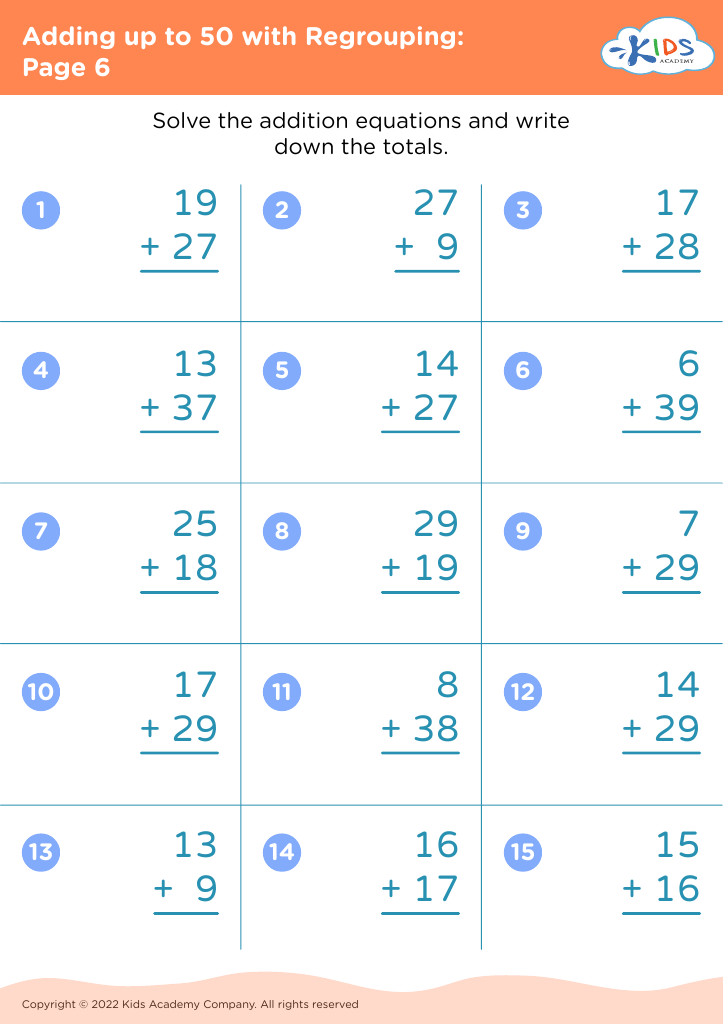
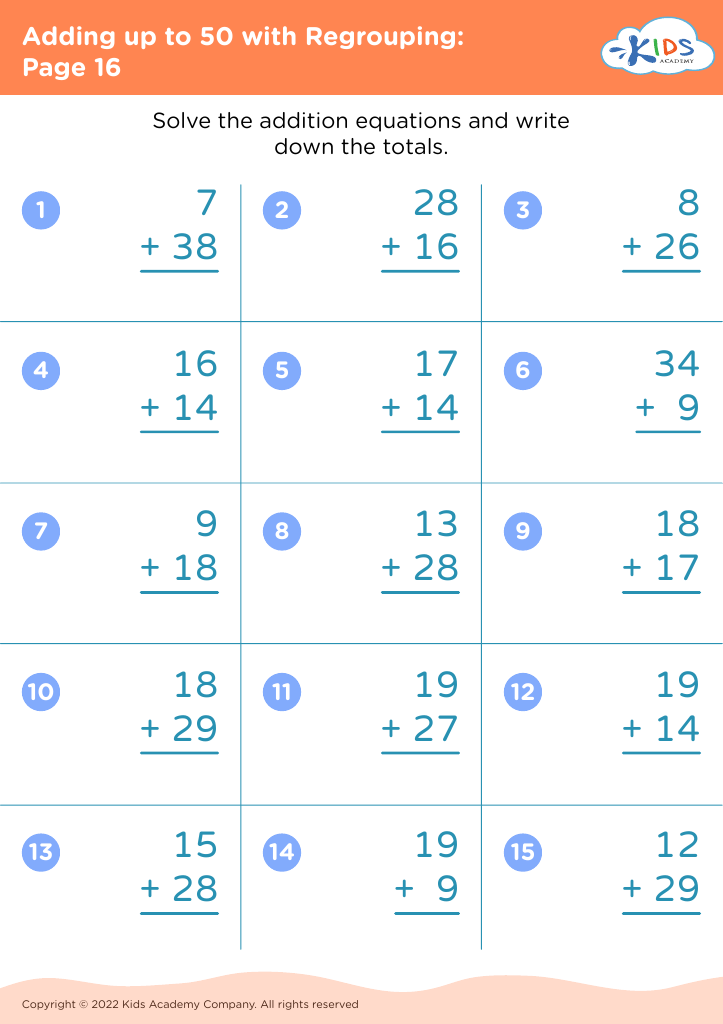
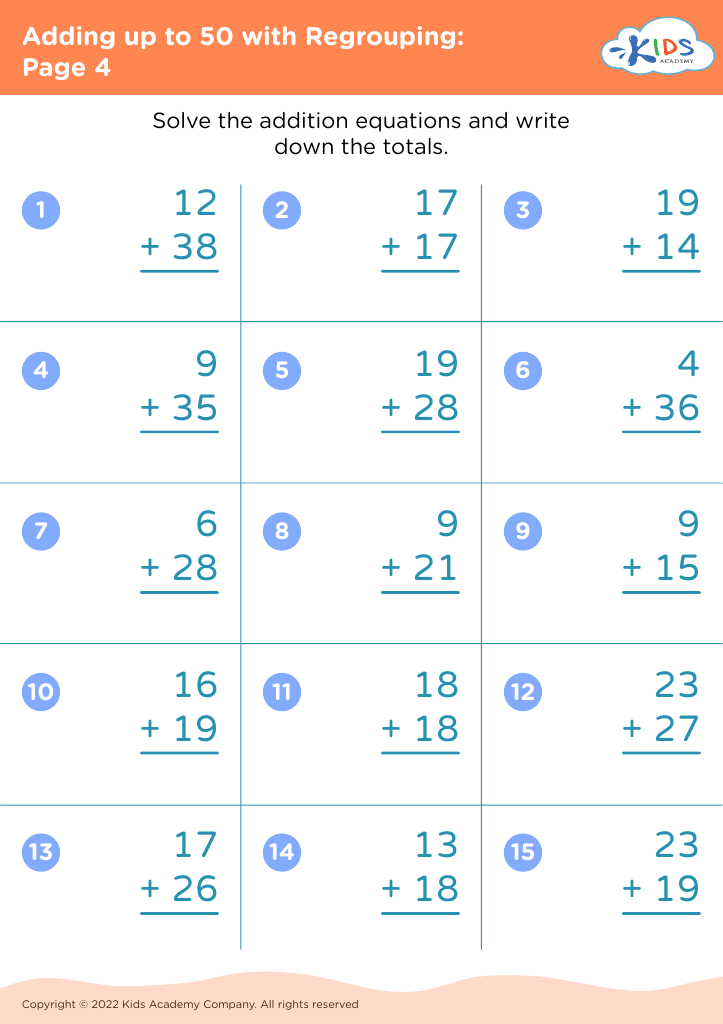


Understanding how to compare fractions, particularly when adding up to 50 with regrouping, is vital for young learners aged 4-8. This mathematical concept fosters a strong foundation in numerical sense, critical thinking, and problem-solving skills. Firstly, fractions represent parts of a whole, and grasping this concept enhances children's ability to comprehend everyday situations, such as measuring ingredients while cooking or dividing items among friends, enhancing their practical life skills.
Moreover, the technique of regrouping is essential in teaching children how to manage numbers beyond 10, ensuring they can handle more complex calculations in the future. When parents and teachers emphasize comparing fractions and regrouping, they help children develop essential cognitive processes like estimation and logical reasoning. This builds confidence and resilience, which are imperative as they advance in their educational journey.
Lastly, early mastery of these concepts impacts children's performance in future mathematics topics, including algebra and geometry. By paying attention to these foundational skills, parents and teachers can create engaging activities that make learning fun, thus nurturing a positive attitude toward mathematics and establishing lifelong learning habits. In nurturing this understanding, educators and parents pave the way for academic success and a love for learning in young minds.