Filters

17 filtered results

Clear all filters
Favorites
With answer key
Interactive

17 filtered results

Difficulty Level

Grade


Explore our "Understanding Fractions: Adding Up to 50 with Regrouping Worksheets" designed for children ages 4-8. These engaging worksheets help young learners grasp the fundamentals of fractions while mastering addition up to 50 with regrouping. Fun visuals and relatable contexts make it easier for kids to comprehend and enjoy math. Each worksheet encourages critical thinking and builds a strong foundation for future mathematical concepts. Suitable for parents, teachers, or tutors, these resources will foster a deeper understanding of fractions, promoting confidence and competence in young learners. Dive into hands-on learning experiences and watch your child excel in math!
Check out this FREE Trial Lesson on Adding up to 50 with Regrouping for age 4-8!

T

Favorites
With answer key
Interactive
  • 4-8
  • Understanding fractions
  • Adding up to 50 with Regrouping
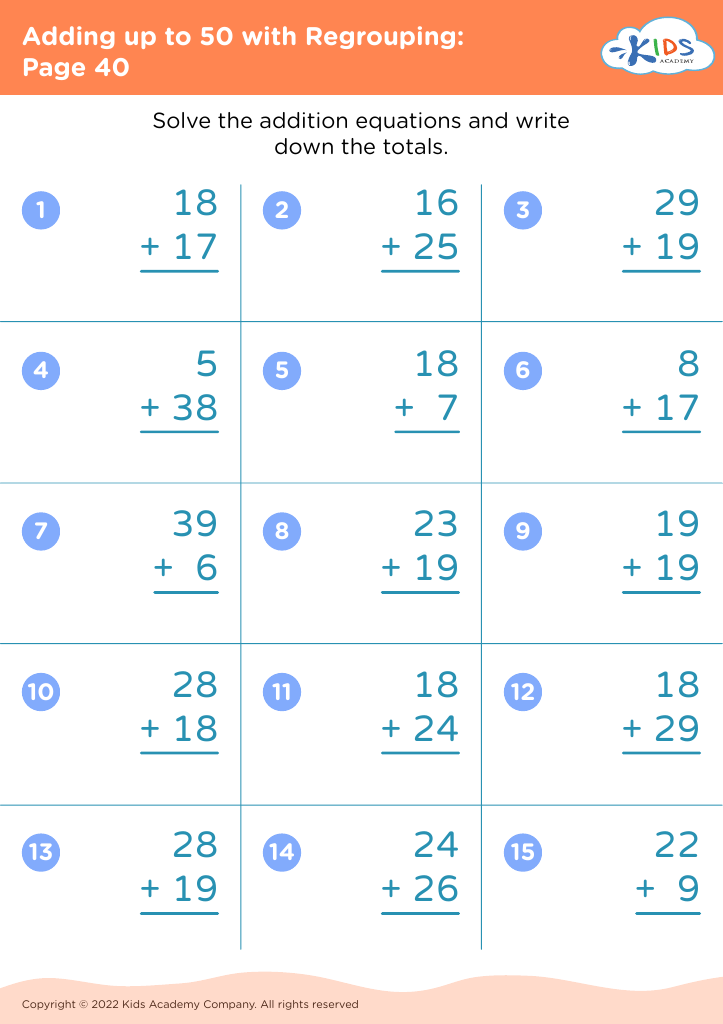
Adding up to 50 with Regrouping: Page 40
Worksheet
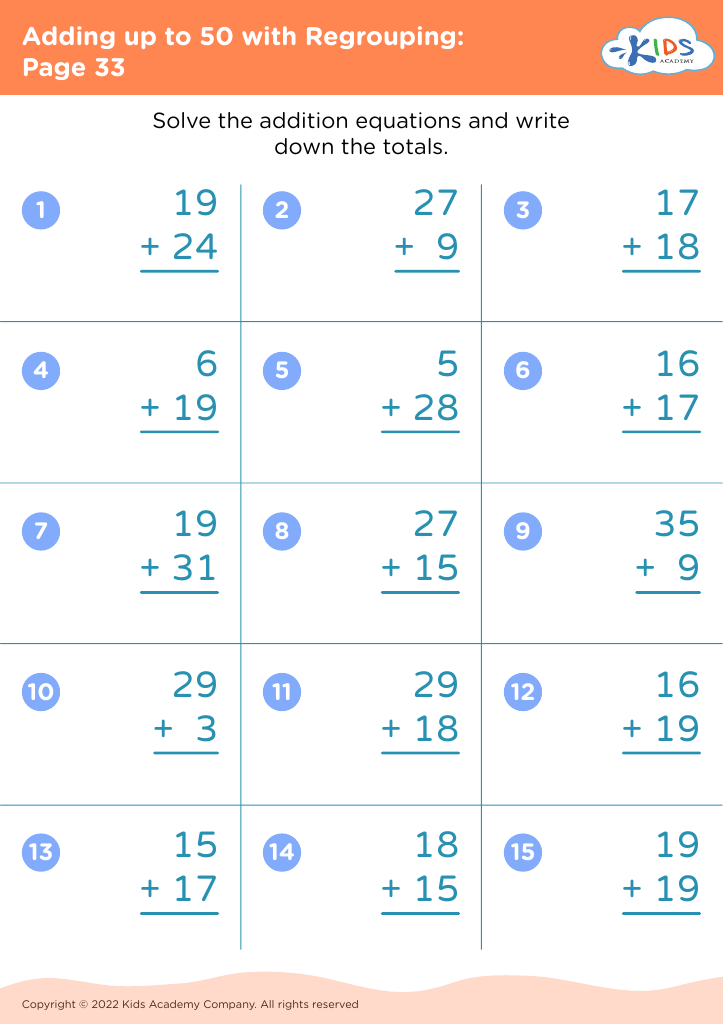
Adding up to 50 with Regrouping: Page 33
Worksheet
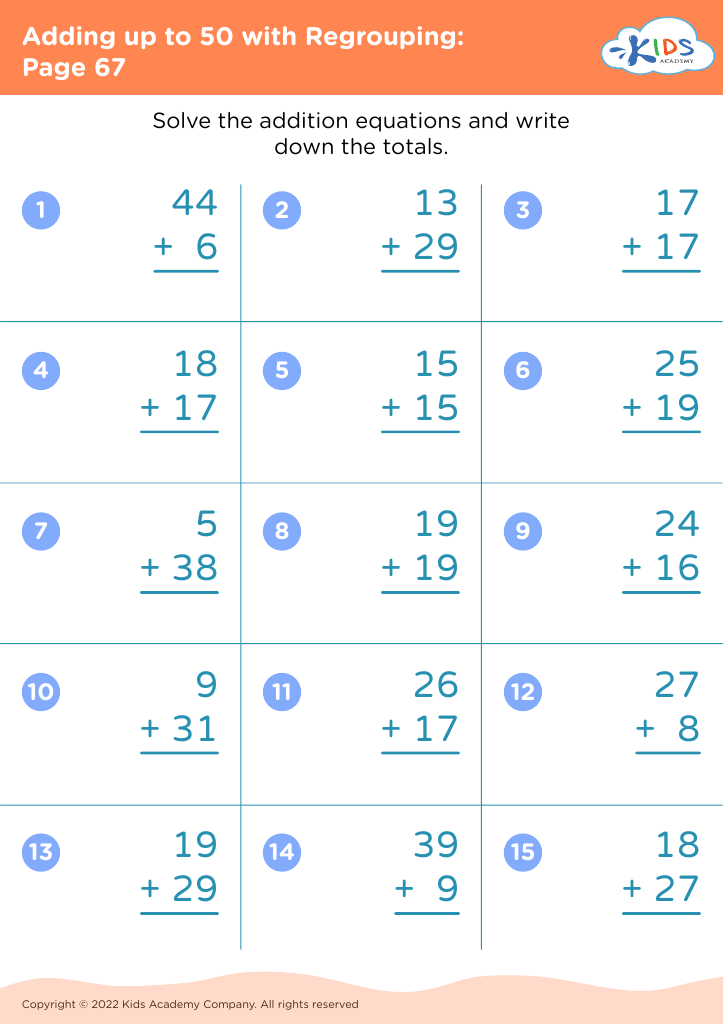
Adding up to 50 with Regrouping: Page 67
Worksheet
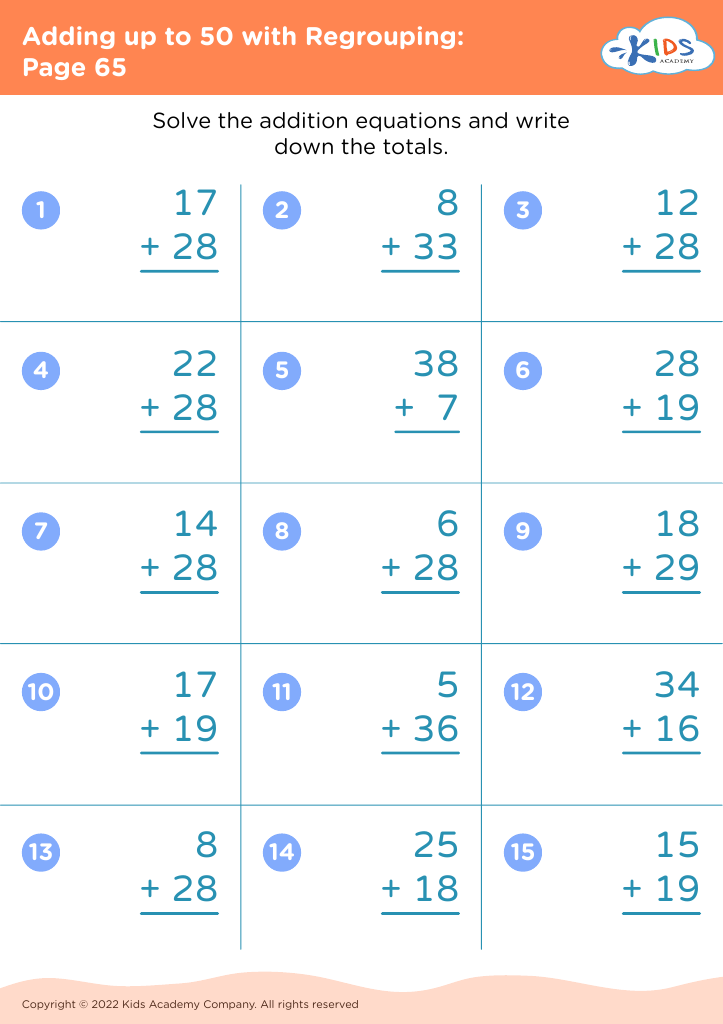
Adding up to 50 with Regrouping: Page 65
Worksheet
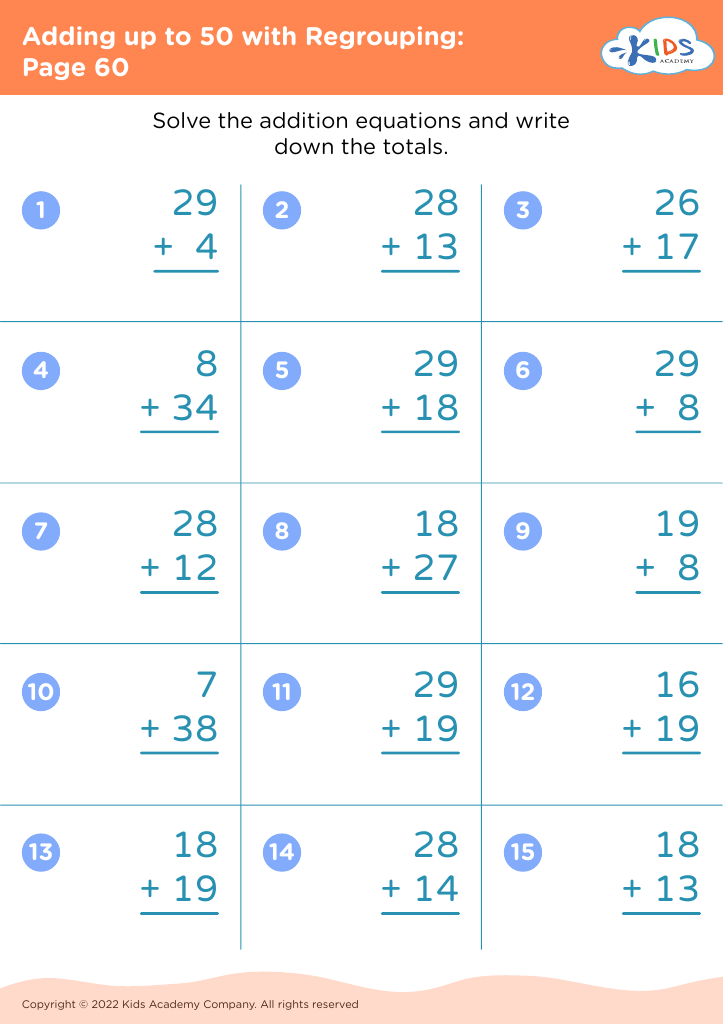
Adding up to 50 with Regrouping: Page 60
Worksheet
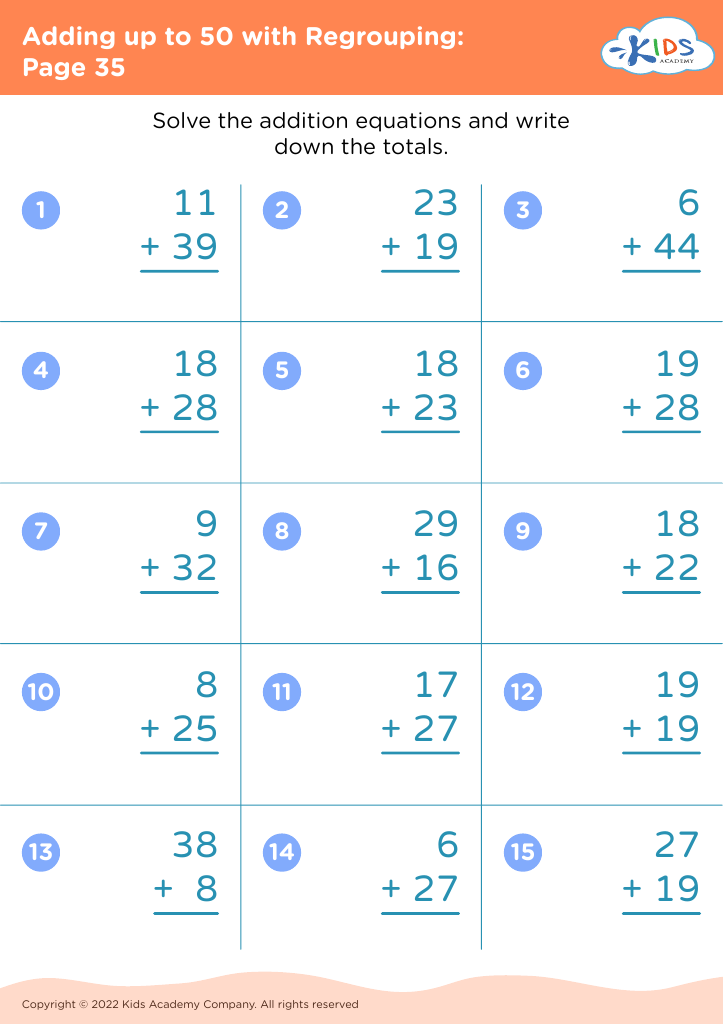
Adding up to 50 with Regrouping: Page 35
Worksheet
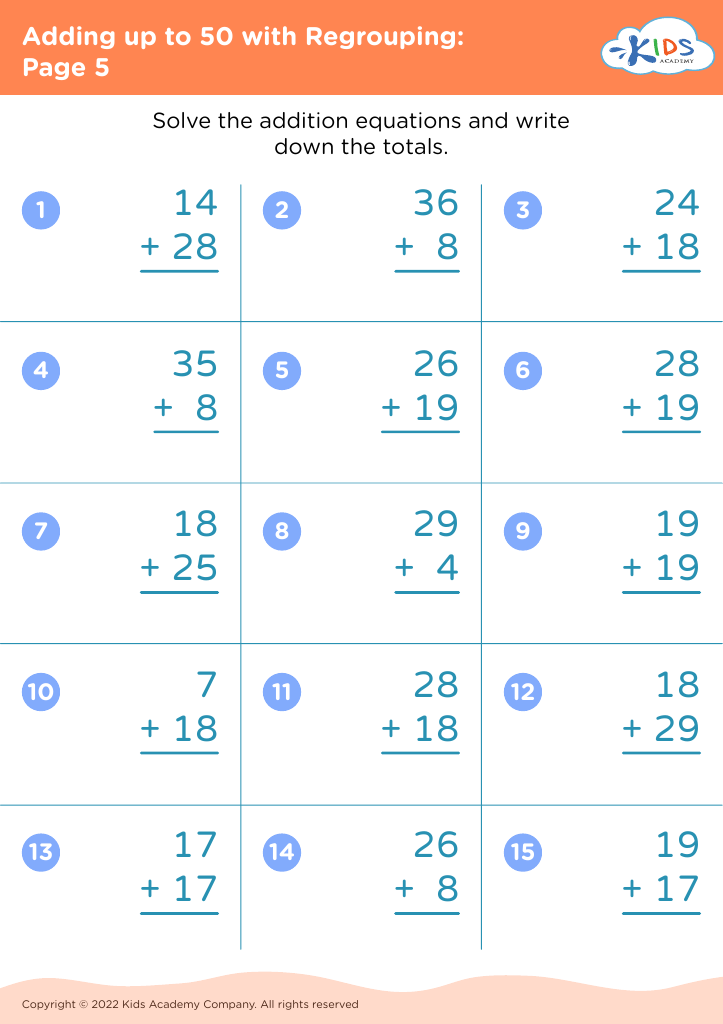
Adding up to 50 with Regrouping: Page 5
Worksheet
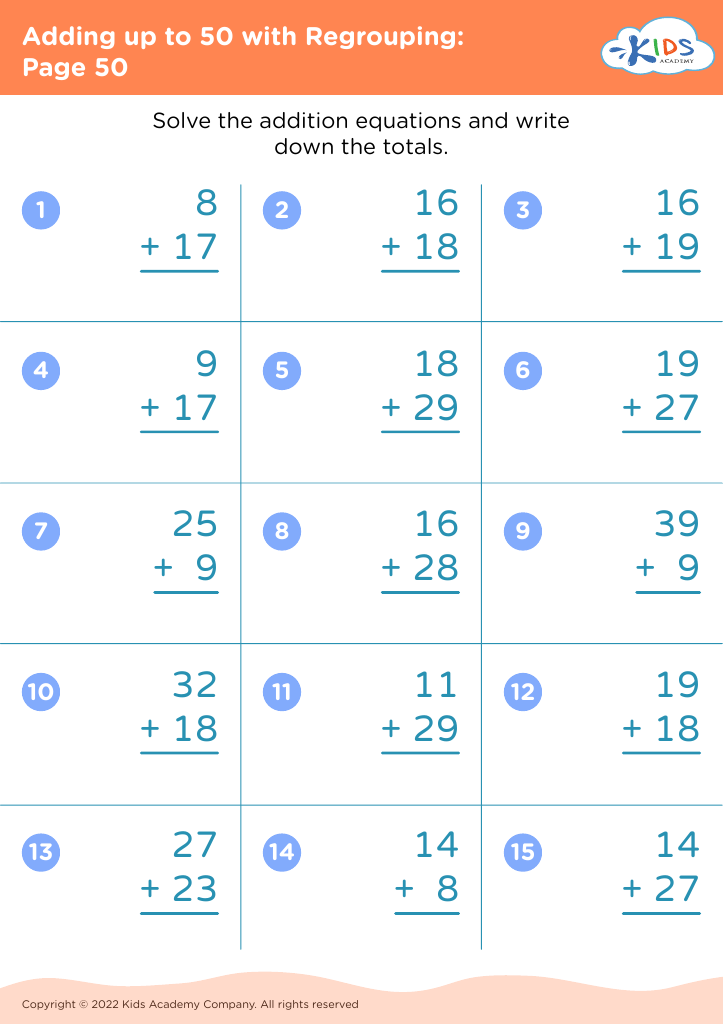
Adding up to 50 with Regrouping: Page 50
Worksheet
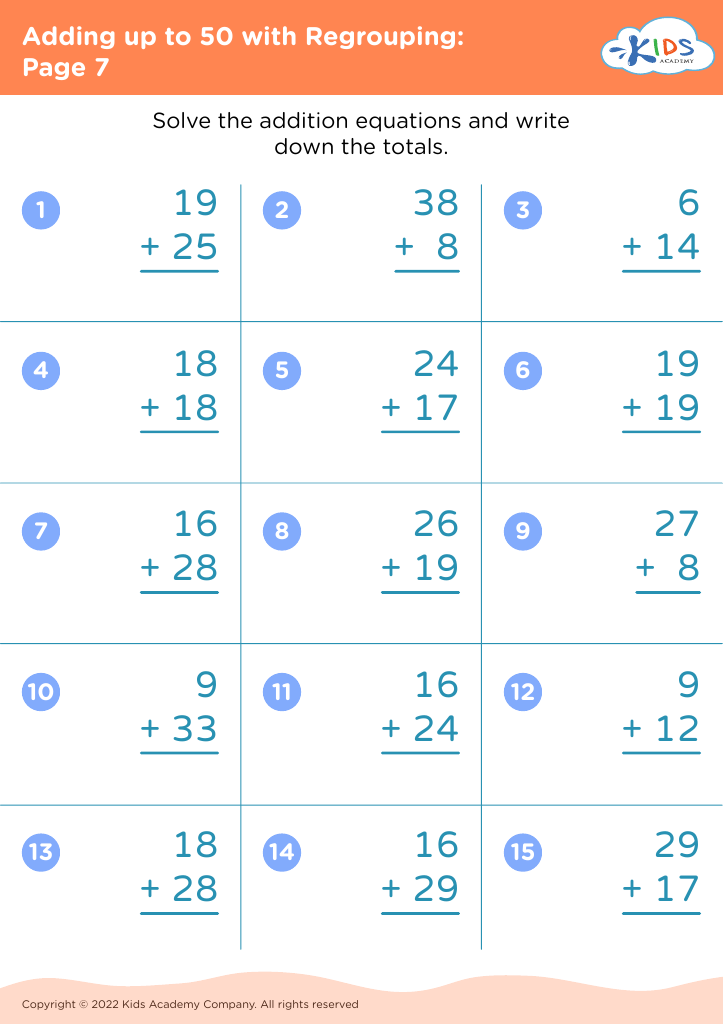
Adding up to 50 with Regrouping: Page 7
Worksheet
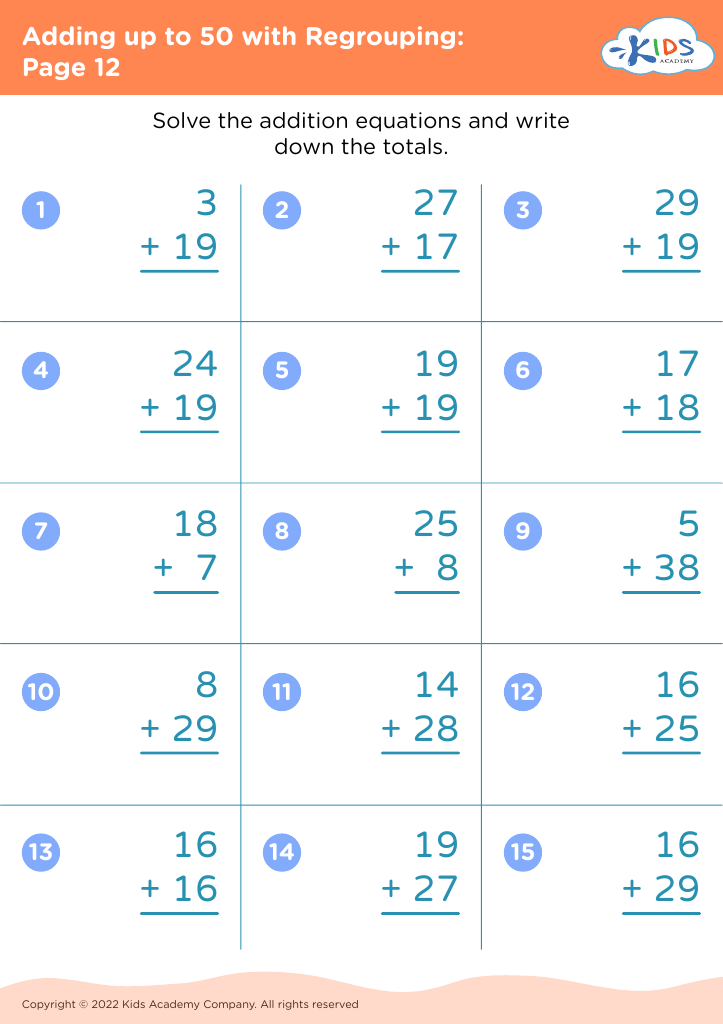
Adding up to 50 with Regrouping: Page 12
Worksheet
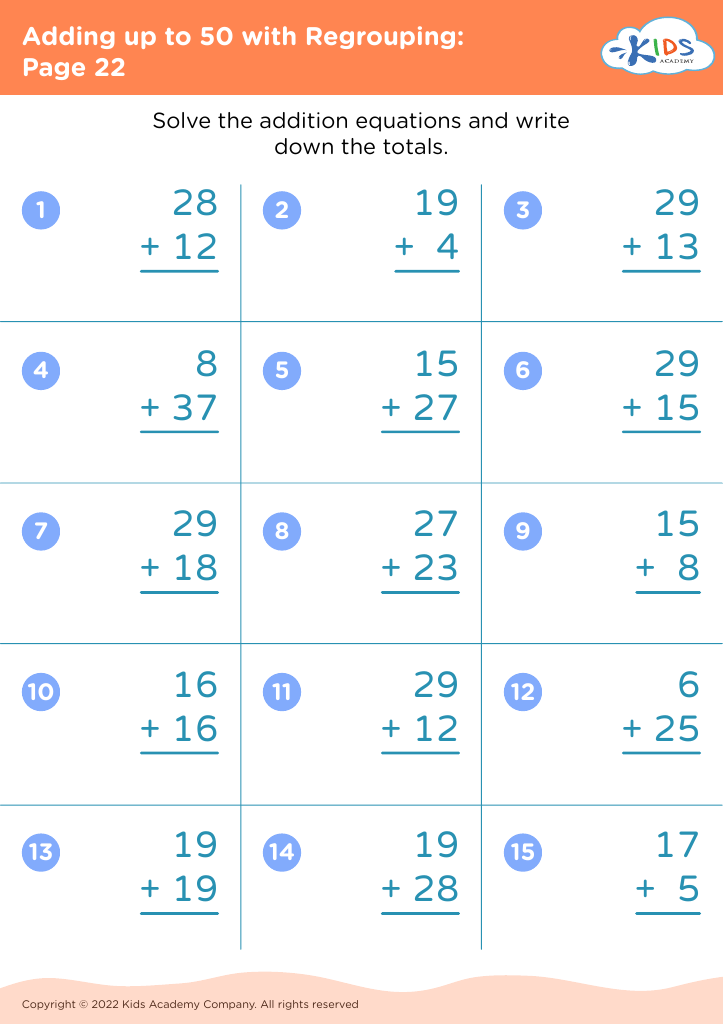
Adding up to 50 with Regrouping: Page 22
Worksheet
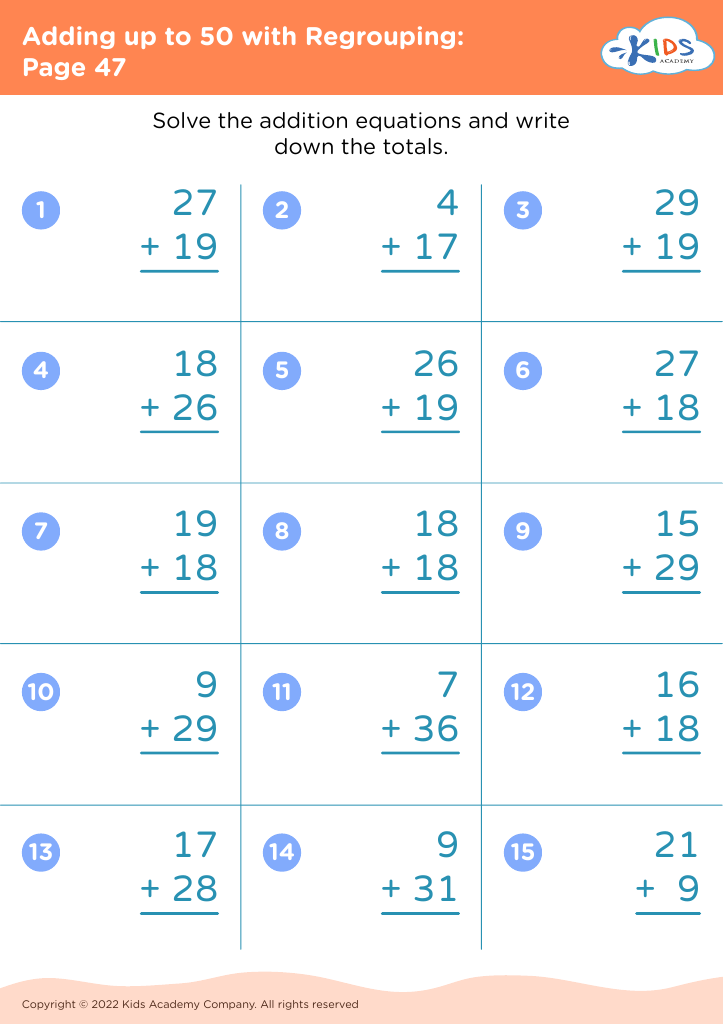
Adding up to 50 with Regrouping: Page 47
Worksheet
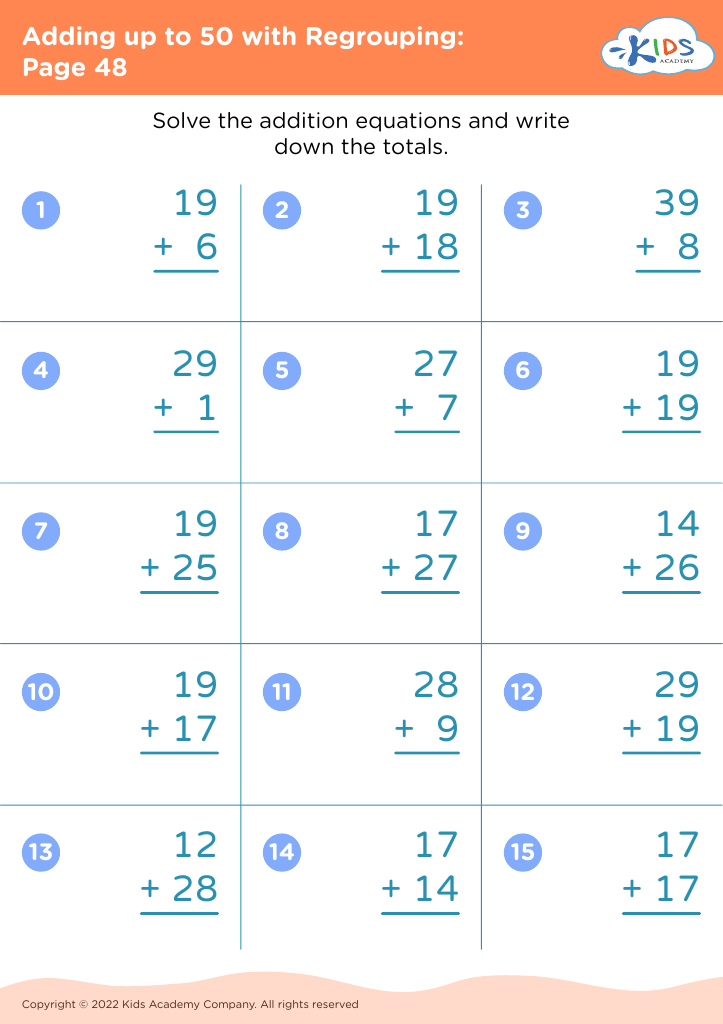
Adding up to 50 with Regrouping: Page 48
Worksheet
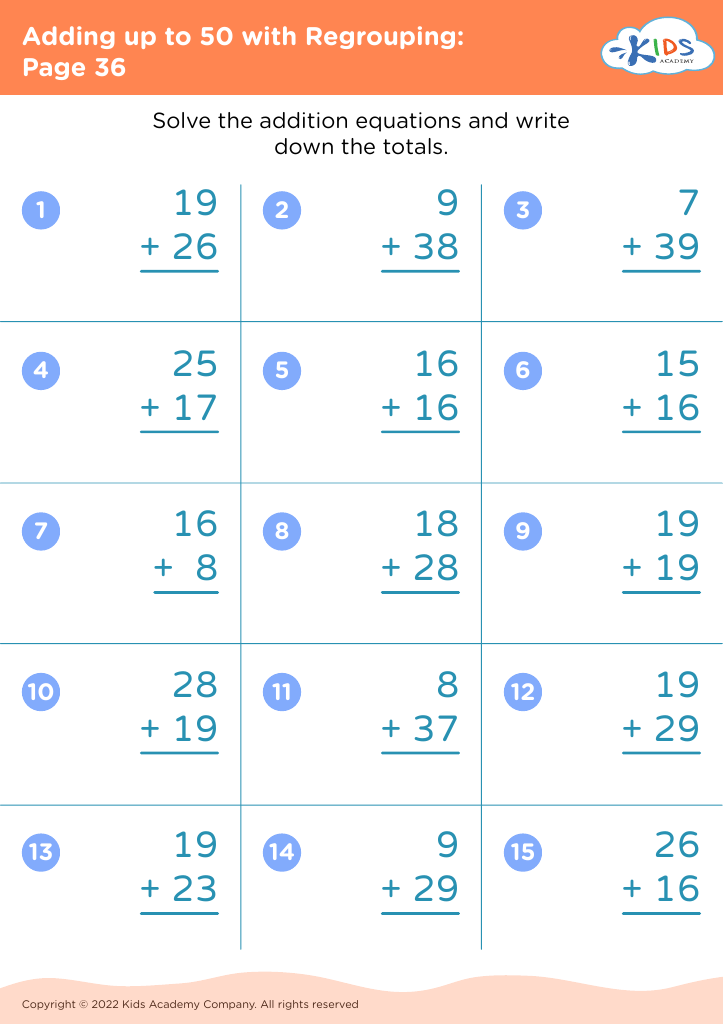
Adding up to 50 with Regrouping: Page 36
Worksheet
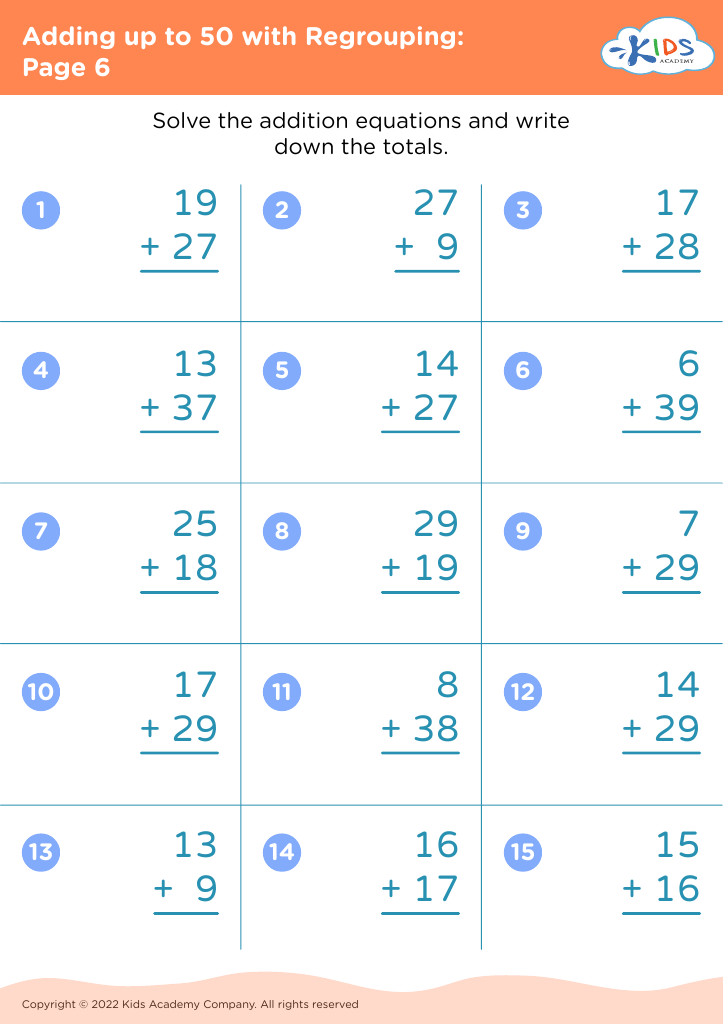
Adding up to 50 with Regrouping: Page 6
Worksheet
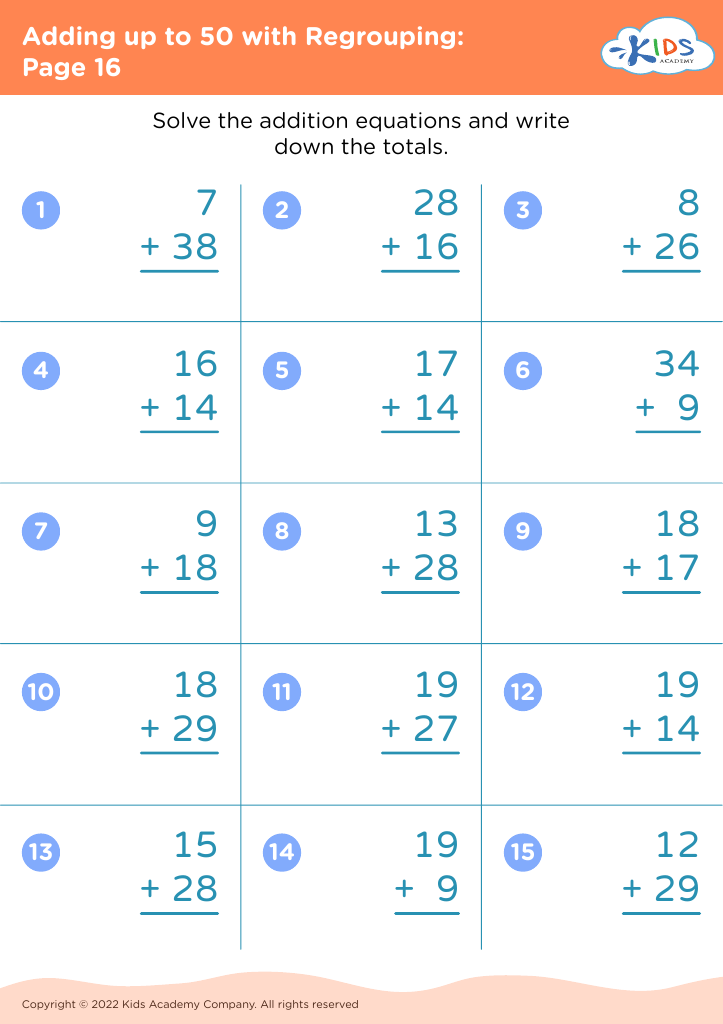
Adding up to 50 with Regrouping: Page 16
Worksheet
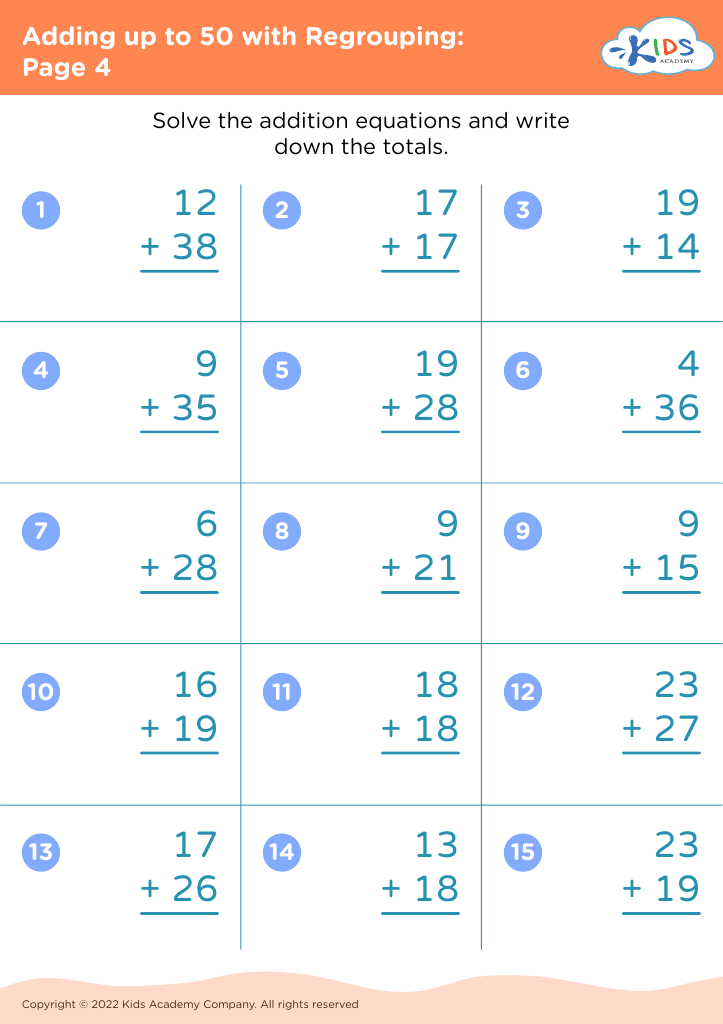
Adding up to 50 with Regrouping: Page 4
Worksheet


Understanding fractions and the concept of adding up to 50 with regrouping is crucial for young learners aged 4-8, as it lays a foundation for their mathematical development. At this age, children are not only developing basic arithmetic skills but also learning how to think critically and solve problems. Mastering fractions helps children understand parts of a whole, which is a key concept that transcends mathematics and applies to everyday life situations, such as cooking, sharing, and measuring.

Additionally, introducing the concept of regrouping while adding allows children to comprehend numerical relationships more deeply. It fosters flexibility in thinking and enhances their ability to approach complex problems in the future. As they progress, strengths in these foundational skills can significantly boost their confidence and interest in math.

For parents and teachers, focusing on these concepts supports a child’s overall cognitive development and equips them with tools for success in school and beyond. Engaging children through interactive activities and practical exercises also strengthens their learning experience, making math a joyful and relevant subject. Overall, prioritizing an understanding of fractions and regrouping can significantly shape a child’s academic journey and equip them for more advanced topics later on.