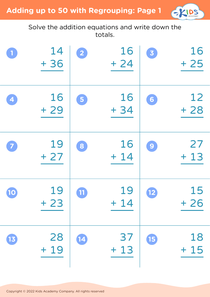
Counting practice Adding up to 50 Without Regrouping Worksheets for Ages 4-8
5 filtered results
-
From - To
Discover our "Counting Practice Adding Up to 50 Without Regrouping Worksheets," specially designed for children aged 4-8. These engaging worksheets provide a fun and interactive way for young learners to enhance their addition skills while focusing on sums up to 50. With clear instructions and visually appealing layouts, children will develop confidence in counting and mastering addition without the complexity of regrouping. Ideal for classroom use or at-home learning, our worksheets promote essential math skills through varied exercises that cater to different learning styles. Start your child's mathematical journey today and watch their skills flourish!
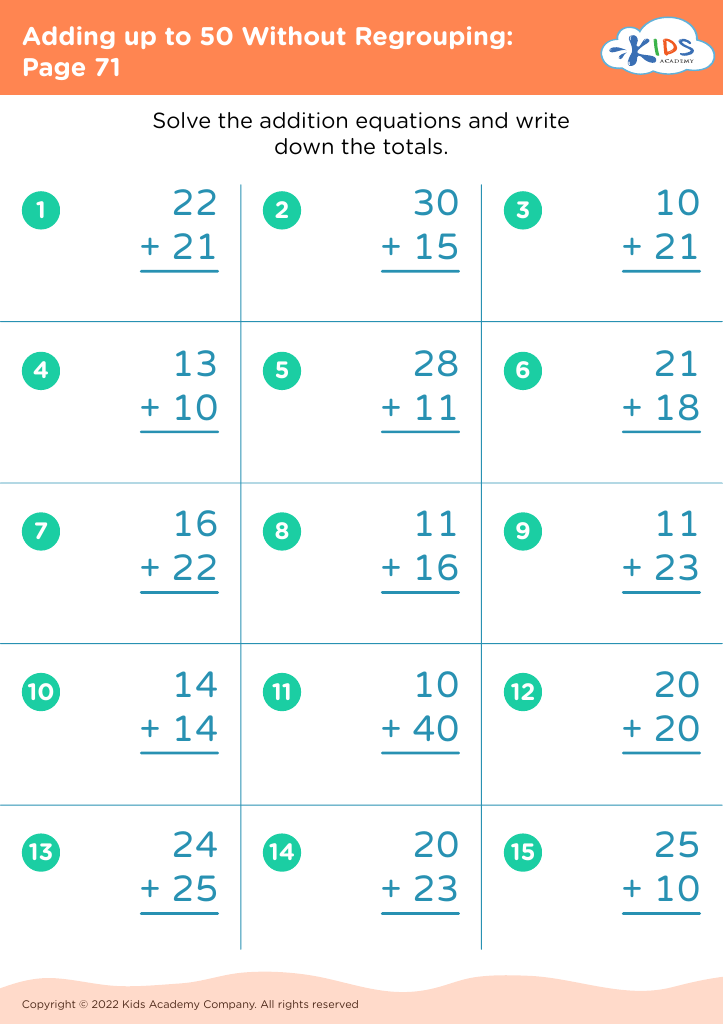
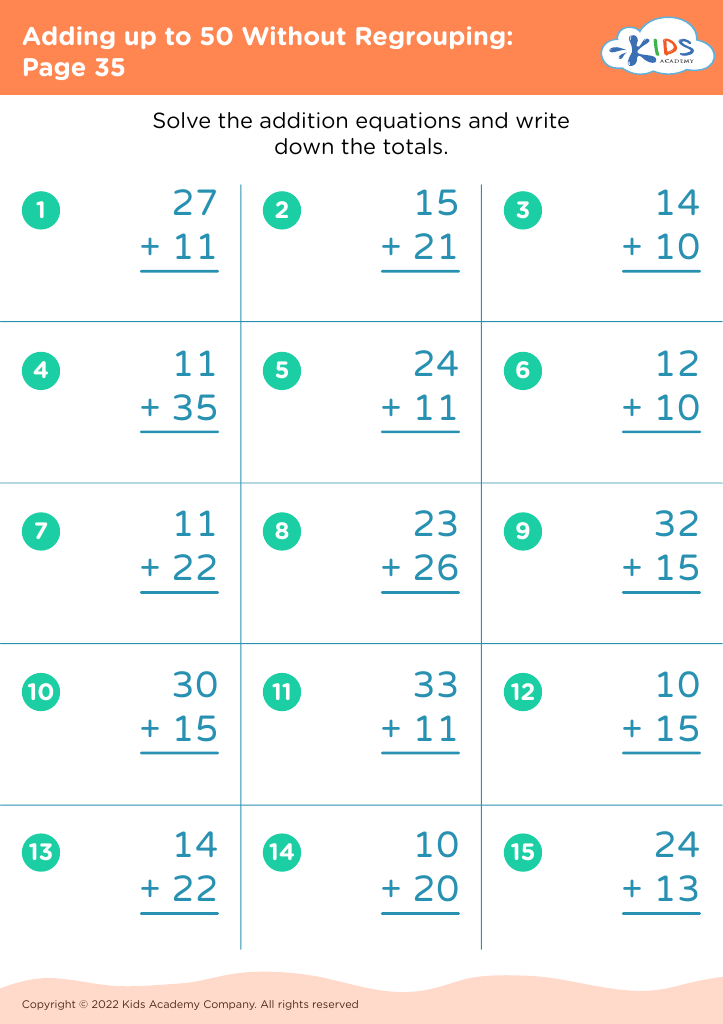
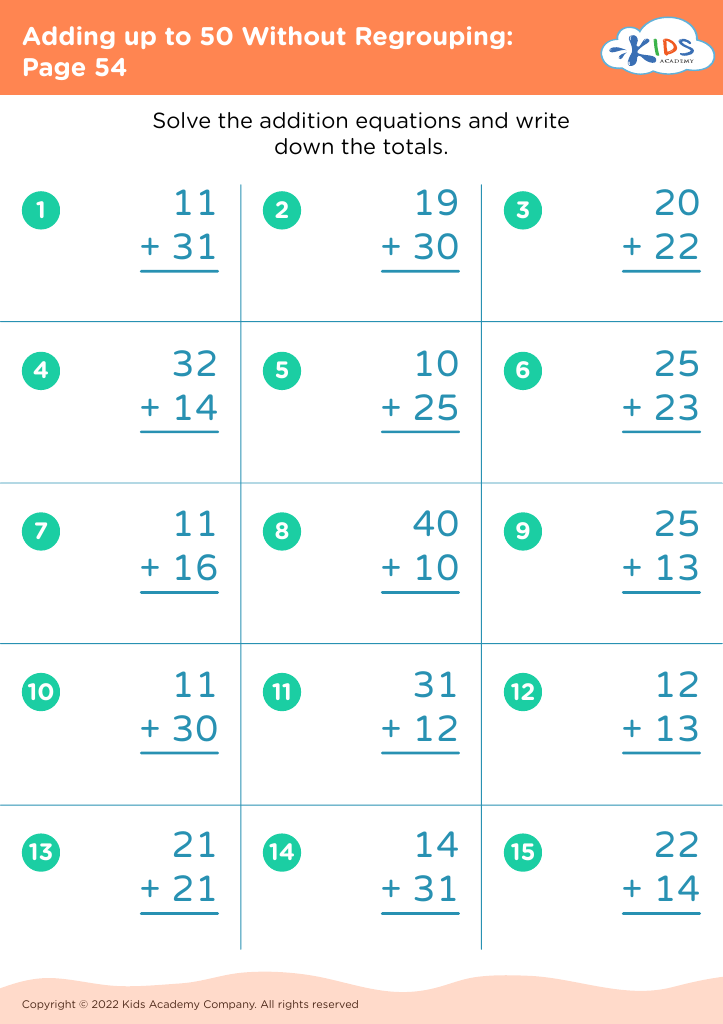
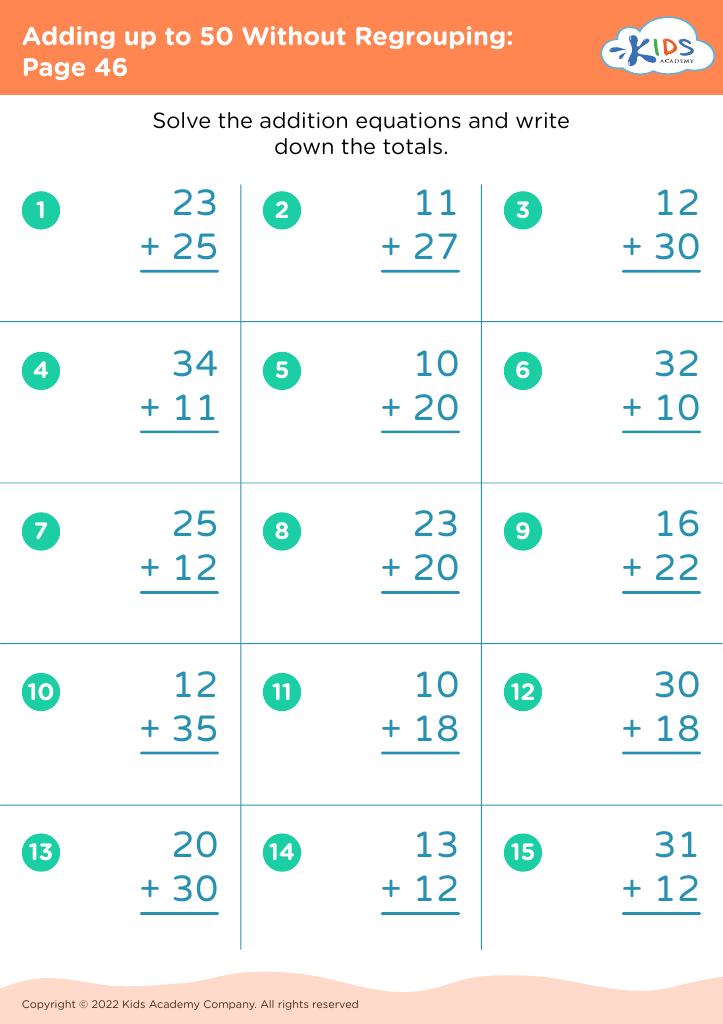
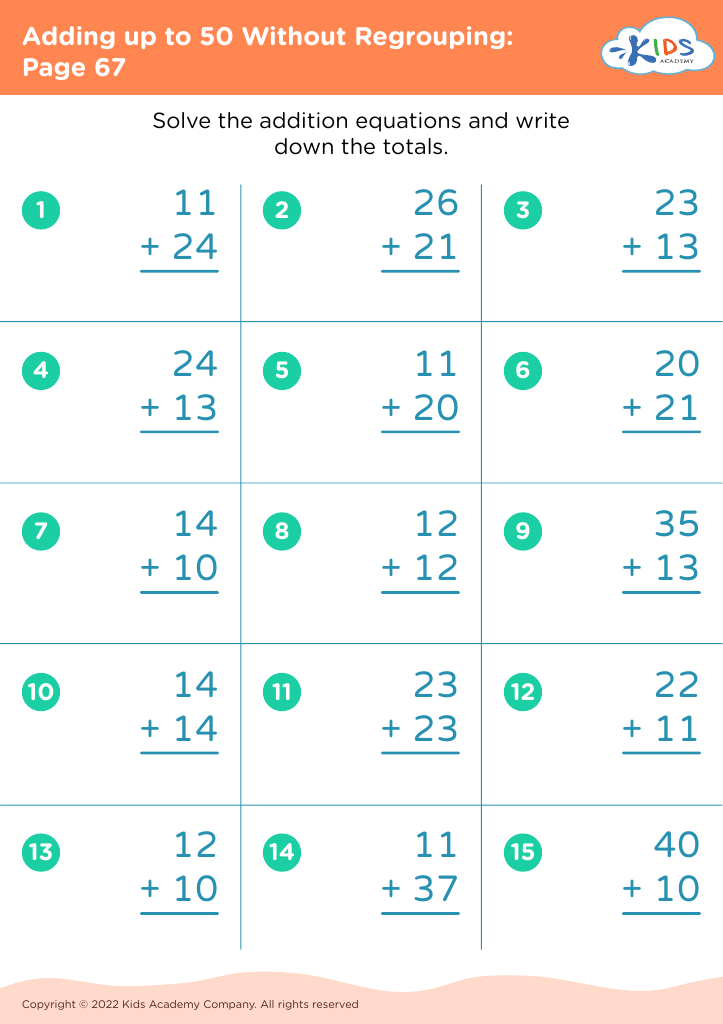


Counting practice, particularly adding up to 50 without regrouping, is crucial for children aged 4-8 as it lays the foundation for their mathematical understanding. This stage of development is pivotal; children are starting to grasp basic numerical concepts and relationships. By engaging in these foundational exercises, children strengthen their number sense, which is vital for future math skills.
Counting exercises help enhance computational fluency, encouraging students to become confident in their abilities. Without regrouping, children can visually and mentally process addition, helping them recognize patterns and develop strategies for problem-solving.
Moreover, practicing addition up to 50 cultivates attention to detail and patience, important traits that extend beyond mathematics. It also prepares children for more complex operations they'll encounter later in their education, embedding a positive attitude toward math.
Parents and teachers should approach counting practice as an opportunity for bonding, engagement, and reinforcement of cognitive skills. By encouraging kids through interacting and practicing together, they promote a supportive learning environment and encourage a love of learning that can last a lifetime. Therefore, prioritizing this early counting practice sets children on a path towards academic achievement and lifelong confidence in their math abilities.