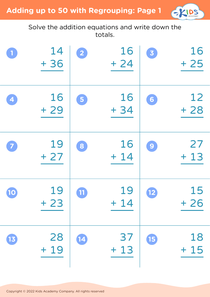
Counting skills Adding up to 50 Without Regrouping Worksheets for Ages 4-8
11 filtered results
-
From - To
Boost your child's math skills with our "Counting Skills: Adding Up to 50 Without Regrouping" worksheets, tailored for ages 4-8. These engaging, colorful worksheets help young learners effortlessly add numbers up to 50, laying a strong foundation in basic math without the complexity of regrouping. Ideal for early grade students, this collection enhances counting abilities, reinforces number recognition, and builds confidence through practice. Whether at home or in the classroom, these worksheets make learning fun and interactive, ensuring a solid grasp of essential math concepts. Download now and watch your child's arithmetic skills flourish!
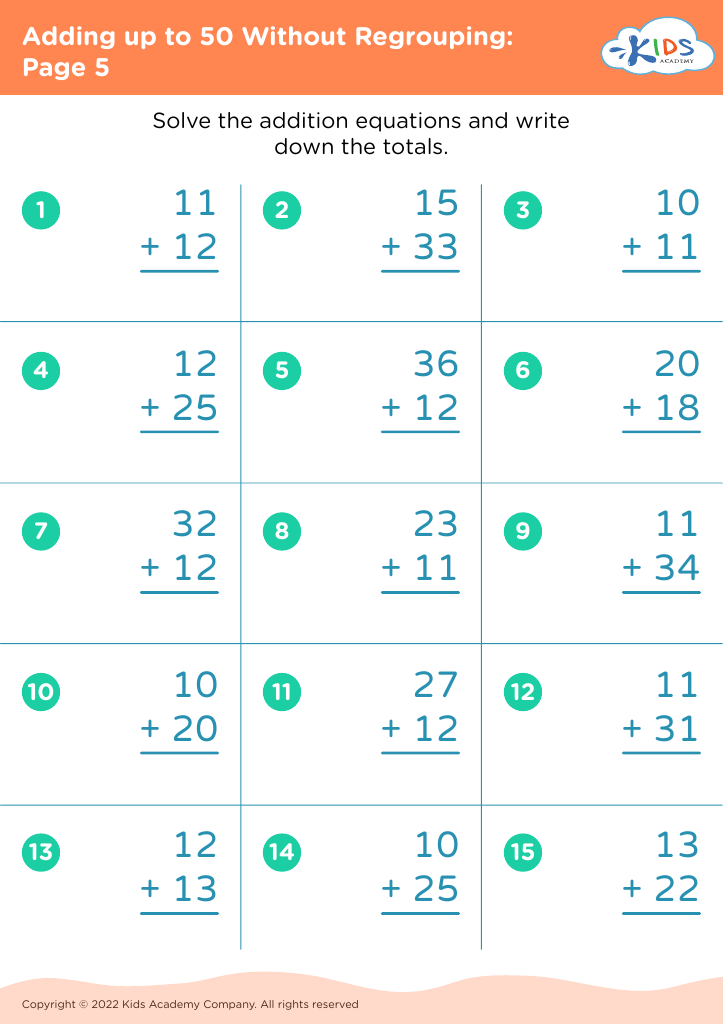
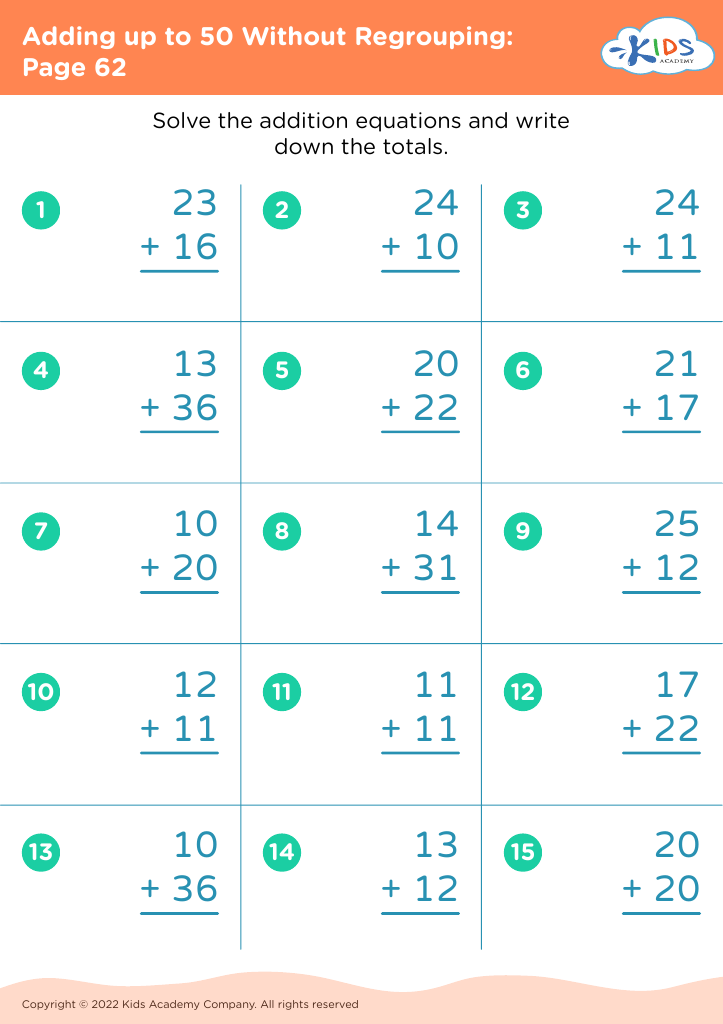
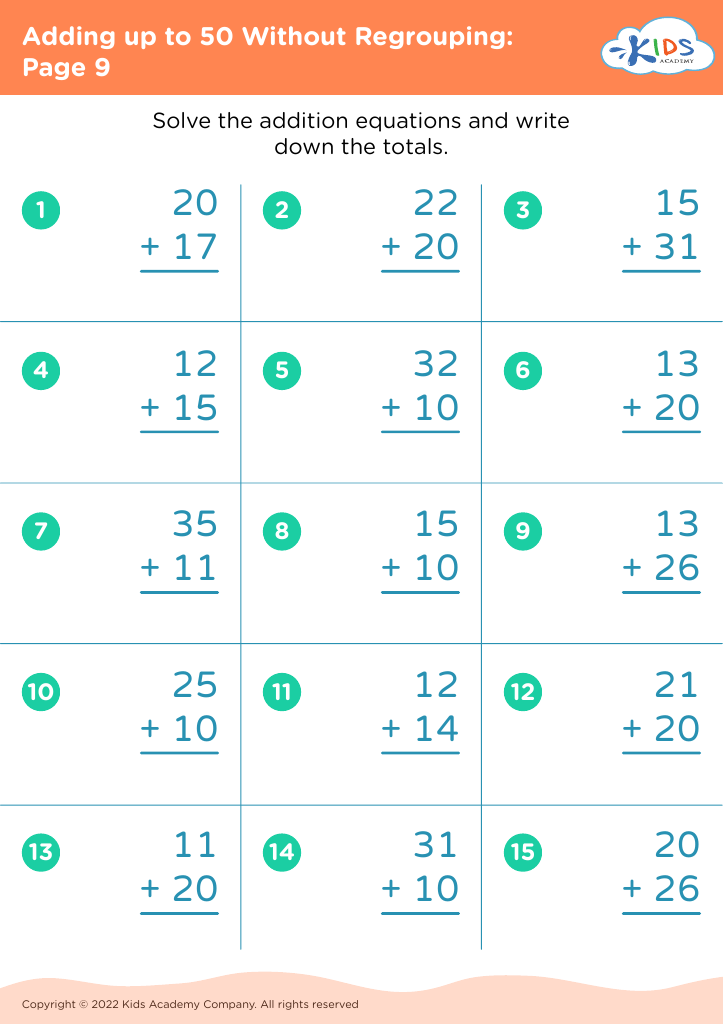
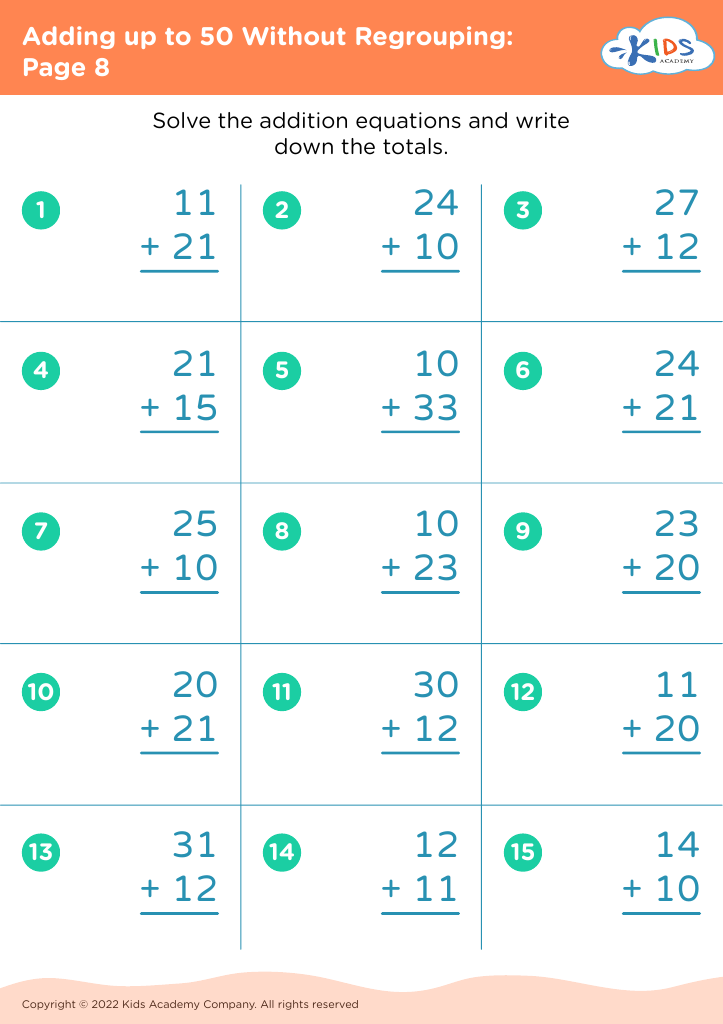
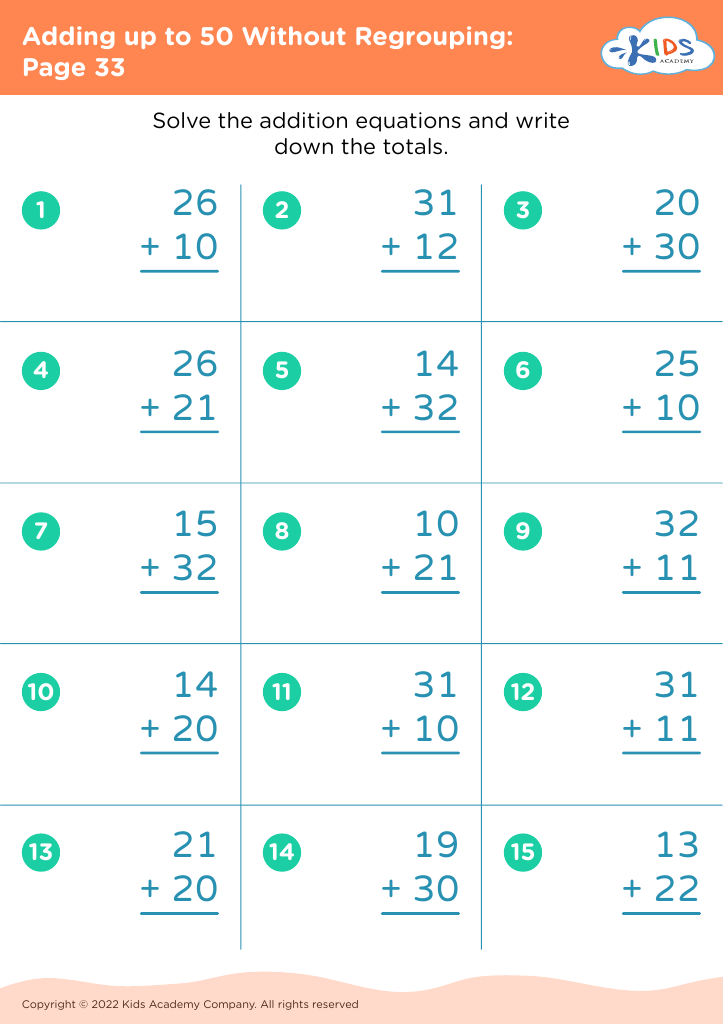
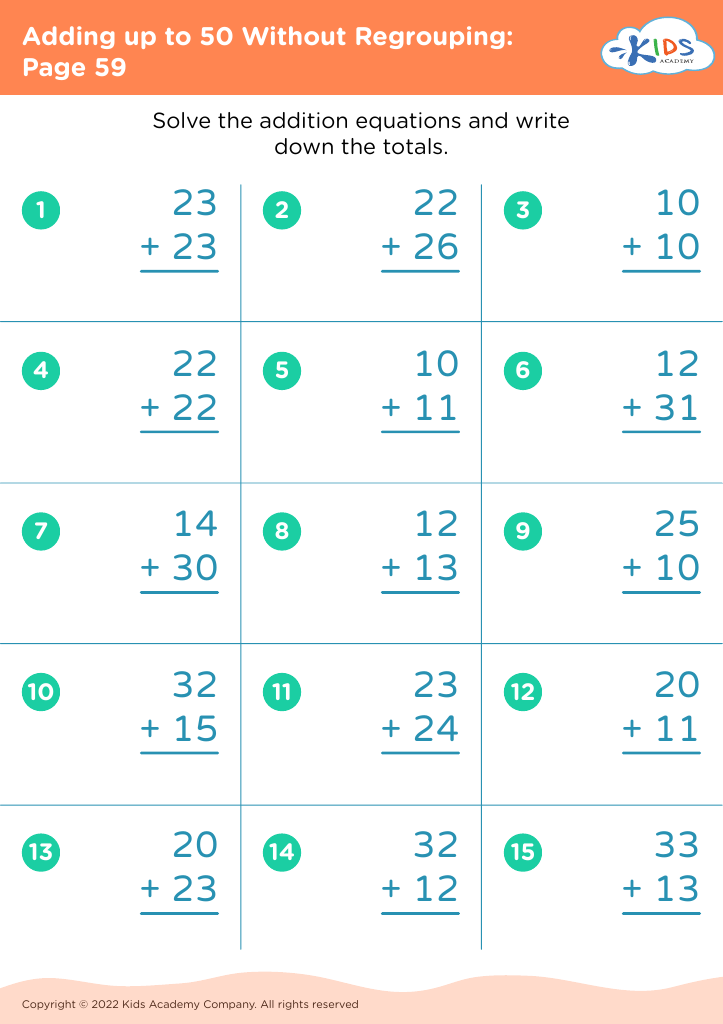
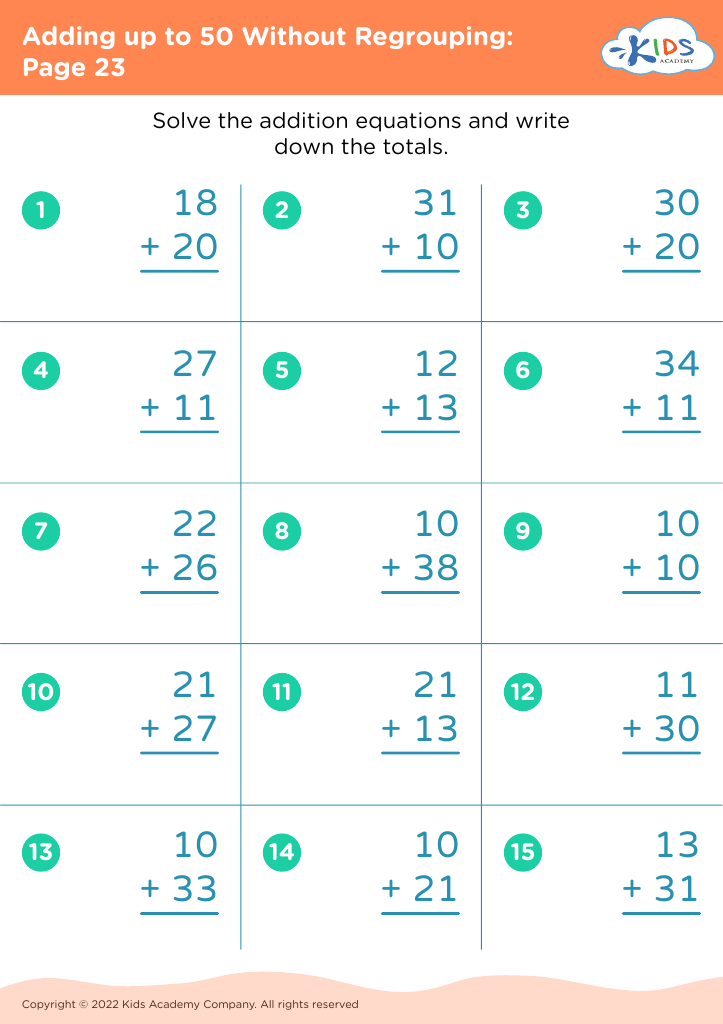
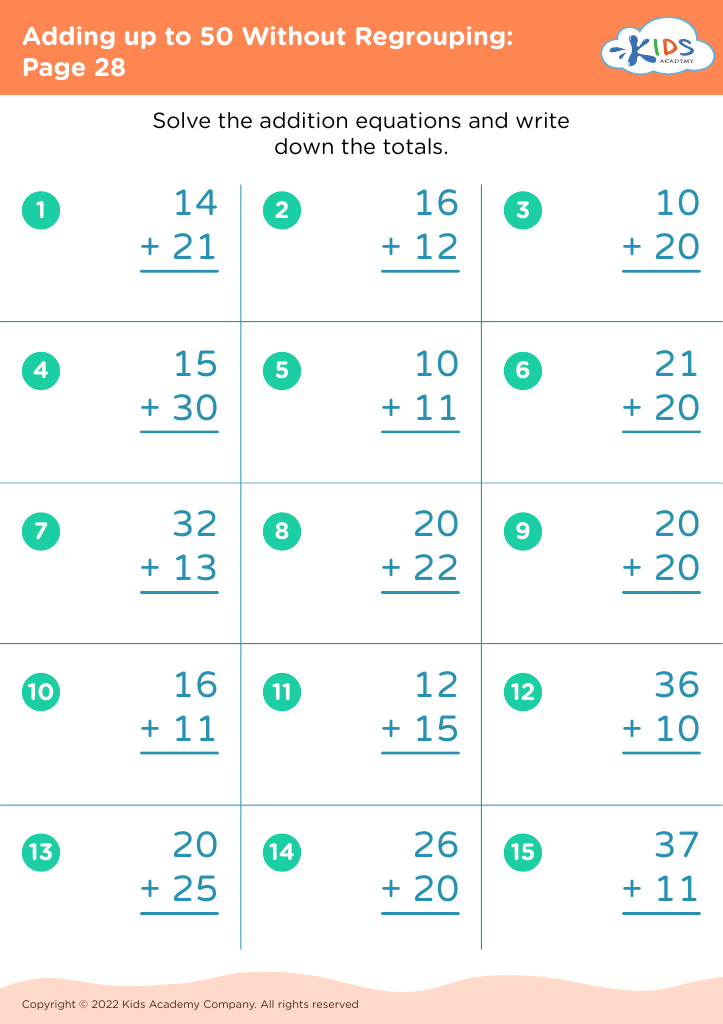
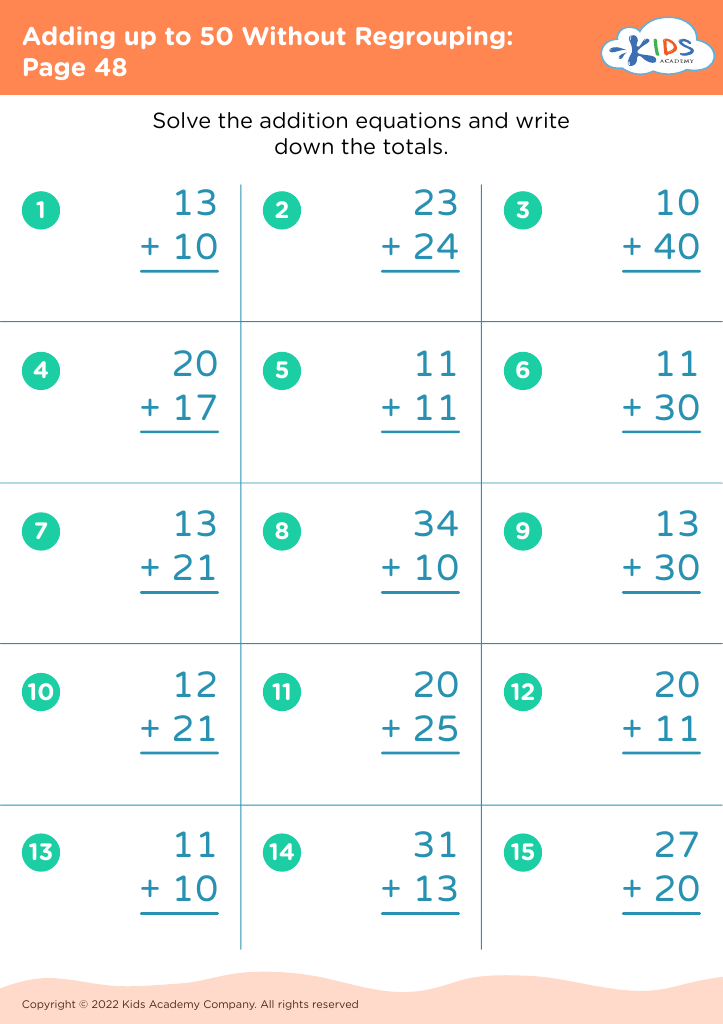
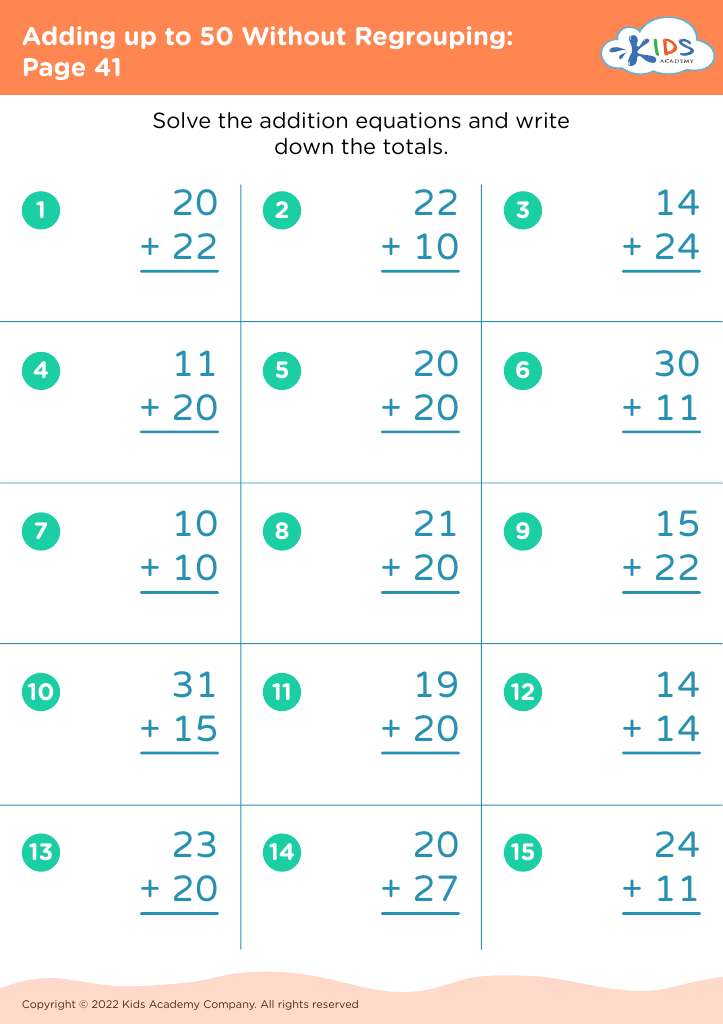
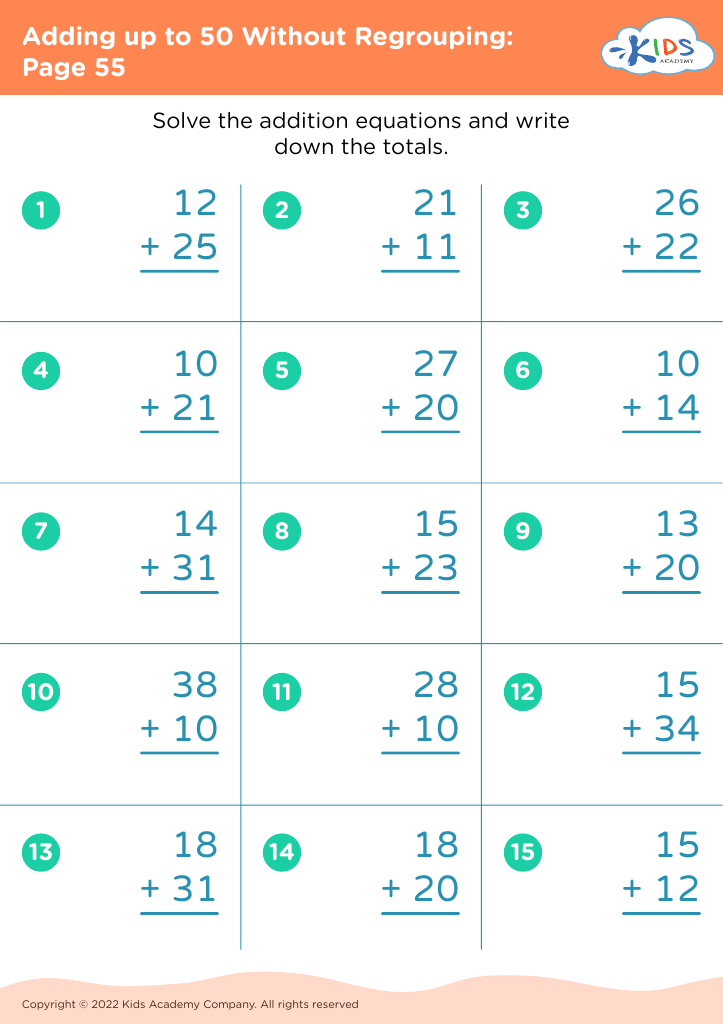


Counting skills and the ability to add up to 50 without regrouping are critical for young children aged 4-8. During these formative years, children’s brains are highly receptive and capable of developing foundational math skills that will support future learning. When kids become comfortable with counting and simple addition, they build essential number sense, understanding the relationships between numbers and developing pattern recognition.
For parents and teachers, ensuring children master these skills is fundamental because it directly relates to their confidence and proficiency in math as they progress through school. Early success with counting and simple addition can inspire a positive attitude towards math, providing children with the confidence needed to tackle more complex mathematical concepts later on.
Moreover, these skills have practical, everyday benefits. Children often encounter situations that require basic arithmetic, such as counting toys, dividing snacks, or understanding the concept of more or less. Mastering counting and addition without regrouping allows kids to solve these real-life problems, fostering independence and decision-making skills.
Finally, emphasizing these skills supports cognitive development, enhancing memory, concentration, and critical thinking. Parents and teachers play a crucial role by creating a supportive environment that nurtures these foundational abilities, ensuring children are well-prepared for their educational journey and everyday life.