Fraction simplification Adding up to 50 Without Regrouping Worksheets for Ages 4-8
7 filtered results
-
From - To
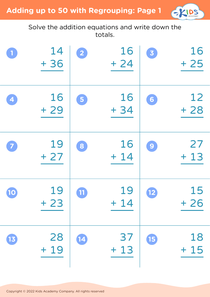
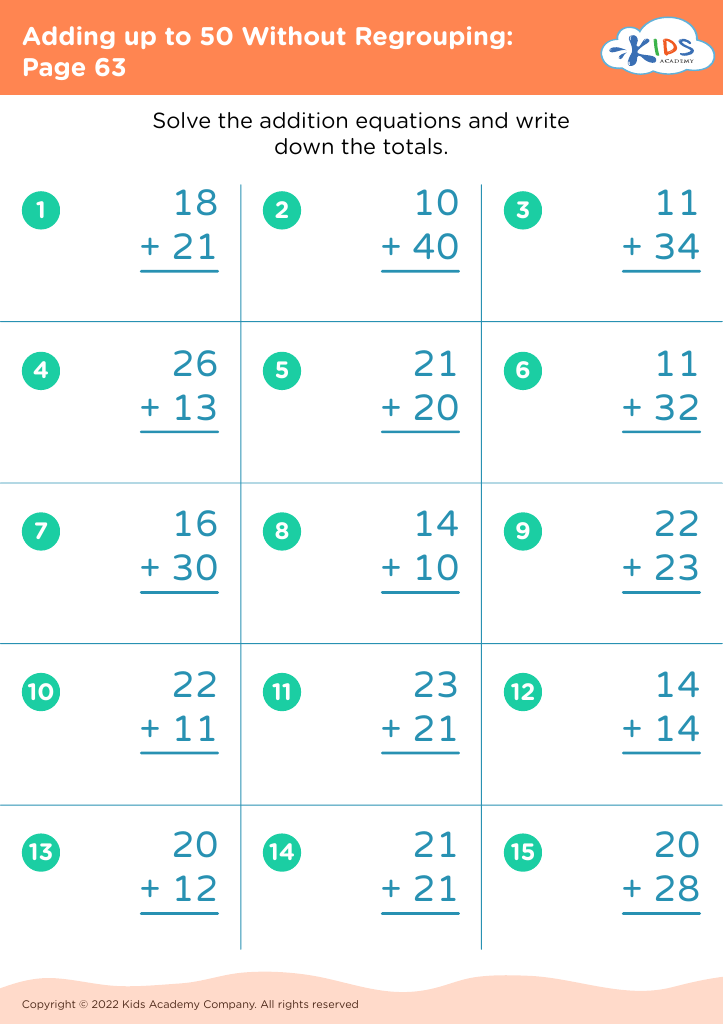
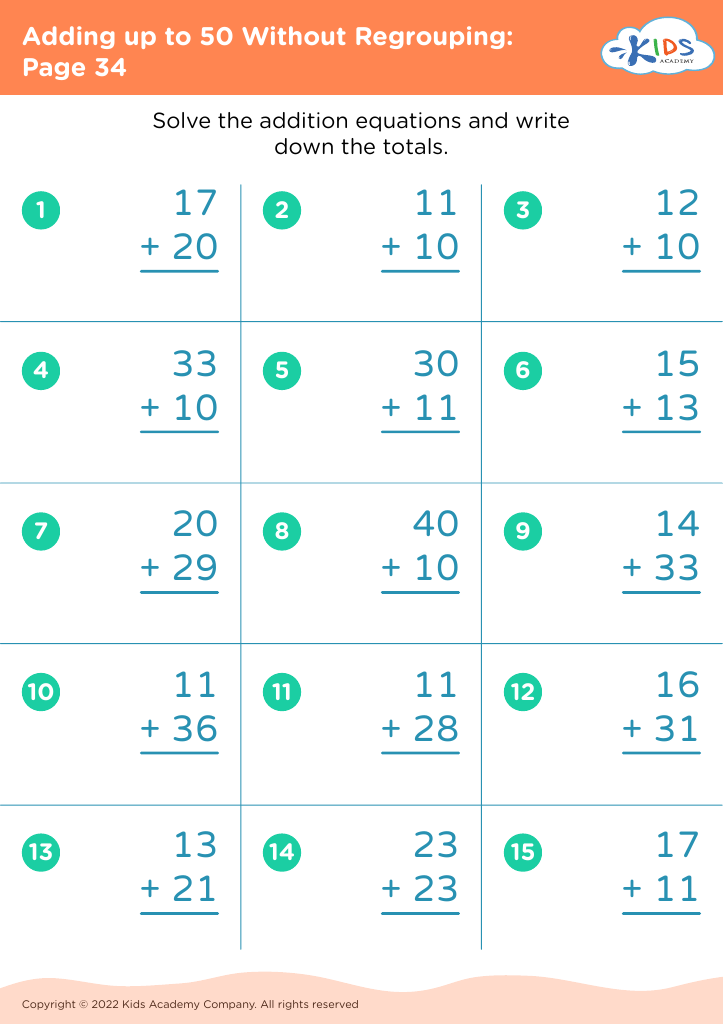
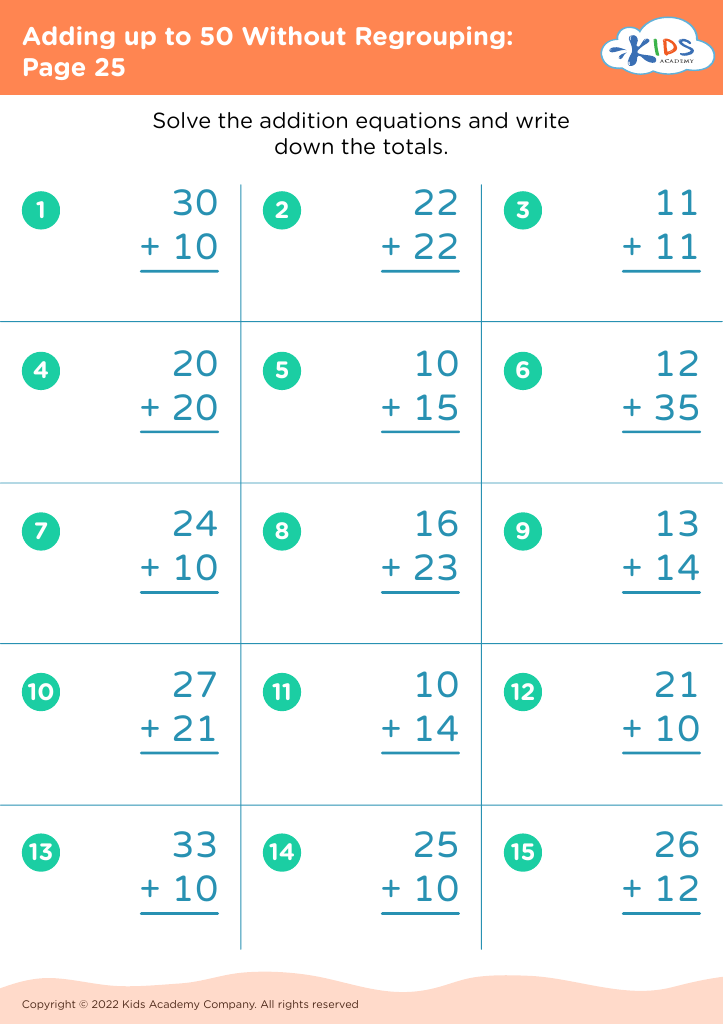
Discover our engaging Fraction Simplification Worksheets, designed for children aged 4-8, that focus on adding numbers up to 50 without regrouping. These worksheets aim to enhance young learners' arithmetic skills while introducing them to fraction simplification concepts in a fun and accessible way. With colorful visuals and a variety of exercises, your child will develop confidence and competence in mastering basic addition and simplifying fractions. Ideal for classroom settings or at-home learning, our resources are perfect for early education, ensuring that kids build a strong mathematical foundation. Explore our collection today and empower your child's math journey!
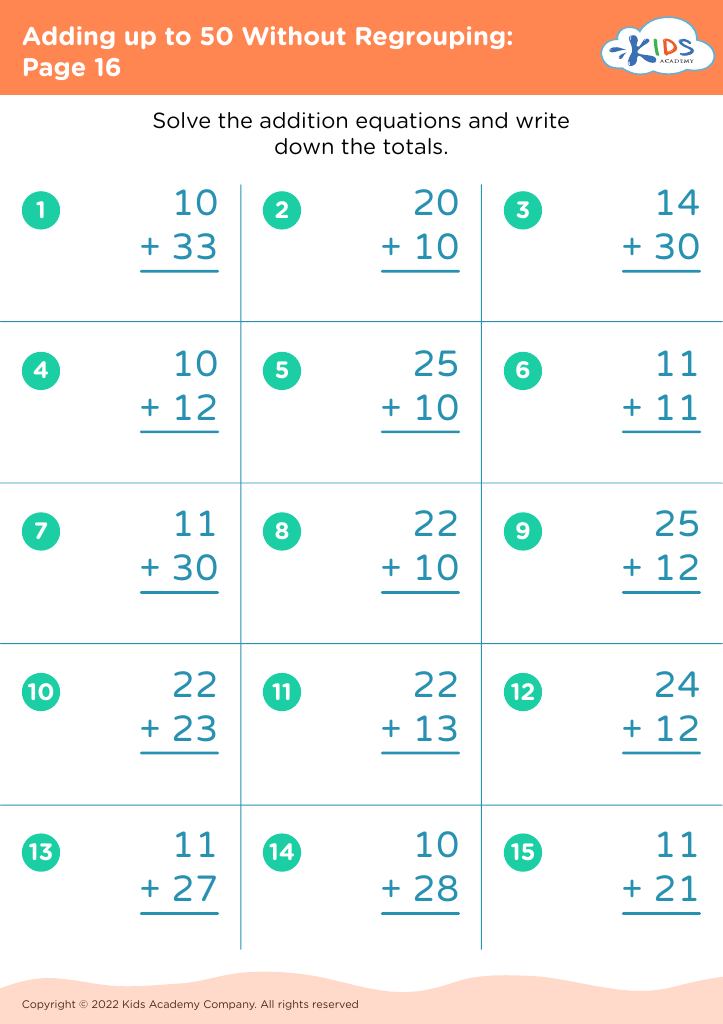
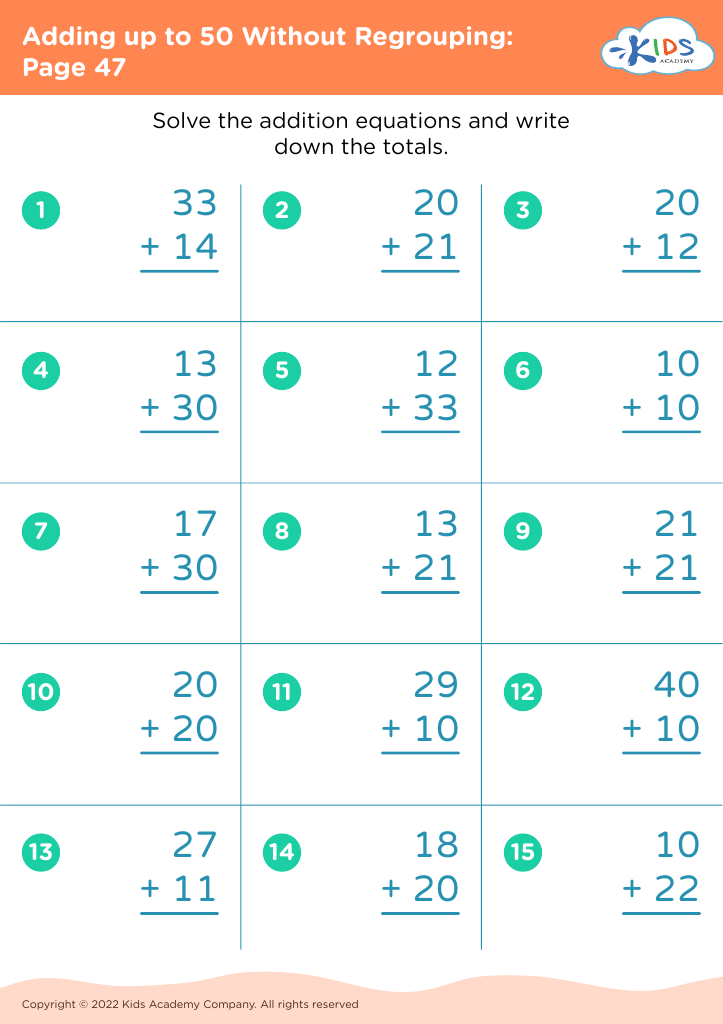
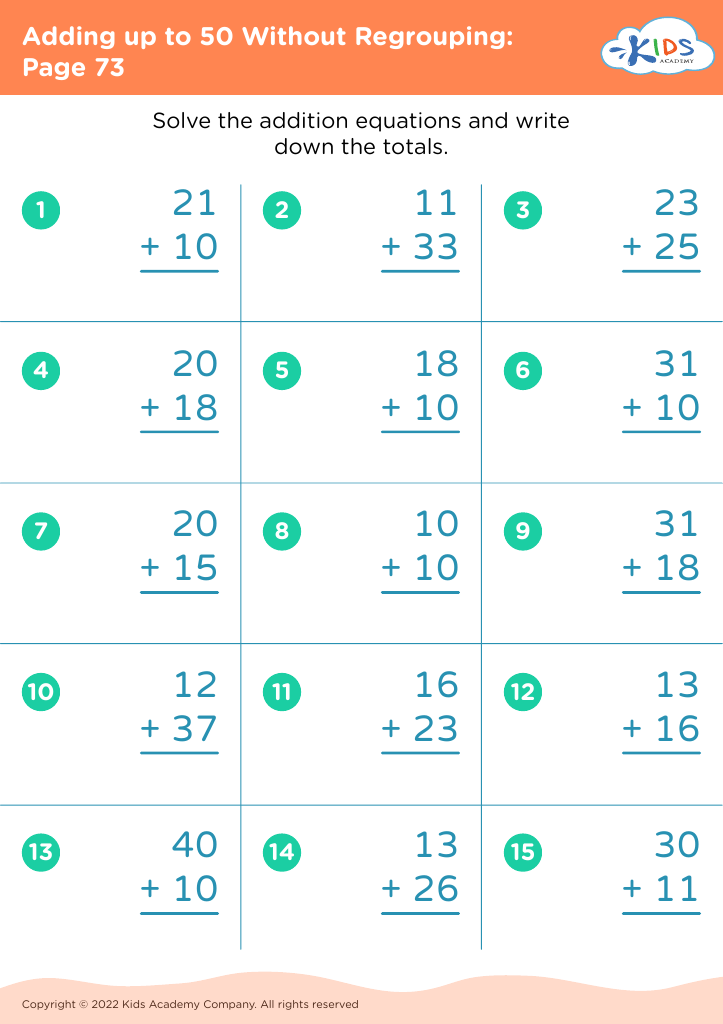
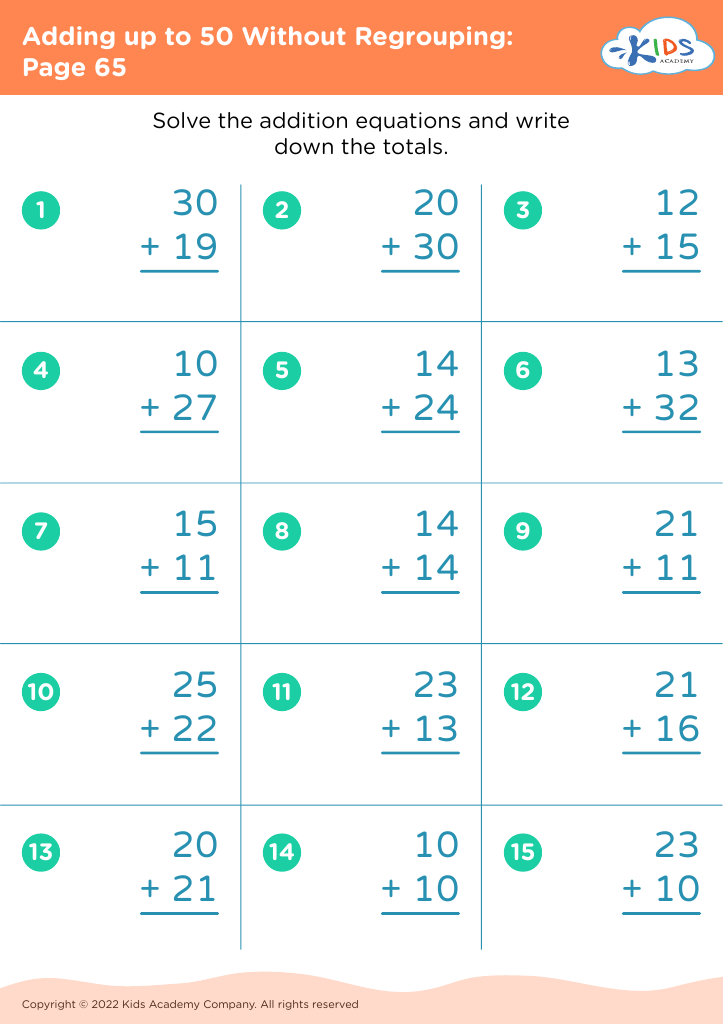


Parents and teachers should prioritize teaching fraction simplification and adding up to 50 without regrouping for children aged 4-8 as these foundational skills are essential for a child's overall mathematics development. First, understanding fractions prepares young learners for more complex concepts in later grades, such as ratios, proportions, and percentages. By simplifying fractions, children learn critical thinking and problem-solving skills, aiding their ability to analyze numerical relationships and make sense of the world around them.
Moreover, mastering basic addition without regrouping strengthens mental math skills, promotes number sense, and builds confidence. Children can perform quick calculations, enhancing their ability to tackle everyday math applications, from shopping to cooking, and inspires positive attitudes toward mathematics.
By nurturing these skills early, parents and teachers can foster perseverance and a growth mindset. This establishes a strong mathematical foundation that supports future learning and academic success. Additionally, providing engaging, age-appropriate games and activities focused on these concepts makes learning enjoyable. In doing so, children develop a love for mathematics and a greater readiness to tackle advanced topics as they progress in school. Ultimately, fostering a firm grasp of these concepts equips children for future challenges and promotes lifelong learning.