Filters

16 filtered results

Clear all filters
Favorites
With answer key
Interactive

16 filtered results

Difficulty Level

Grade


Enhance your child's mathematical abilities with our engaging "Basic Math Skills Adding Up to 50 Worksheets" designed for ages 4-8. These worksheets provide a variety of fun activities that help young learners practice their addition skills in a supportive environment. Each worksheet offers clear instructions and colorful illustrations to capture children's interest, making math exciting and accessible. Parents and teachers will benefit from the structured approach, which builds a strong foundation for future math success. By participating in these activities, children will gain confidence as they master their addition skills and prepare for more complex math concepts. Start the learning adventure today!
Check out this FREE Trial Lesson on Adding up to 50 for age 4-8!

Short and Long Vowel Sort

Favorites
With answer key
Interactive
  • 4-8
  • Basic Math Skills
  • Adding up to 50
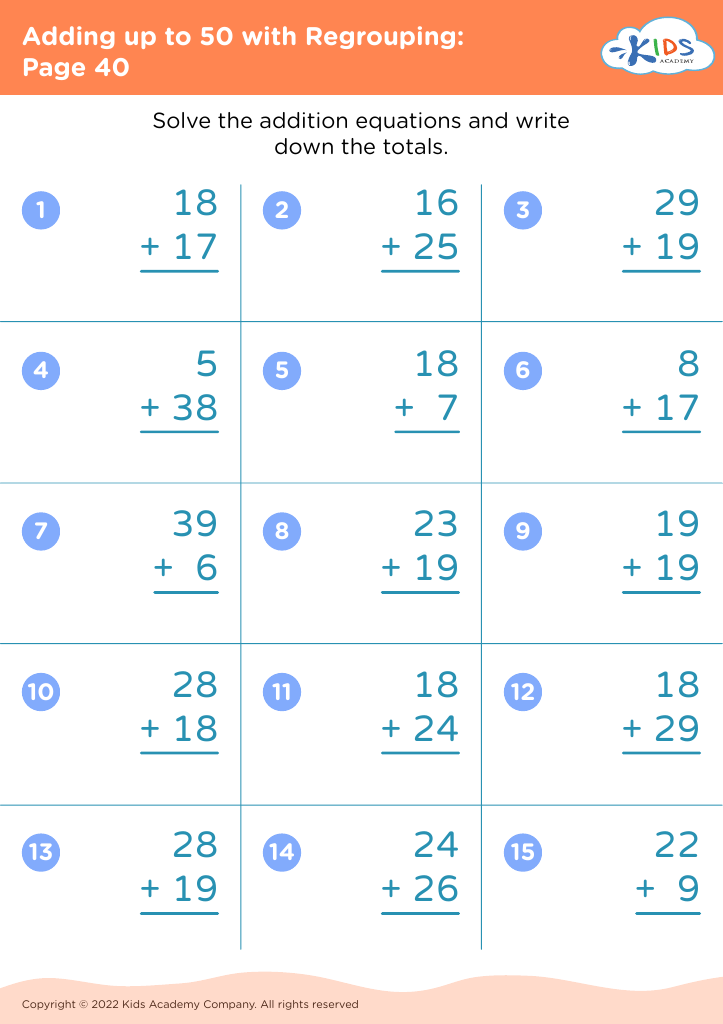
Adding up to 50 with Regrouping: Page 40
Worksheet
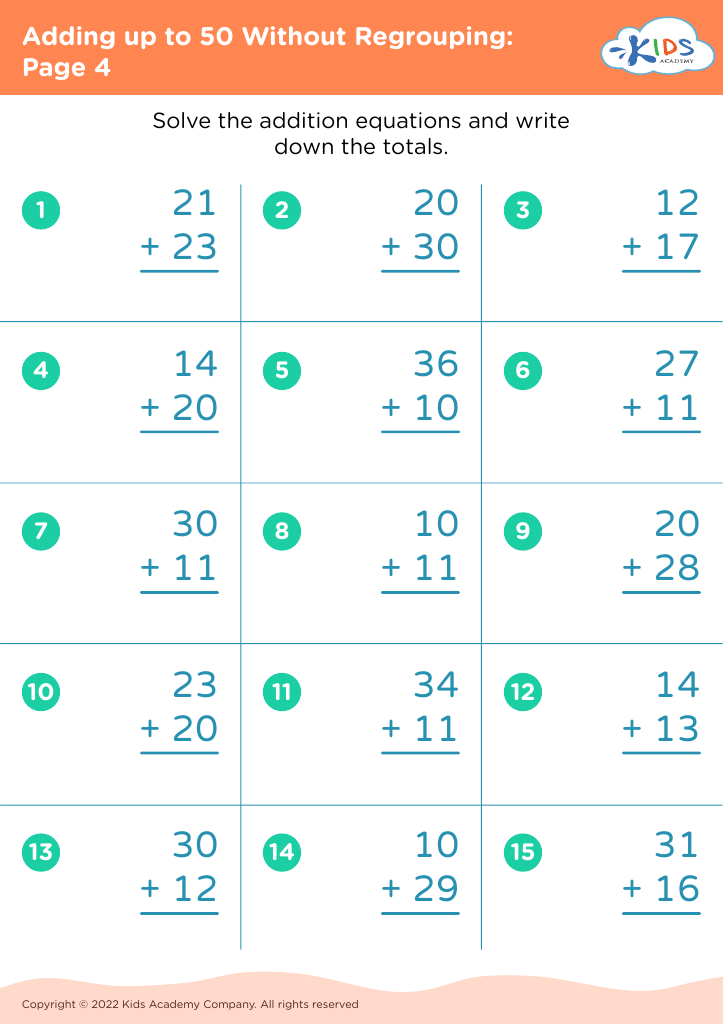
Adding up to 50 Without Regrouping: Page 4
Worksheet
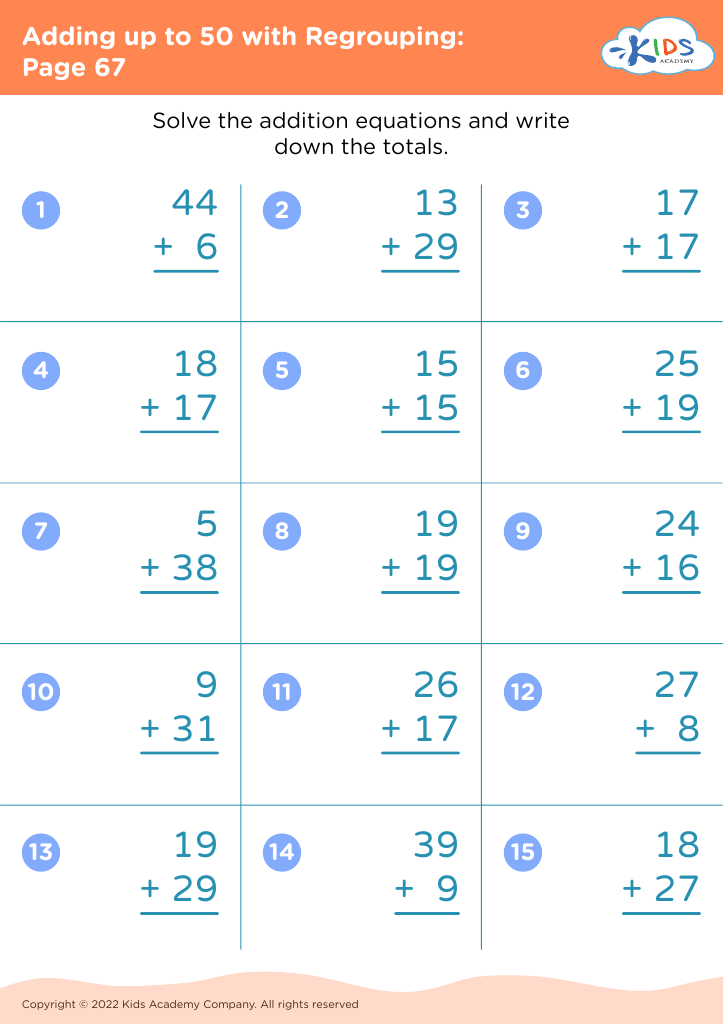
Adding up to 50 with Regrouping: Page 67
Worksheet
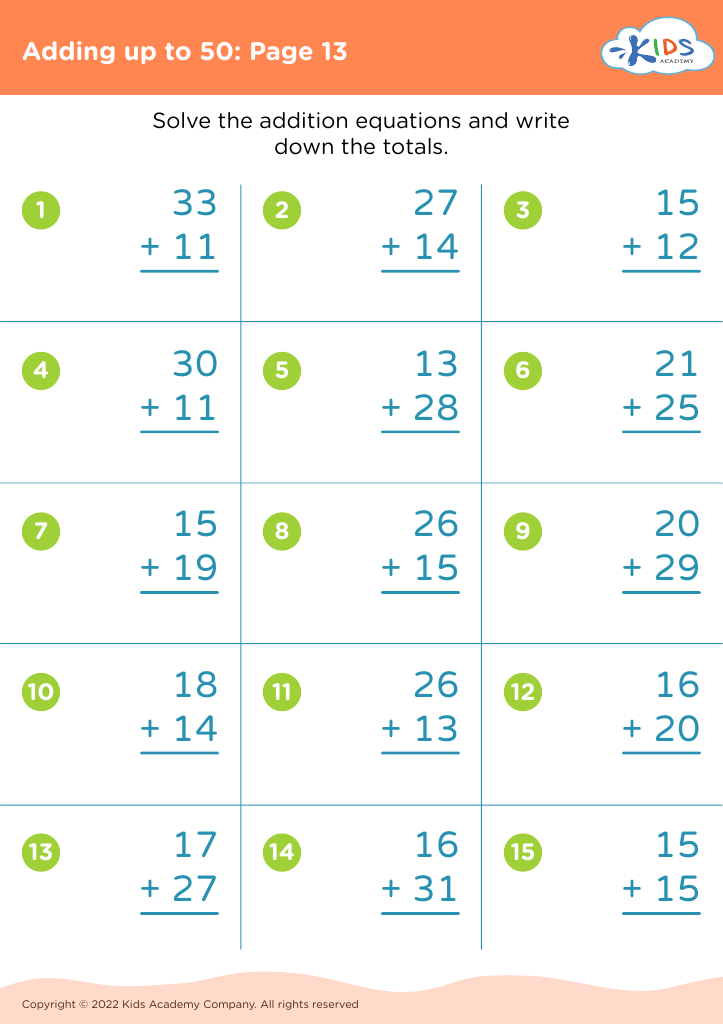
Adding up to 50: Page 13

Adding up to 50: Page 13

Adding up to 50: Page 13
Worksheet
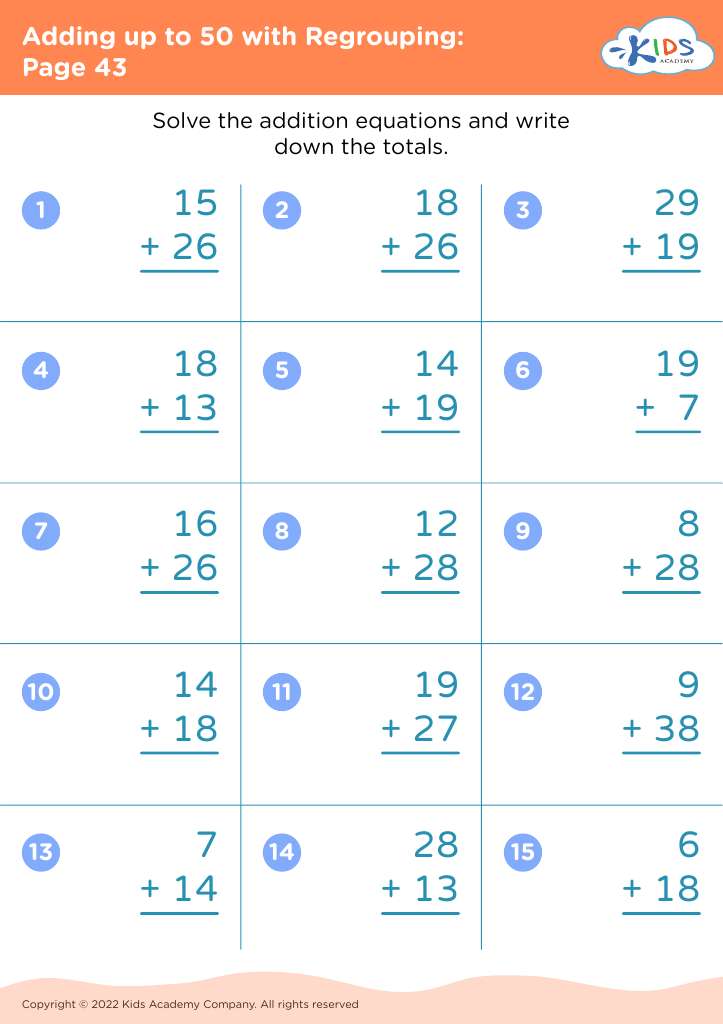
Adding up to 50 with Regrouping: Page 43
Worksheet
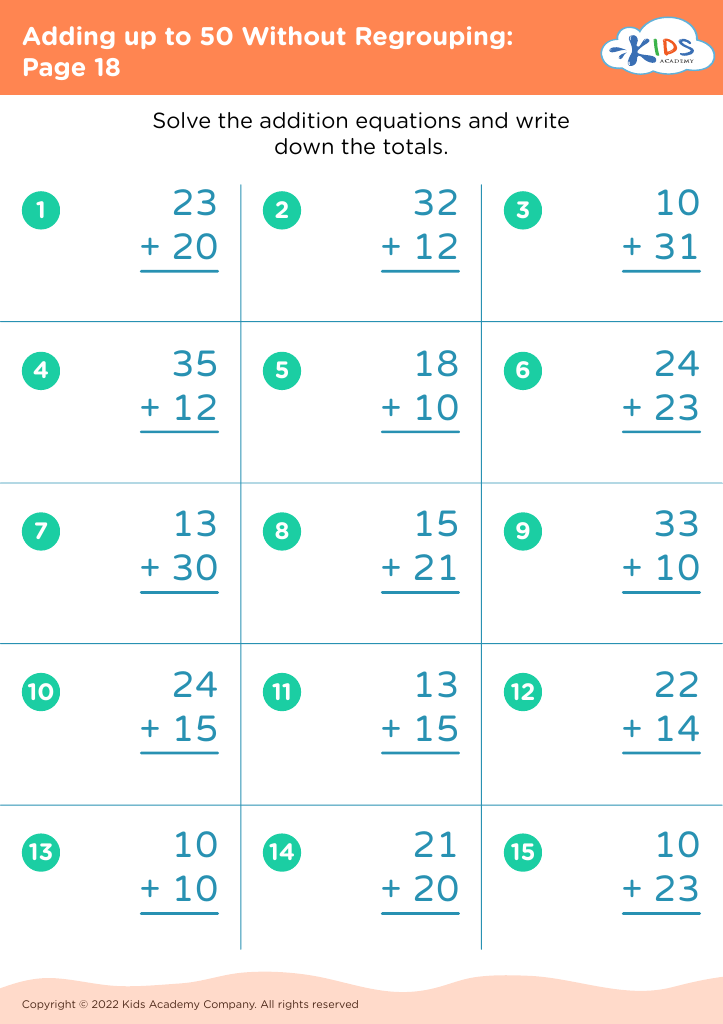
Adding up to 50 Without Regrouping: Page 18
Worksheet
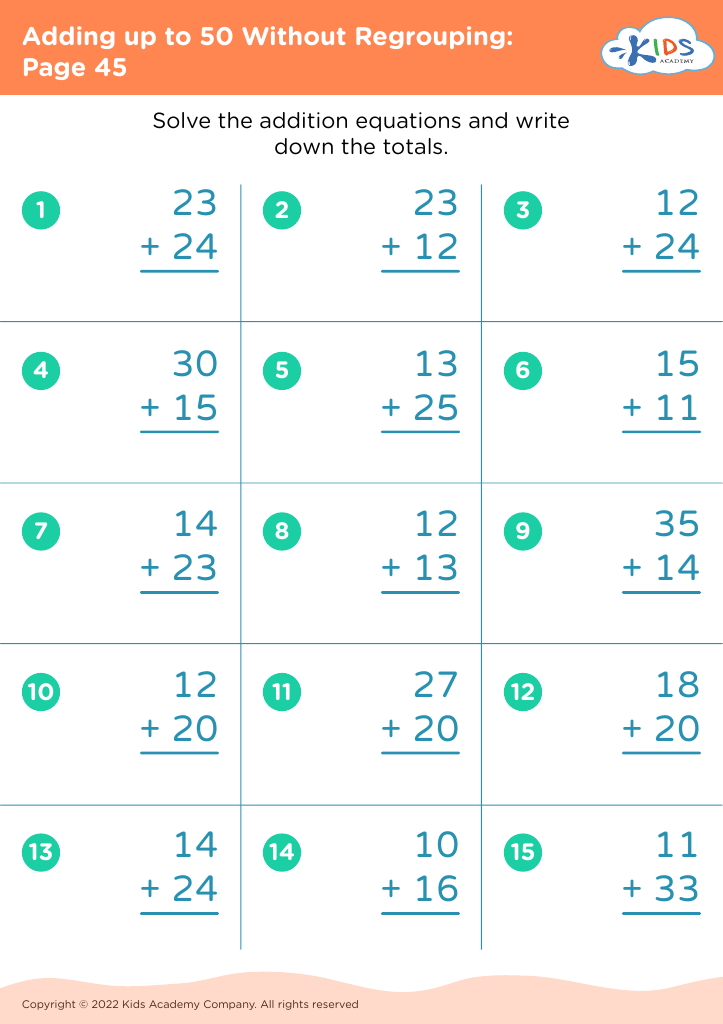
Adding up to 50 Without Regrouping: Page 45
Worksheet
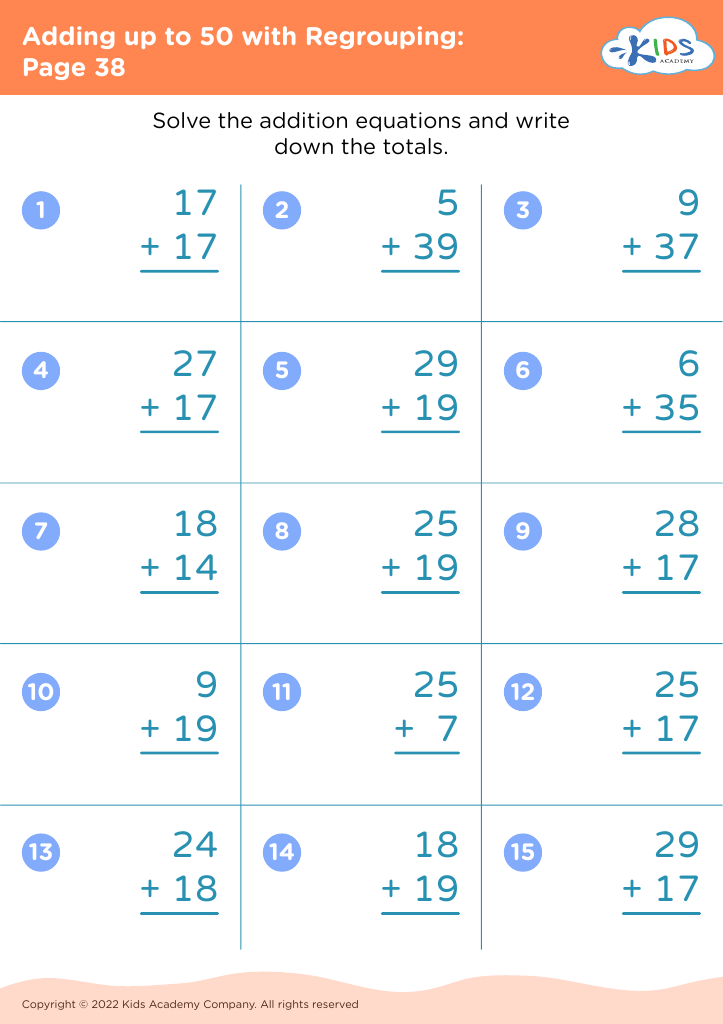
Adding up to 50 with Regrouping: Page 38
Worksheet
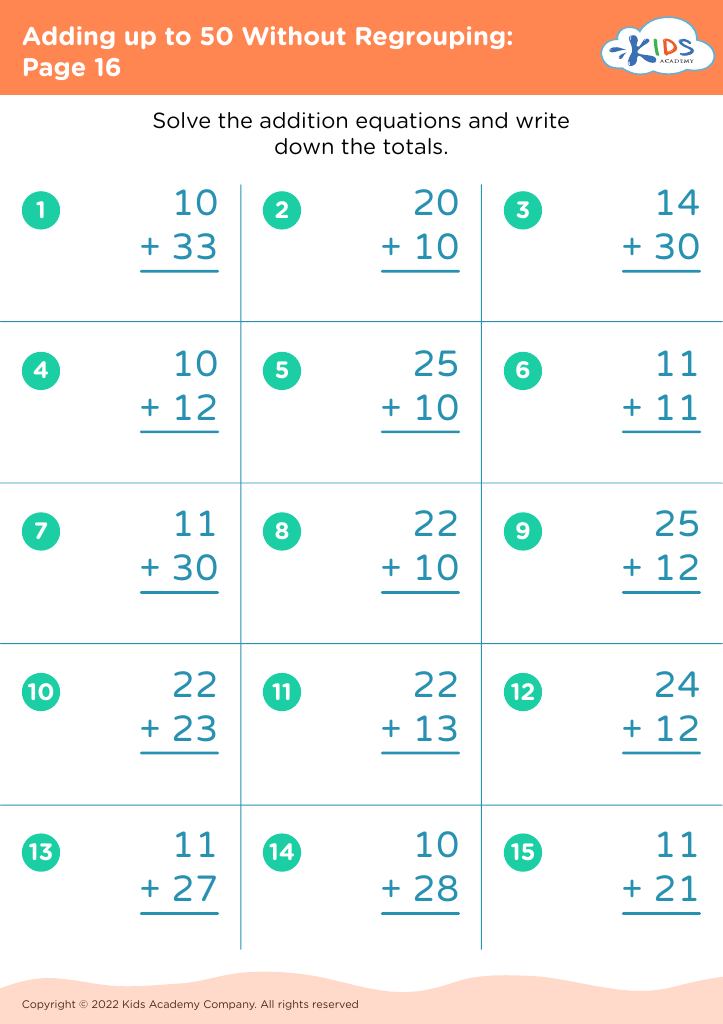
Adding up to 50 Without Regrouping: Page 16
Worksheet
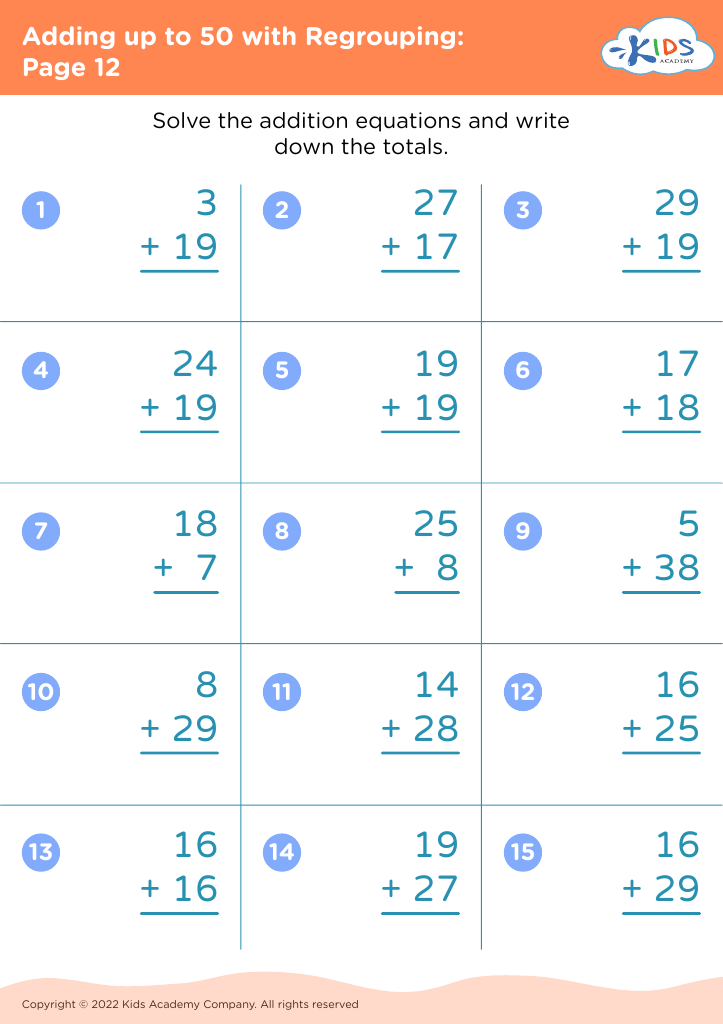
Adding up to 50 with Regrouping: Page 12
Worksheet
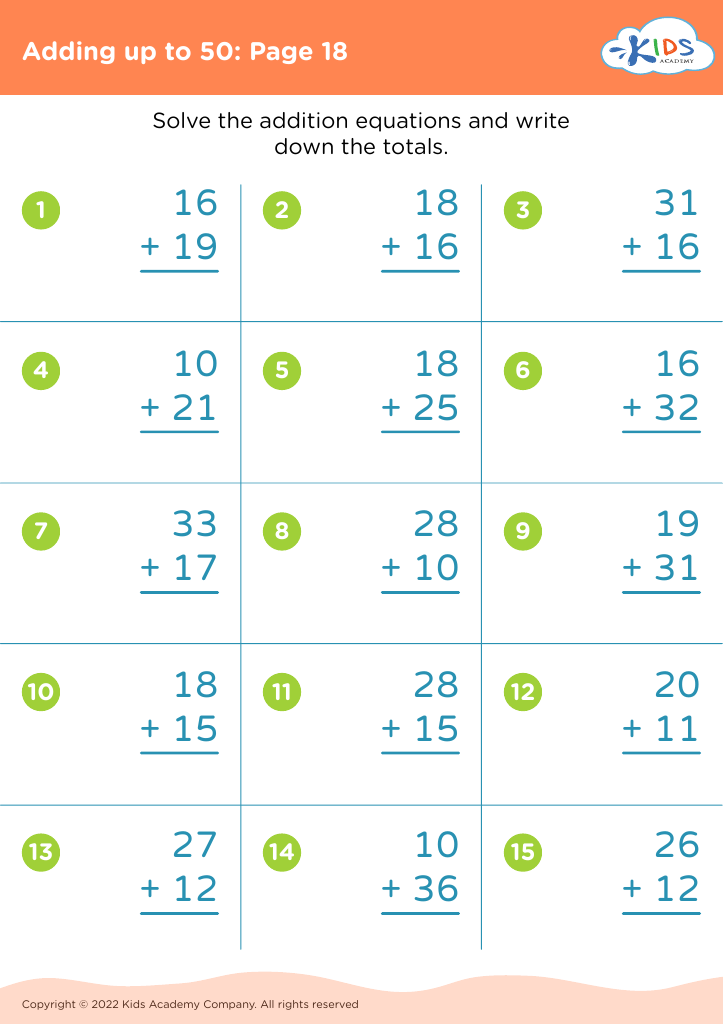
Adding up to 50: Page 18

Adding up to 50: Page 18

Adding up to 50: Page 18
Worksheet
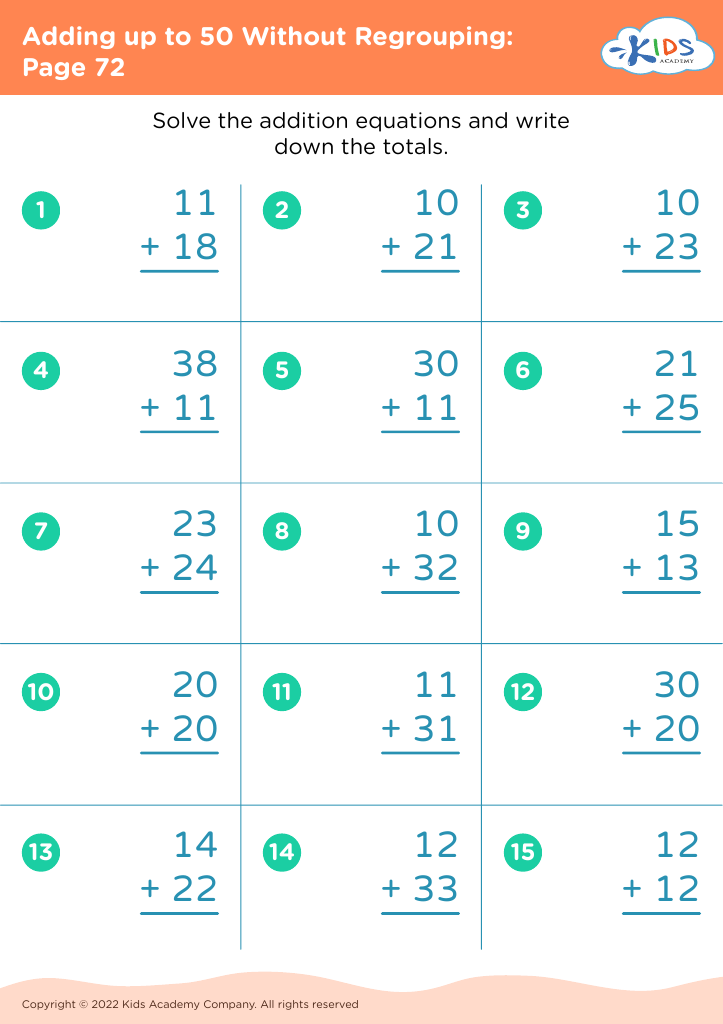
Adding up to 50 Without Regrouping: Page 72
Worksheet
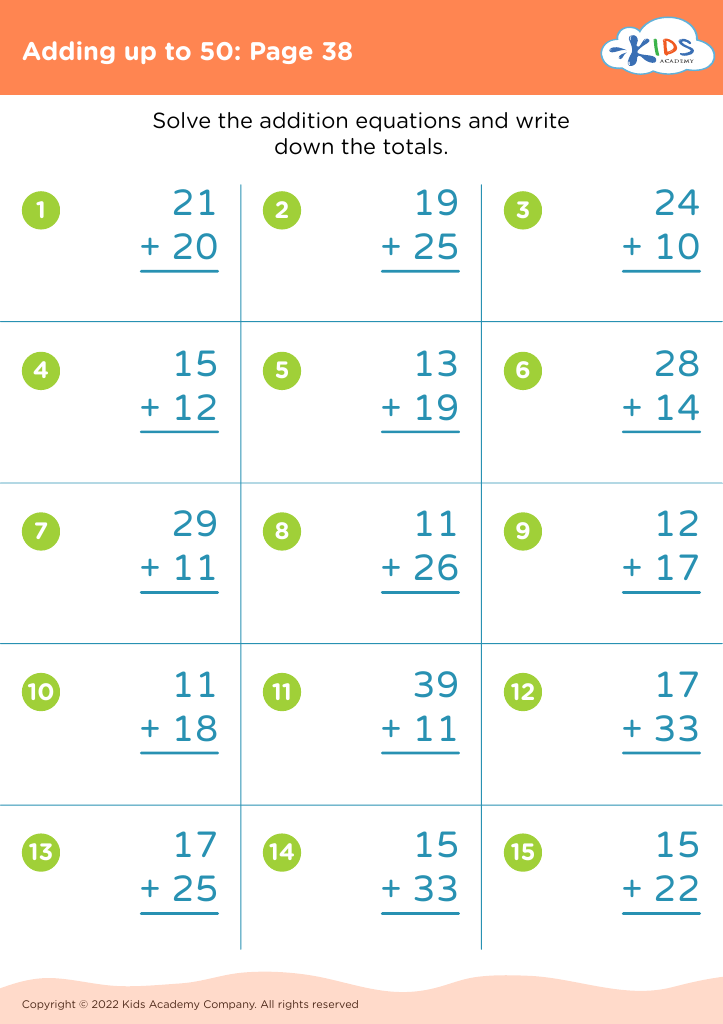
Adding up to 50: Page 38

Adding up to 50: Page 38

Adding up to 50: Page 38
Worksheet
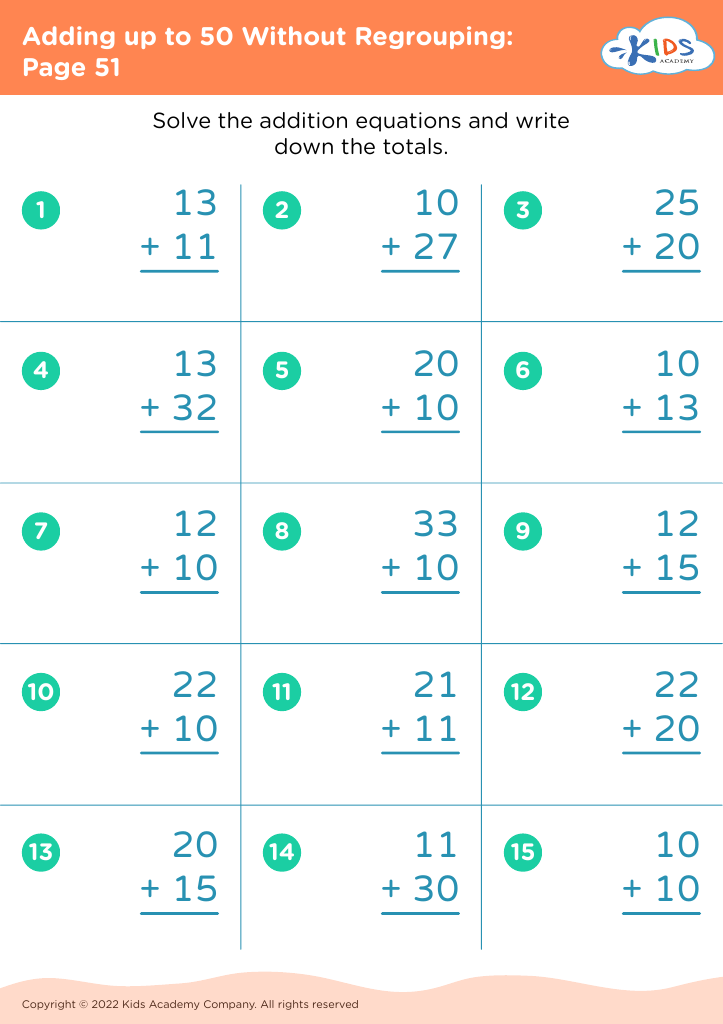
Adding up to 50 Without Regrouping: Page 51
Worksheet
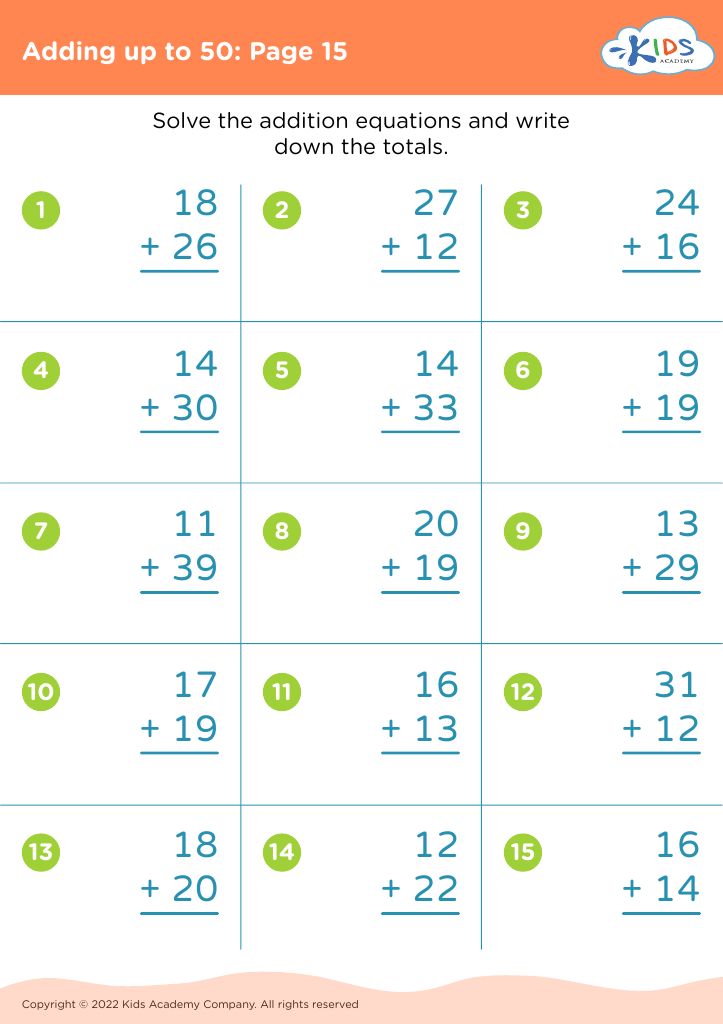
Adding up to 50: Page 15

Adding up to 50: Page 15

Adding up to 50: Page 15
Worksheet
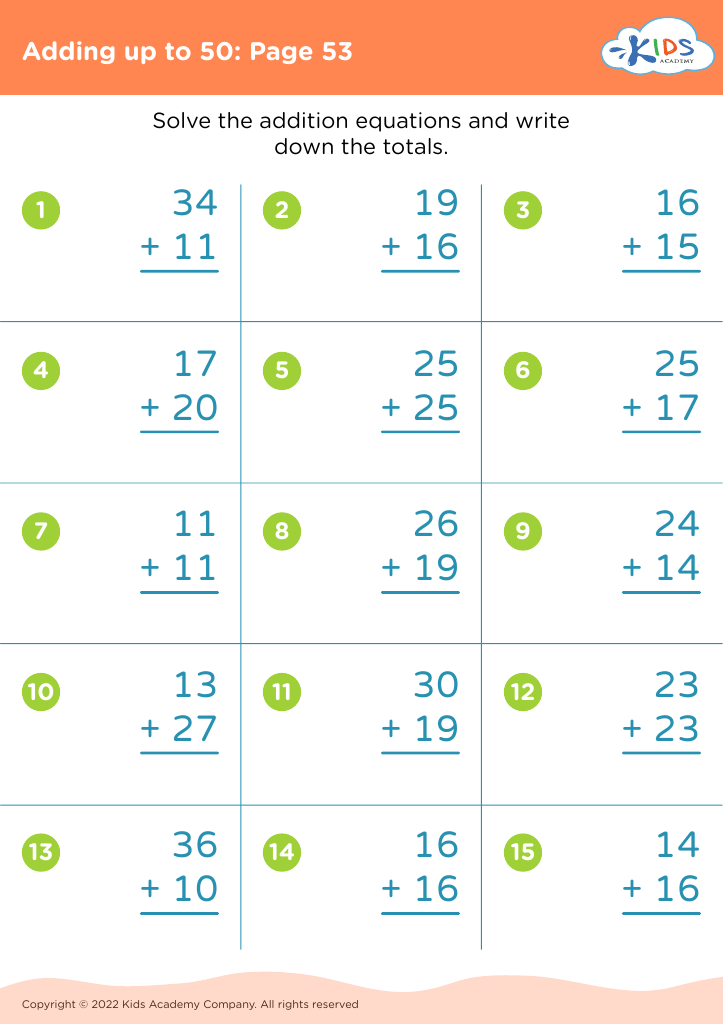
Adding up to 50: Page 53

Adding up to 50: Page 53

Adding up to 50: Page 53
Worksheet


Basic math skills, particularly the ability to add up to 50, are foundational for children's future academic success and daily life. For children ages 4-8, mastering these skills helps develop critical thinking and problem-solving abilities essential for higher learning. Early math fluency boosts confidence, making children more willing to engage with complex concepts later on.

Additionally, gaining a strong grasp of addition lays the groundwork for advanced mathematical operations, such as subtraction, multiplication, and division. Understanding how numbers work together prepares students for real-world scenarios, like budgeting and shopping, making the learning process relevant and practical.

Parents and teachers play a crucial role in supporting this learning journey. Incorporating fun and engaging activities—such as games, songs, or hands-on manipulatives—can enhance a child's enthusiasm for learning. Reinforcement at home or in the classroom can solidify their understanding and retention of these skills. Furthermore, equipping children with solid basic math knowledge fosters a lifelong love for learning and a positive attitude toward education. Ultimately, nurturing basic math skills can help set children on a path to academic achievement and everyday competence, underscoring the importance of focused early math education.