Color recognition Adding up to 50 Worksheets for Ages 4-8
3 filtered results
-
From - To
Introducing our "Color Recognition Adding up to 50 Worksheets" designed for children ages 4-8! These fun, educational worksheets help young learners master basic addition skills while also boosting their color recognition abilities. With engaging visuals and simple instructions, kids will enjoy adding numbers up to 50, coloring according to the answer, and developing their math and cognitive skills. Perfect for early grade teachers and parents, these worksheets ensure children stay motivated and excited about learning. Start your child's journey to math proficiency and color recognition today with our expertly crafted resources!
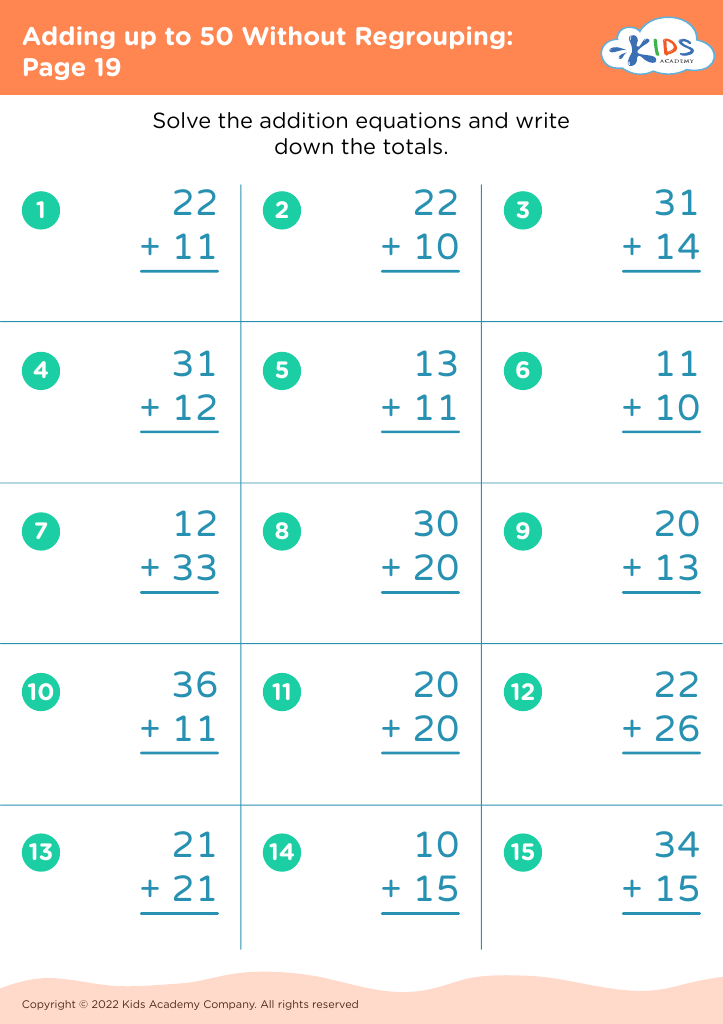
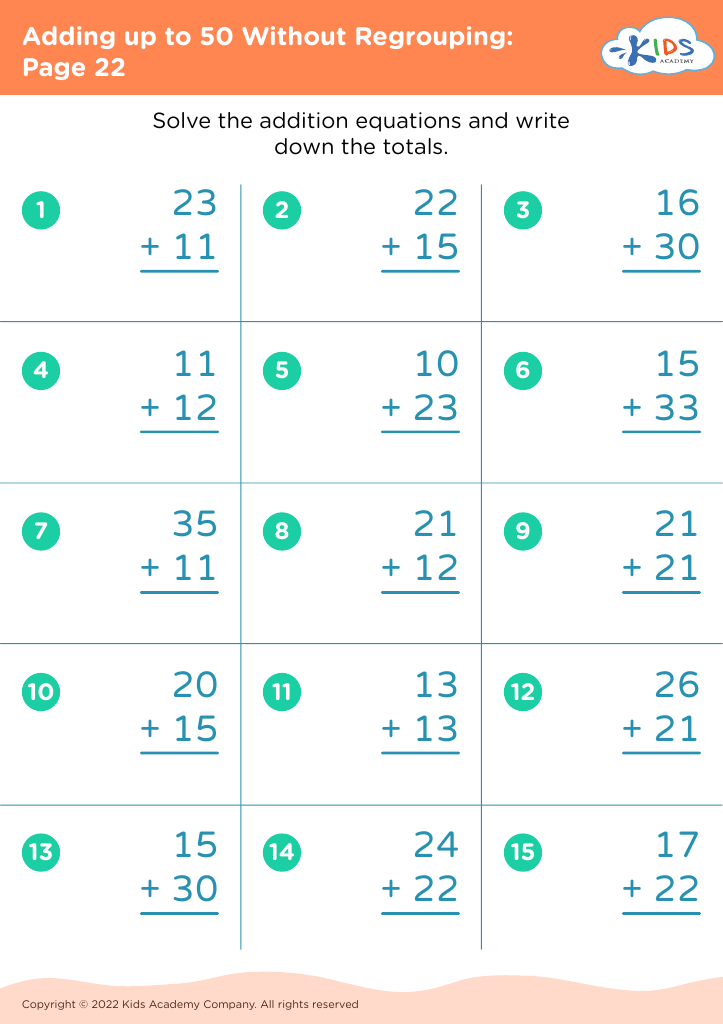
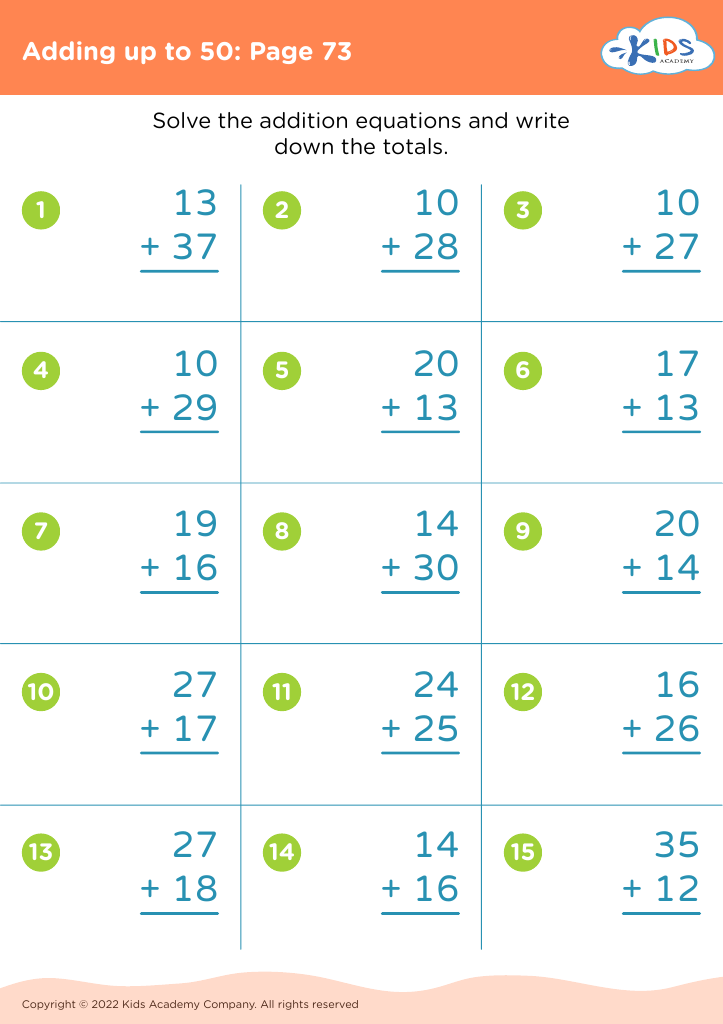




Color recognition and adding up to 50 are fundamental skills that play crucial roles in a child's intellectual development and overall learning experience, particularly for children between the ages of 4-8. Parents and teachers should prioritize these skills as they form the building blocks for more complex cognitive abilities.
Color recognition is essential for young children as it enhances their visual perception and contributes to their understanding of their environment. Recognizing and naming colors improves language skills and vocabulary, as children learn to associate words with visual cues. It also aids in sorting and categorizing, which are foundational pre-math skills. For example, distinguishing between different colored objects helps kids develop observational skills and attention to detail.
Adding up to 50 introduces basic numerical literacy, which is pivotal at this age. This foundational math skill sets the stage for more advanced arithmetic operations and problem-solving activities in future grades. It helps children grasp concepts of quantity, number relationships, and lays the groundwork for developing logical and analytical thinking. Mastery of simple addition also boosts confidence and encourages further exploration in math, making other educational activities more approachable.
In summary, focusing on color recognition and basic addition skills up to 50 fosters cognitive development, builds a solid educational foundation, and enhances a child's ability to engage with and succeed in more complex academic endeavors.








