Comparing Fractions Adding up to 50 Worksheets for Ages 4-8 - Page 2
30 filtered results
-
From - To
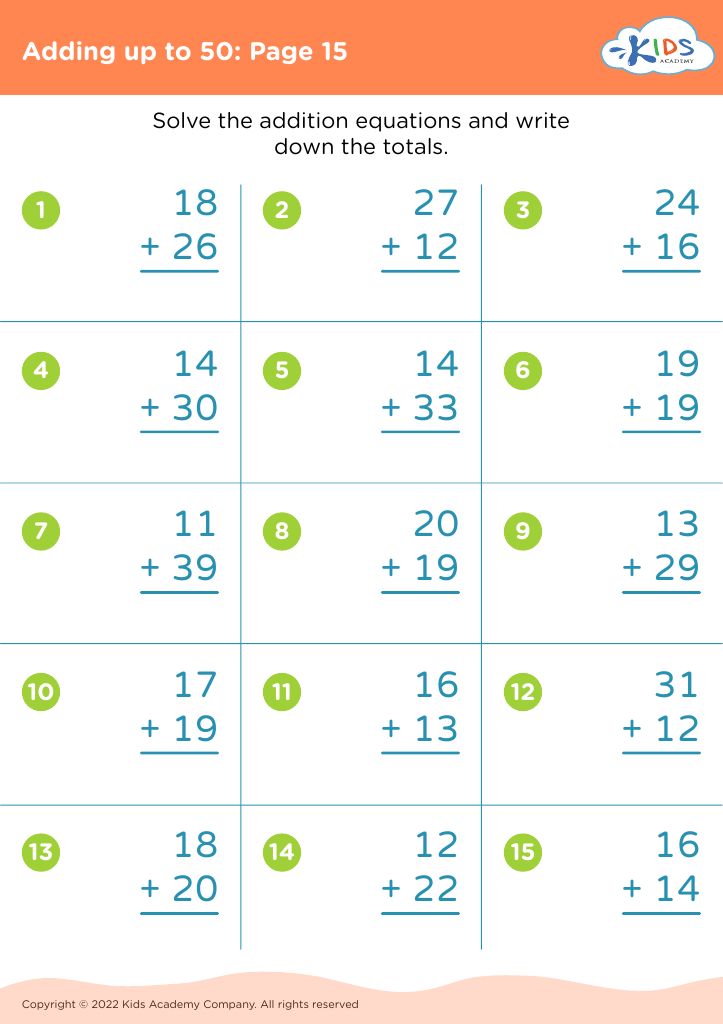
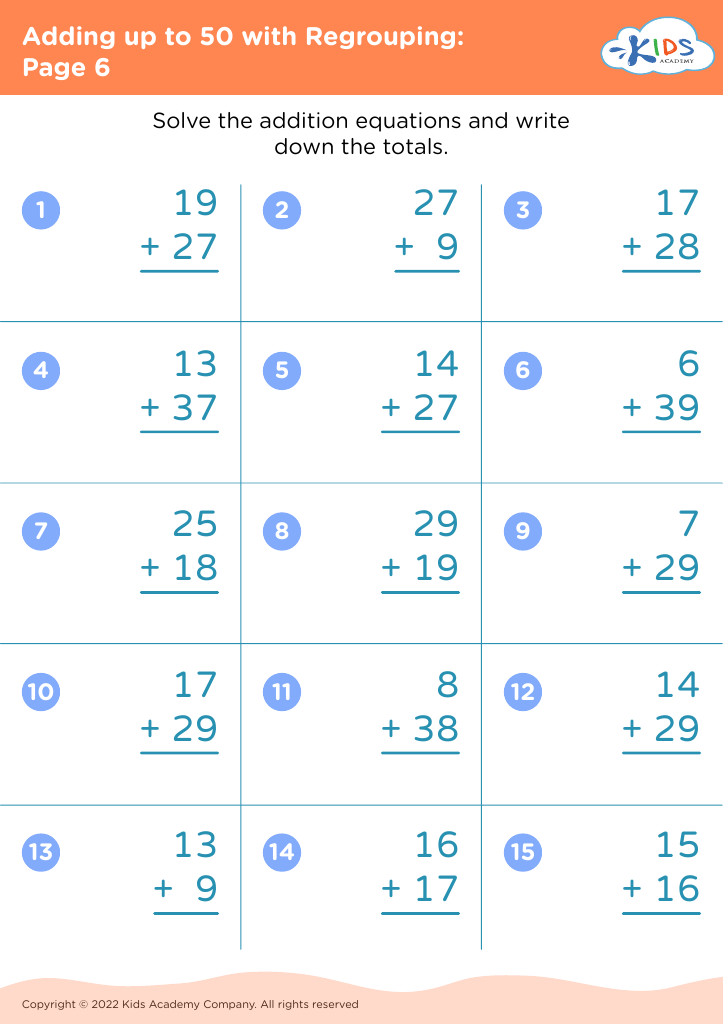
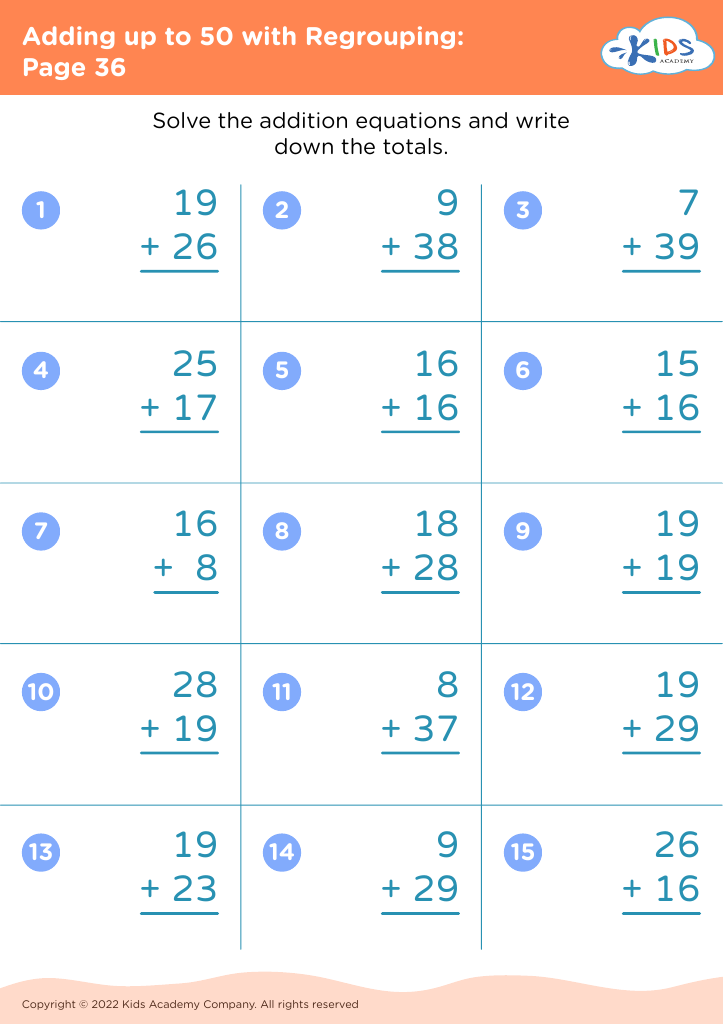
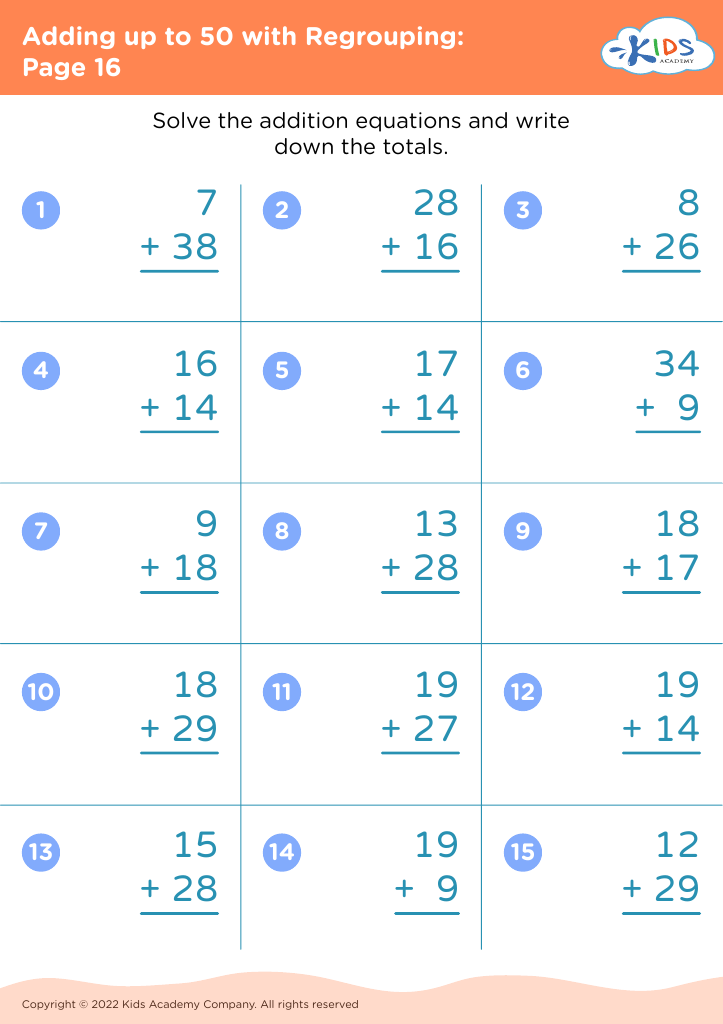
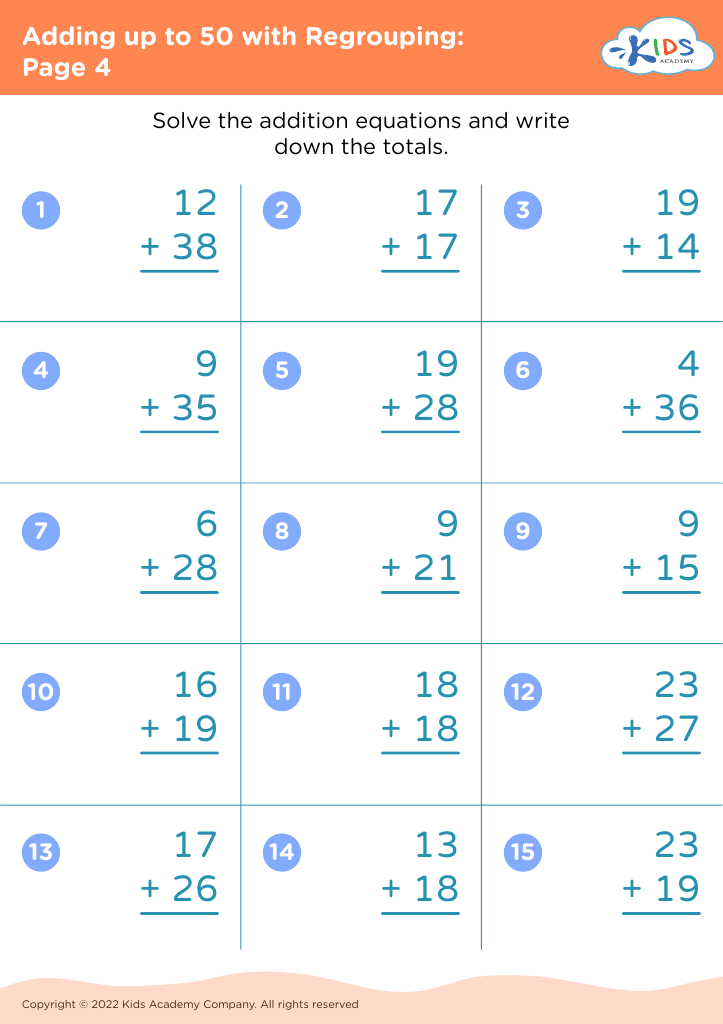
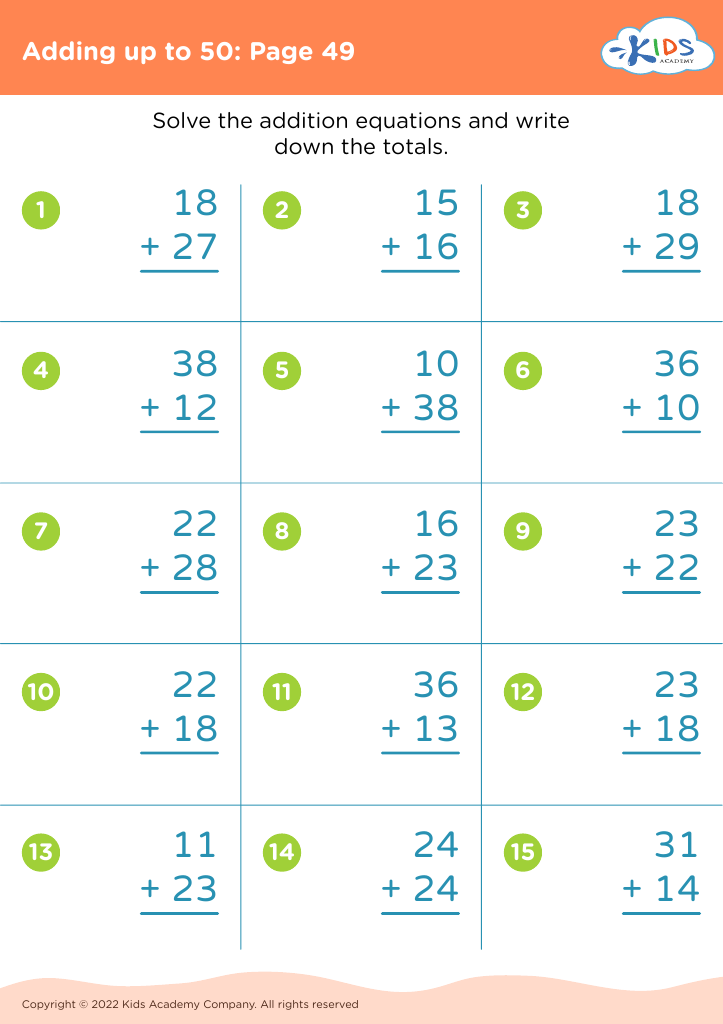




Comparing fractions is an essential foundational skill in mathematics that critically influences a child's understanding of number sense, fractions, and subsequent arithmetic operations. For children aged 4-8, engaging in activities that involve comparing fractions, particularly those that add up to 50, fosters cognitive development and problem-solving skills crucial for later academic success.
First and foremost, learning to compare fractions helps children develop a clear understanding of parts of a whole, a concept they will encounter in various real-life situations. Understanding that fractions can represent different sizes or quantities is vital not only in math but also in cooking, sharing, and allocating resources—situations they may encounter in daily life.
Moreover, activities centered around comparing fractions can enhance critical thinking and decision-making skills. Understanding how to break down and articulate why one fraction is greater than or less than another promotes analytical skills that are transferable to other subjects and situations.
Finally, these exercises can serve as engaging learning opportunities, helping build a positive attitude towards math as children visualize and interact with different fractions. Teachers and parents should actively support these learning experiences, ensuring children develop a strong, enjoyable foundation in mathematics that will benefit them for years to come.








