Identifying shapes Adding up to 50 Worksheets for Ages 4-8
9 filtered results
-
From - To
Explore our engaging "Identifying Shapes Adding up to 50 Worksheets" tailored for ages 4-8. Designed to nurture early math skills, these worksheets offer a fun way for children to practice addition while identifying and learning shapes. Each activity combines visual learning with arithmetic exercises, promoting a comprehensive understanding of basic math concepts. Perfect for both classroom and at-home learning, these resources support cognitive development and boost problem-solving skills. Ignite your child's interest in math with these interactive, easy-to-follow worksheets from Kids Academy, and watch them confidently master addition and shape recognition!
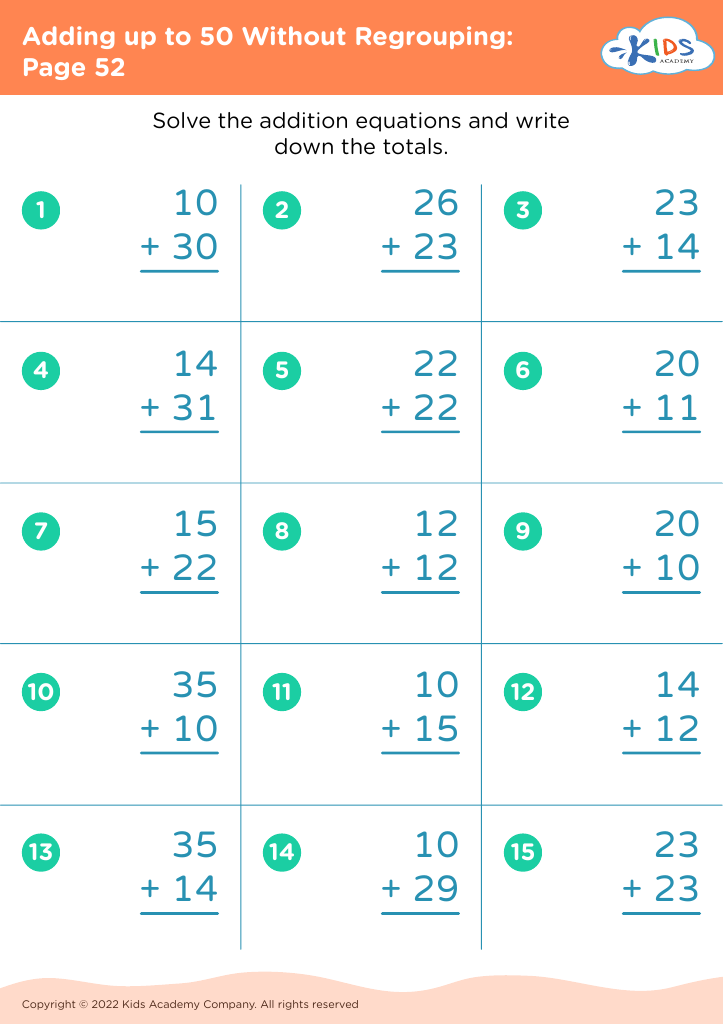
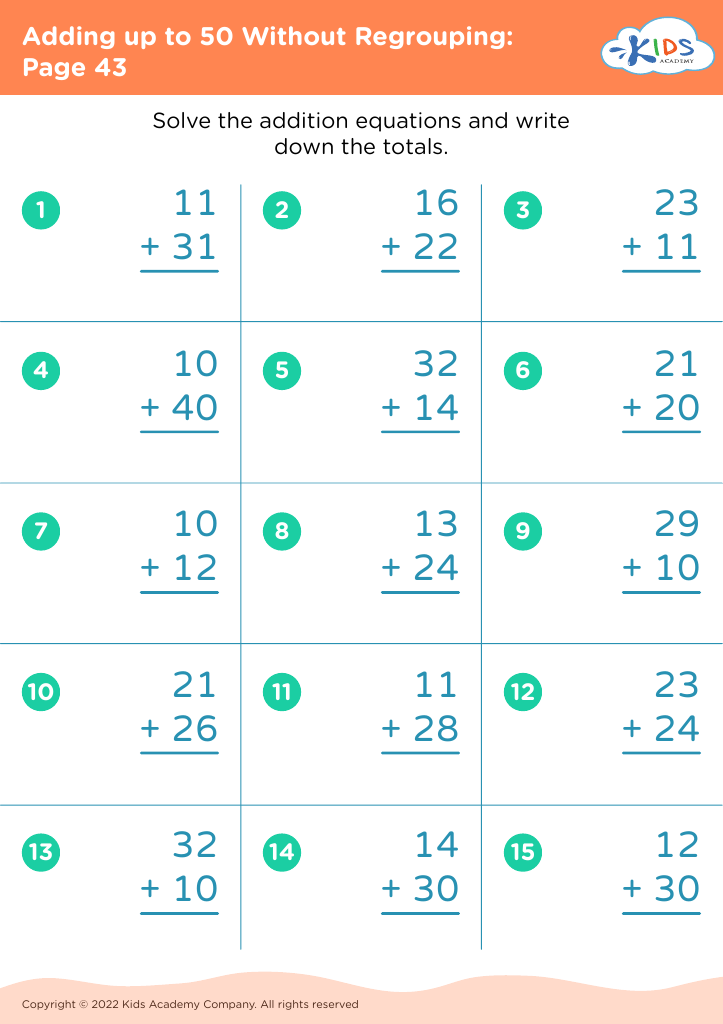
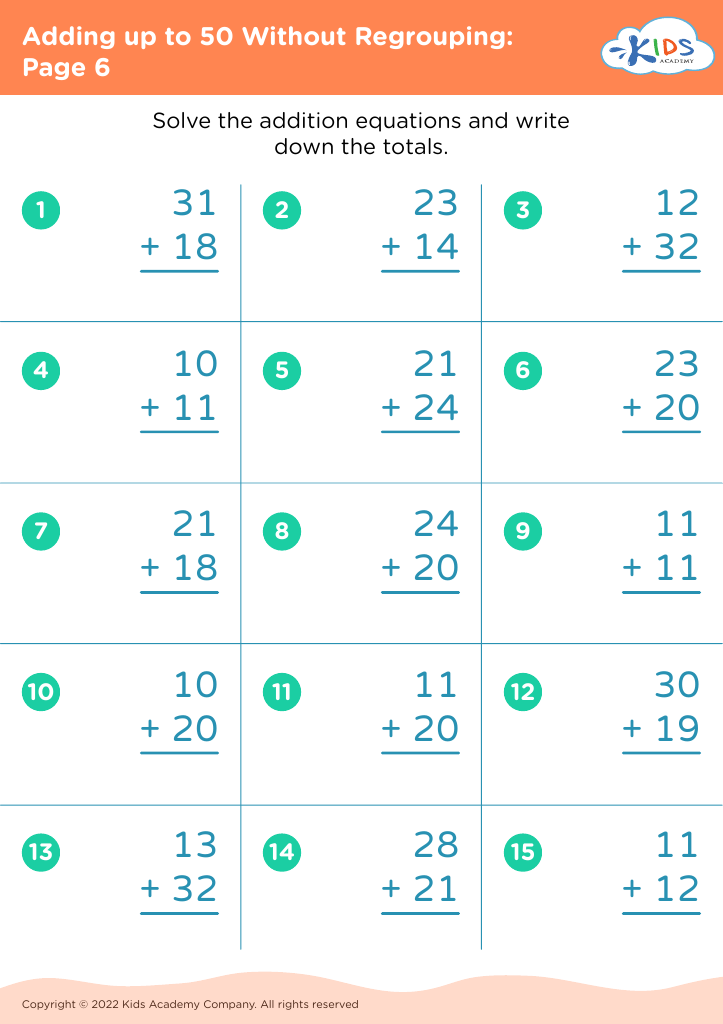
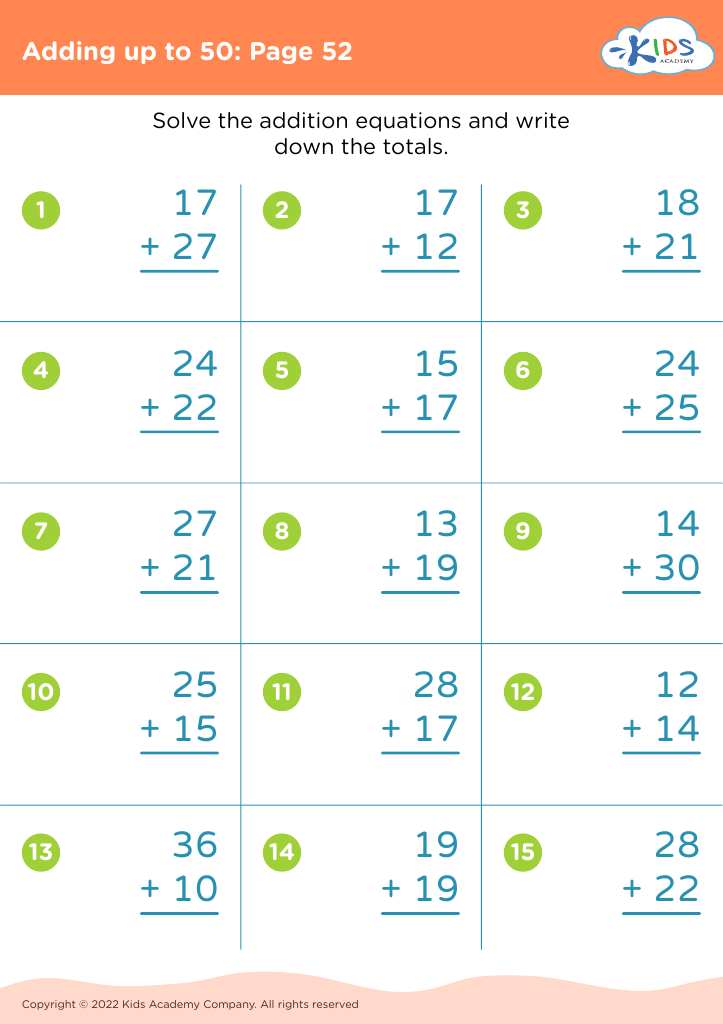
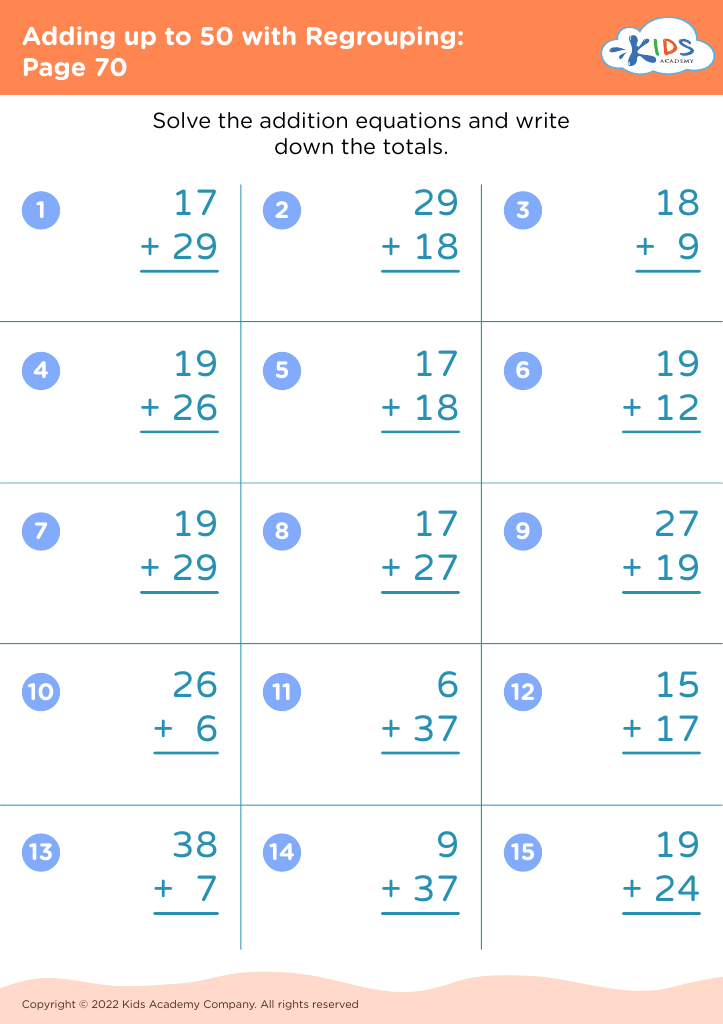
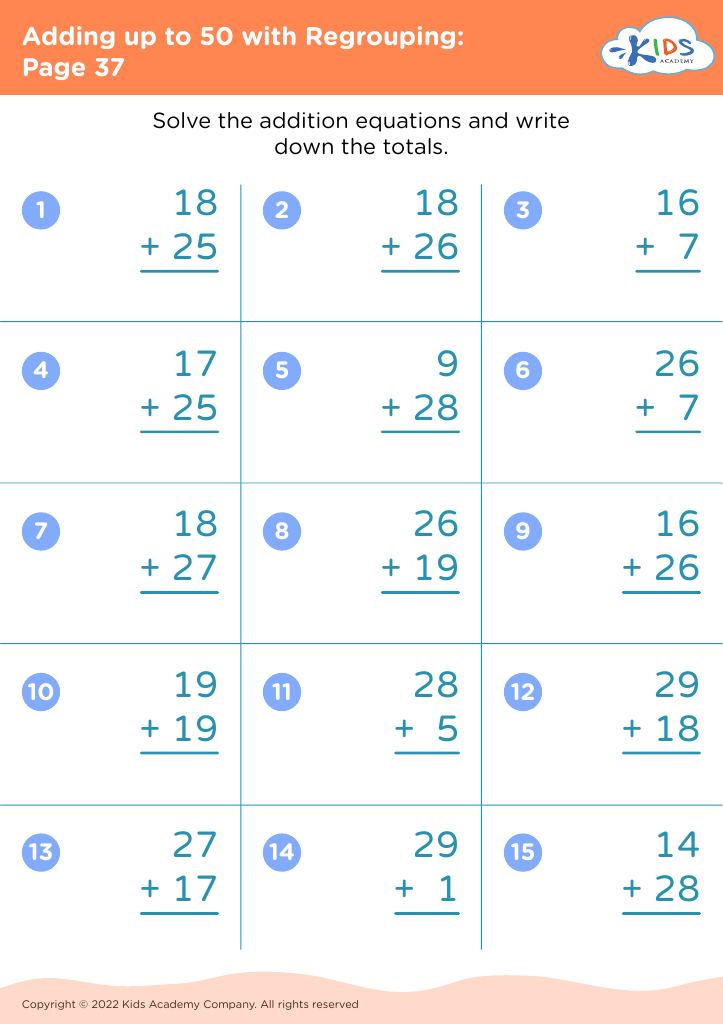
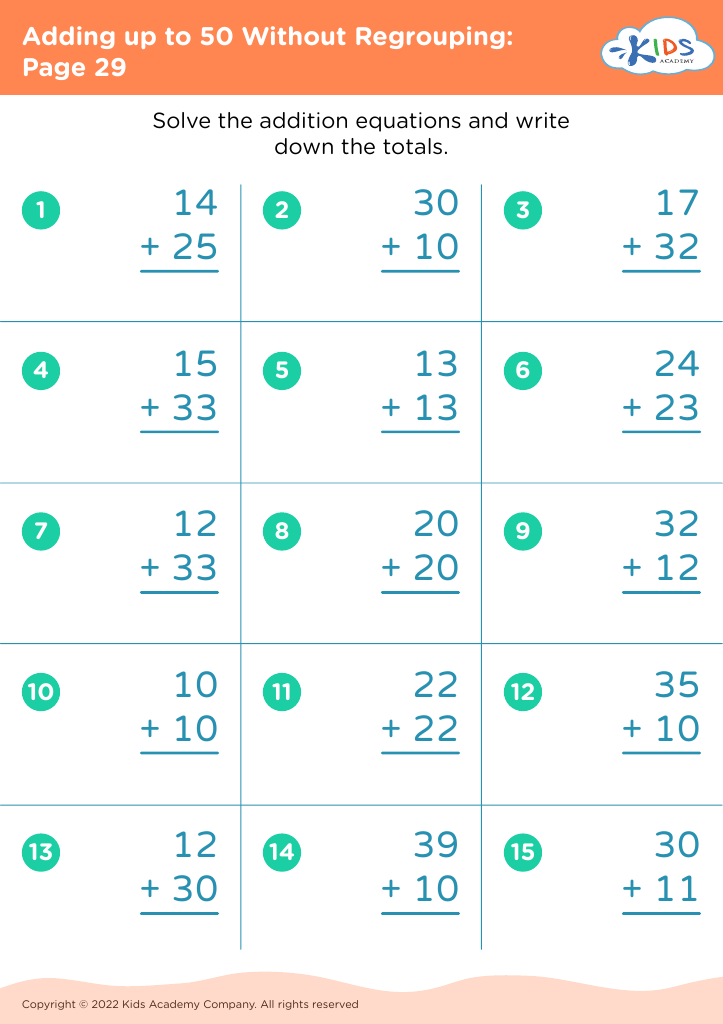
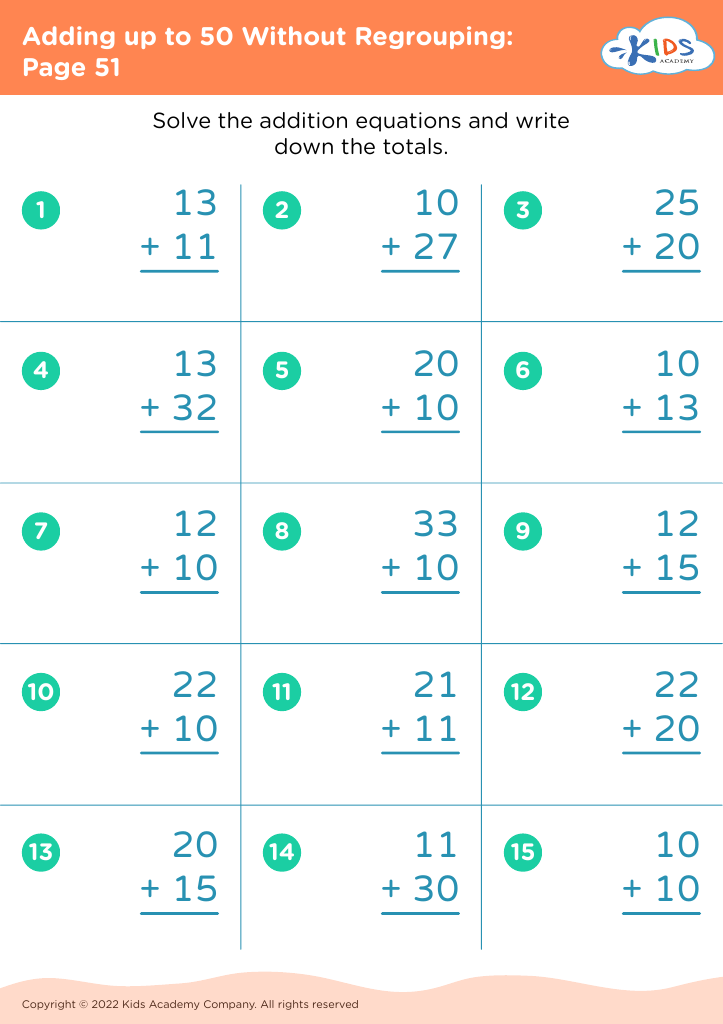
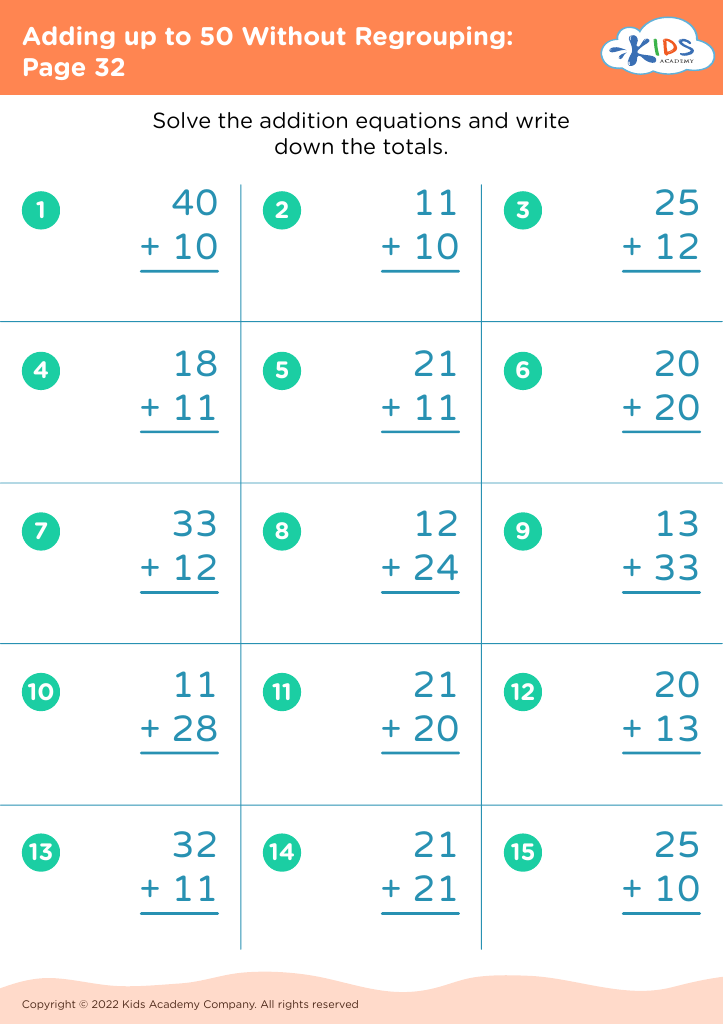




Understanding shapes and basic arithmetic are foundational skills essential for young children's cognitive development. For children aged 4-8, these skills pave the way for more complex mathematical reasoning and problem-solving abilities.
When children learn to identify shapes, they enhance their spatial awareness and geometry skills. Recognizing shapes like circles, squares, and triangles helps children categorize objects and lays the groundwork for understanding the properties of shapes and patterns. This knowledge is not only crucial in math but also applicable in everyday situations, such as identifying road signs or organizing objects.
Adding up to 50 encompasses fundamental arithmetic skills that are vital for more advanced mathematics. Mastering addition within this range builds numerical fluency and confidence. It helps children understand the concept of quantities and improves their ability to perform calculations mentally, an essential skill for daily tasks such as counting money or measuring ingredients in cooking.
Moreover, these learning experiences promote problem-solving skills, logical thinking, and attention to detail. They also help to develop persistence and patience as children work through problems. Engaging with these concepts fosters a positive attitude towards mathematics, encouraging children to view learning as an enjoyable and rewarding process. Therefore, parents and teachers should prioritize these foundational skills to support the overall academic and practical development of young learners.








