Number Writing Practice Adding up to 50 Worksheets for Ages 4-8
4 filtered results
-
From - To
Boost your child's mathematical skills with our Number Writing Practice Worksheets aimed at ages 4-8! Designed to support young learners, these engaging worksheets focus on writing numbers as they explore the world of addition up to 50. Through fun activities and colorful illustrations, children will practice their number formation while enhancing their understanding of basic math concepts. Ideal for both classroom use and home learning, these worksheets promote fine motor skills and early numeracy. Watch your child gain confidence and excitement in their math abilities. Download our Number Writing Practice Worksheets today and make math learning a joyful experience!
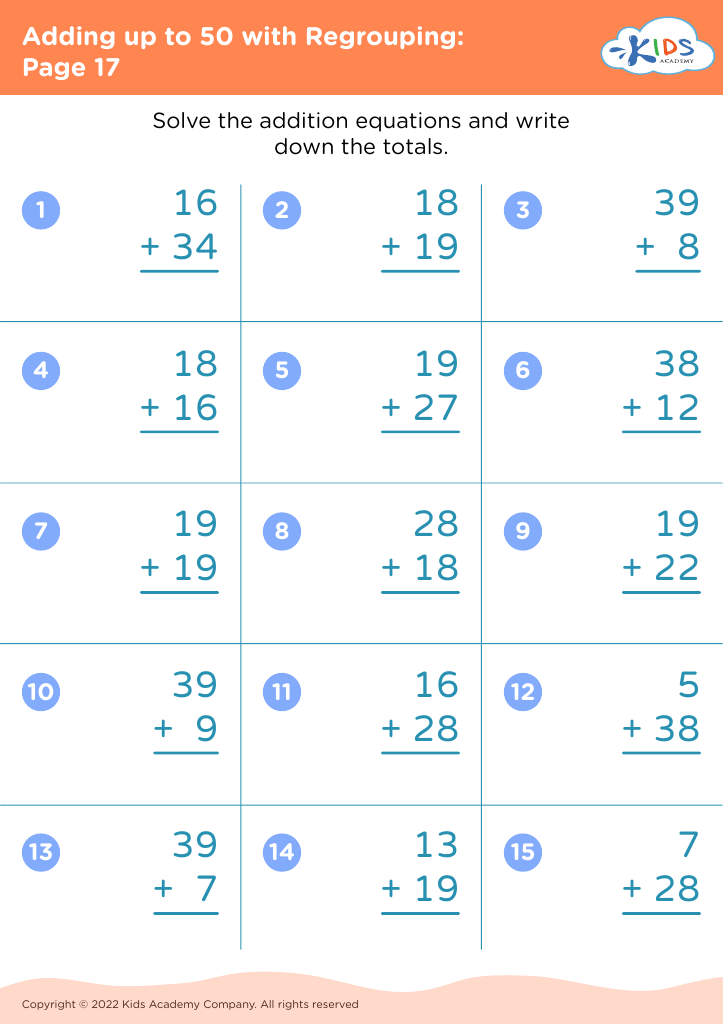
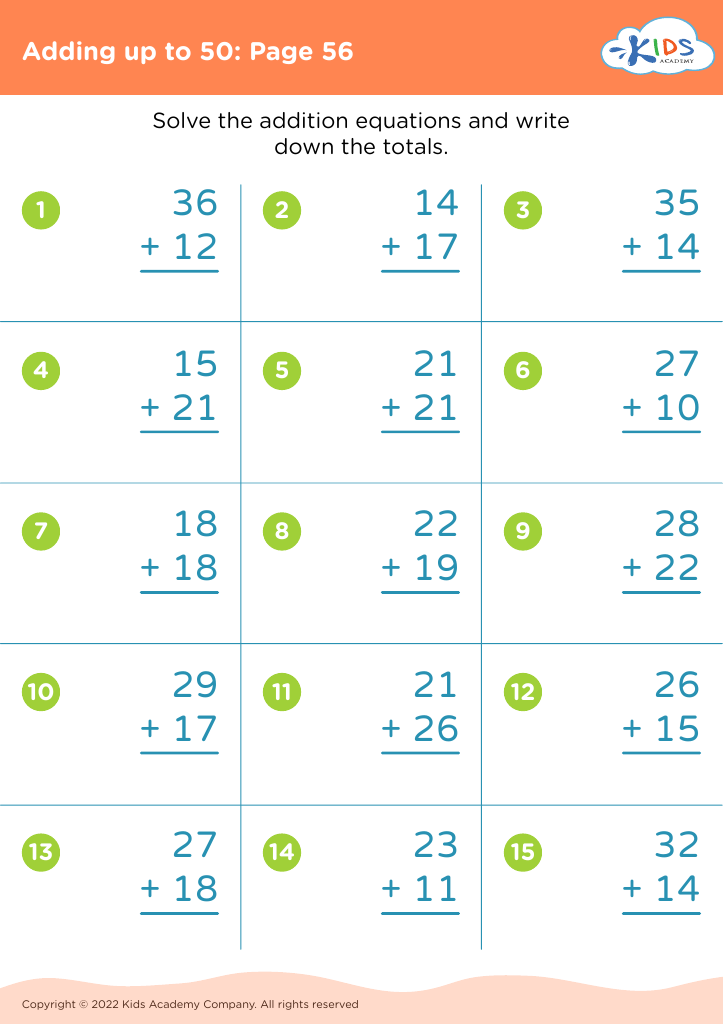
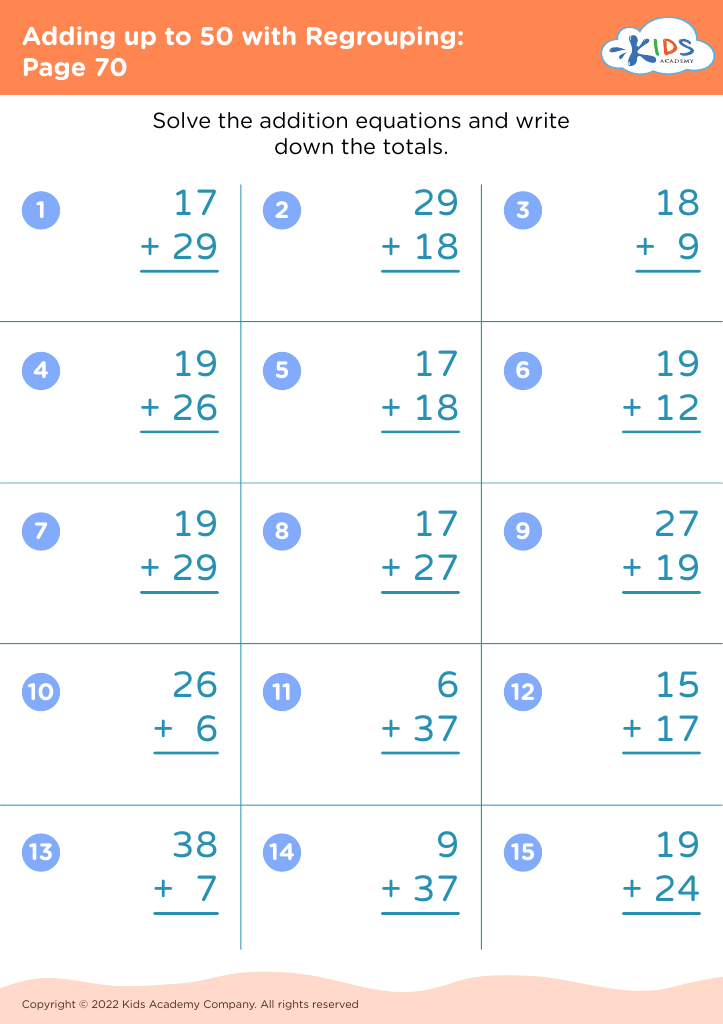
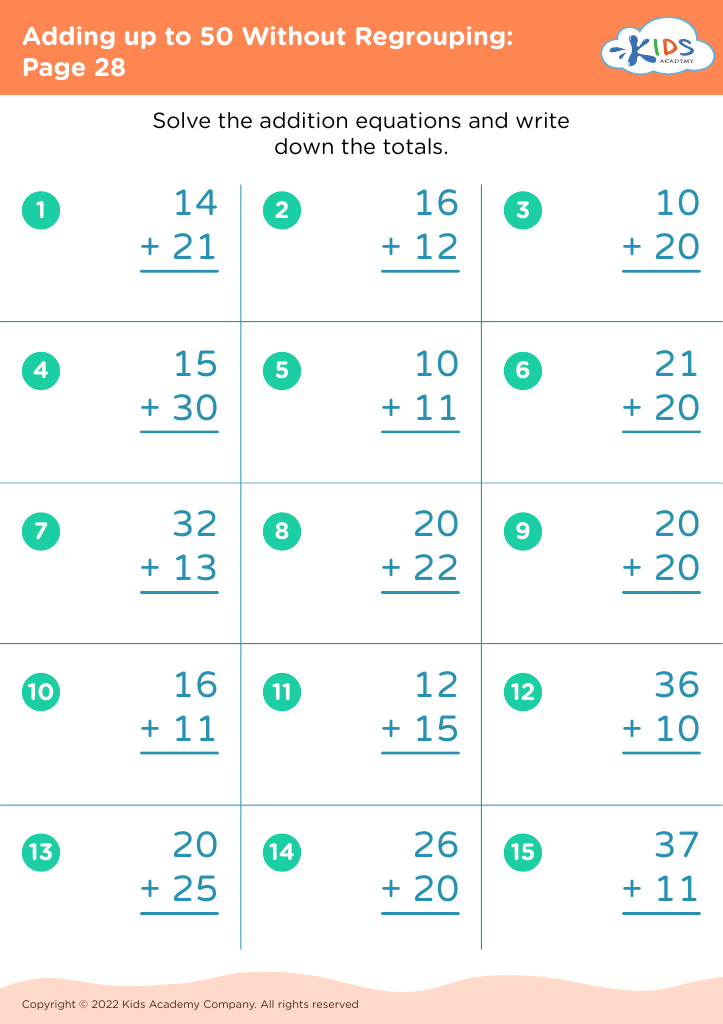




Number writing practice is crucial for children aged 4-8 as it establishes a strong foundation in mathematics and promotes fine motor skills essential for overall development. Engaging with written numbers enhances number recognition, enabling children to identify and recall quantities effectively. This age group represents a critical period for cognitive growth, where introducing concepts of counting and addition can significantly enhance mathematical understanding and problem-solving abilities.
Practicing number writing and reaching numerical goals, such as adding up to 50, helps children to reinforce their counting skills and develop confidence in their abilities. Additionally, it promotes the understanding of place value and number order, which are vital concepts in the early stages of mathematical learning. Parents and teachers can facilitate this process through interactive and fun approaches, making it enjoyable rather than daunting.
Moreover, consistent practice can help establish a positive attitude towards math, increasing the likelihood that children will pursue higher-level math concepts in the future. By caring about number writing and helping children reach important milestones like adding up to 50, parents and teachers play a pivotal role in preparing students for academic success and developing essential life skills such as persistence, focus, and self-esteem.








