Problem-solving abilities Adding up to 50 Worksheets for Ages 4-8
4 filtered results
-
From - To
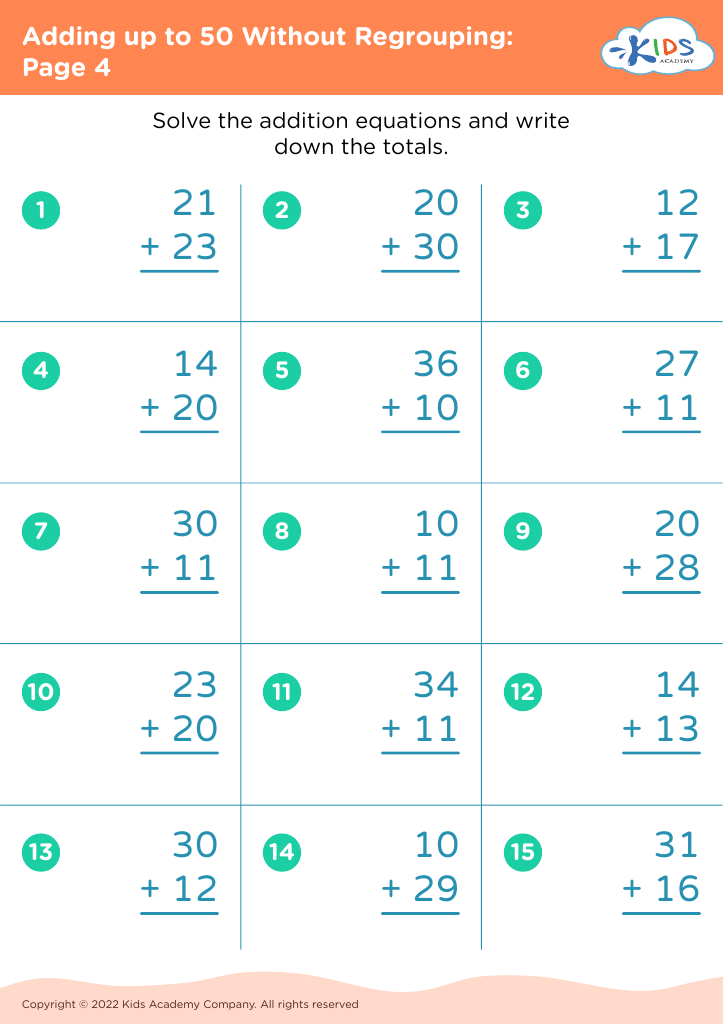
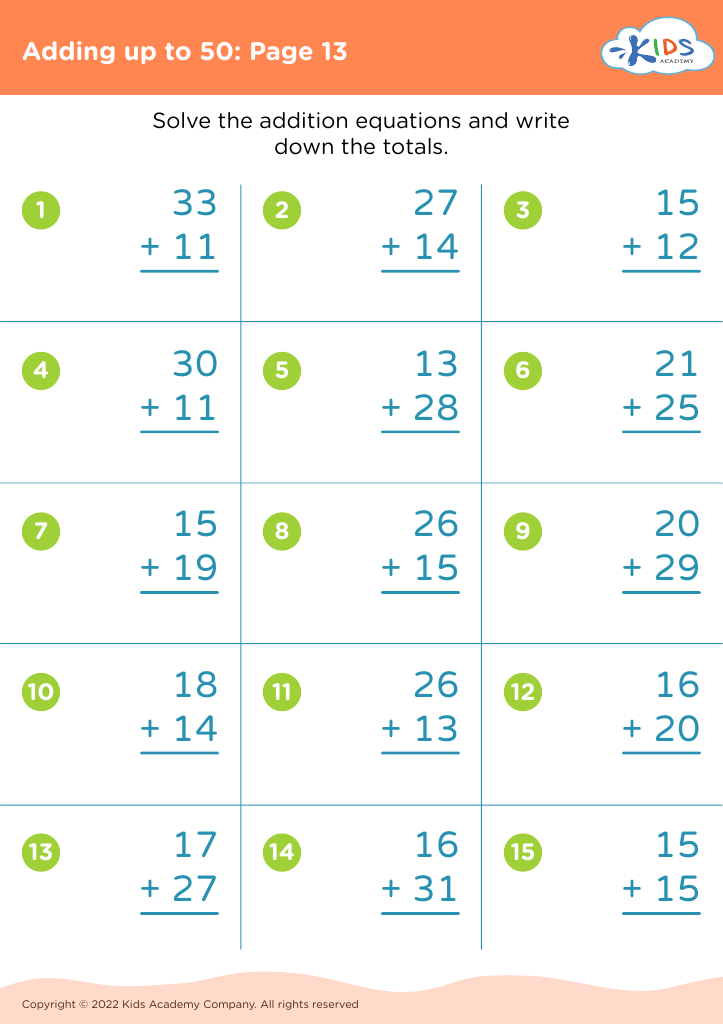
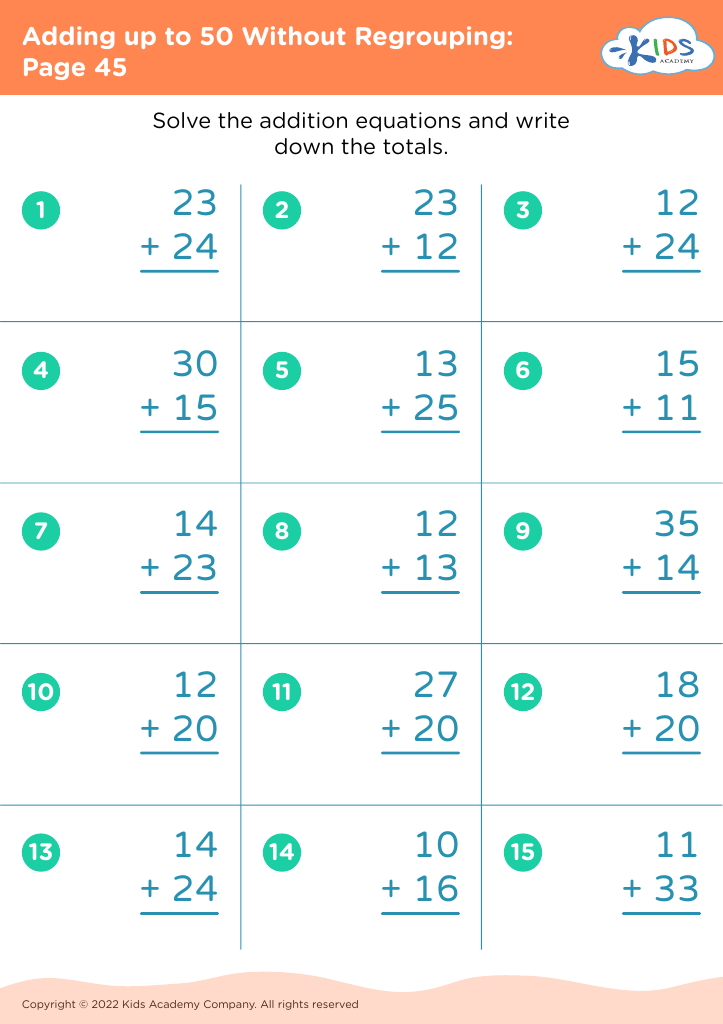
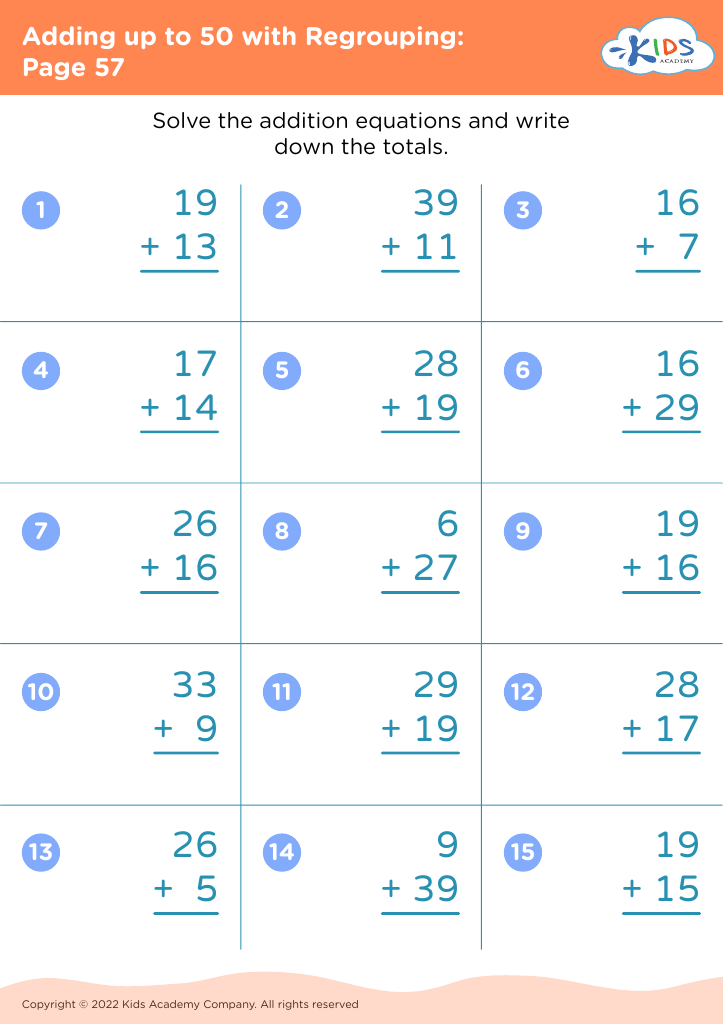
Boost your child's problem-solving abilities with our "Adding Up to 50 Worksheets," designed specifically for ages 4-8. These engaging printables offer a variety of fun challenges that help young learners develop critical thinking skills while mastering addition concepts. Each worksheet encourages children to explore different strategies to solve problems, fostering their confidence and independence in mathematics. Perfect for home or classroom use, these activities make learning enjoyable and interactive. With a focus on building foundational math skills, our worksheets set the stage for future success in math and beyond. Download now and watch your child thrive as a problem solver!




Parents and teachers should prioritize developing problem-solving abilities in children aged 4-8, particularly skills related to adding up to 50, for several compelling reasons. First, problem-solving lays the foundation for critical thinking and analytical skills, which are essential for lifelong learning and adaptability in a rapidly changing world. By encouraging children to engage in adding up to 50, they not only learn basic arithmetic but also enhance their ability to assess a problem, devise strategies, and evaluate outcomes.
Second, mastering addition and the concepts surrounding it instills confidence in young learners, making them more willing to tackle complex challenges in the future. Skills developed through arithmetic play a crucial role in daily life and academic success, impacting future subjects like science, technology, engineering, and math (STEM).
Furthermore, problem-solving fosters resilience. When children navigate challenges, they learn to embrace mistakes as learning opportunities, gaining perseverance in the face of obstacles. Engaging in collaborative problem-solving with peers or family enhances social skills and communication, important for team dynamics later in life. Therefore, supporting children in developing these skills is fundamental, not just for academic achievement but for nurturing well-rounded, capable individuals.








