Problem-solving practice Adding up to 50 Worksheets for Ages 4-8
3 filtered results
-
From - To
Discover engaging worksheets designed to enhance problem-solving skills for children ages 4-8 with our "Adding Up to 50" practice materials. Tailored for young learners, these worksheets make math enjoyable while reinforcing essential concepts of addition. Students will develop critical thinking and problem-solving abilities through fun, interactive exercises that challenge them to reach sums up to 50. Perfect for at-home learning or classroom activities, these worksheets support foundational math skills while keeping kids motivated and excited about learning. Explore our thoughtfully crafted resources to help your child navigate mathematical challenges with confidence and creativity! Start fostering a love for math today!
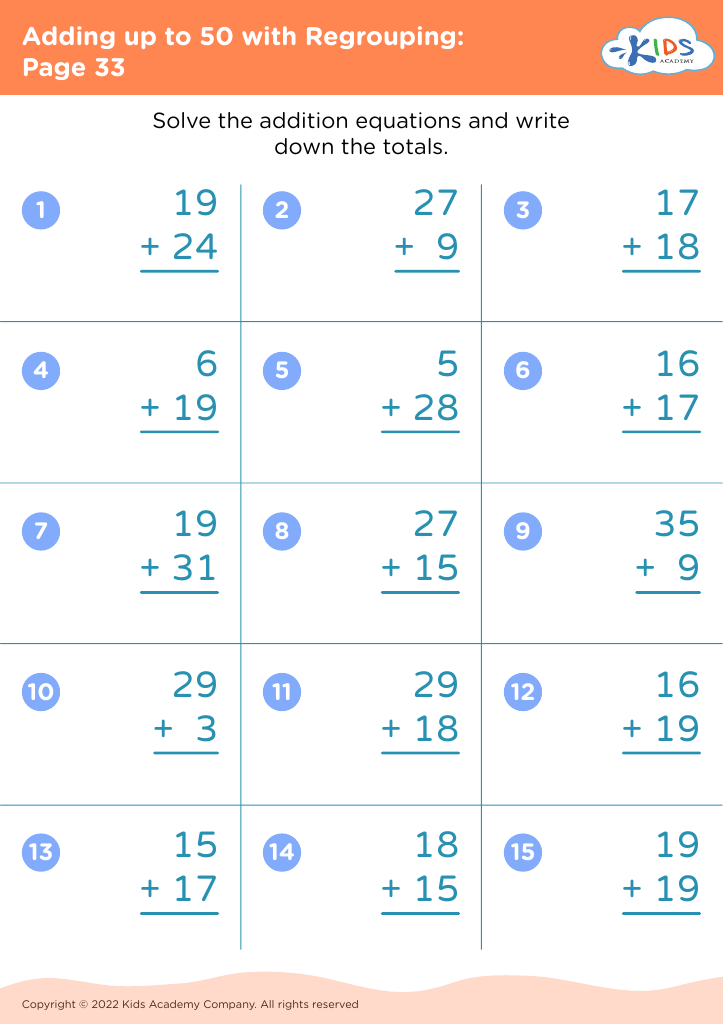
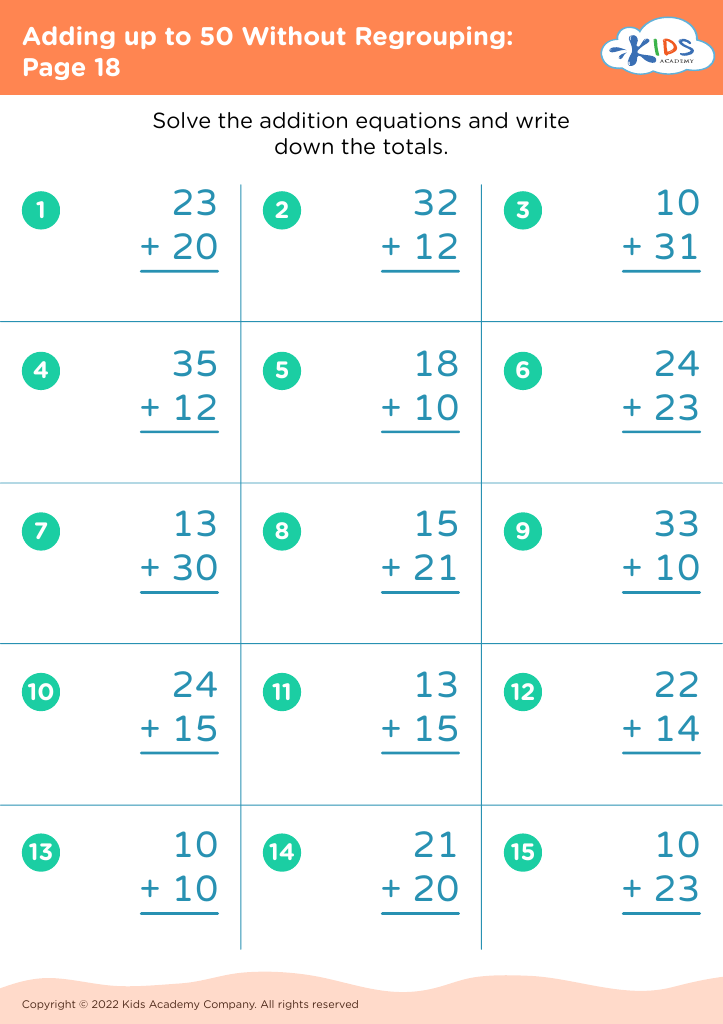
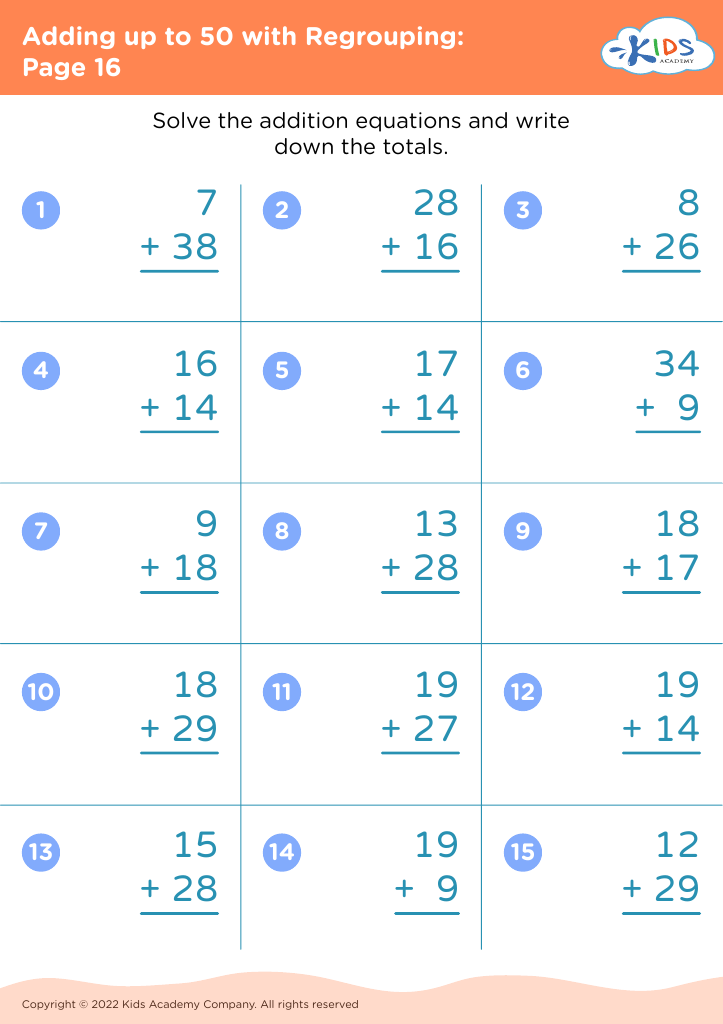




Problem-solving practice, especially focusing on adding up to 50, is essential for children aged 4-8 as it lays a strong mathematical foundation. This early stage is critical for developing not only computational abilities but also critical thinking and reasoning skills. By practicing problem-solving with addition, children learn to approach challenges systematically, which fosters their cognitive development.
For parents and teachers, encouraging such practice helps children understand the concept of numbers and their relationships, building confidence in their abilities. Engaging with addition through games, stories, or real-life scenarios makes learning enjoyable and promotes active participation. This playful learning helps to reinforce key math concepts and enhances retention.
Moreover, problem-solving skills are not limited to math; they are transferable to various aspects of life, encouraging resilience and adaptability. As children learn to solve problems, they also develop perseverance and the ability to work through frustration—valuable traits for any learning journey.
Overall, prioritizing problem-solving practice in early learning can equip children with essential skills for future academic success and everyday life, resulting in more competent and confident learners. Thus, both parents and teachers play a crucial role in nurturing and supporting this foundational aspect of education.








