Problem-Solving Skills Adding up to 50 Worksheets for Ages 4-8 - Page 2
26 filtered results
-
From - To
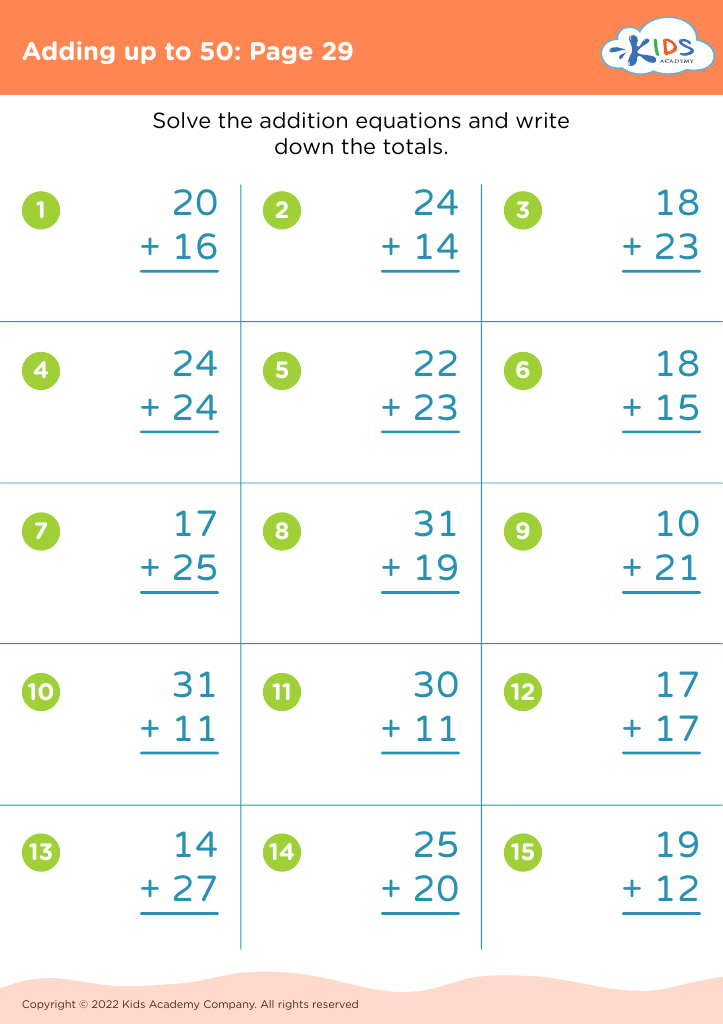
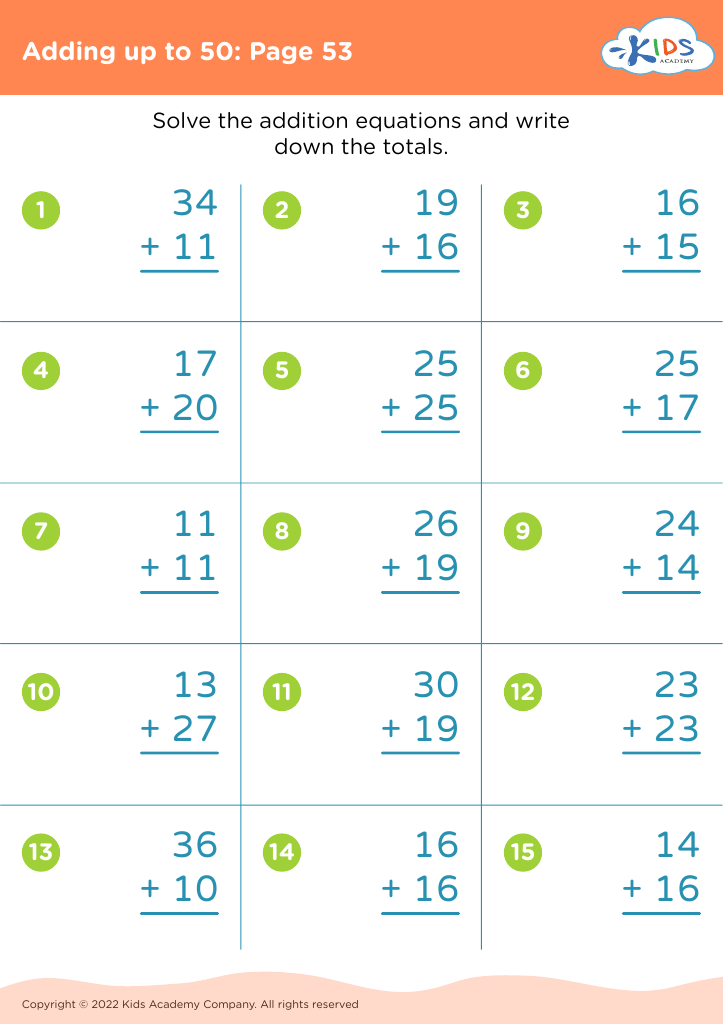




Parents and teachers should prioritize problem-solving skills in young children, especially when it comes to exercises like "adding up to 50," for several vital reasons. Firstly, developing these skills fosters critical thinking and cognitive development. By engaging children in such challenges, they learn to analyze problems, think logically, and explore different strategies to find solutions. This foundational ability not only enhances their mathematical understanding but also contributes to their overall intellectual growth.
Furthermore, mastering problem-solving skills boosts a child’s confidence. Successfully navigating challenges reinforces their belief in their capabilities, encouraging them to embrace new difficulties rather than shy away from them. This resilience is essential in academic settings and life encounters.
Additionally, engaging in collaborative problem-solving activities encourages social skills and teamwork. Children learn the value of discussing ideas and approaching challenges together, highlighting the importance of communication and cooperation.
Lastly, problem-solving activities often nurture creativity, as children are prompted to think outside the box and explore unconventional solutions. By empowering our young learners with these essential skills early on, parents and teachers set the stage for future success in education and everyday life, ensuring children are well-prepared to tackle the complexities of the world around them.








