Recognizing equivalent fractions Adding up to 50 Worksheets for Ages 4-8
3 filtered results
-
From - To
Discover our engaging "Recognizing Equivalent Fractions Adding Up to 50 Worksheets" designed specifically for children ages 4 to 8. These worksheets provide a fun and interactive way to help young learners understand the concept of equivalent fractions while practicing addition with sums up to 50. Each worksheet features vibrant illustrations and clear instructions that make learning both enjoyable and effective. Perfect for home or classroom use, these materials encourage critical thinking and strengthen foundational math skills. Inspire your child's math journey with our thoughtfully crafted resources, ensuring they grasp essential concepts while building confidence in their abilities. Start exploring today!
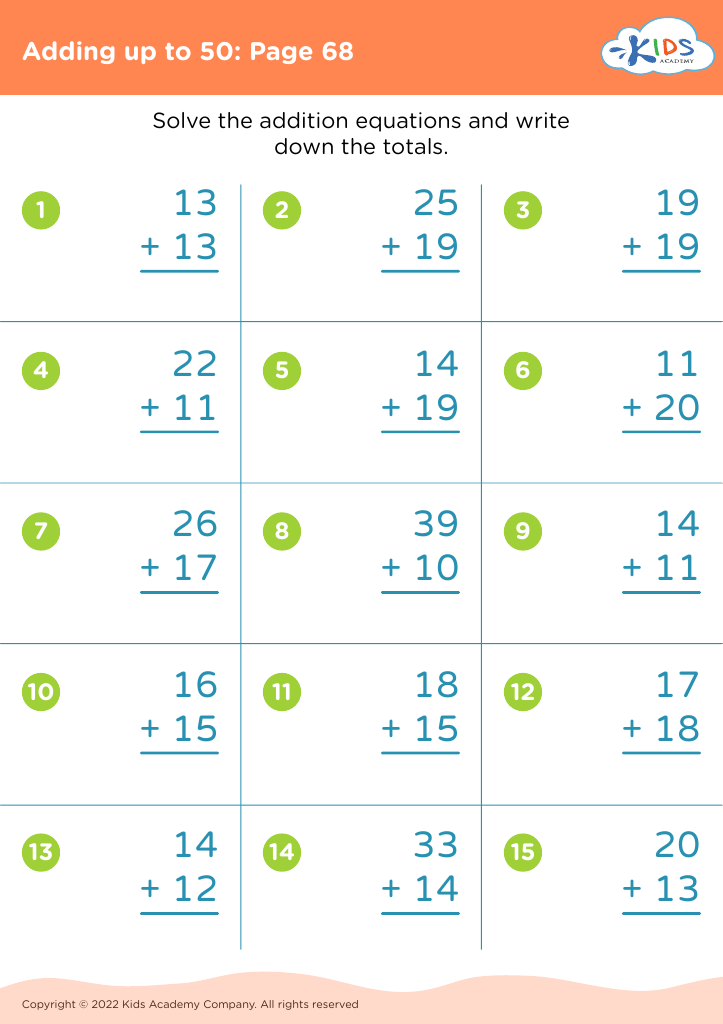
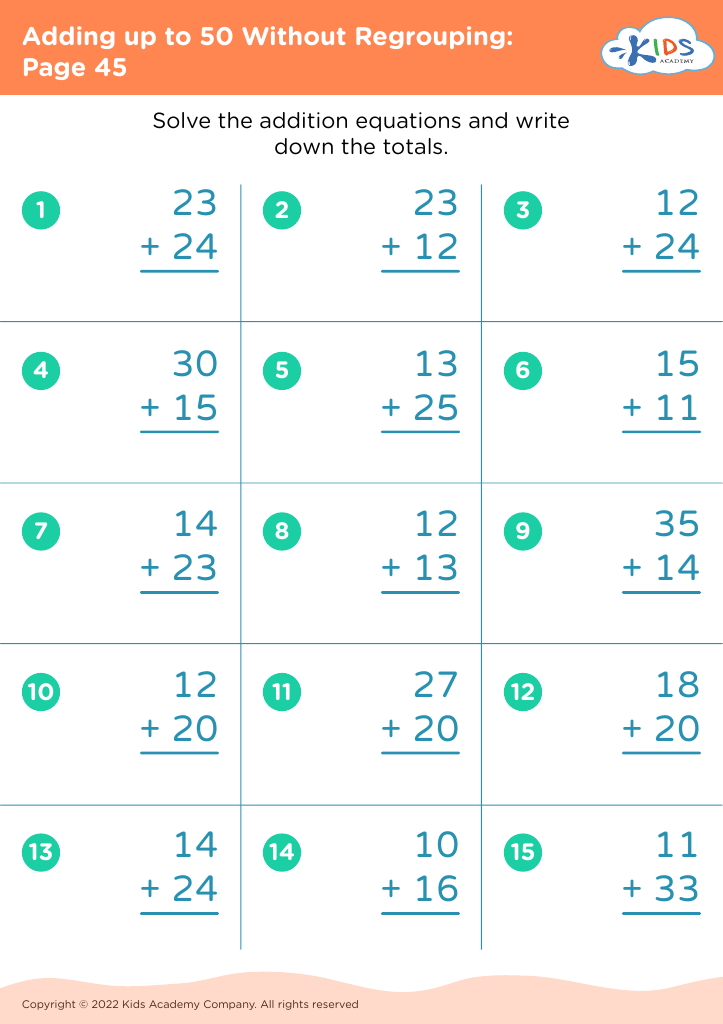
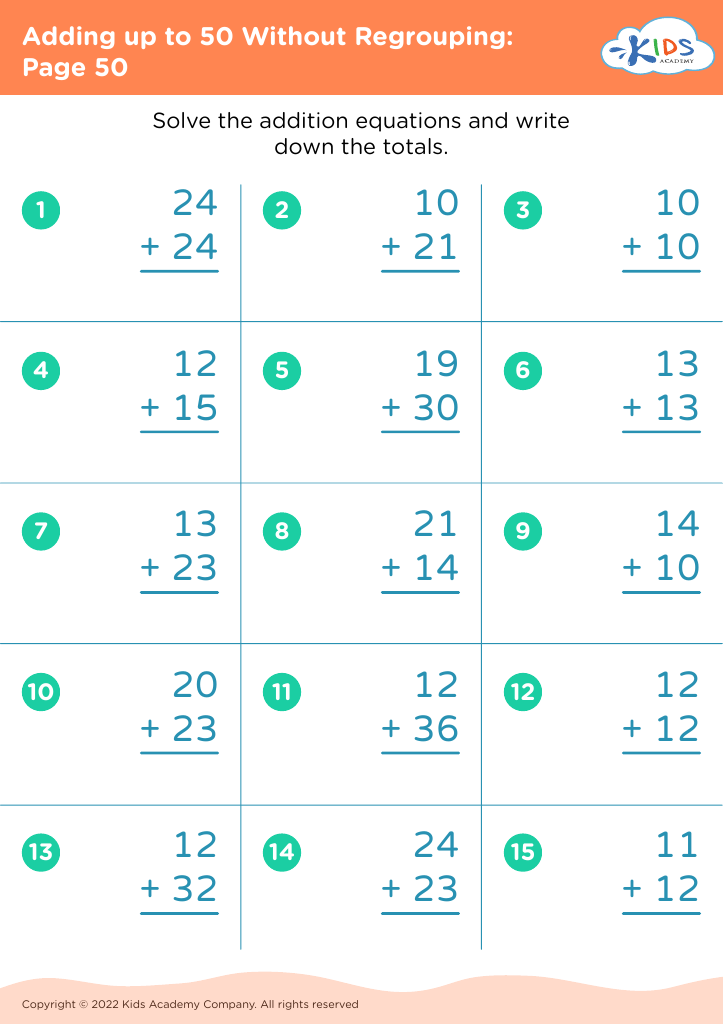




Recognizing equivalent fractions and mastering the concept of addition up to 50 are essential skills for children ages 4-8. Parents and teachers should prioritize these concepts as they lay the foundation for more complex mathematical understanding.
Understanding equivalent fractions helps children develop their number sense, enabling them to see relationships between numbers and how they can be used flexibly. For instance, recognizing that 1/2 is the same as 2/4 enhances their ability to categorize and compare different quantities, fostering critical thinking.
In parallel, adding up to 50 is a fundamental skill that encourages mental math strategies. It supports early arithmetic abilities and builds confidence when approaching numbers. As children learn to manipulate numbers to reach a sum, they develop problem-solving skills vital for future mathematical concepts.
Teaching these skills in an engaging manner through games and activities maintains children’s interest and enthusiasm for learning. Consequently, recognizing equivalent fractions and adding up to 50 not only strengthen foundational math skills but also empower students with confidence and competence as they progress in their educational journey. By nurturing these capabilities, parents and teachers set the stage for a strong mathematical foundation that fosters lifelong learning.








