Subtraction skills Adding up to 50 Worksheets for Ages 4-8
3 filtered results
-
From - To
Discover essential subtraction skills with our "Subtraction Skills Adding Up to 50 Worksheets" designed for children aged 4-8. These engaging worksheets help young learners grasp the fundamental concepts of subtraction while enhancing their number sense. Through fun, interactive activities, kids will explore subtraction within the context of adding up to 50, fostering a deeper understanding of mathematical relationships. Each worksheet incorporates colorful illustrations and age-appropriate exercises that make learning enjoyable. Perfect for at-home learning or classroom use, these resources will build confidence in young mathematicians. Download our subtraction worksheets today and watch your child's skills flourish!
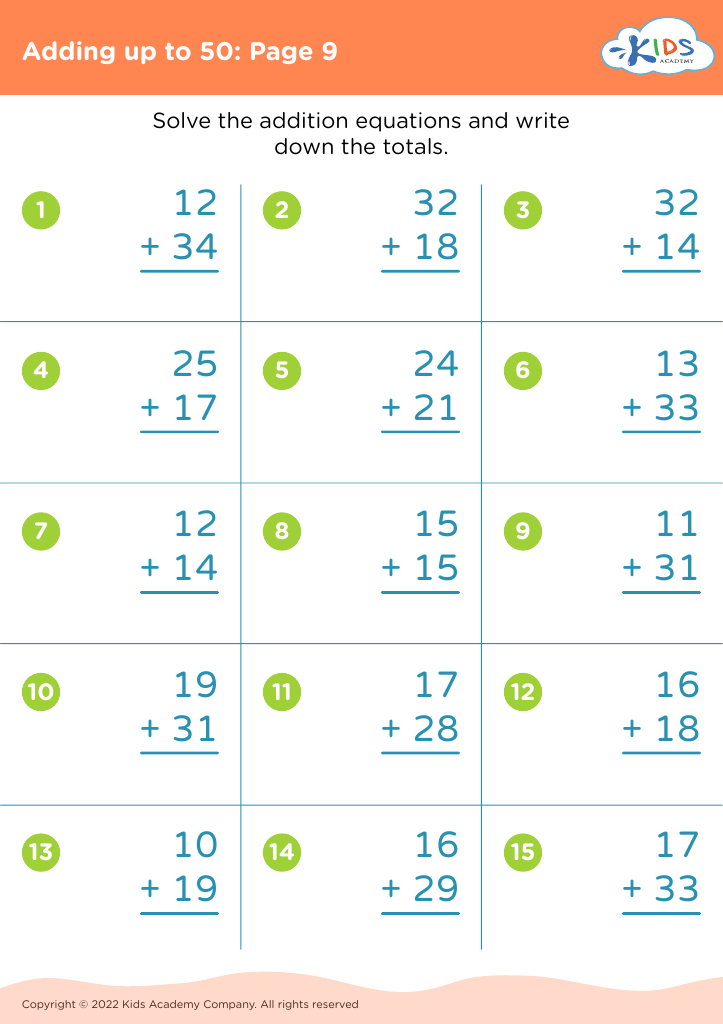
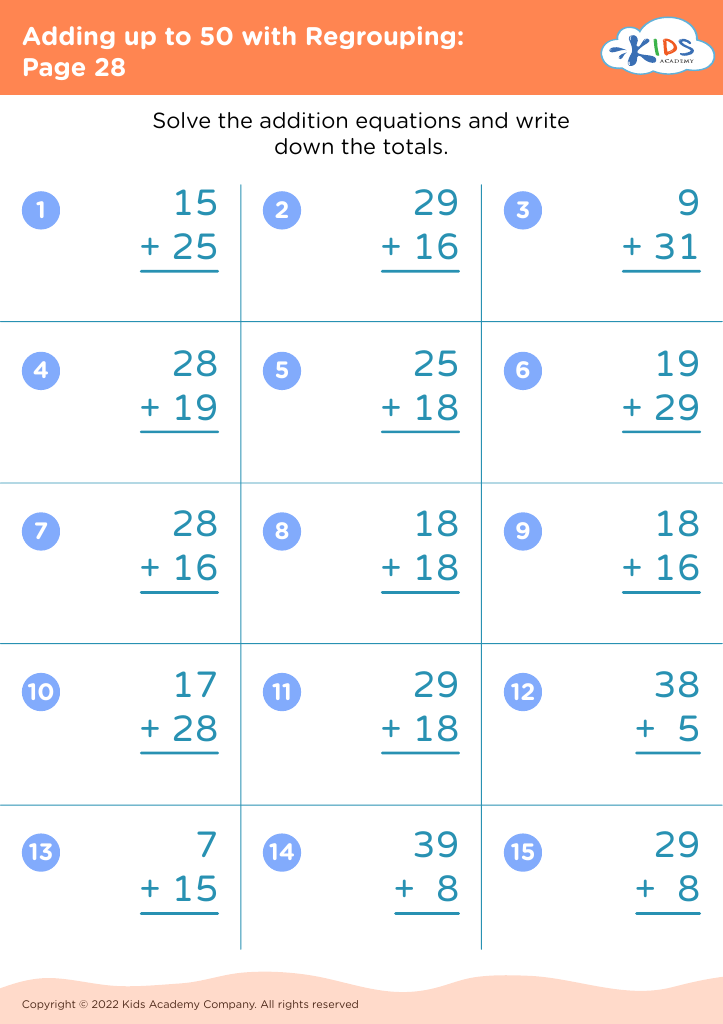
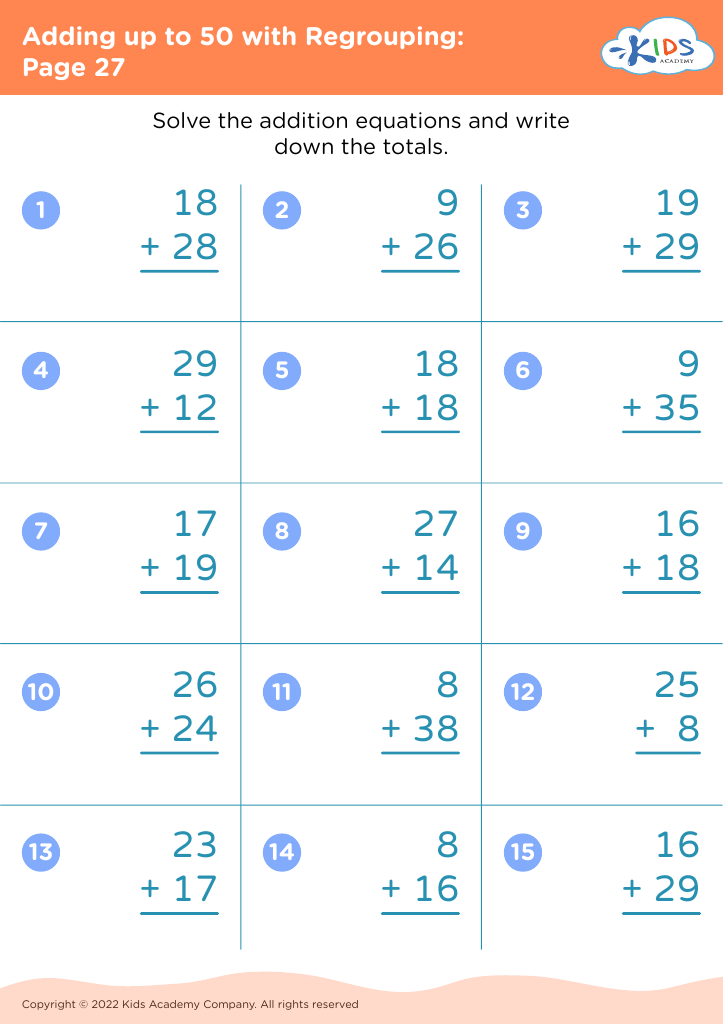




Subtraction skills are crucial for children aged 4-8, as they form the foundation for more complex mathematical concepts. Mastering subtraction, particularly with numbers up to 50, enhances "number sense," which is essential for everyday problem-solving and logical thinking. Early mastery in these skills builds confidence in students, fostering a positive attitude towards math that benefits their overall academic trajectory.
Parents and teachers should care about these skills because early mathematics education significantly impacts later academic performance, particularly in subjects that rely on strong numerical abilities. Subtraction helps children understand the concept of "taking away," which is fundamental to grasping the idea of quantities and relationships between numbers.
Additionally, learned subtraction skills contribute to real-life situations, such as estimating shopping costs, managing small allowances, or engaging in everyday activities like cooking and planning games. By promoting strong subtraction skills early on, parents and teachers enable children to develop critical thinking and problem-solving skills necessary for future endeavors. Overall, strengthening these skills lays the groundwork for enhanced cognitive development, academic achievement, and life skills, making math a less intimidating subject in the long run.








