Vocabulary enhancement Adding up to 50 Worksheets for Ages 4-8
3 filtered results
-
From - To
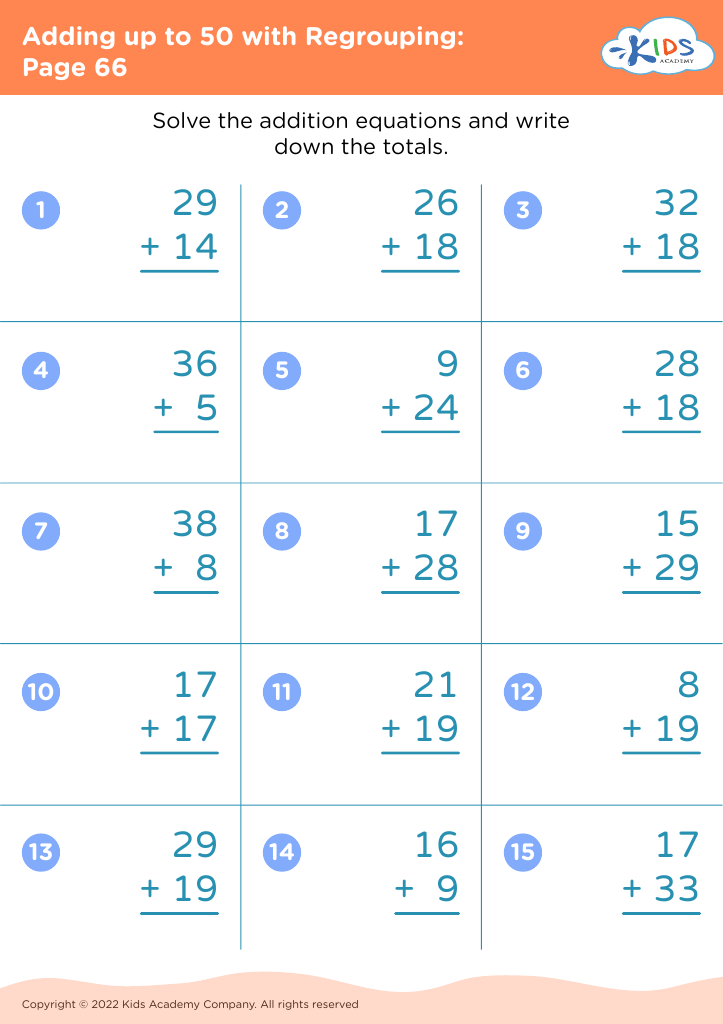
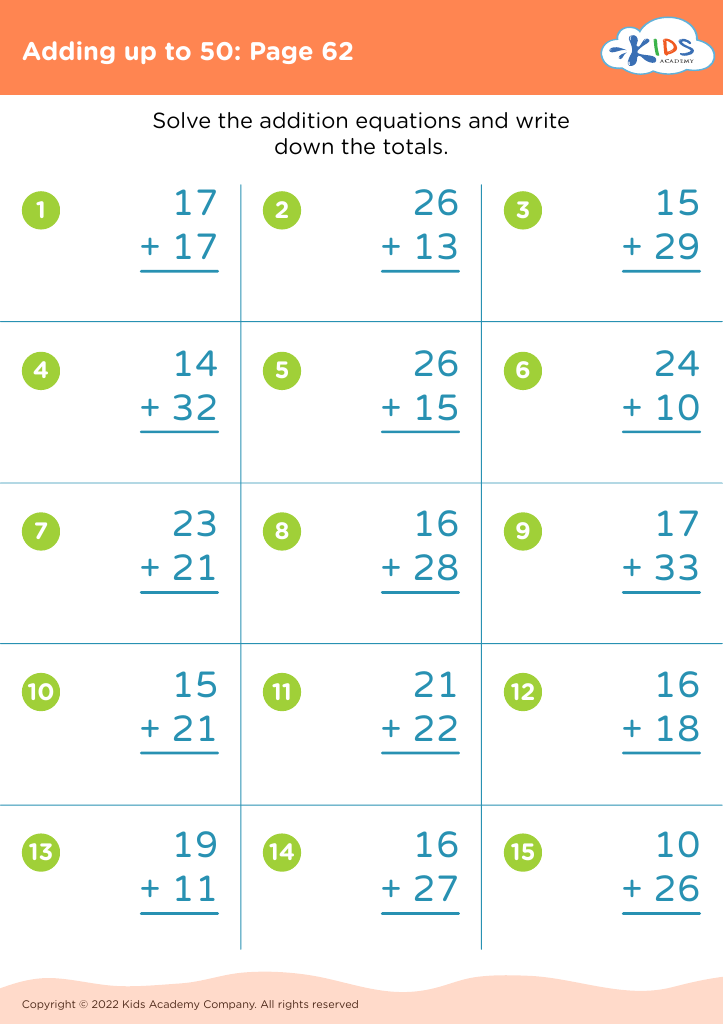
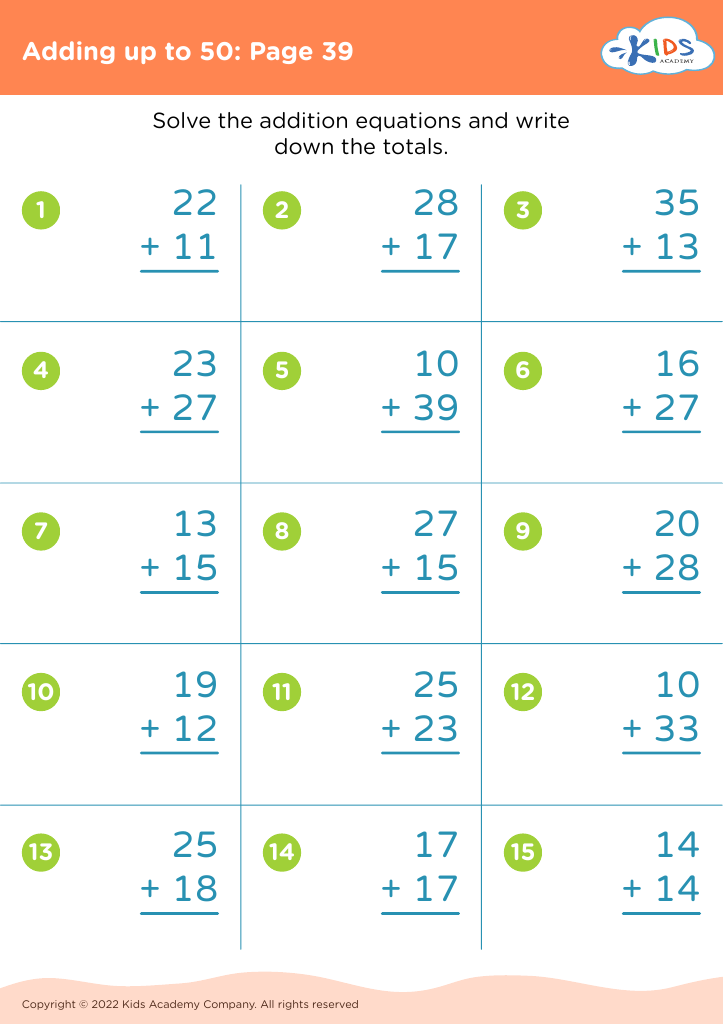
Enhance your child's vocabulary with our engaging "Vocabulary Enhancement: Adding Up to 50 Worksheets" designed for ages 4-8! These interactive worksheets combine fundamental math skills with key language development, helping young learners improve their addition prowess while also expanding their vocabulary. Through exciting and enjoyable activities, children will strengthen their arithmetic abilities adding numbers up to 50 and recognize important math-related terms. Ideal for fostering both cognitive and linguistic growth, our worksheets provide a dual education advantage. Give your child the head start they need with these fun, comprehensive learning tools tailored for young, curious minds.




Vocabulary enhancement for children aged 4-8 is crucial for several reasons. Firstly, a robust vocabulary enriches their communication skills, allowing them to express ideas, needs, and emotions more effectively. At this formative stage, children's brains are highly receptive to learning new words. Strong vocabulary acquisition positively impacts reading comprehension, a foundational skill that supports all other areas of learning. When children understand more words, they can grasp more complex concepts across subjects like math, science, and social studies.
Secondly, vocabulary development is directly linked to academic success. Early readers with extensive vocabularies find it easier to decode new words and understand texts, fostering a love for reading and learning. This early boost can set a positive trajectory for lifelong learning and academic achievement, as struggling readers often fall behind in multiple subjects.
Moreover, vocabulary growth supports social and emotional development. Children with richer vocabularies interact more confidently with peers and adults, engage in more meaningful conversations, and navigate social settings with ease. They become better storytellers, enhancing their imaginations and creativity.
Therefore, parents and teachers should prioritize vocabulary enhancement through reading, conversations, and interactive activities, setting the stage for enriched communication, academic achievement, and well-rounded personal development.








