Addition up to 5 Addition & Subtraction Worksheets for Ages 4-8
4 filtered results
-
From - To
Unlock your child's potential with our "Addition up to 5 Addition & Subtraction Worksheets" designed for ages 4-8! These engaging, printable worksheets from Kids Academy offer a fun and interactive way to introduce your young learner to basic math concepts. With colorful exercises tailored to abilities of preschoolers and elementary students, kids can practice essential skills such as counting, addition, and subtraction within the number 5. Perfect for building a solid mathematical foundation and boosting confidence, these resources make learning enjoyable and effective. Download today and transform your math sessions into a delightful adventure!
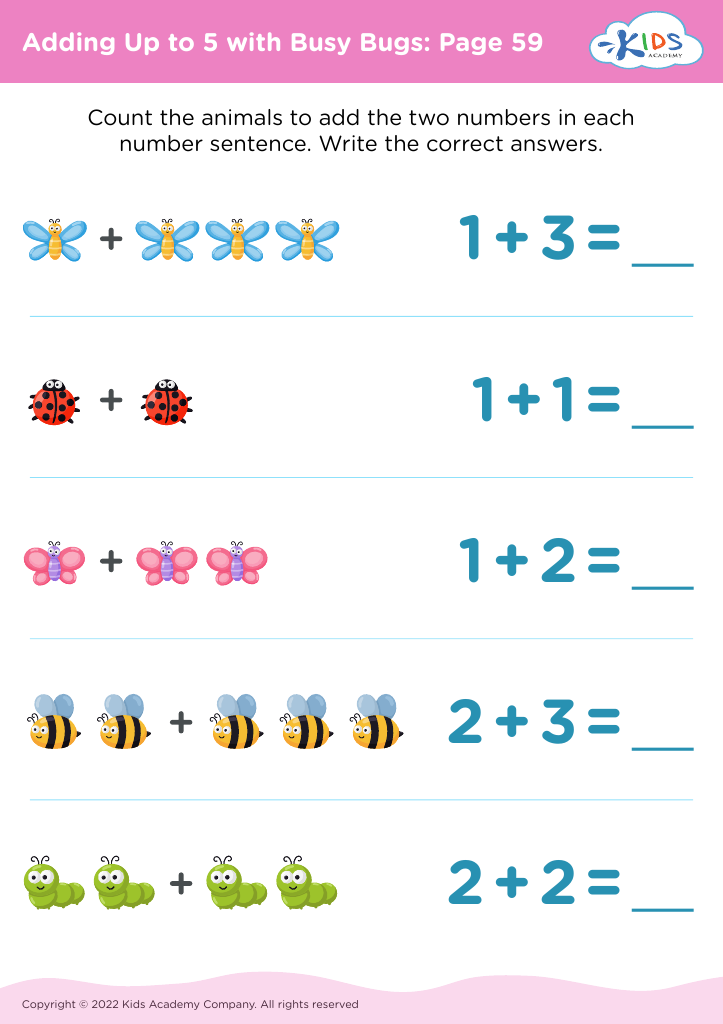
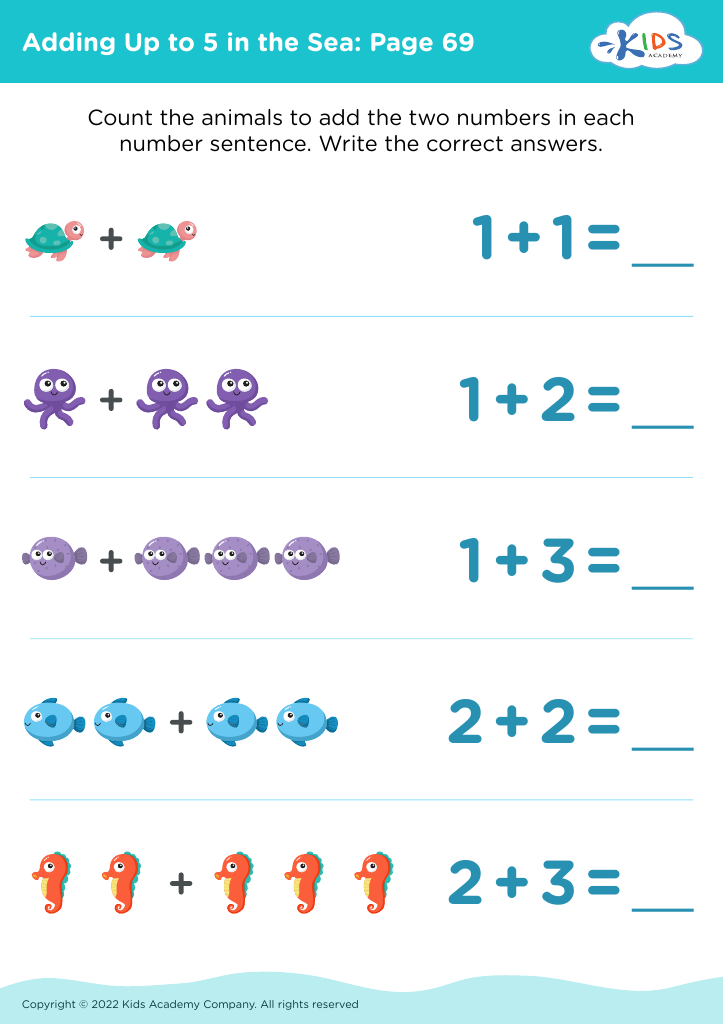
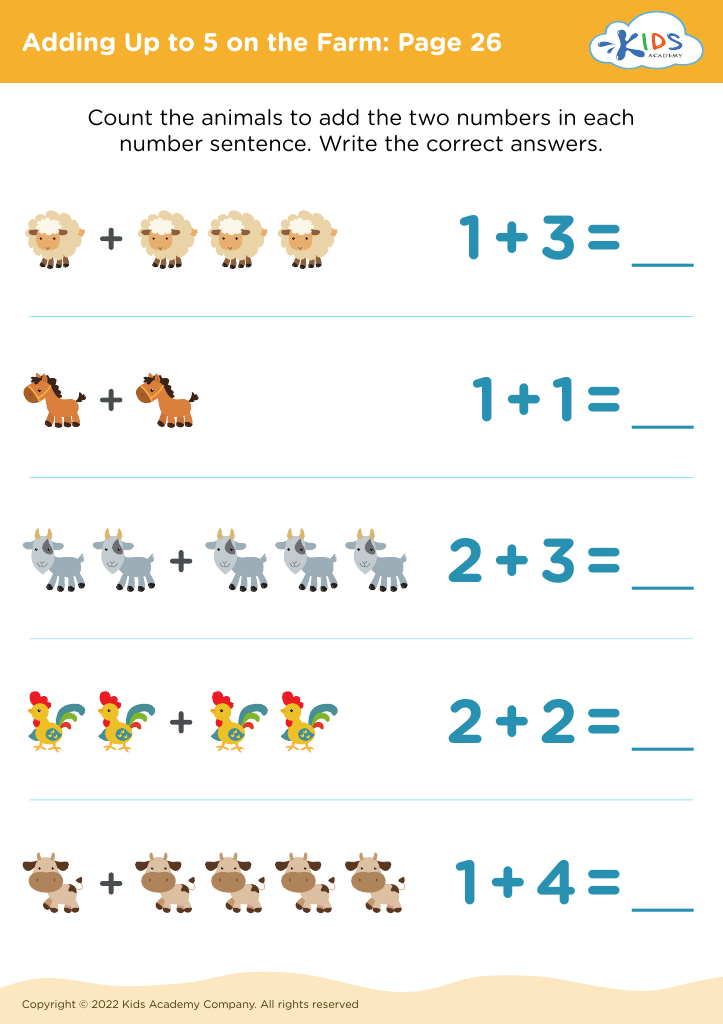
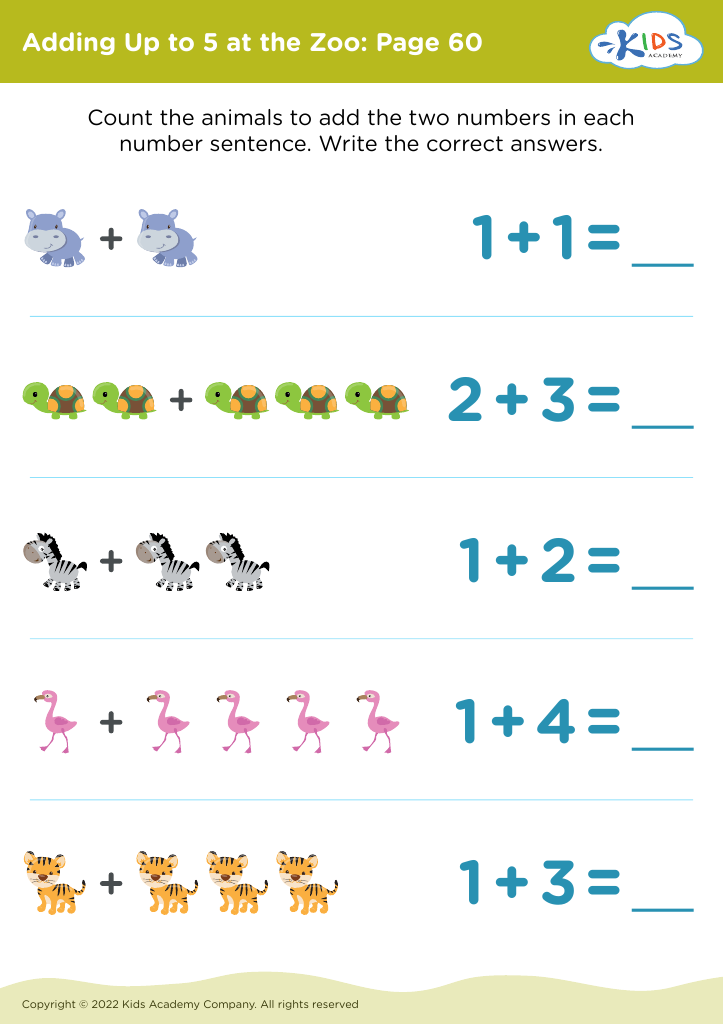








Developing a strong foundation in basic arithmetic, such as addition up to 5 and subtraction for children aged 4-8, is crucial for several reasons. First, it builds essential numeracy skills that are the foundation for all future mathematical learning. Understanding these basic operations helps children comprehend more complex concepts as they progress through higher grades. Second, early math proficiency is linked to better problem-solving skills. Students learn to approach problems methodically and think critically, which benefits not only academic pursuits but real-world situations as well.
Furthermore, mastering early arithmetic boosts confidence. Success in solving simple addition and subtraction problems instills a sense of accomplishment and encourages a positive attitude towards learning. For young children, positive reinforcement is essential; it cultivates a growth mindset, where they understand that putting in effort leads to success.
Teachers and parents play a pivotal role in this learning phase. Interactive and engaging activities, such as games or real-life examples, make learning math enjoyable, thereby increasing focus and retention. Establishing this solid base of mathematical understanding also helps identify any early learning difficulties, allowing for timely intervention. This ensures every child has the best possible start in their educational journey and can fully benefit from subsequent teaching.








