Welcome to our Basic Addition & Subtraction Worksheets designed specifically for children ages 4-8! These engaging worksheets are perfect for helping young learners master fundamental math skills. With a variety of fun and creative activities, students will practice addition and subtraction in an interactive way. Each worksheet is tailored to reinforce number recognition, counting skills, and basic arithmetic operations, making learning enjoyable and effective. Whether at home or in the classroom, these resources provide a solid foundation for mathematical understanding and foster a love for learning. Download our printable worksheets today and watch your child's confidence in math grow!
Check out this FREE Trial Lesson on Addition & Subtraction for age 4-8!

Enrichment

Favorites
With answer key
Interactive
  • 4-8
  • Basic addition practice
  • Addition & Subtraction
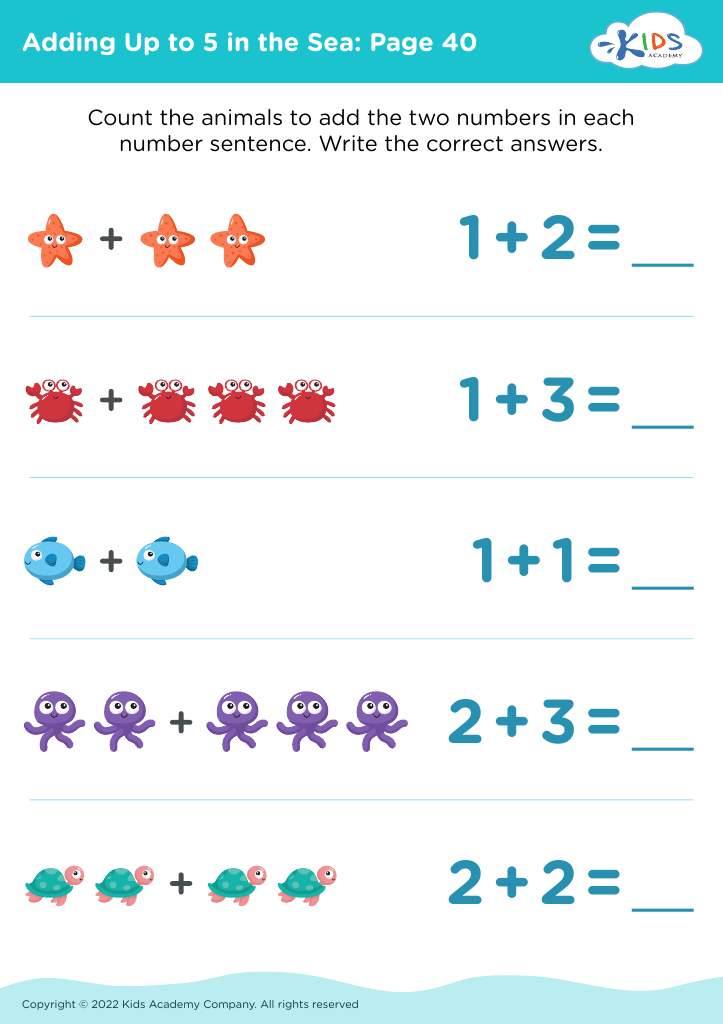
Adding Up to 5 in the Sea: Page 40
Worksheet
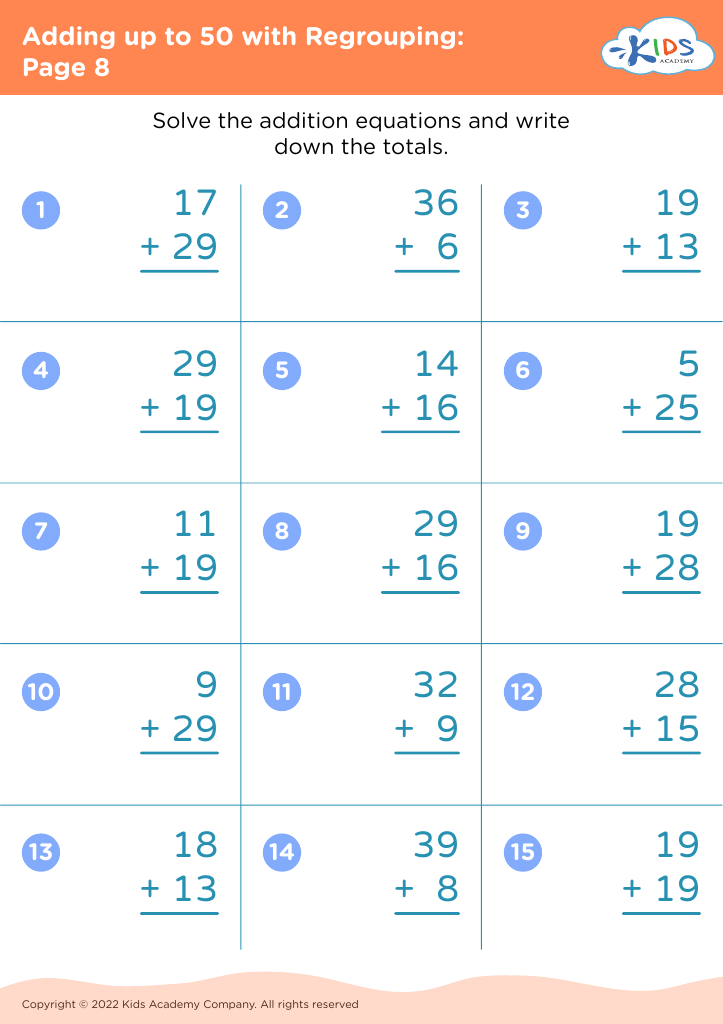
Adding up to 50 with Regrouping: Page 8
Worksheet
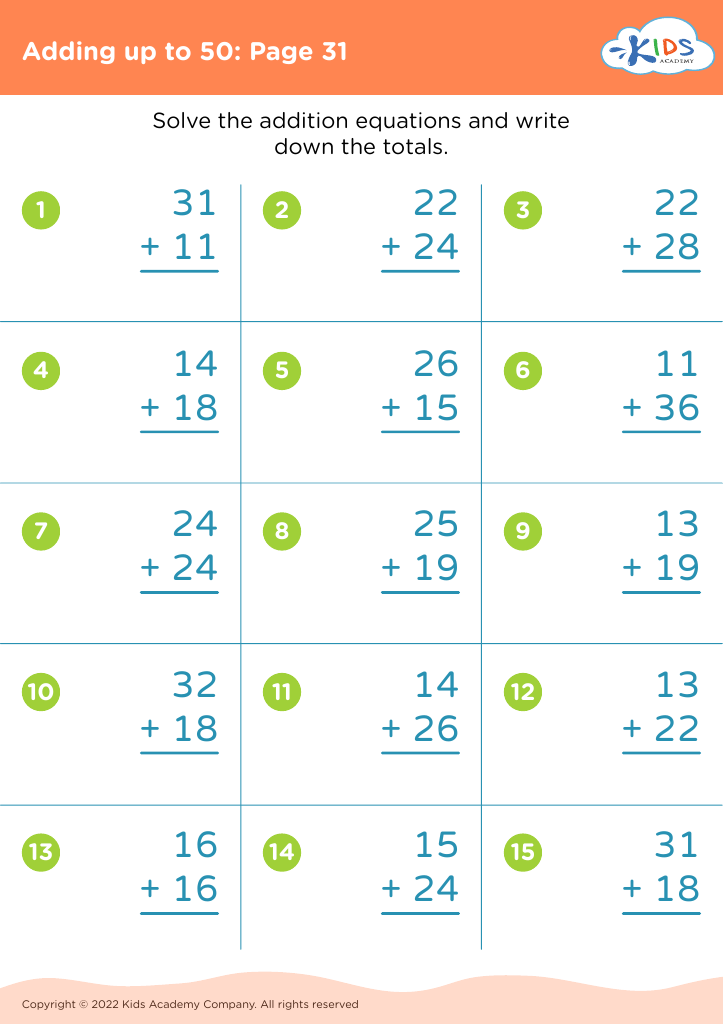
Adding up to 50: Page 31

Adding up to 50: Page 31

Adding up to 50: Page 31
Worksheet
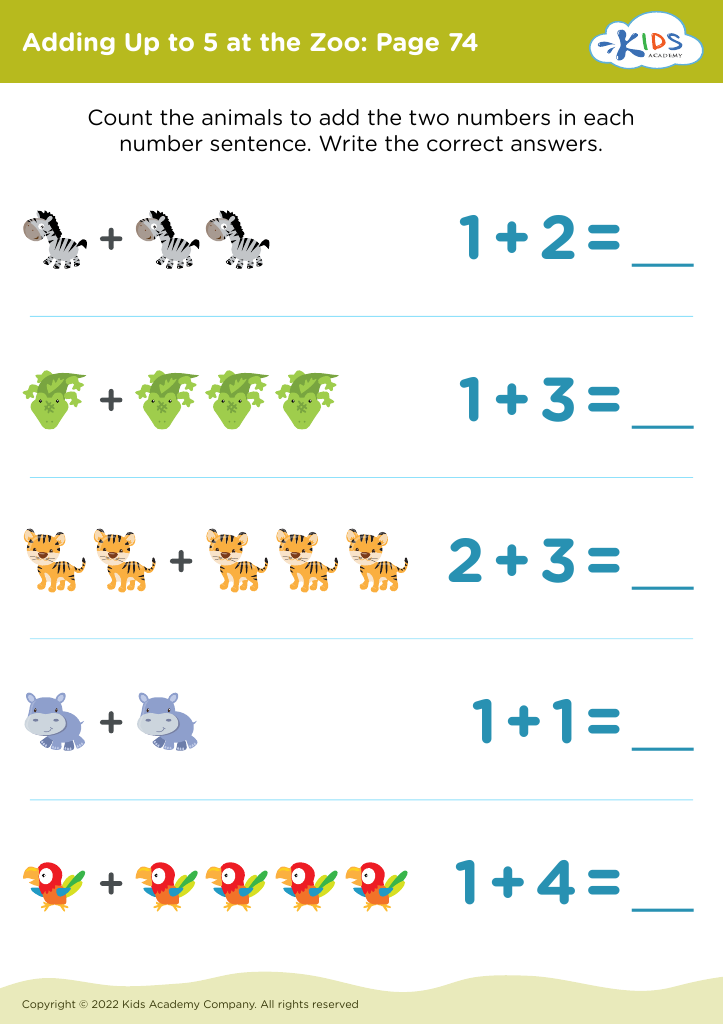
Adding Up to 5 at the Zoo: Page 74
Worksheet
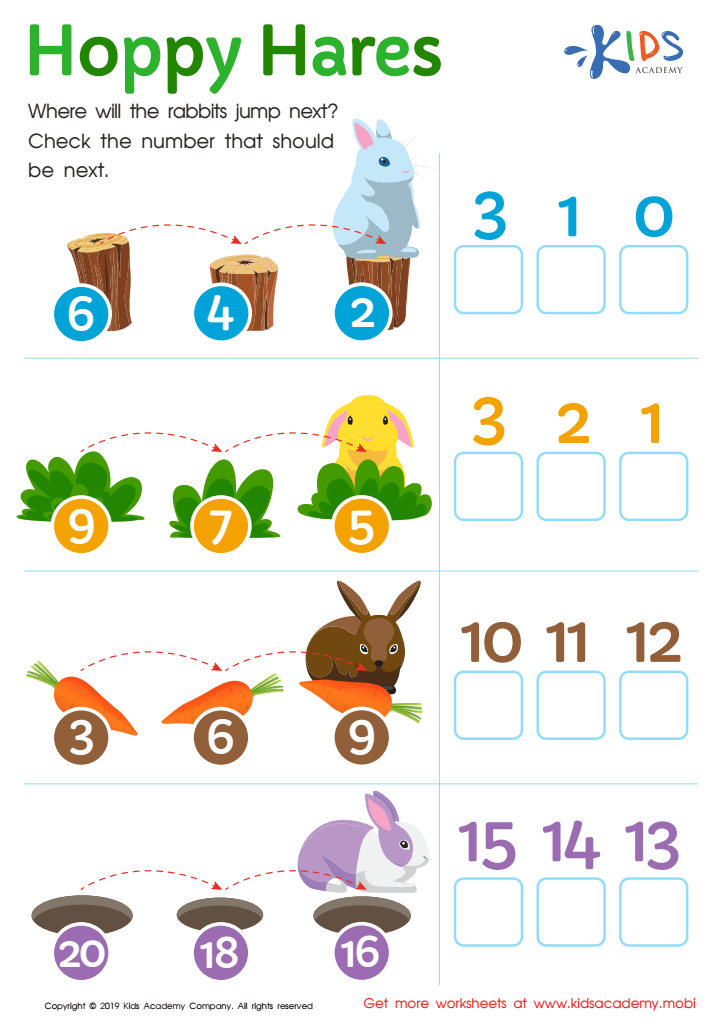
Hoppy Hares Worksheet

Hoppy Hares Worksheet

Ask your kids if they can identify the rabbits in the picture, then help them solve the math problems. The rabbits need to hop from place to place, so look at the numbers and help your kids figure out the next one. These cute and friendly little animals make great pets. Have fun solving this worksheet together!
Hoppy Hares Worksheet
Worksheet
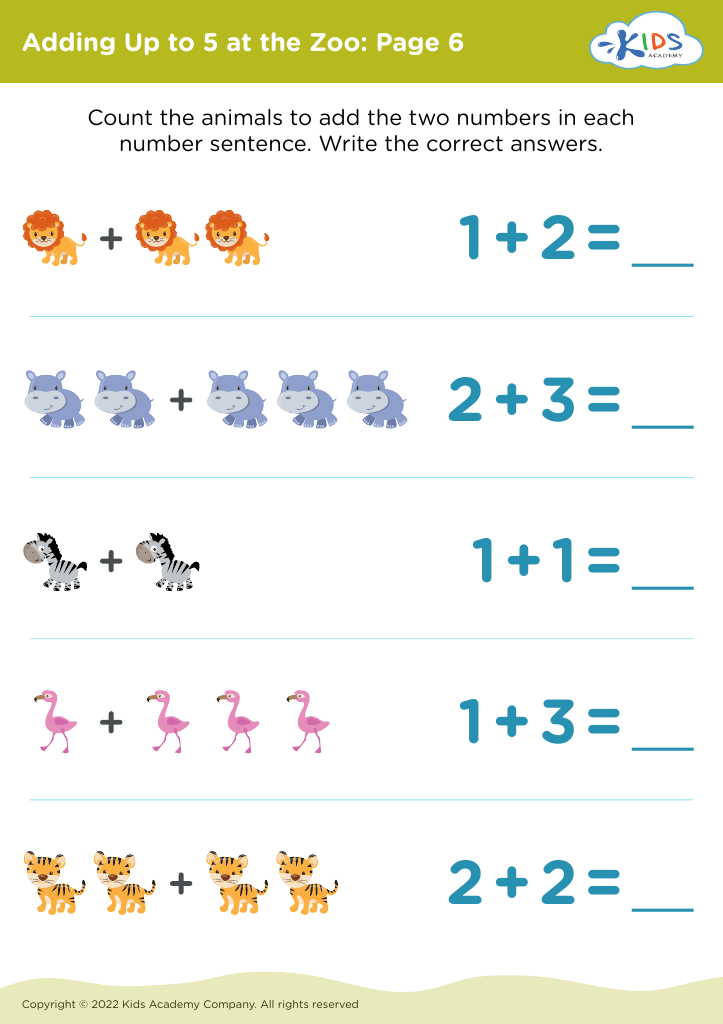
Adding Up to 5 at the Zoo: Page 6

Adding Up to 5 at the Zoo: Page 6

Adding Up to 5 at the Zoo: Page 6
Worksheet
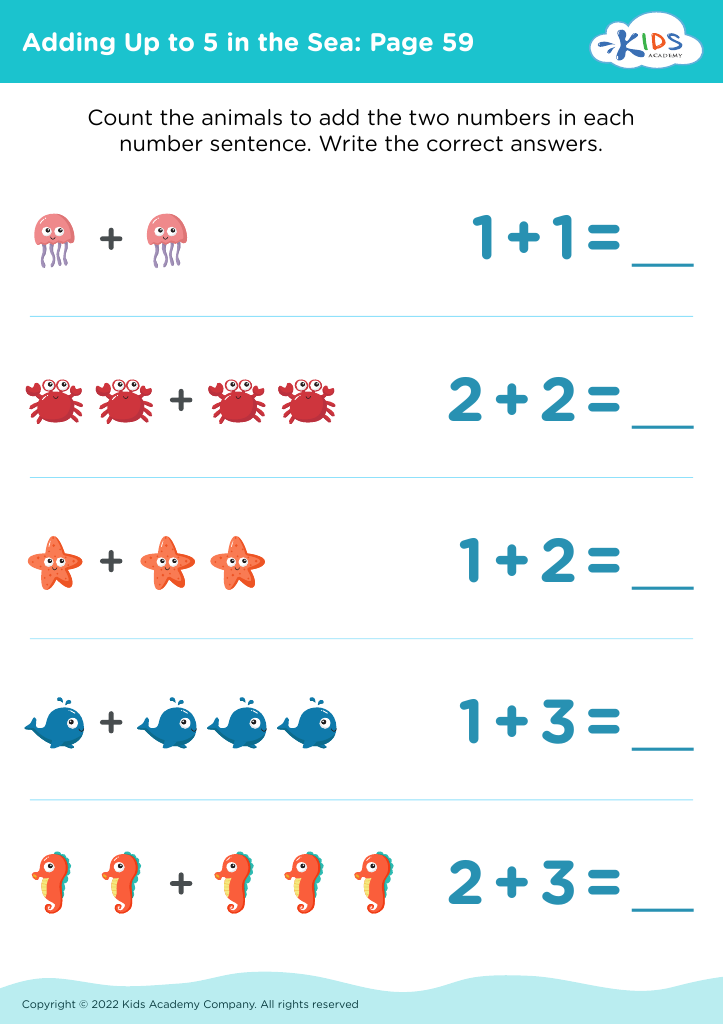
Adding Up to 5 in the Sea: Page 59
Worksheet
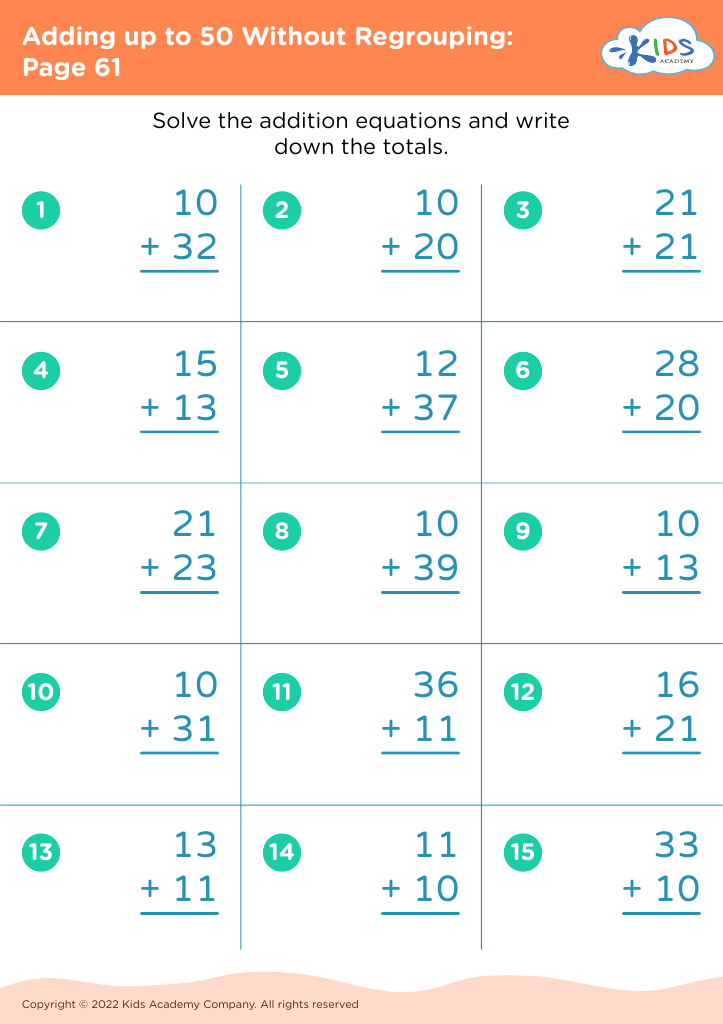
Adding up to 50 Without Regrouping: Page 61
Worksheet
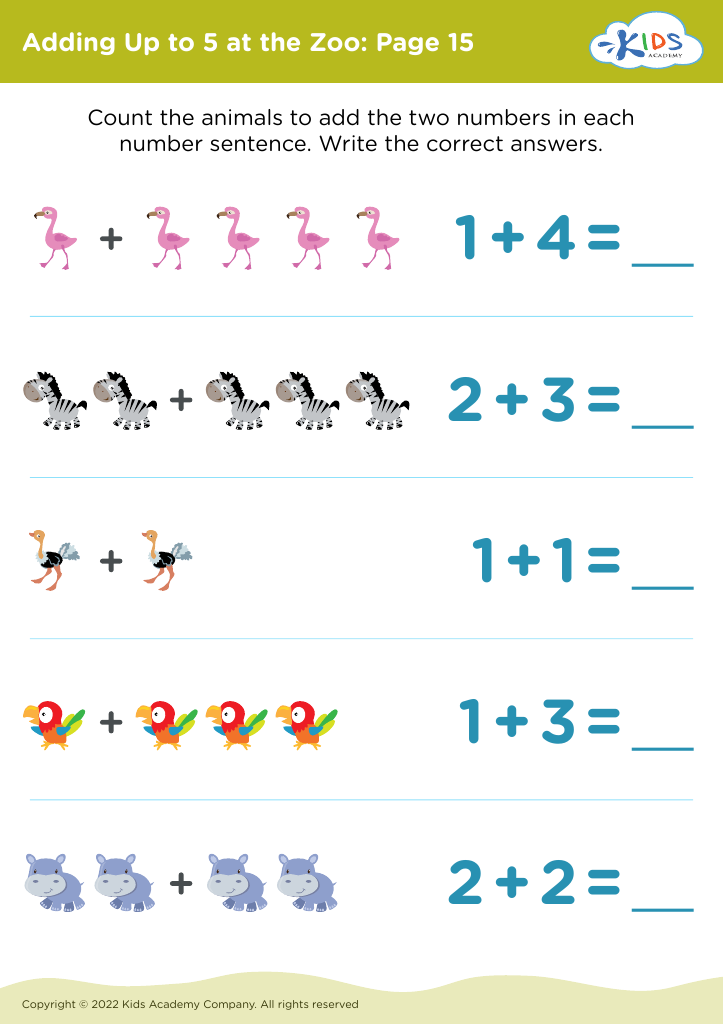
Adding Up to 5 at the Zoo: Page 15
Worksheet
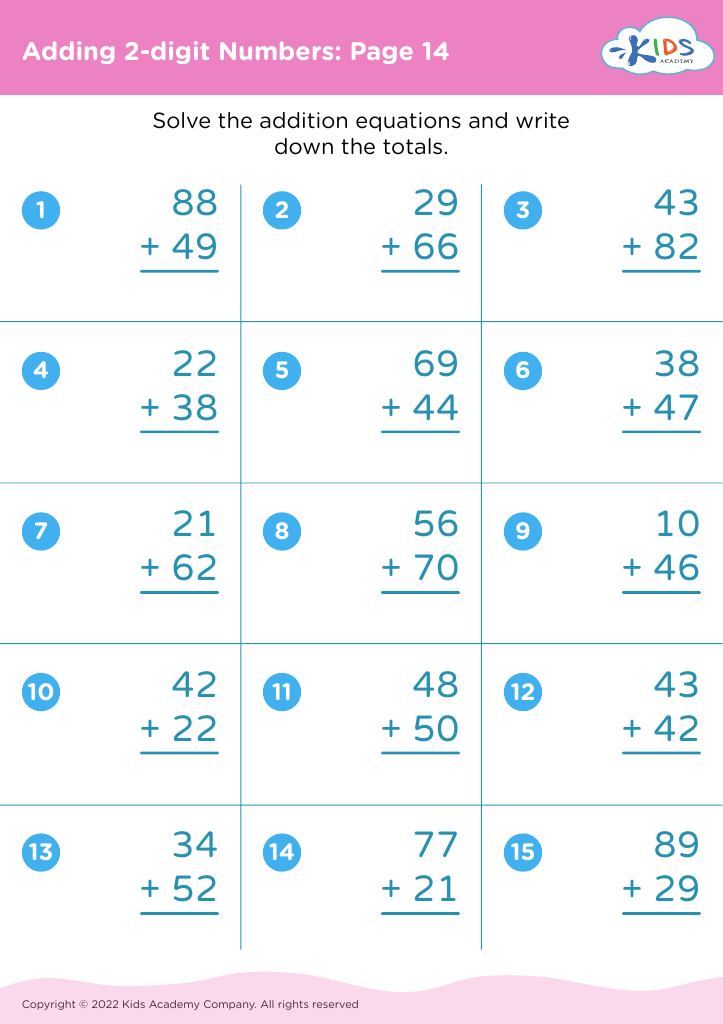
Adding 2-digit Numbers: Page 14

Adding 2-digit Numbers: Page 14

Adding 2-digit Numbers: Page 14
Worksheet
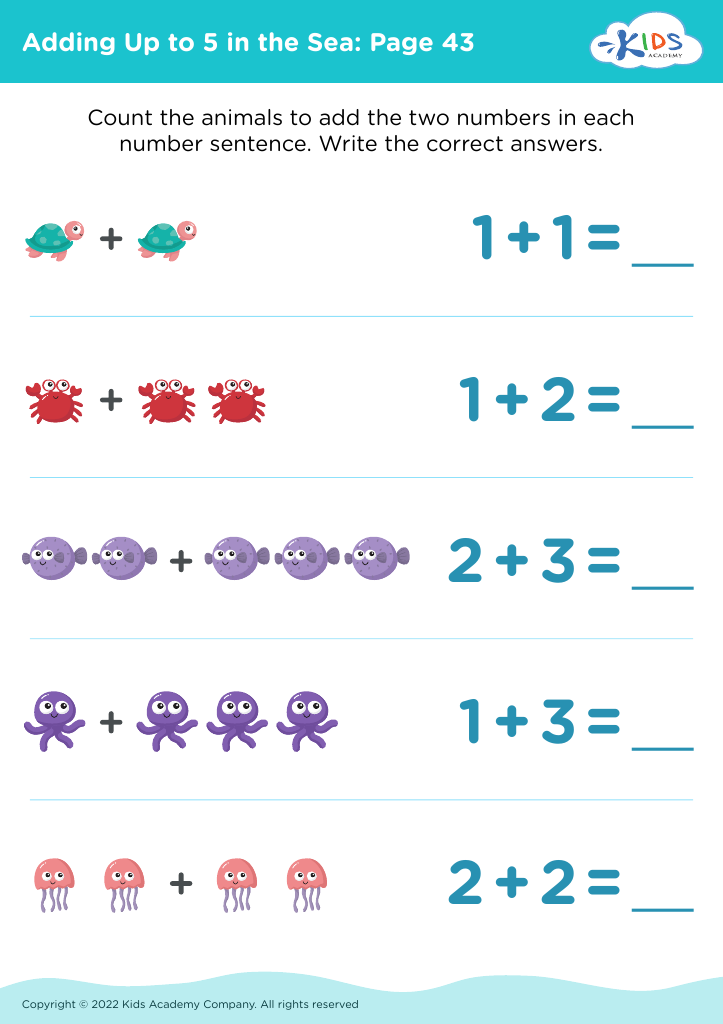
Adding Up to 5 in the Sea: Page 43
Worksheet
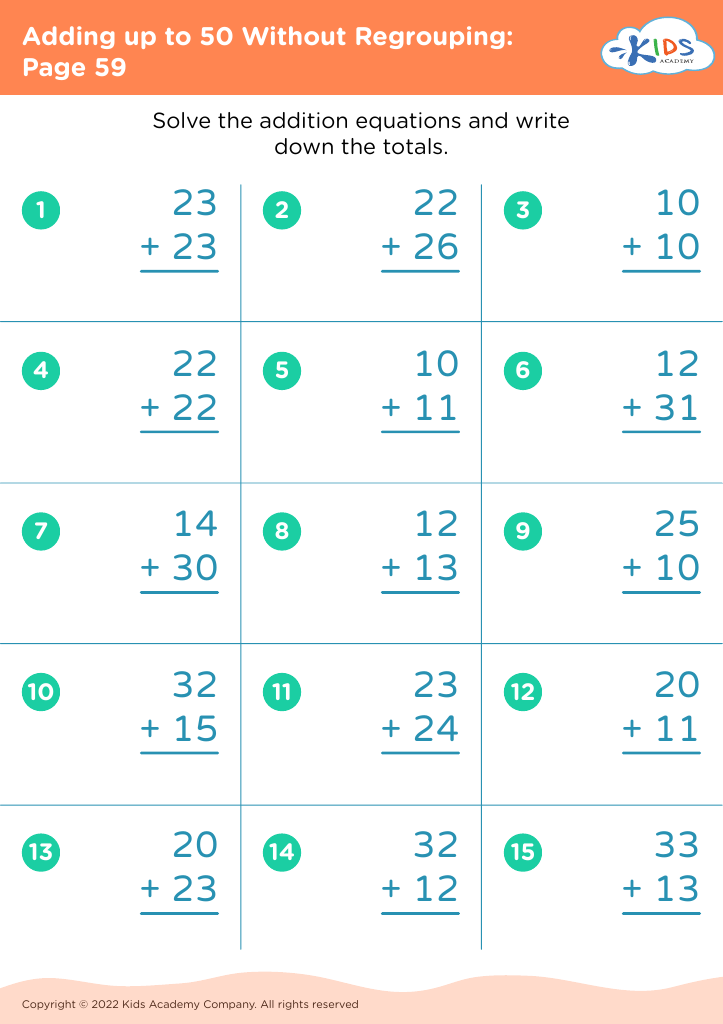
Adding up to 50 Without Regrouping: Page 59
Worksheet
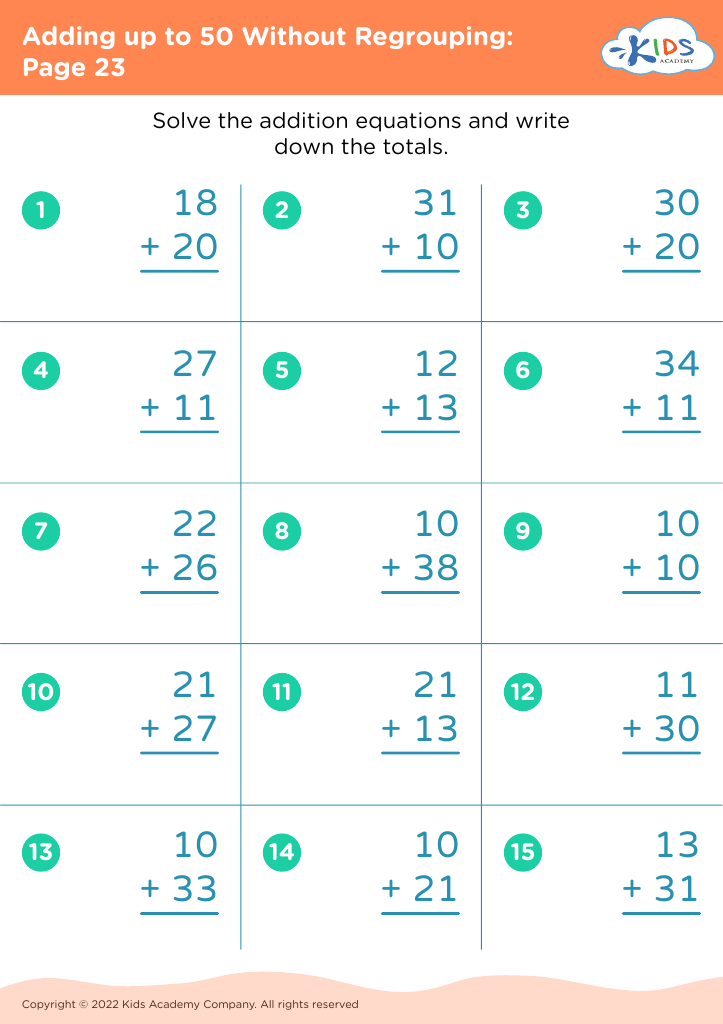
Adding up to 50 Without Regrouping: Page 23
Worksheet
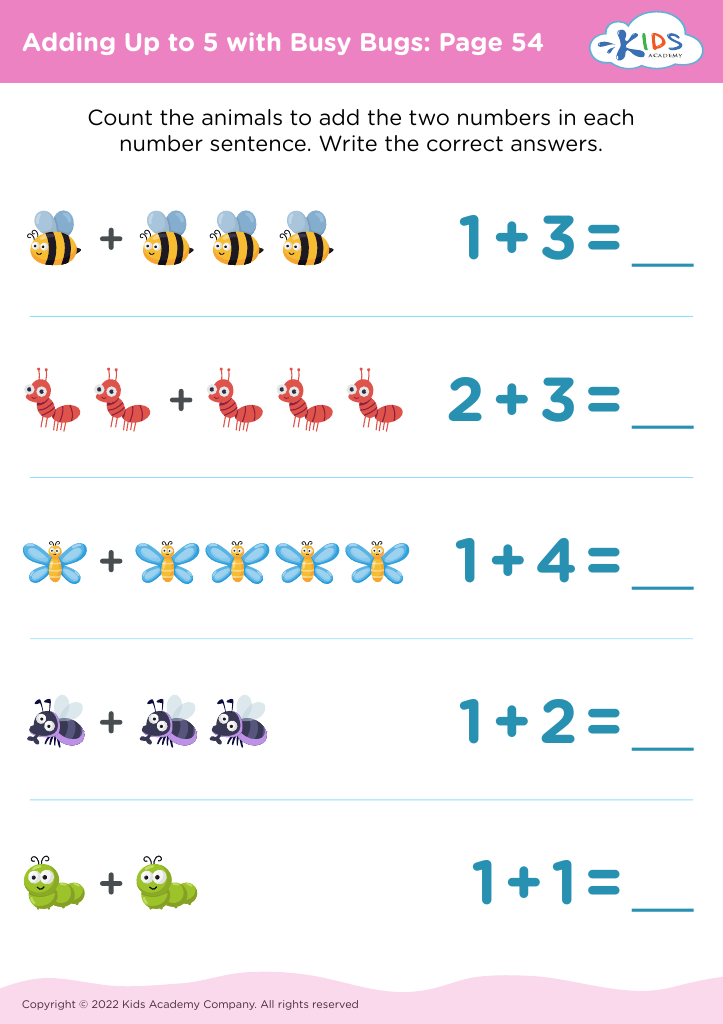
Adding Up to 5 with Busy Bugs: Page 54
Worksheet
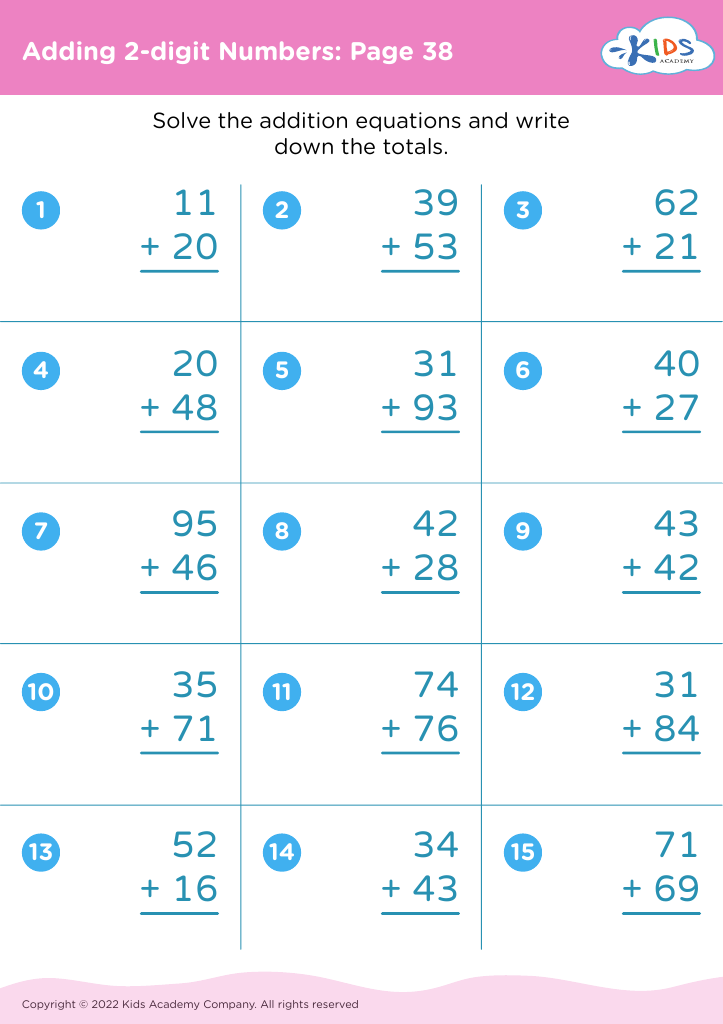
Adding 2-digit Numbers: Page 38

Adding 2-digit Numbers: Page 38

Adding 2-digit Numbers: Page 38
Worksheet
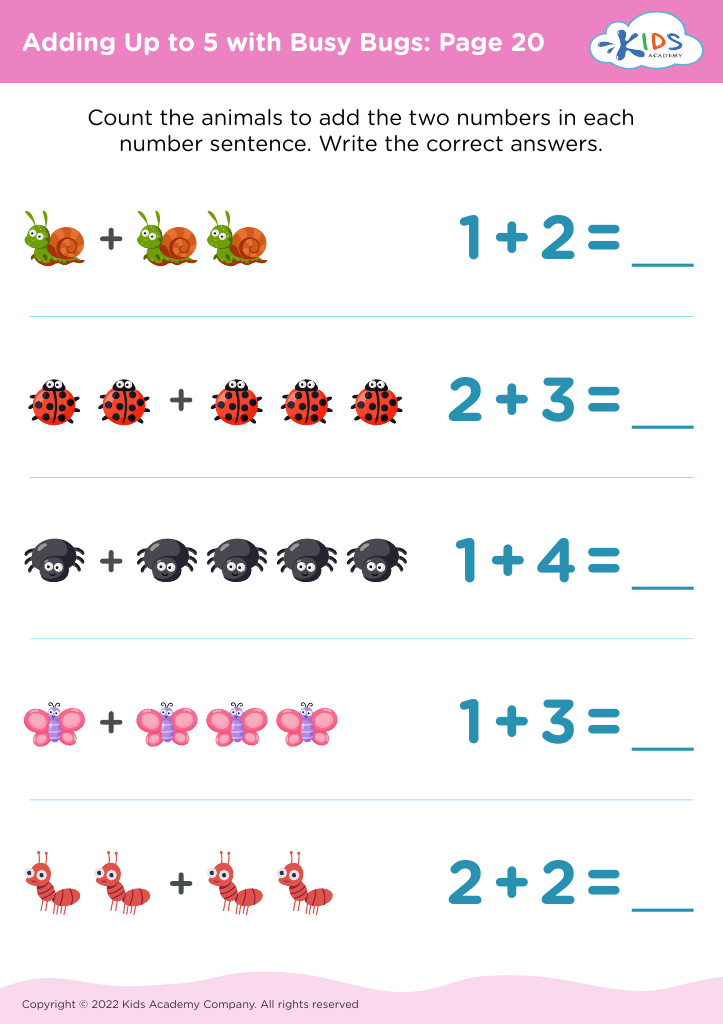
Adding Up to 5 with Busy Bugs: Page 20
Worksheet
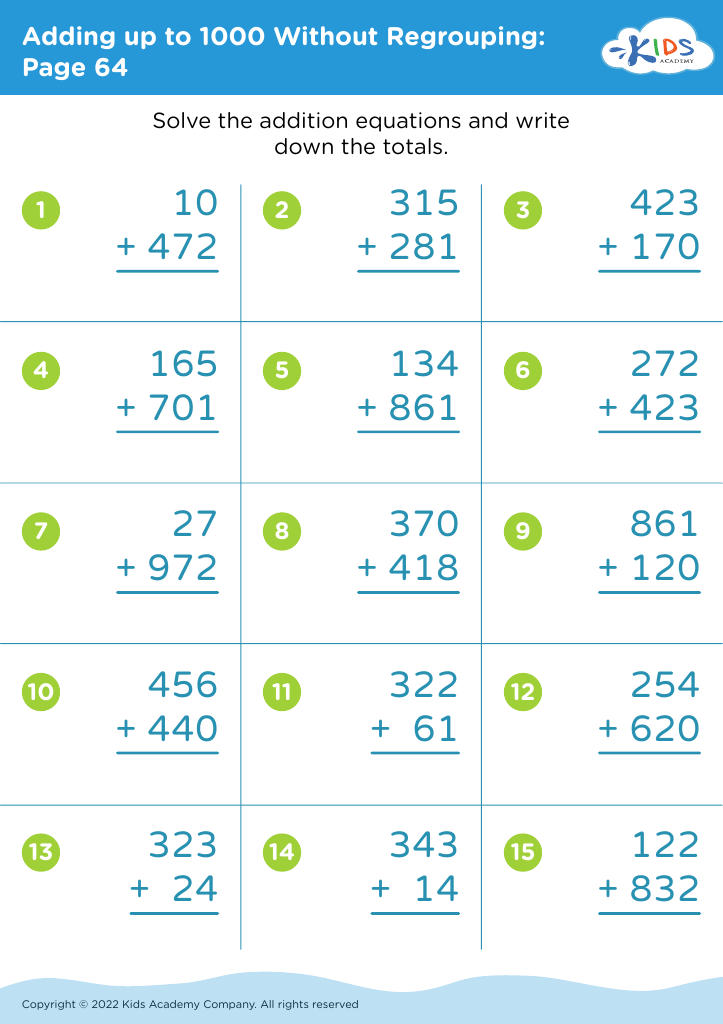
Adding up to 1000 Without Regrouping: Page 64
Worksheet
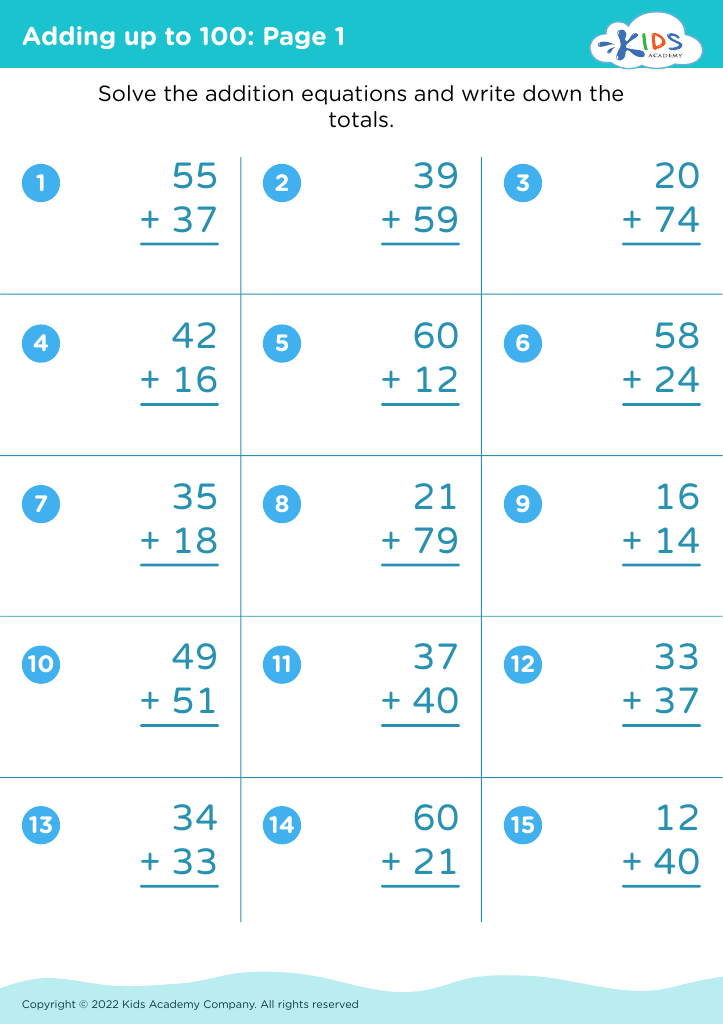
Adding up to 100: Page 1

Adding up to 100: Page 1

Adding up to 100: Page 1
Worksheet
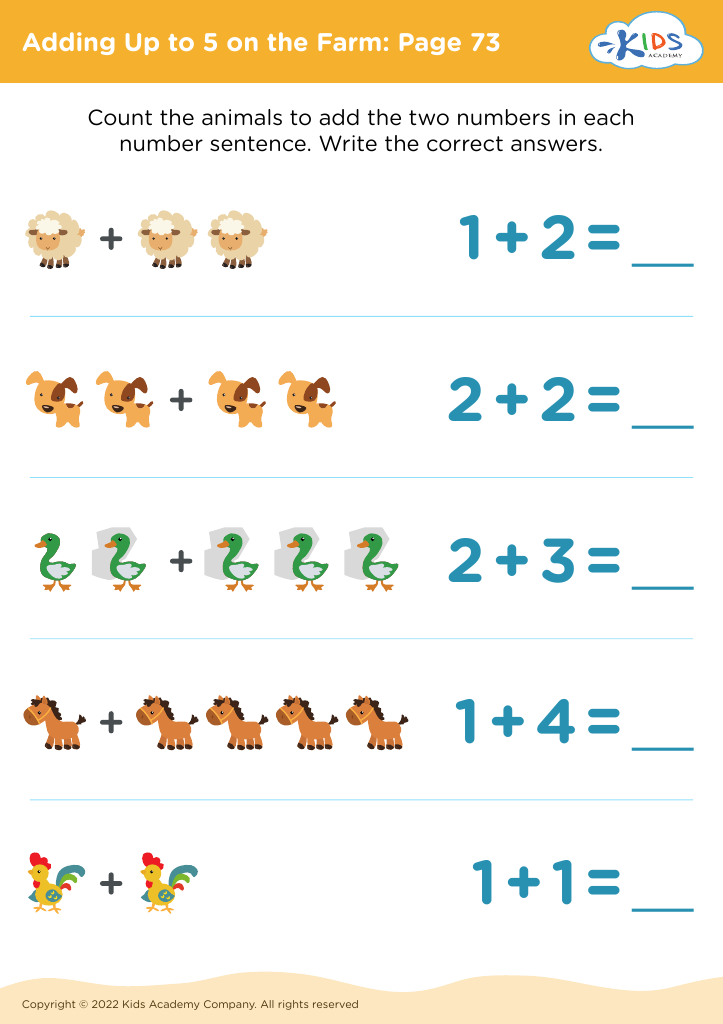
Adding Up to 5 on the Farm: Page 73
Worksheet


Basic addition and subtraction mastery is crucial for children aged 4-8, as it lays the foundation for future math skills and overall academic success. Cognitive development during these early years is exponential, and introducing concepts of math through fun and engaging activities can enhance logical thinking and problem-solving abilities. As children grasp basic operations, they develop confidence and enjoyment in learning, fostering a positive attitude toward mathematics.

Furthermore, these skills are essential for everyday life. Children who understand addition and subtraction can manage basic tasks like counting items, understanding time, and handling money. This foundational knowledge supports not only their academic journey but also their ability to navigate real-world situations effectively.

For parents and teachers, focusing on basic math skills provides a structured approach to assessing and tracking a child's progress. It encourages collaboration between home and school, allowing for consistent reinforcement of learning concepts. By engaging children in purposeful practice, parents and teachers can cultivate a love for learning, setting them on a path to success in higher-level math as they continue their education. Therefore, prioritizing basic addition and subtraction for this age group is vital for holistic development.