
Comprehension skills Addition & Subtraction Worksheets for Ages 4-8
3 filtered results
Difficulty Level
Grade
Age
-
From - To
Subject
Activity
Standards
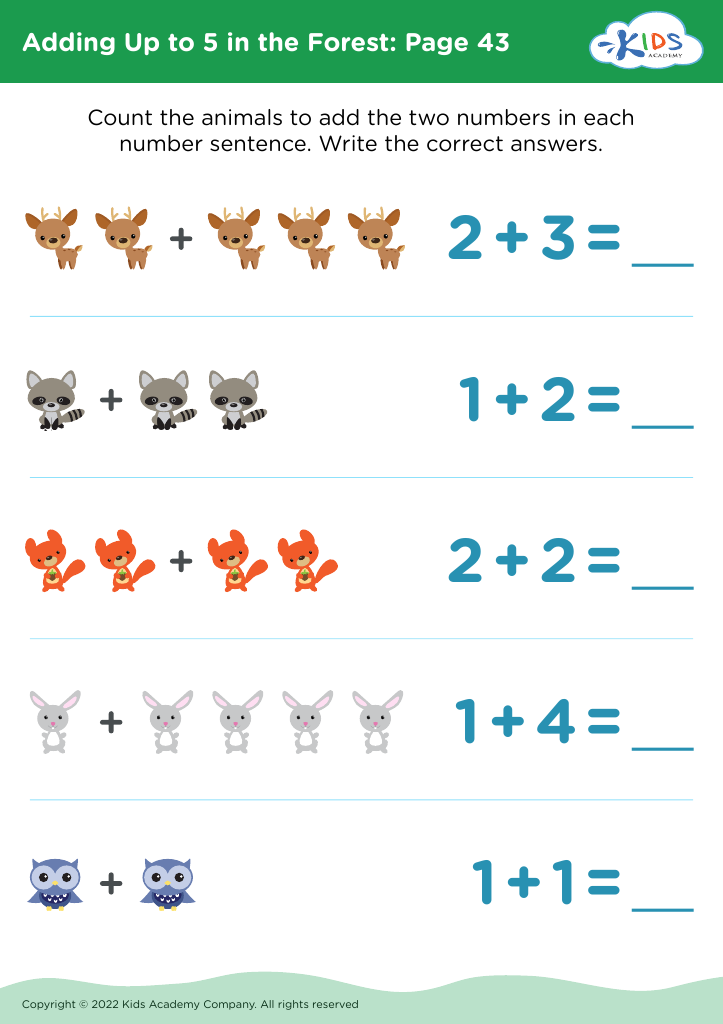
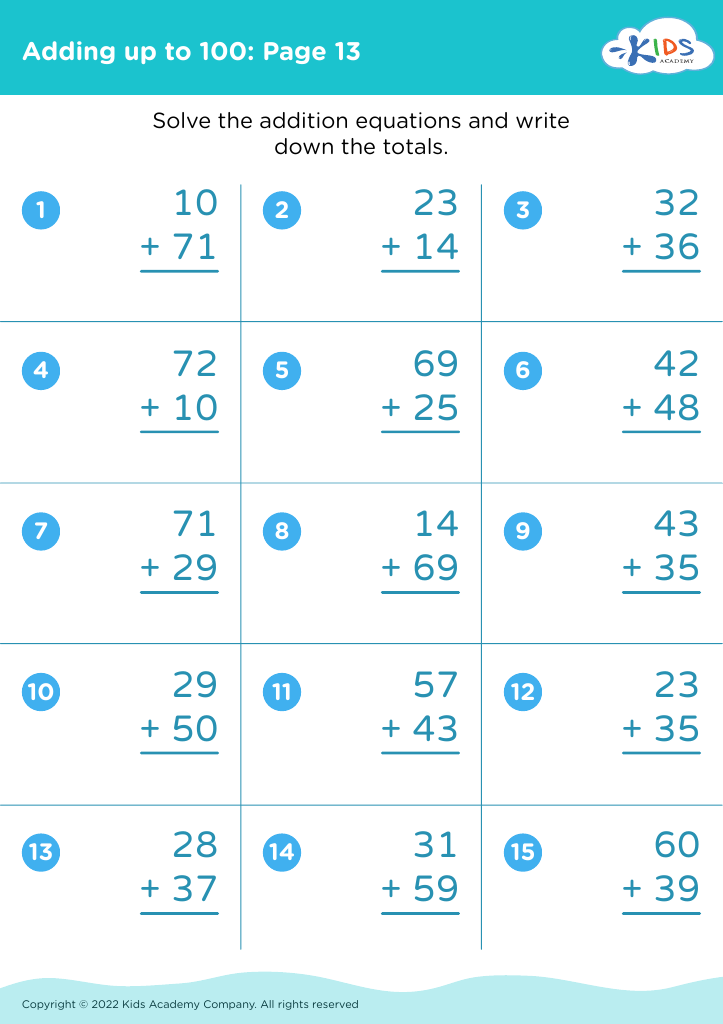
Our "Comprehension Skills: Addition & Subtraction Worksheets for Ages 4-8" enrich early math learning through fun, engaging activities. Tailored for young learners, these worksheets combine foundational math with reading comprehension to bolster both areas. Whether toddlers are just starting with basic addition or mastering subtraction, our worksheets help them understand math concepts in real-world contexts. Designed by educational experts, each activity aims to enhance problem-solving skills and boost confidence. Mastery of arithmetic paired with comprehension ensures a strong mathematical foundation early in life. Keep learning enjoyable and effective with our curated collection for young minds.
Favorites
With answer key
Interactive
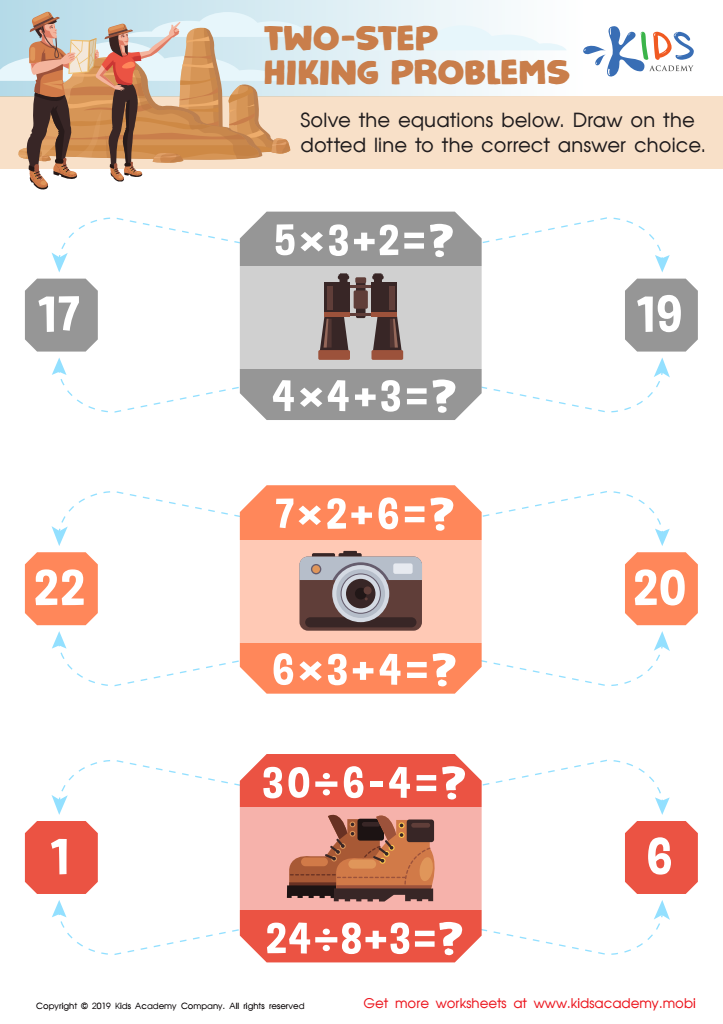
Two-Step Hiking Problems Worksheet
Help your kids ease into math with this worksheet. Solve the three basic equations, then draw on the dotted line to the correct answer. You can help your kids make their journey smoother by guiding them through it.
 Assign to My Students
Two-Step Hiking Problems Worksheet
Worksheet
Join Kids Academy for Free
Who is primarily going to use this learning content?








Comprehension skills in addition and subtraction are crucial for young children aged 4-8, forming the foundation for their mathematical journey. First, developing these skills early fosters numerical literacy, which is essential for understanding more complex math concepts later on. Just like learning letters is vital for reading, mastering basic arithmetic is critical for future academic success in math.
Additionally, these skills promote logical thinking and problem-solving abilities. When children learn how to add and subtract, they’re not just manipulating numbers; they’re learning how to analyze situations, make decisions, and think critically—skills that are valuable beyond the classroom.
Parents and teachers play a key role in this developmental stage. Engaging children with fun and interactive methods such as games, stories, and everyday tasks helps contextualize math in a meaningful way. This enhances children’s understanding and retention, as opposed to rote learning.
Moreover, strong comprehension in these early math skills builds confidence. Children who grasp addition and subtraction easily feel more competent and positive about math, leading to a more enthusiastic approach toward learning in general. This positive attitude can carry forward into other subjects, fostering an overall curiosity and love for learning.
Ultimately, investing time and effort into teaching these foundational skills equips children with the tools they need for academic success and critical thinking, making it an invaluable focus for parents and teachers alike.








