
Critical thinking development Addition & Subtraction Worksheets for Ages 4-8
3 filtered results
Difficulty Level
Grade
Age
-
From - To
Subject
Activity
Standards
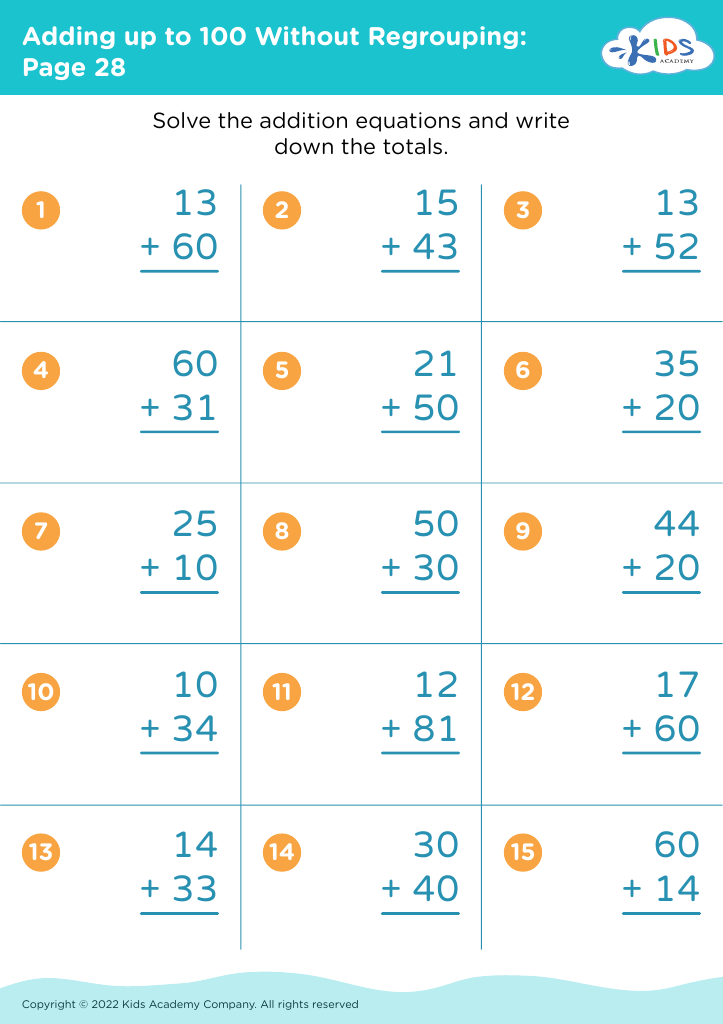
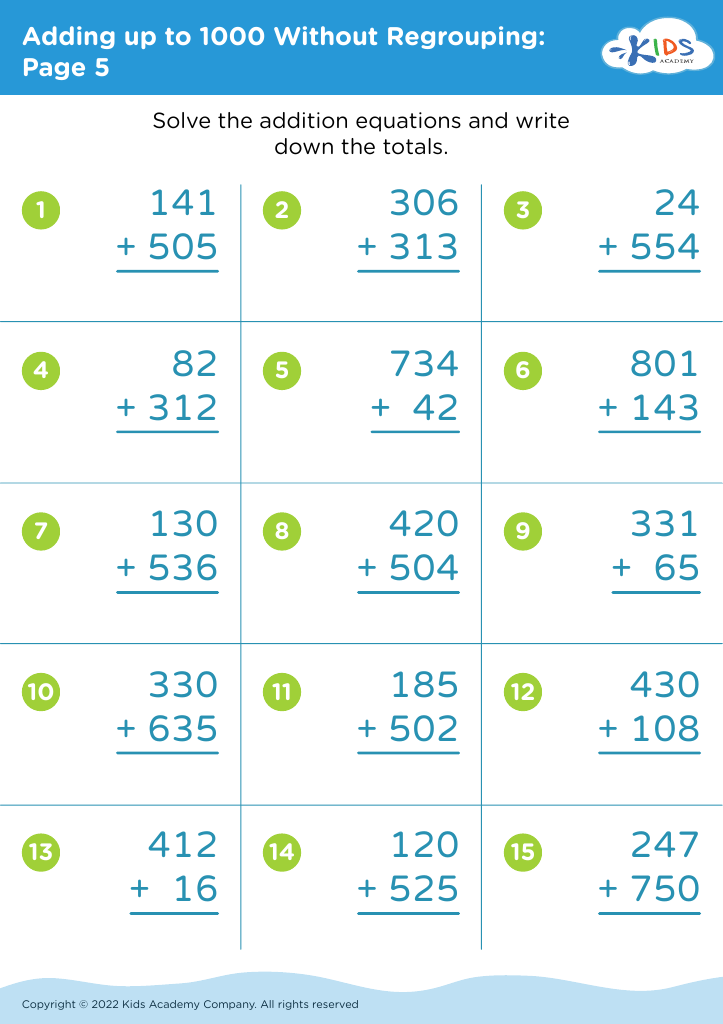
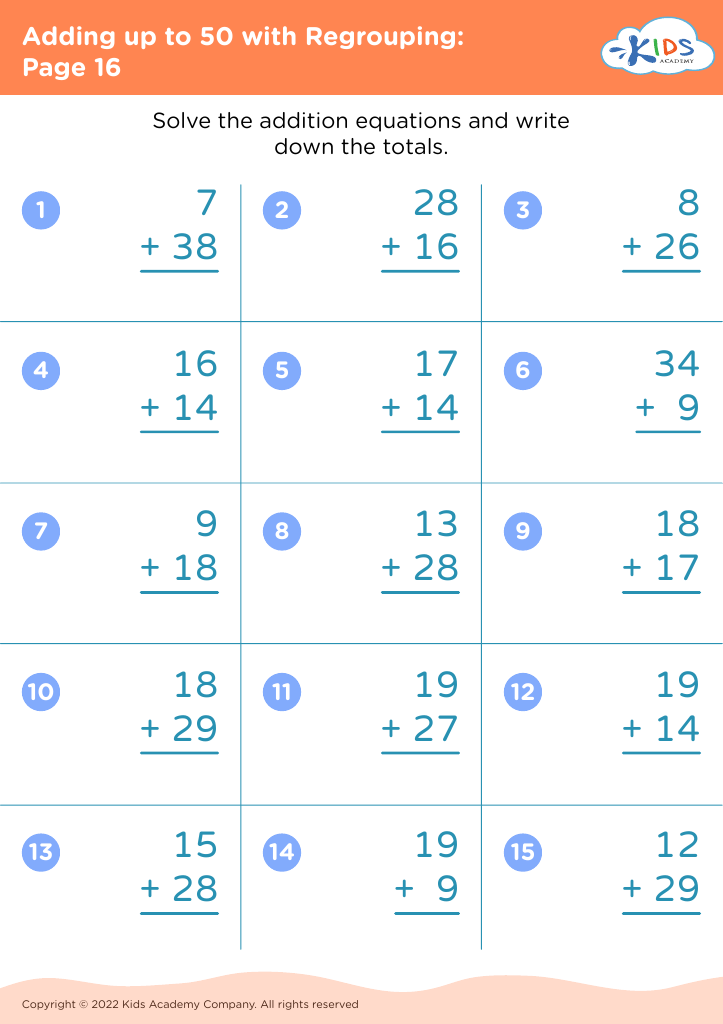
Nurture young minds with our "Critical Thinking Development Addition & Subtraction Worksheets for Ages 4-8". Specifically designed for early learners, these engaging worksheets promote analytical thinking by combining fundamental math skills with problem-solving tasks. Each worksheet is crafted to challenge children, encouraging them to discover patterns, reason logically, and derive solutions independently. Ideal for home or classroom use, these resources pave the way for academic success and cognitive growth. Equip your child with the tools they need to excel in math while developing crucial critical thinking abilities through enjoyable, interactive exercises. Elevate their learning experience today!
Favorites
With answer key
Interactive
Join Kids Academy for Free
Who is primarily going to use this learning content?








Developing critical thinking skills and mastering basic addition and subtraction are both essential components of early childhood education for ages 4-8. Parents and teachers should focus on these areas because they fundamentally shape a child's cognitive development and problem-solving abilities.
Critical thinking involves analyzing information, evaluating different perspectives, and making reasoned decisions. At an early age, fostering this skill helps children become independent thinkers who can navigate complex situations. When young children learn to question, compare, and experiment, they build a foundation for academic success and lifelong learning. This process also enhances their creativity and adaptability, crucial skills in an ever-evolving world.
Similarly, mastering addition and subtraction forms the basis for all future mathematical learning. It helps children understand key concepts such as number value, relationships, and arithmetic operations. Early proficiency in these skills contributes to better performance in more advanced math topics and subjects requiring quantitative reasoning.
Moreover, combining critical thinking exercises with math problems helps solidify these concepts in practical and engaging ways. For instance, solving word problems requires children to comprehend the scenario, determine necessary operations, and employ appropriate strategies, all of which enhance critical thinking.
In summary, nurturing critical thinking and arithmetic skills in early childhood sets children up for both academic achievements and practical success in their everyday lives.








