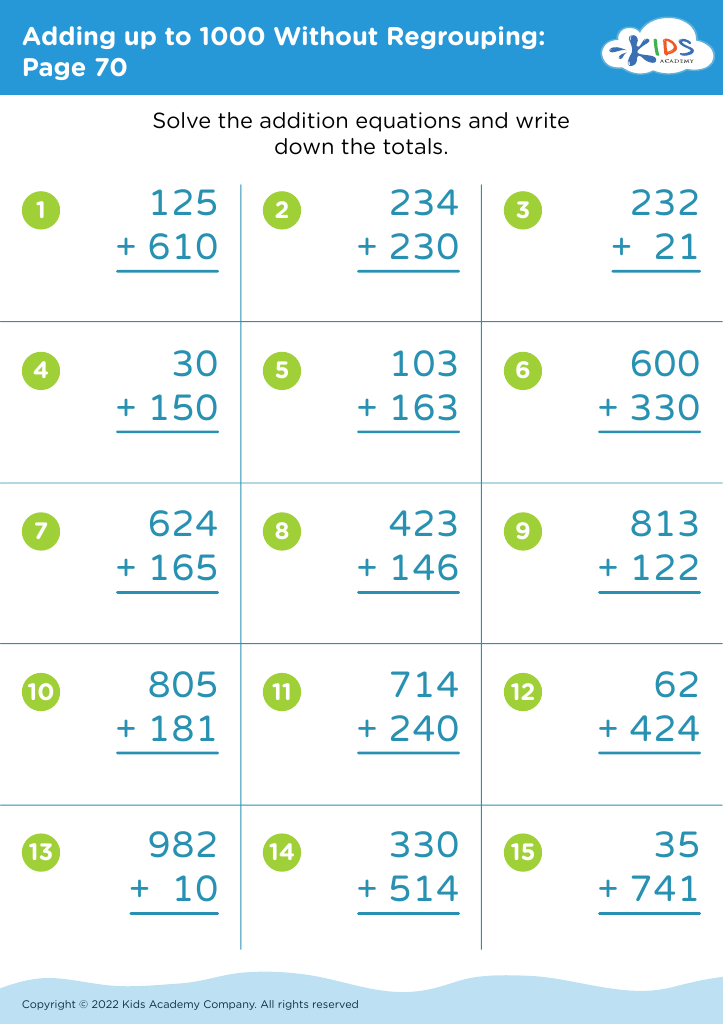








Critical thinking in addition and subtraction for ages 4-8 is crucial because it lays a strong foundation for mathematical understanding and problem-solving skills, which are essential for academic success and everyday life. During these formative years, children's brains are highly adaptable and capable of absorbing new concepts quickly. Engaging them in critical thinking activities helps them understand the 'why' and 'how' behind mathematical operations, fostering a deeper comprehension rather than just rote memorization.
Incorporating critical thinking into math exercises encourages children to approach problems systematically and creatively. It builds their ability to analyze situations, recognize patterns, and make logical connections. For example, understanding how and why we 'carry over' in addition or 'borrow' in subtraction makes them more adept at handling complex problems later on.
Parents and teachers should prioritize this approach because it also cultivates other crucial life skills, such as perseverance, attention to detail, and the ability to approach challenges with confidence. By making math interactive and thought-provoking, we instill a love for learning and reduce anxiety toward the subject. Additionally, these critical thinking skills benefit other academic areas, making children more well-rounded learners. Ultimately, nurturing critical thinking in early math sets the stage for a lifetime of analytical and logical reasoning.








