
Develop analytical thinking Addition & Subtraction Worksheets for Ages 4-8
3 filtered results
Difficulty Level
Grade
Age
-
From - To
Subject
Activity
Standards
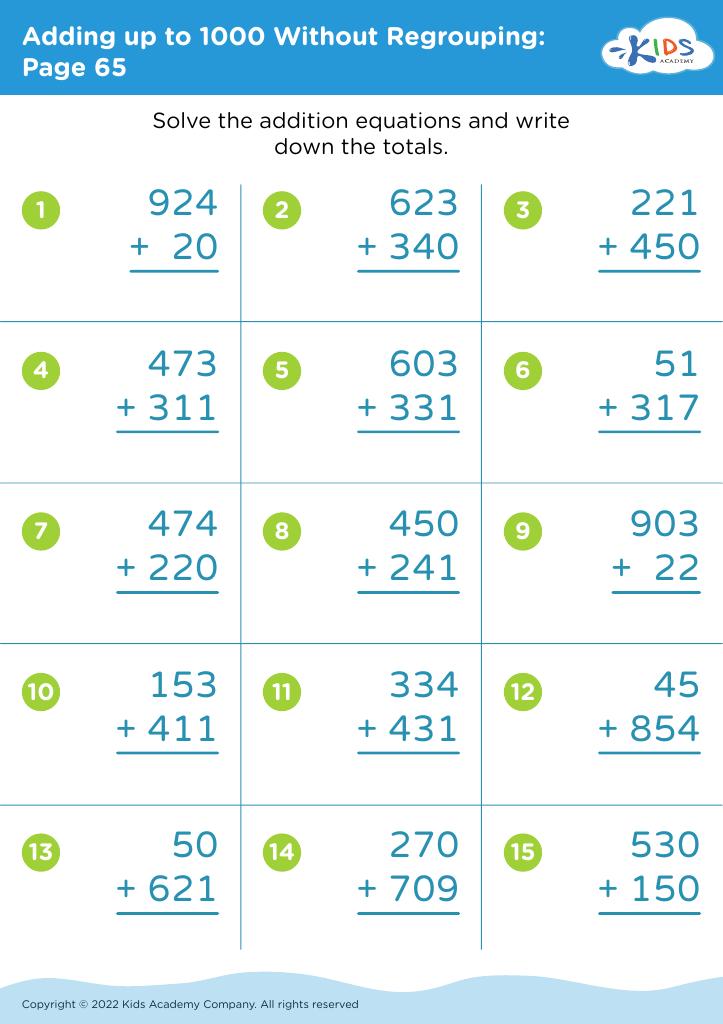
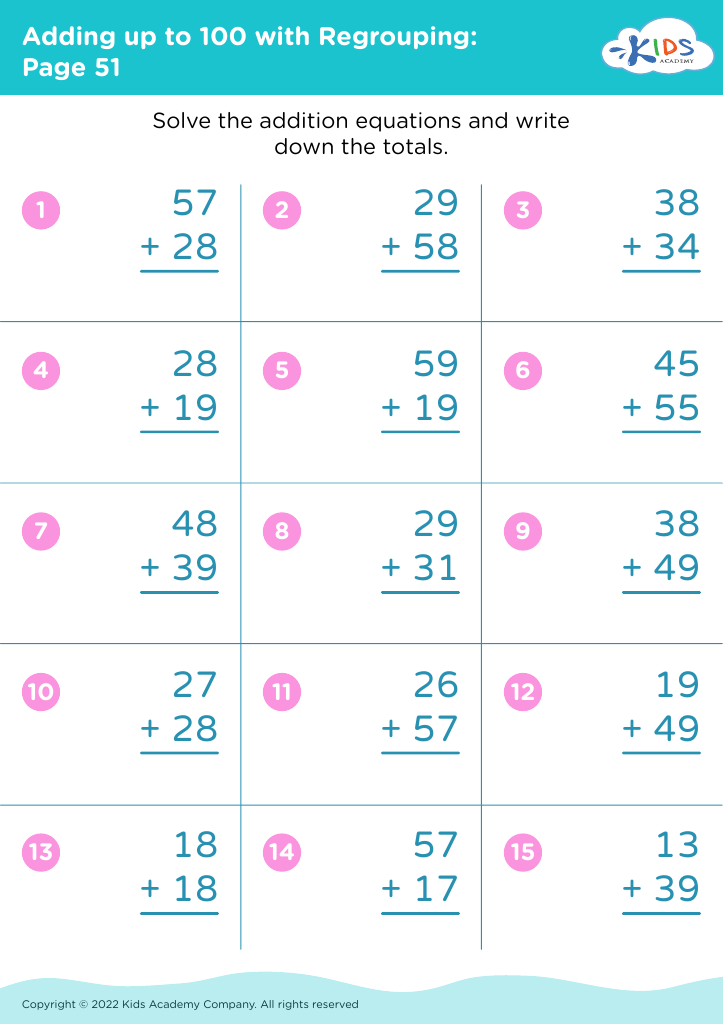
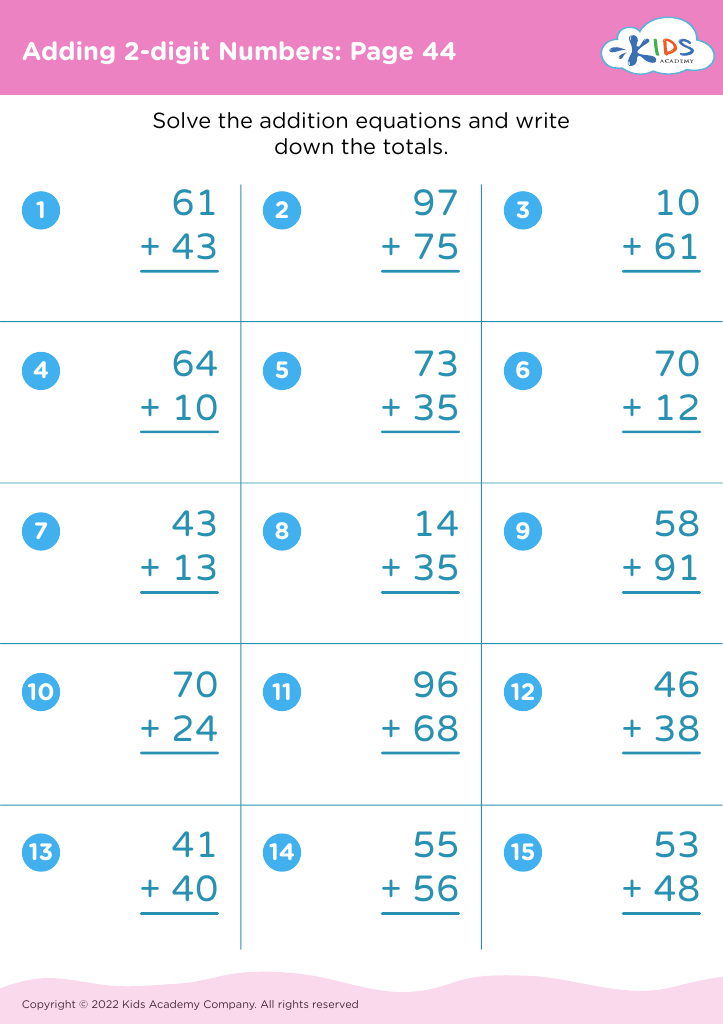
Unlock the potential of your child's analytical thinking with our engaging Addition and Subtraction Worksheets designed specifically for ages 4-8. These carefully crafted resources promote critical problem-solving and logical reasoning skills as young learners tackle fun and challenging math problems. Our worksheets incorporate visual aids, real-life scenarios, and interactive activities that stimulate curiosity and enhance comprehension. With a focus on developing essential math skills alongside analytical thinking, children will gain confidence in their abilities while enjoying the learning process. Perfect for home or classroom use, these printable worksheets are an excellent way to lay a strong foundation for future academic success in mathematics.
Favorites
With answer key
Interactive
Join Kids Academy for Free
Who is primarily going to use this learning content?








Developing analytical thinking skills in young children aged 4 to 8 is vital for their overall cognitive development, particularly in foundational areas like addition and subtraction. As children grasp these basic mathematical concepts, they simultaneously learn to analyze problems, think critically, and draw conclusions. Understanding addition and subtraction sets the stage for more complex mathematical operations later on, such as multiplication and division.
Parents and teachers who nurture these skills help cultivate a child’s ability to approach challenges systematically. By encouraging children to solve problems through addition and subtraction activities, they foster curiosity and resilience during learning. Moreover, these activities often involve patterns, comparisons, and logical reasoning, which are essential components of analytical thinking.
Children are also encouraged to communicate their thought processes, promoting language development and reasoning skills. This combination of mathematical and analytical abilities prepares young learners not only for academic success but also for everyday life scenarios where decision-making and problem-solving are needed.
In essence, parents and teachers play a significant role in laying the groundwork for a child's future learning and development, making it crucial to focus on enhancing analytical thinking through robust addition and subtraction education.








