Enhance logical thinking Addition & Subtraction Worksheets for Ages 4-8
3 filtered results
-
From - To
Boost your child's logical thinking skills with our engaging Addition and Subtraction Worksheets designed for ages 4-8. These interactive activities not only make learning math fun but also strengthen critical thinking and problem-solving abilities. Our worksheets introduce students to core concepts through colorful visuals and relatable scenarios, ensuring that children develop a strong mathematical foundation while improving their logical reasoning. With varying levels of difficulty, these resources cater to different learning paces, making them perfect for home or classroom use. Spark excitement for math and help your child thrive in their academic journey with our thoughtfully crafted worksheets!
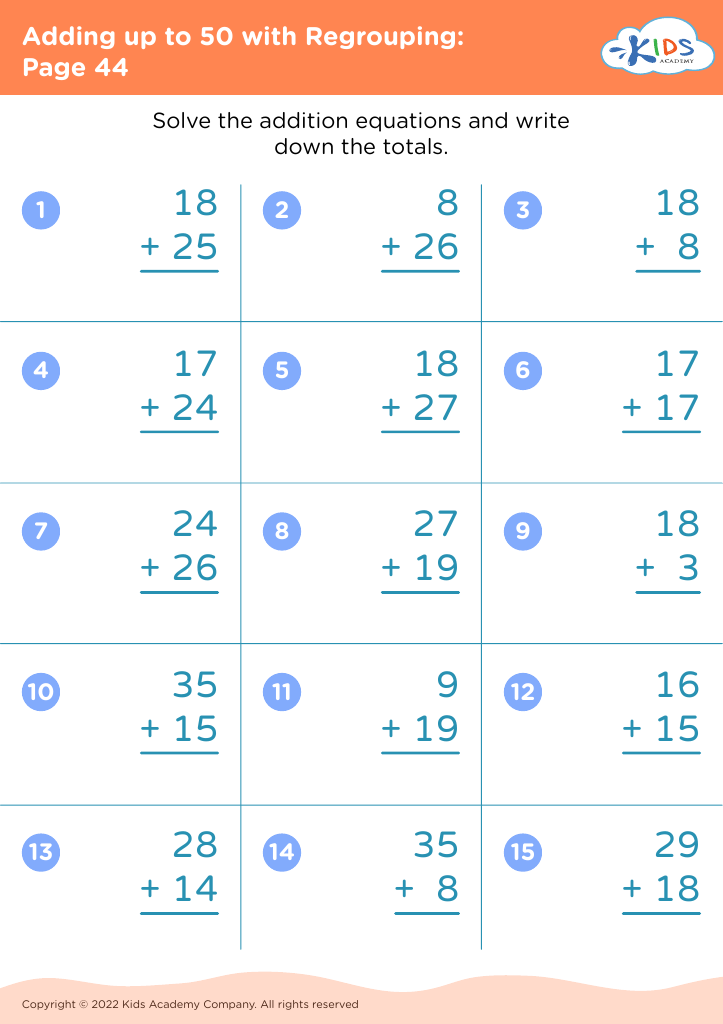
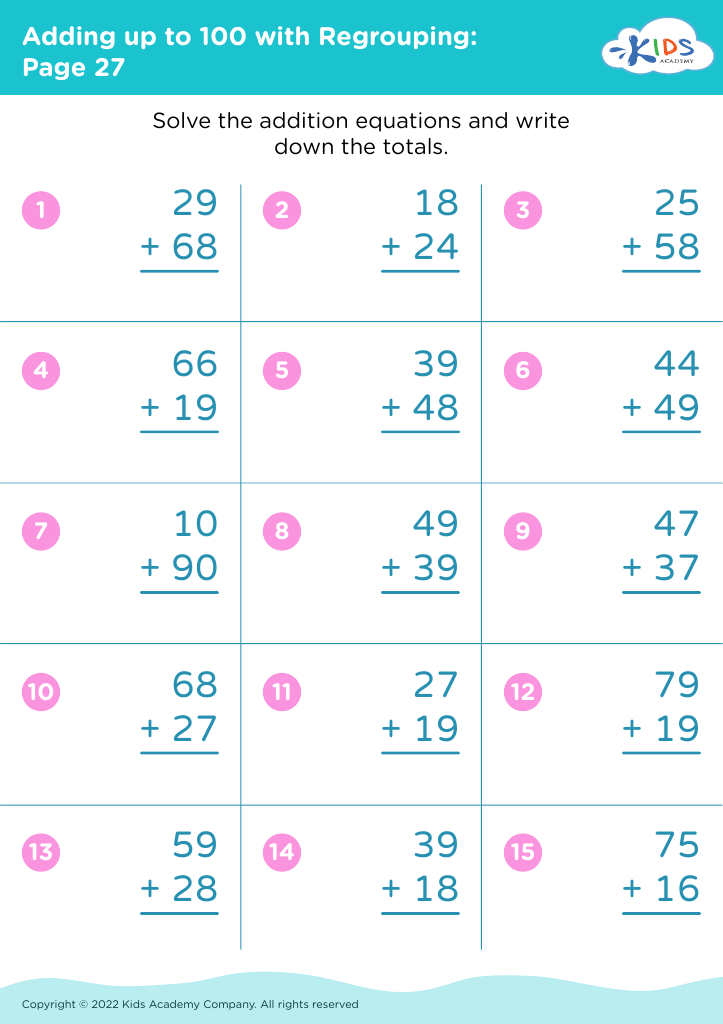
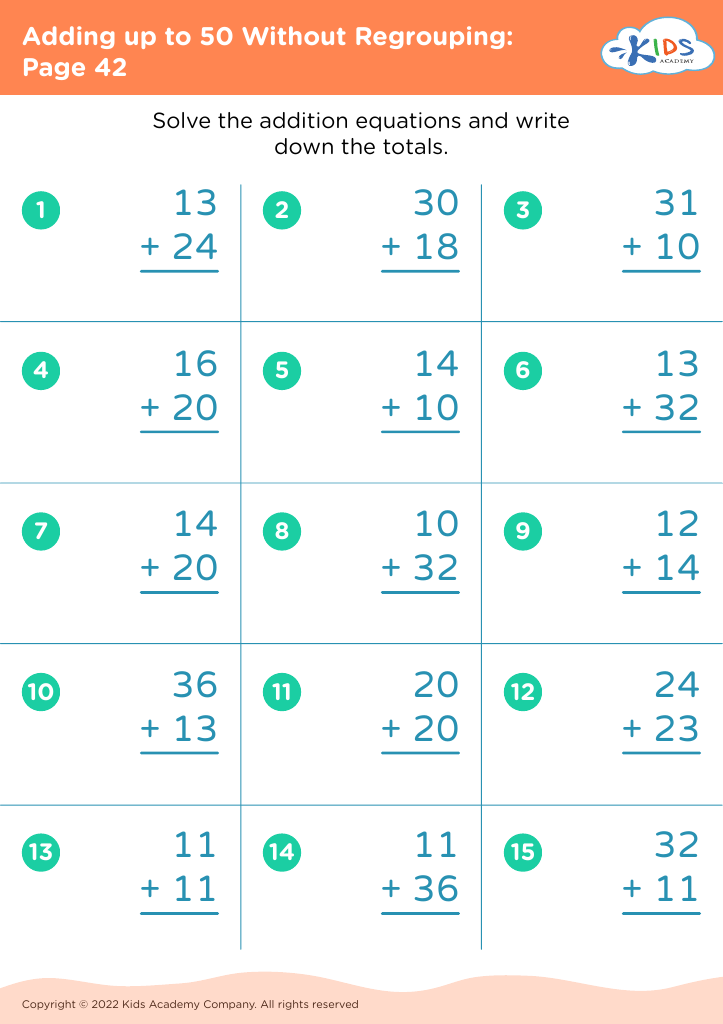








Enhancing logical thinking in addition and subtraction for children aged 4-8 is crucial for their cognitive development and future academic success. At this age, children are naturally curious and developing essential problem-solving skills. Engaging them in fun, hands-on activities that foster logical reasoning helps establish a strong foundation in mathematics, which is vital for grasping more complex concepts later on.
Understanding addition and subtraction not only aids in mathematical skills but also promotes critical thinking. Children learn to analyze problems, recognize patterns, and form strategies, all of which are transferable skills that benefit their overall learning and decision-making abilities. Furthermore, when parents and teachers emphasize these skills, they build confidence and resilience in handling challenges, equipping children to face difficult tasks as they progress in school.
Additionally, nurturing early mathematical skills enhances language development, as children learn to articulate their thought processes and justify their reasoning. A strong emphasis on logical thinking also prepares children for collaborative learning experiences, fostering teamwork and communication abilities. Overall, prioritizing enhancement of logical thinking in addition and subtraction supports a holistic approach to education, ensuring children are well-prepared for academic and real-world challenges ahead.








