Enhances number recognition Addition & Subtraction Worksheets for Ages 4-8
4 filtered results
-
From - To
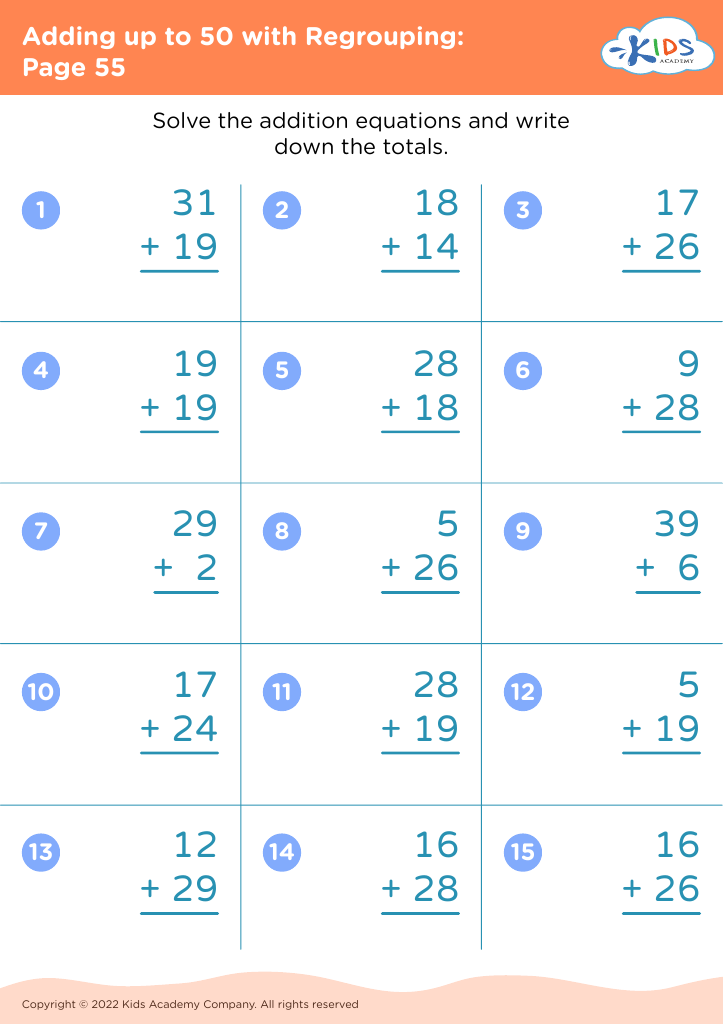
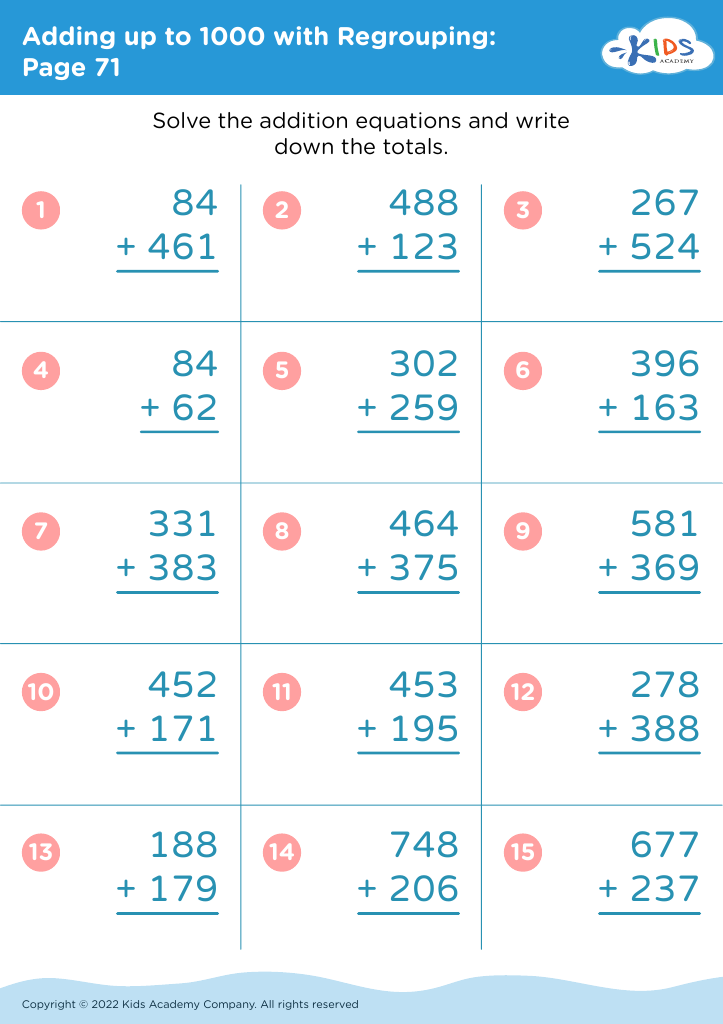
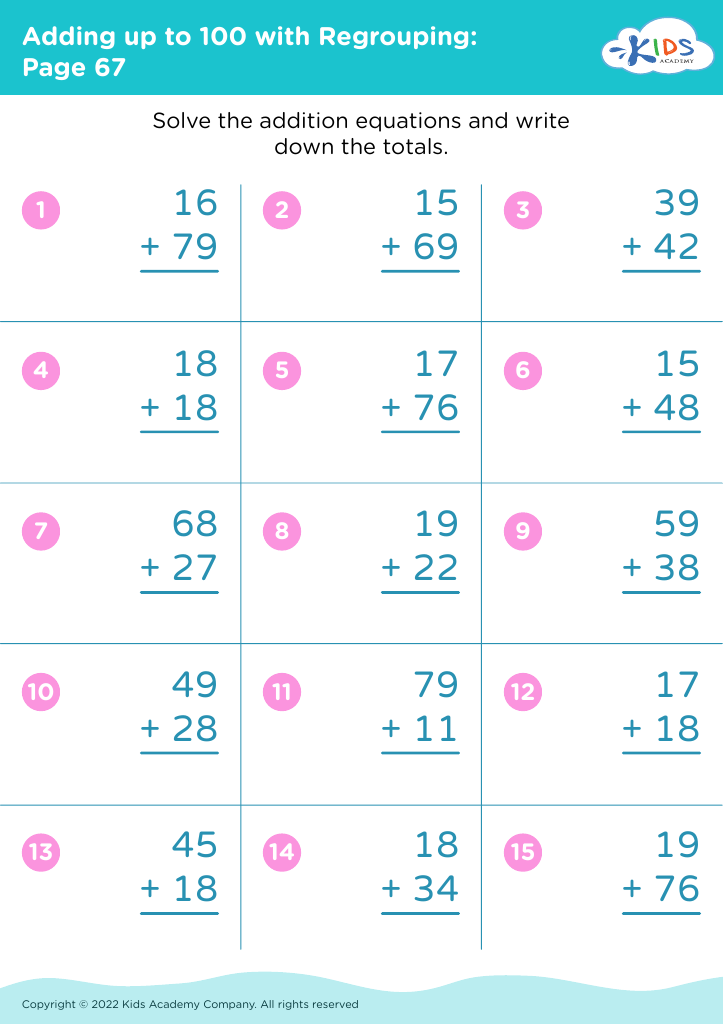
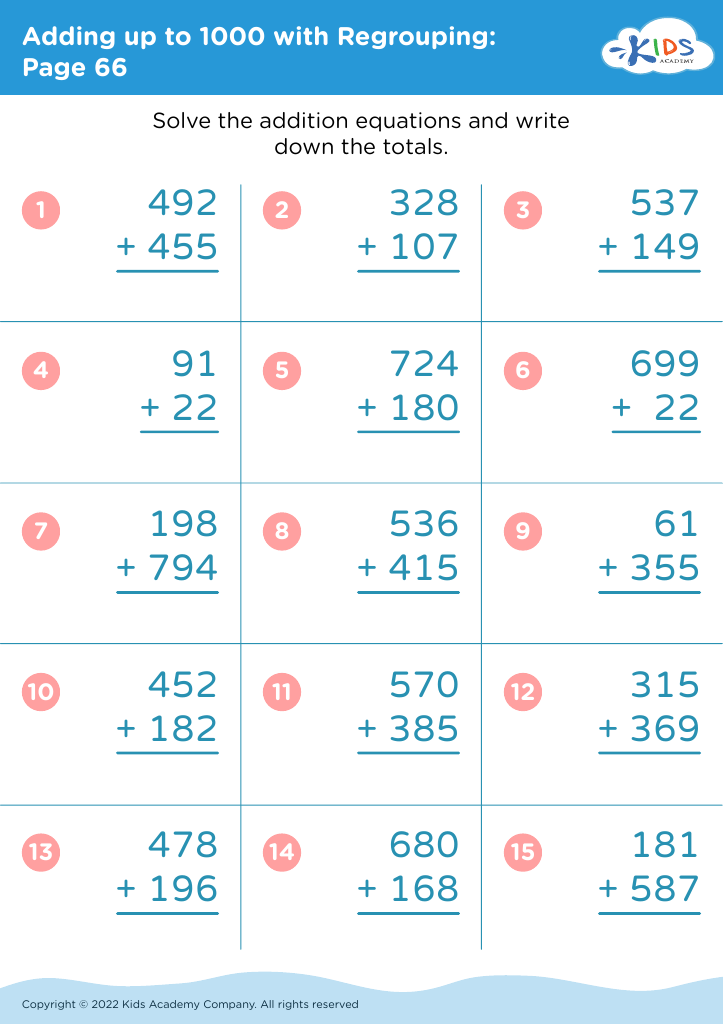
Enhance your child's number recognition skills with our fun and engaging Addition and Subtraction Worksheets designed for ages 4-8. These worksheets focus on helping young learners master essential math concepts through interactive exercises that make learning enjoyable. Featuring colorful visuals and age-appropriate challenges, our resources motivate children to practice their addition and subtraction skills while reinforcing their understanding of numbers. Ideal for parents and educators alike, these worksheets encourage independent learning and boost confidence in young mathematicians. Explore our collection today and watch your child’s math abilities flourish as they develop a strong foundation for future learning!








Parents and teachers should prioritize enhancing number recognition and foundational addition and subtraction skills for children aged 4-8 because these abilities serve as the building blocks of mathematics. Early number recognition helps children identify and understand numerical symbols, which is essential for their cognitive development. This foundational knowledge promotes confidence as they progress to more complex math concepts, setting the stage for future academic success.
Additionally, mastering basic addition and subtraction is crucial during these formative years, as it not only strengthens problem-solving skills but also reinforces logical reasoning. Engaging children in activities that promote these skills prepares them for real-life situations, such as budgeting, measuring, and time management. If children struggle with these concepts early on, it can lead to a negative attitude towards mathematics and hinder their overall learning journey.
Moreover, nurturing a positive math experience fosters a love for learning and exploration. Simple games, interactive activities, and meaningful discussions can make these skills enjoyable, leading to better retention. In summary, investing attention to enhance number recognition and addition/subtraction in young children not only influences their mathematical abilities but also lays the entire foundation of learning, self-esteem, and critical thinking as they grow.








