Fine motor skills (writing) Addition & Subtraction Worksheets for Ages 4-8 - Page 2
40 filtered results
-
From - To
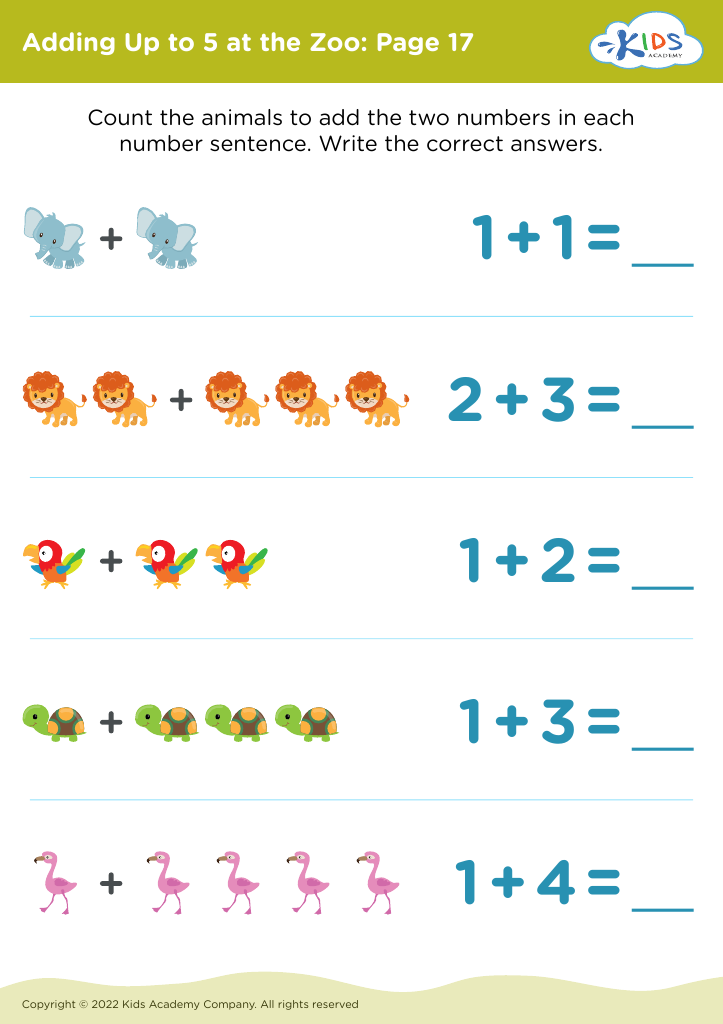
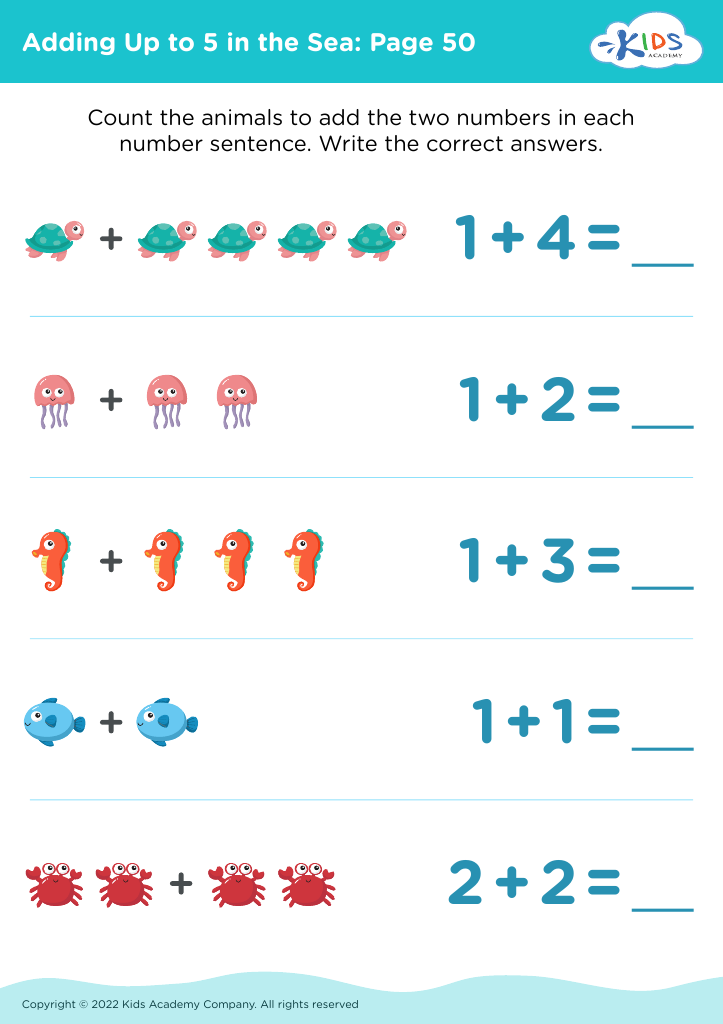
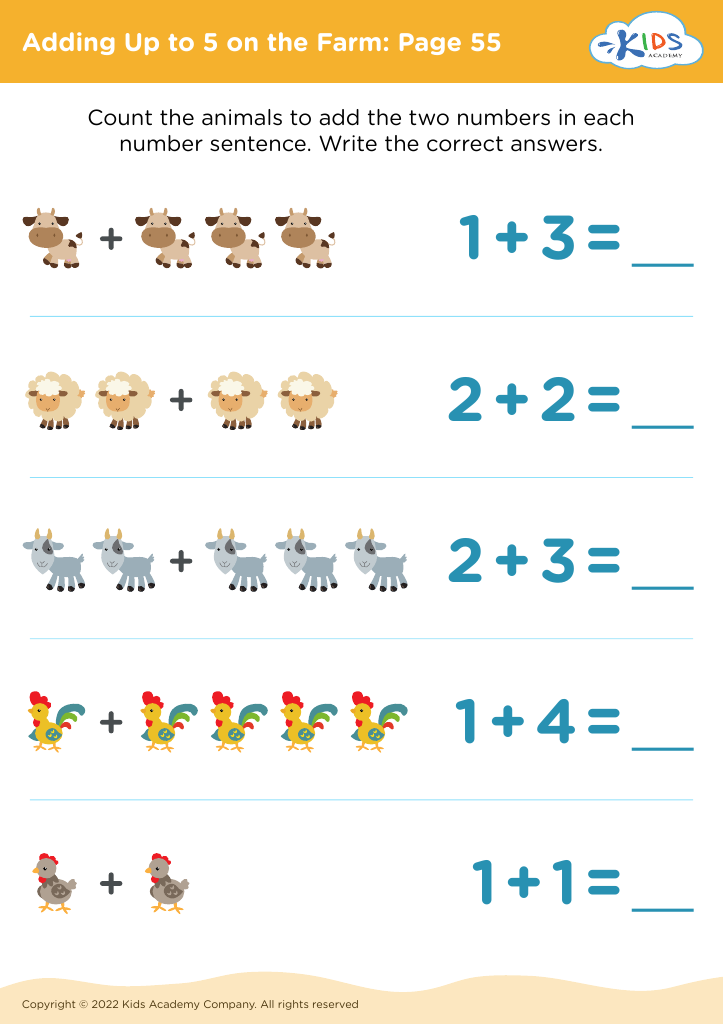
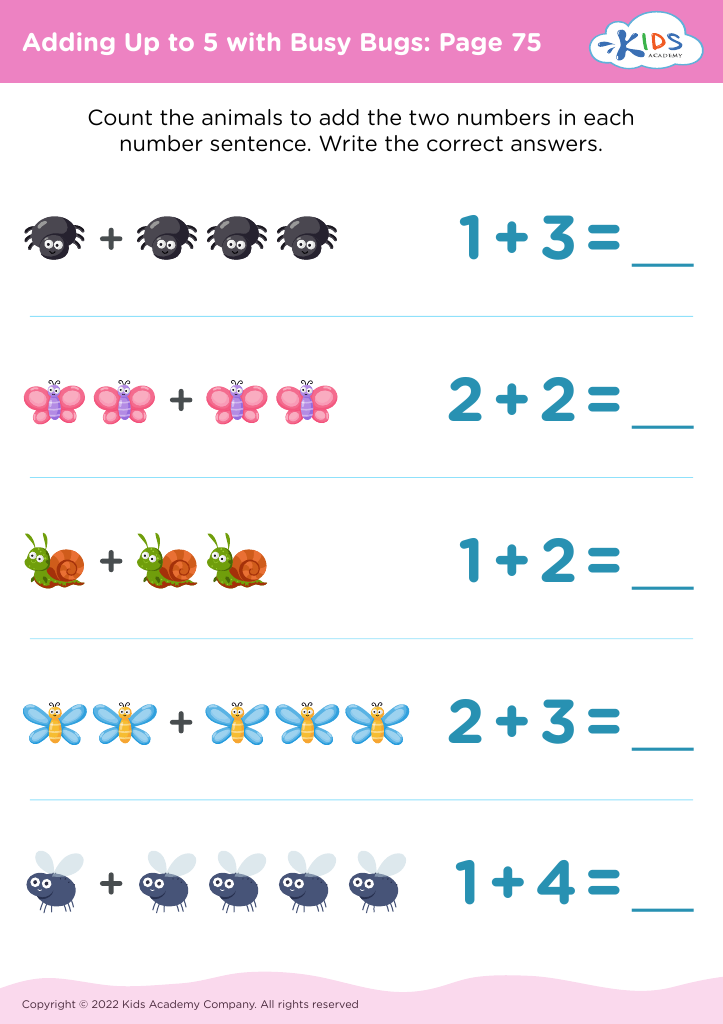
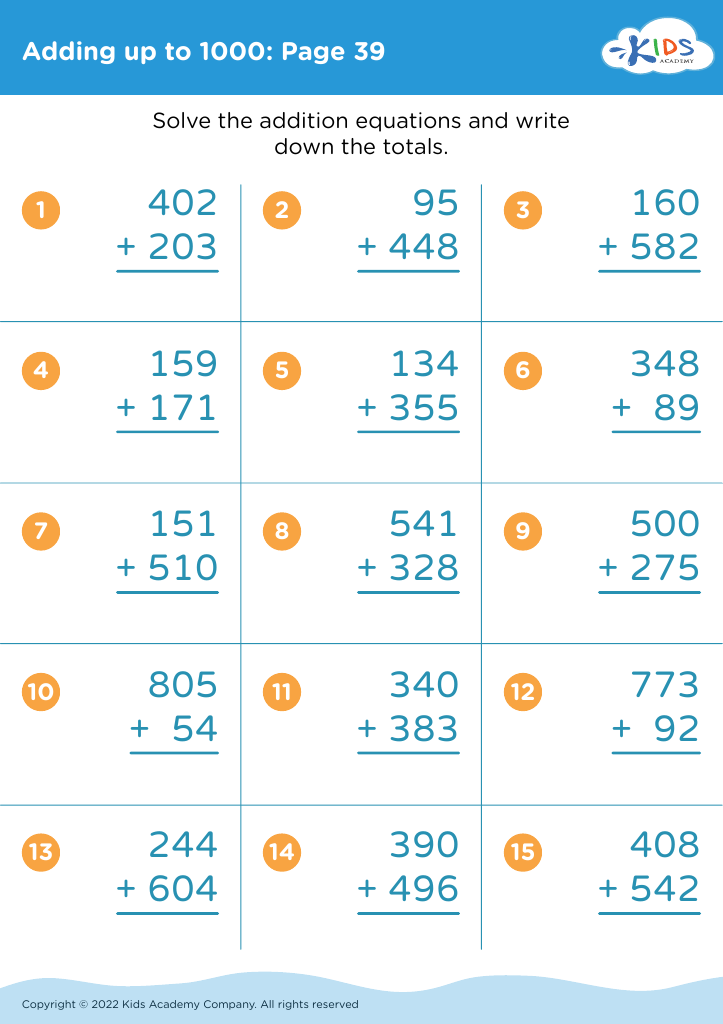
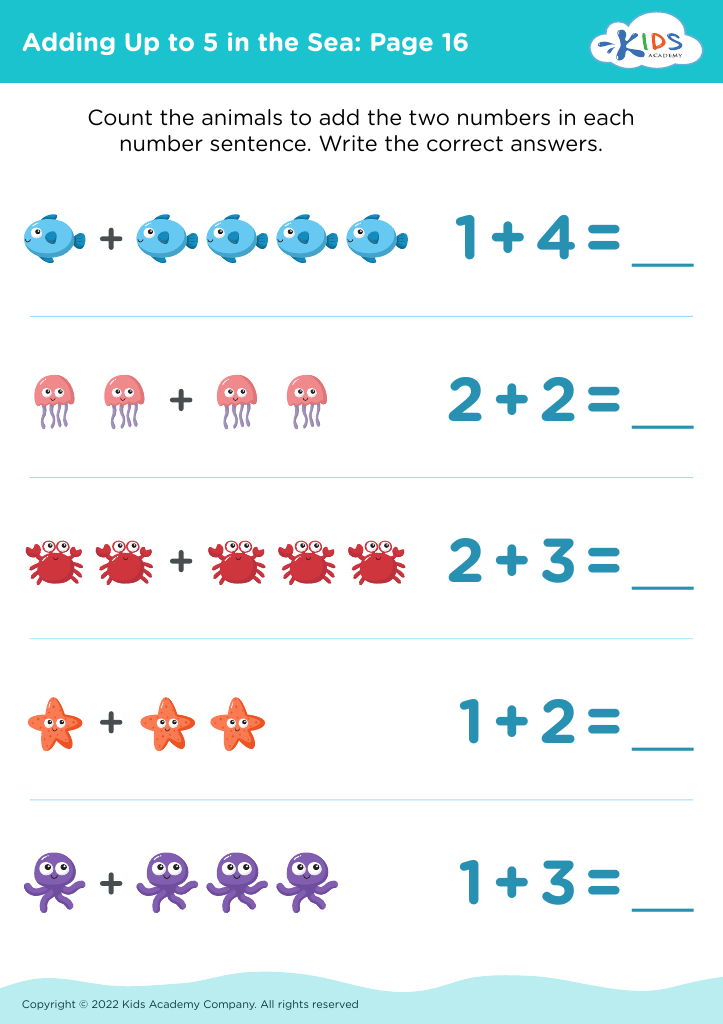
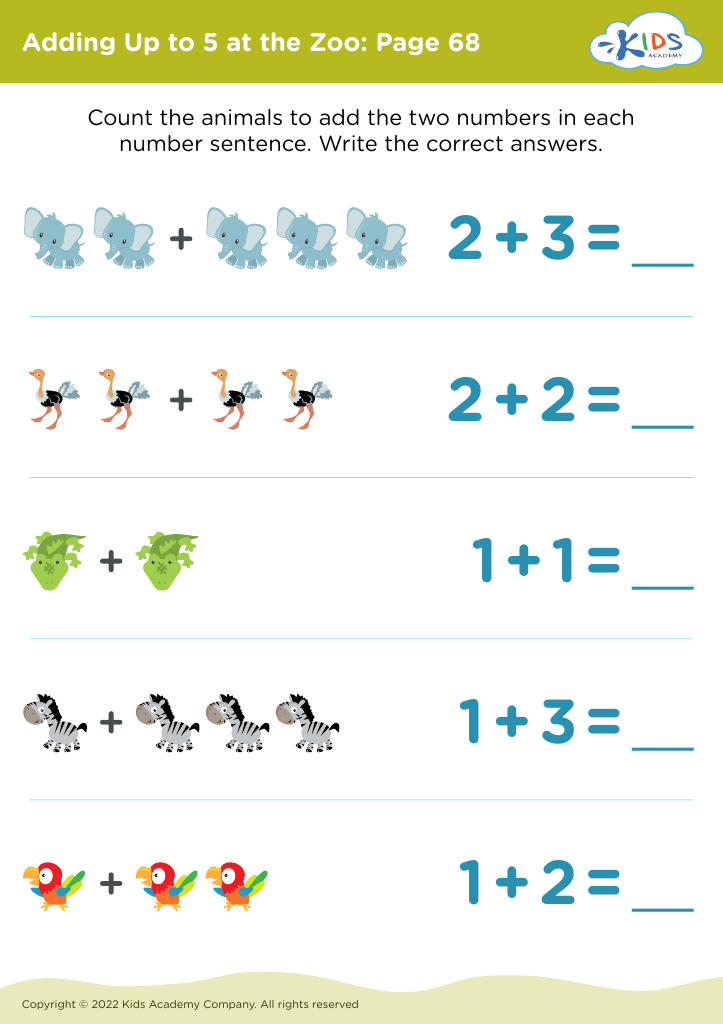
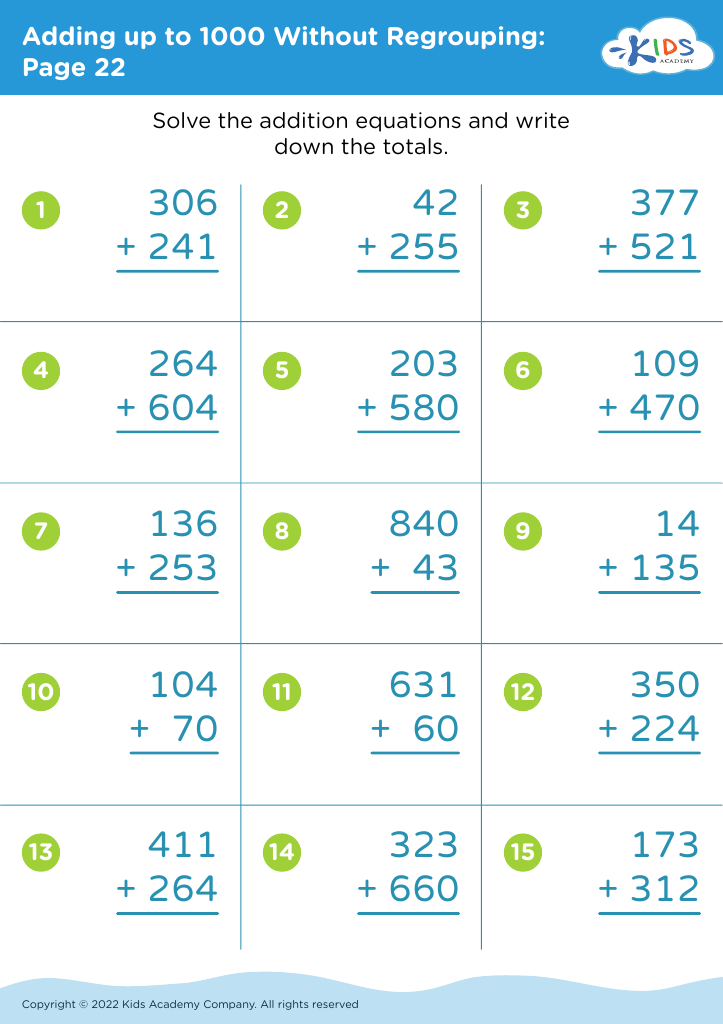
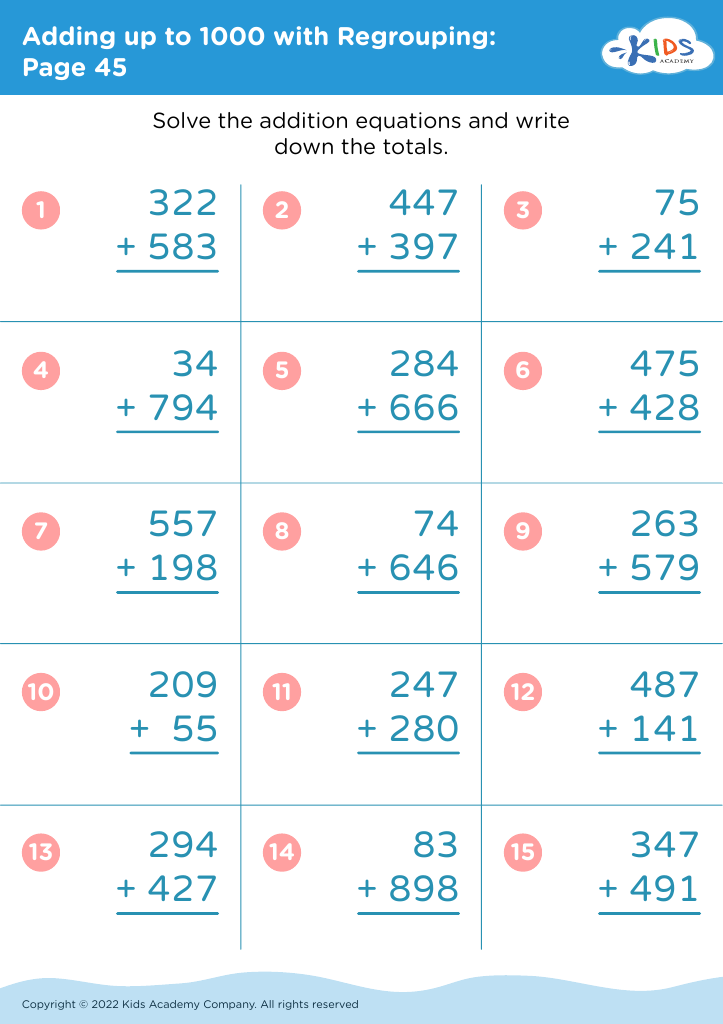
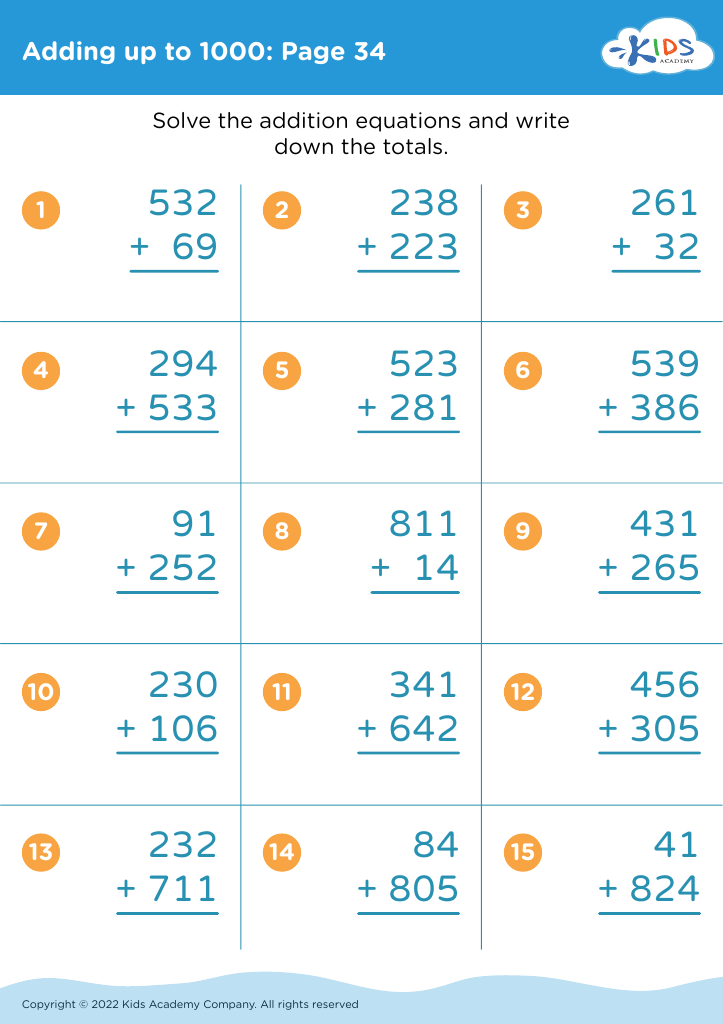
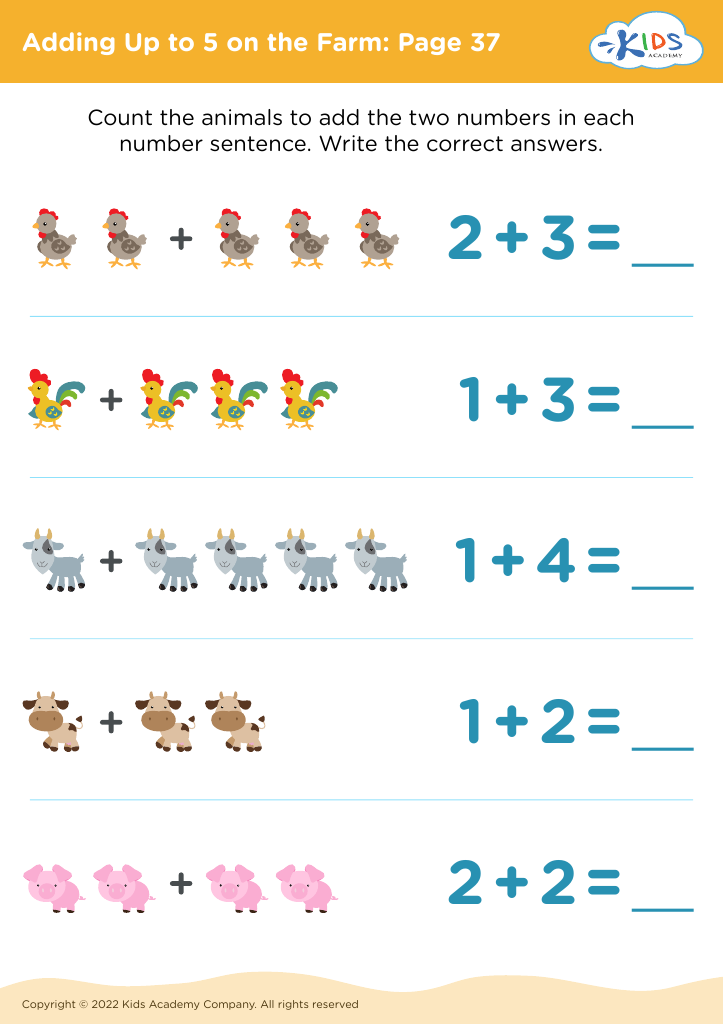
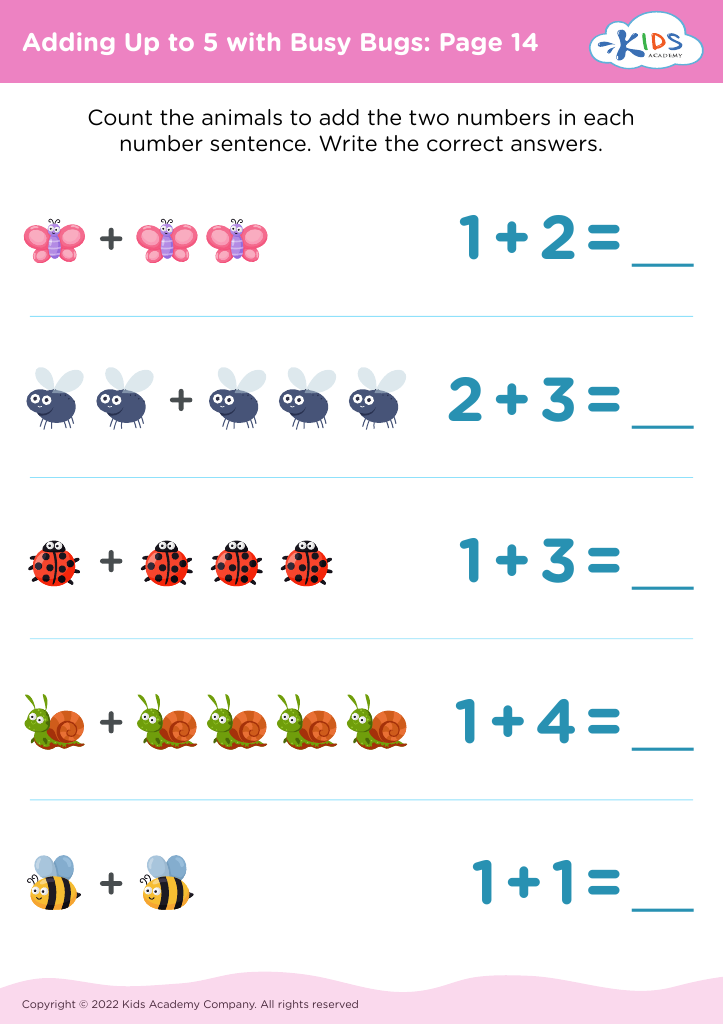
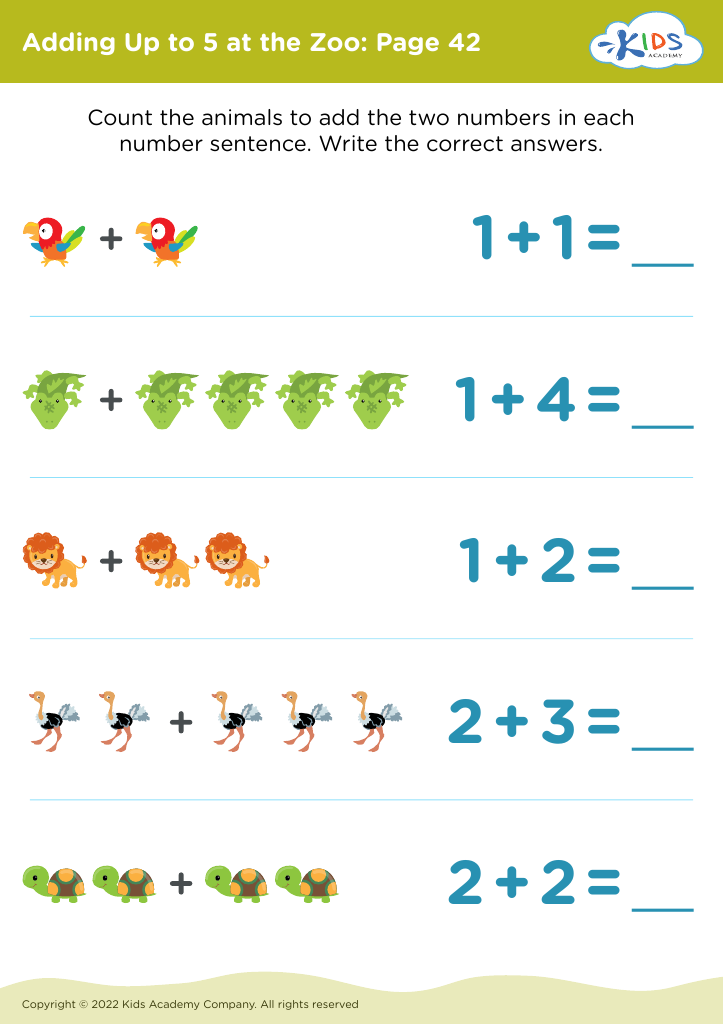
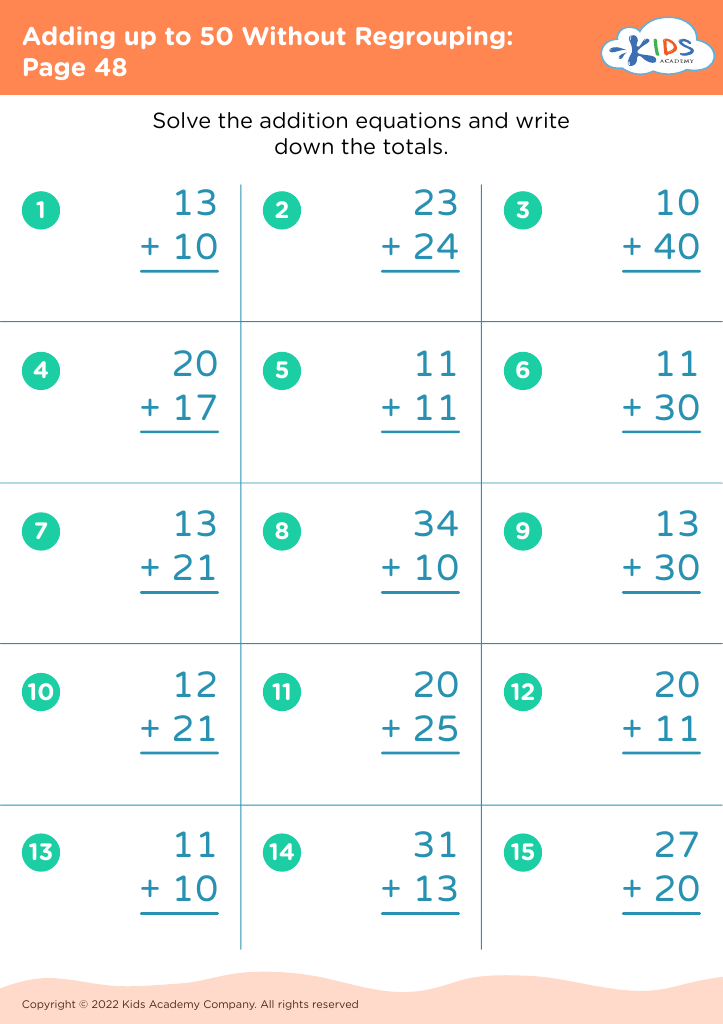
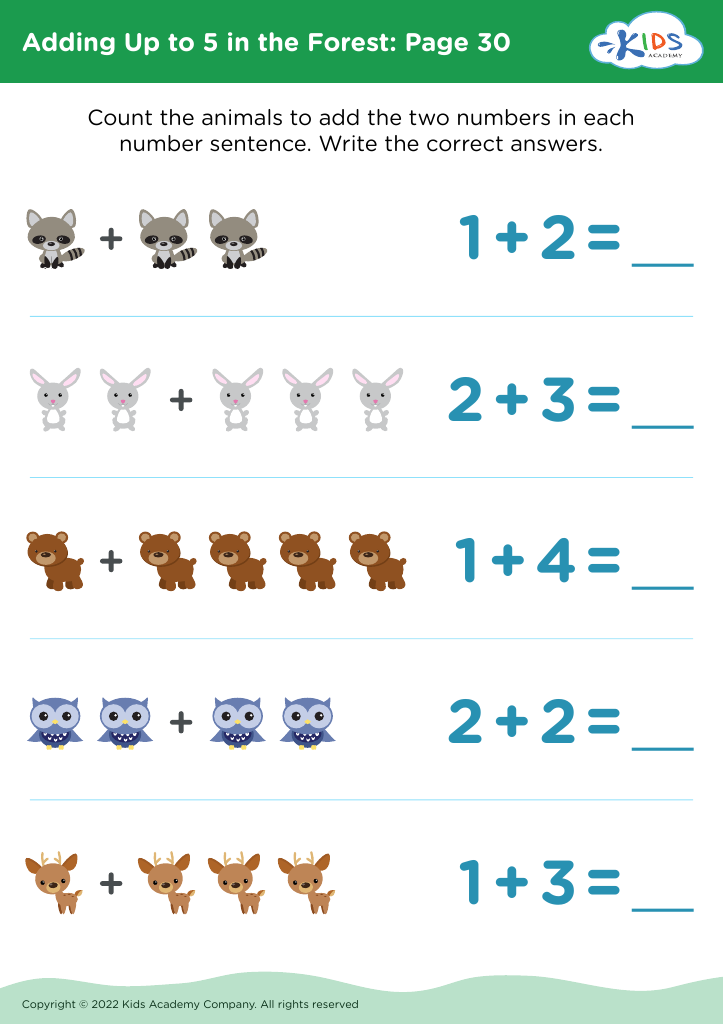
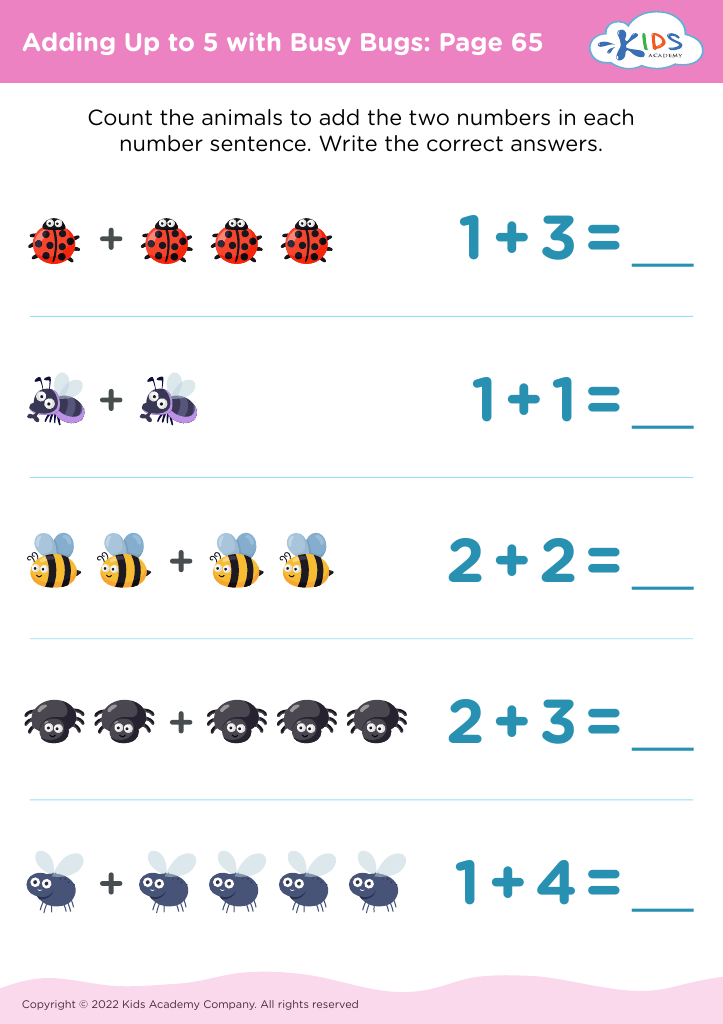








Fine motor skills, particularly in writing, are crucial for children aged 4-8 as they serve as the foundation for both academic success and everyday activities. Developing these skills enables young learners to effectively manipulate writing tools, enhancing their ability to express thoughts, ideas, and creativity on paper. Mastering fine motor skills not only fosters their writing capabilities but also boosts self-confidence, paving the way for a positive learning experience.
Additionally, basic addition and subtraction are fundamental mathematical concepts that enrich a child's cognitive development. Engaging in these early mathematical skills strengthens problem-solving abilities, enhances logical thinking, and promotes spatial awareness, all of which are vital for future academic tasks.
By focusing on fine motor skills while teaching math, parents and teachers can create integrated learning opportunities. For instance, drawing numbers or counting with manipulatives requires precision, reinforcing the use of fine motor skills while practicing addition and subtraction. As children progress, these intertwined skills prepare them for more complex tasks in later grades. Overall, prioritizing fine motor development in the context of foundational math helps in fostering well-rounded, confident learners who are better equipped for future challenges.








