Improving observation skills Addition & Subtraction Worksheets for Ages 4-8
3 filtered results
-
From - To
Enhance your child's observation skills with our engaging Addition & Subtraction Worksheets for ages 4-8. Designed to boost mathematical abilities, these printable sheets help young learners sharpen their focus as they practice key concepts. Each worksheet offers fun and challenging exercises, turning math into an exciting adventure. With a variety of visually appealing activities, children will have the opportunity to improve both their addition and subtraction techniques while developing keen observational skills. Ideal for home or classroom use, these resources are perfect for laying down a strong mathematical foundation in an enjoyable way. Start today and witness the improvement!
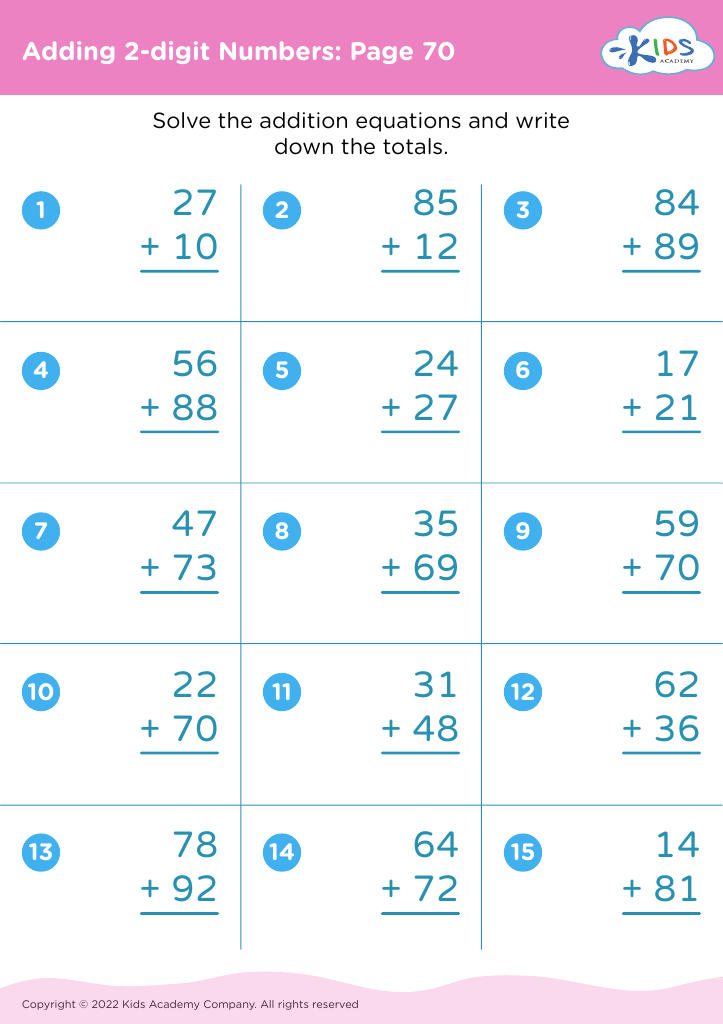
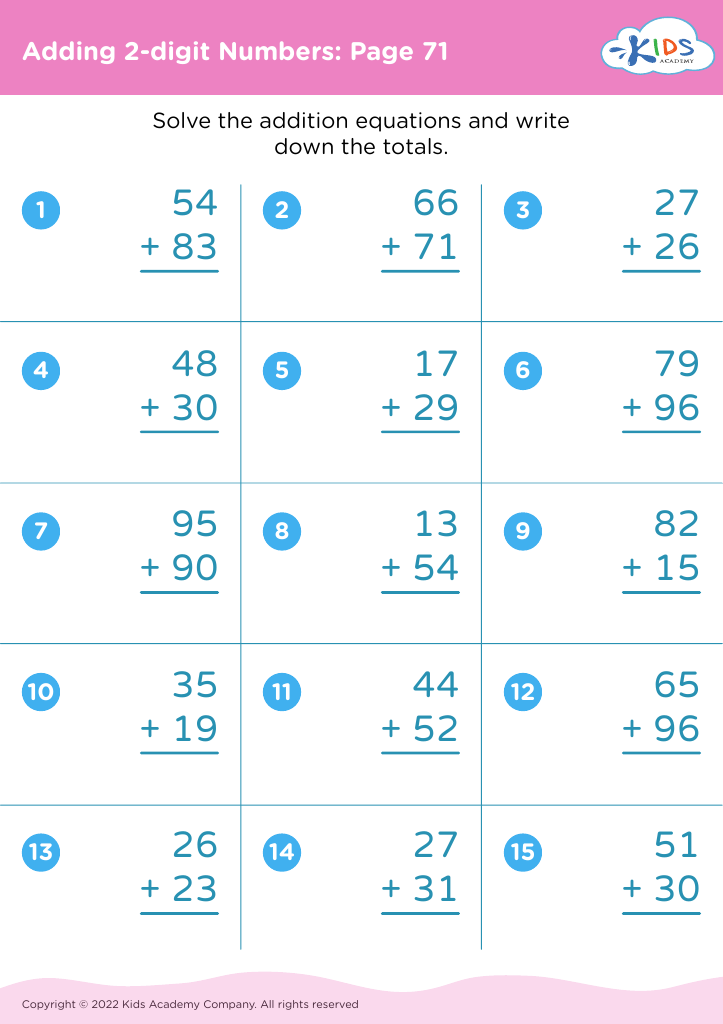
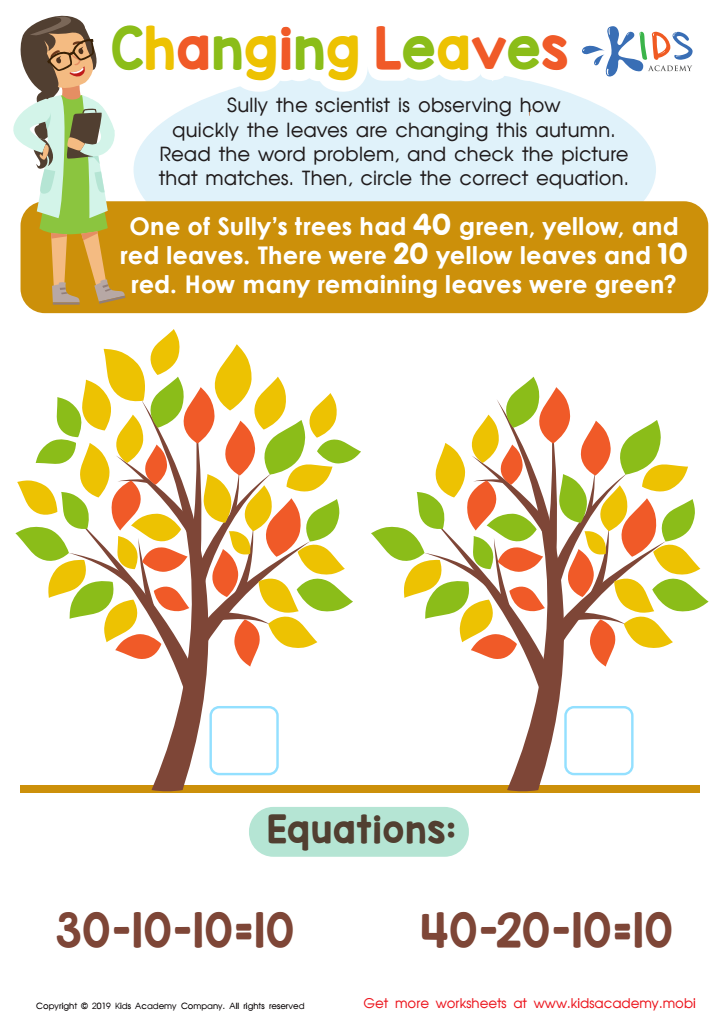
Changing Leaves Worksheet
 Assign to My Students








Improving observation skills in young children, particularly for ages 4-8, is crucial for their cognitive development and sets a foundation for learning essential mathematical concepts like addition and subtraction. At this formative stage, children's brains are exceptionally receptive to new information, and honing their ability to observe and analyze details can greatly enhance their academic performance and problem-solving abilities.
Strong observation skills enable children to notice patterns, discern differences, and understand relationships between objects and numbers. This attentiveness is fundamental for grasping basic mathematical operations. For instance, when learning addition, children need to see how combining groups of items leads to a larger total, while subtraction requires them to understand the concept of removing items from a group.
Beyond academics, fostering these skills nurtures critical thinking and logical reasoning. Children who can keenly observe are more likely to approach problems methodically, both in school and in everyday situations. Improved observation capabilities also aid in other subjects, such as reading, where noticing letters and words is key to literacy, and science, where observing phenomena is fundamental to discovery.
By investing effort in developing observation skills for addition and subtraction, parents and teachers provide children with tools that build a lifetime of learning and curiosity, ultimately making them more adept and confident learners in various facets of life.








