Filters

10 filtered results

Clear all filters
Favorites
With answer key
Interactive

10 filtered results

Difficulty Level

Grade


Enhance your child's logical thinking skills with our engaging Addition & Subtraction Worksheets designed for ages 4-8. These carefully crafted activities promote mathematical reasoning while making learning enjoyable. Our worksheets offer a progressive approach, challenging young learners to solve problems using addition and subtraction, sharpening their critical thinking. Each exercise encourages children to identify patterns, make connections, and develop strategies for problem-solving, laying a strong foundation for future academic success. Ideal for home or classroom use, these resources are perfect for supporting diverse learning styles. Foster confidence and curiosity in math with our fun and educational worksheets today!

Check out this FREE Trial Lesson on Addition & Subtraction for age 4-8!

More Word Problems

Favorites
With answer key
Interactive
  • 4-8
  • Logical thinking development
  • Addition & Subtraction
Grocery Store Fun! Worksheet

Grocery Store Fun! Worksheet

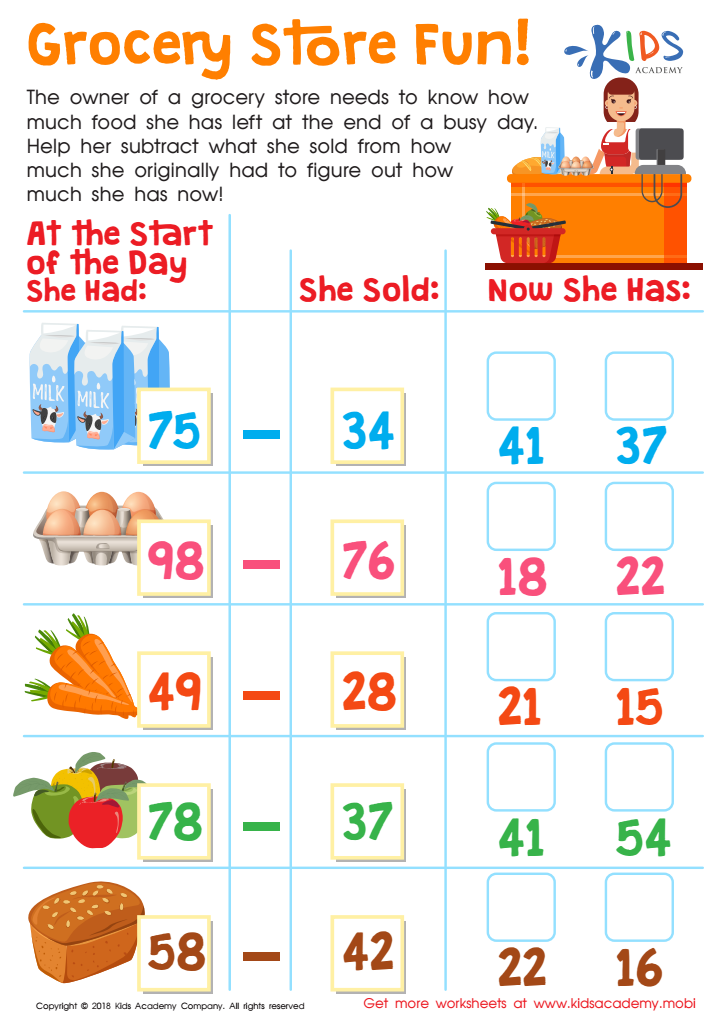
Let your kids have fun with this store worksheet. It requires them to help the owner by subtracting what she has sold from the original amount to figure out how much is left. Have them read and solve the equations in the printout to give the store owner the answer.
Grocery Store Fun! Worksheet
Worksheet
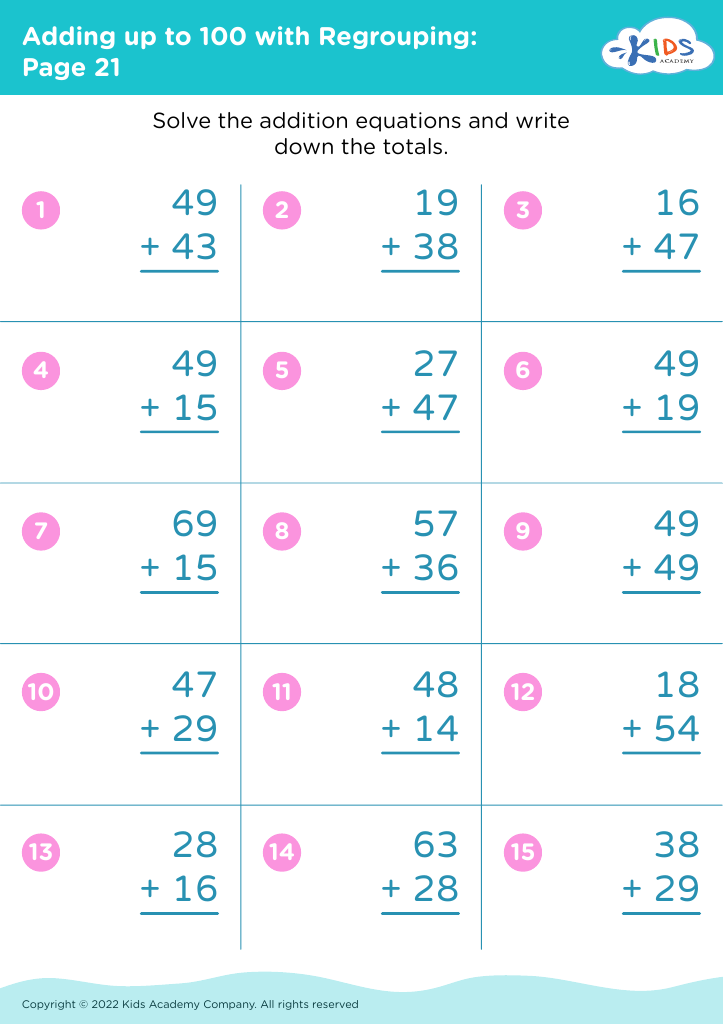
Adding up to 100 with Regrouping: Page 21
Worksheet
Voting Worksheet
Voting Worksheet

Voting Worksheet

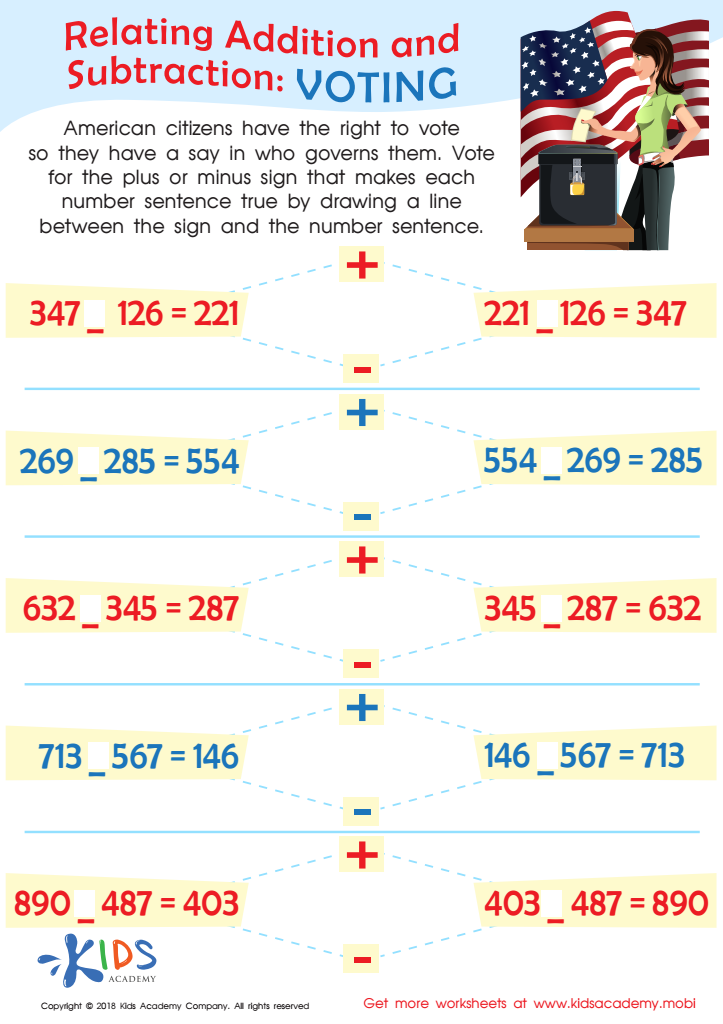
This worksheet combines Social Studies and Math, teaching kids the democratic concept of voting. Guide learners to observe the problem, and decide if it needs a plus or minus. They "vote" for the correct answer by drawing a line from the problem to the correct operation symbol. Tally up the votes to check the answers!
Voting Worksheet
Worksheet
Tricky Problems Worksheet: Part 2

Tricky Problems Worksheet: Part 2

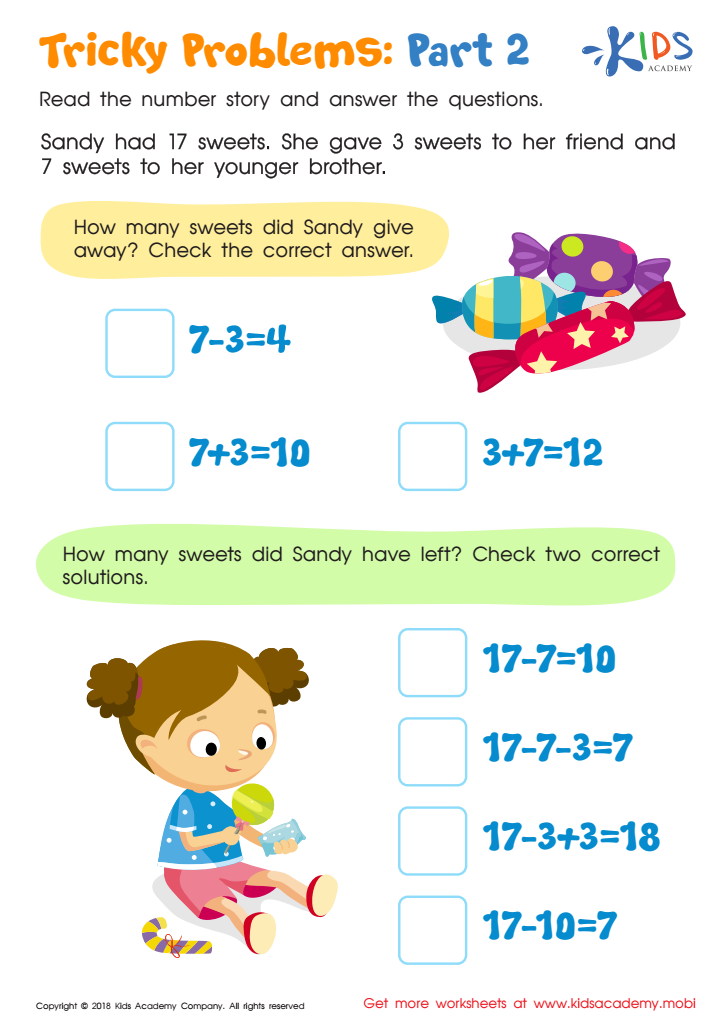
Help your little math learner visualize number stories with this engaging worksheet. They'll connect pictures to the story and use math facts to find the sums. After that, they'll be able to identify the correct number sentences to match. Let them practice and get better at problem solving!
Tricky Problems Worksheet: Part 2
Worksheet
Match the Word Problems Worksheet

Match the Word Problems Worksheet

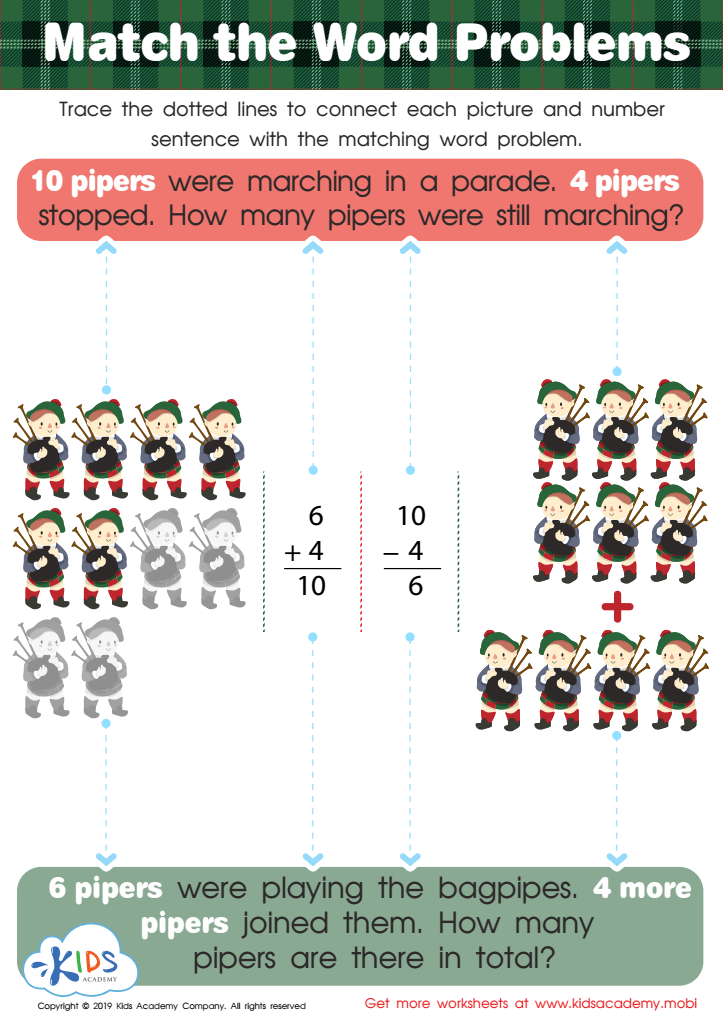
Read this word problem to your kids: Help them understand how it can be translated into a number problem. Trace the dotted lines to see how each picture and number sentence match the problem. With this worksheet, you can show your kids how easy it is to transform a word problem into a number problem.
Match the Word Problems Worksheet
Worksheet
Subtraction Robot Sorter Worksheet
Subtraction Robot Sorter Worksheet
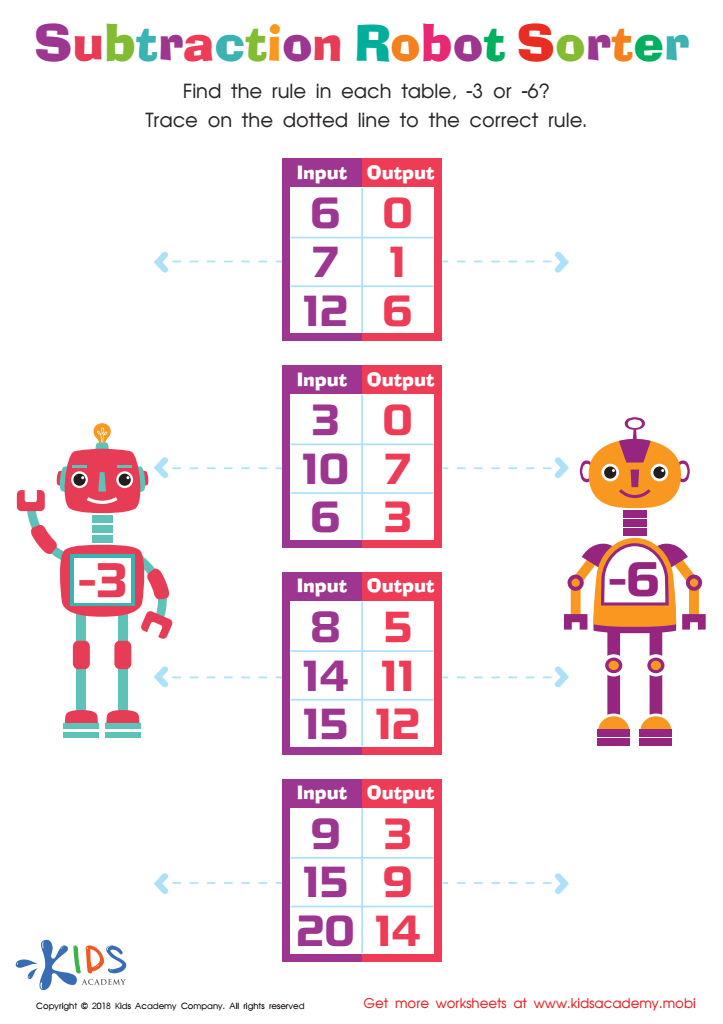
Help your child learn essential math skills with robot friends! Look at function machines and find if the rule is minus 3 or minus 6. Trace the dotted line to the robot with the correct rule when the pattern is found. Simple and delightful!
Subtraction Robot Sorter Worksheet
Worksheet
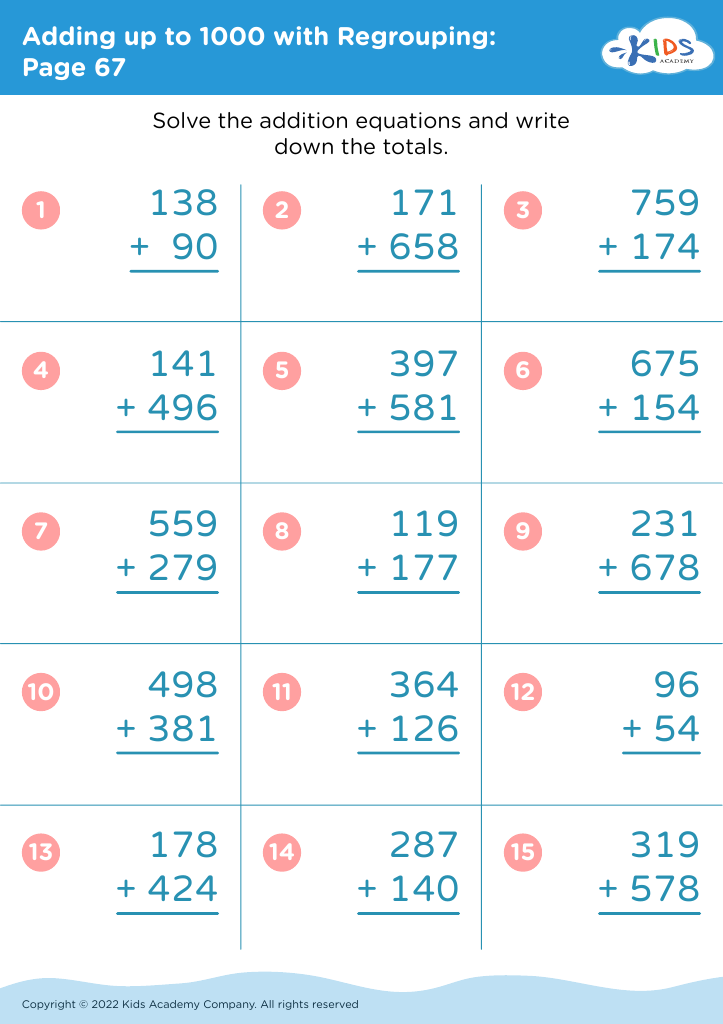
Adding up to 1000 with Regrouping: Page 67
Worksheet
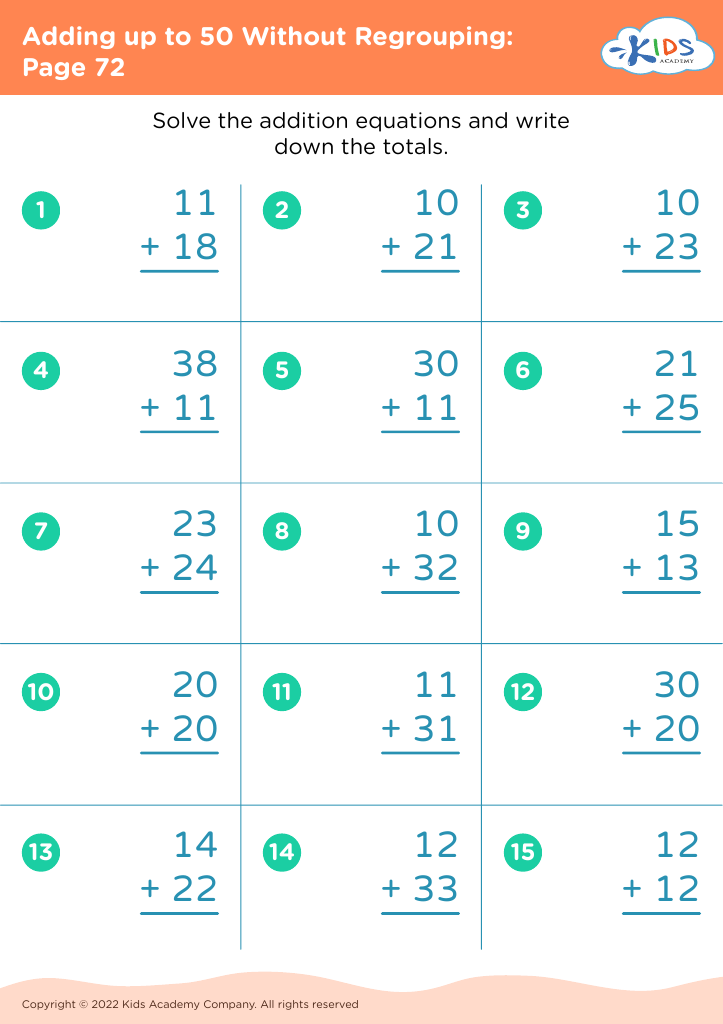
Adding up to 50 Without Regrouping: Page 72
Worksheet
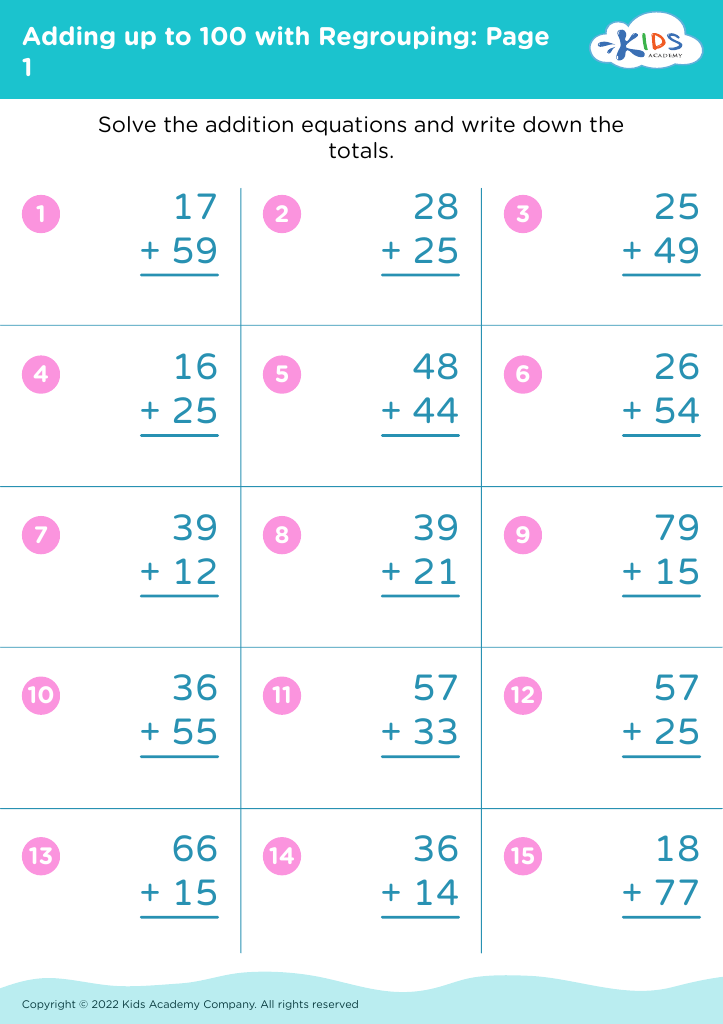
Adding up to 100 with Regrouping: Page 1
Worksheet
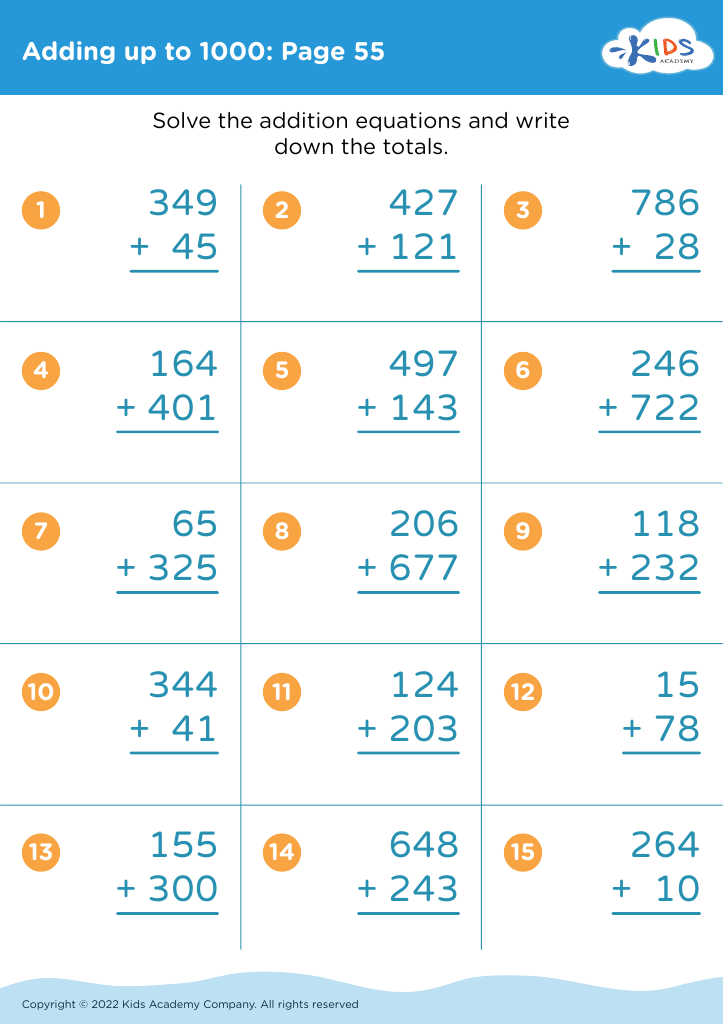
Adding up to 1000: Page 55

Adding up to 1000: Page 55

Adding up to 1000: Page 55
Worksheet


Parents and teachers should prioritize logical thinking development in addition and subtraction for children aged 4-8 because these foundational skills are crucial for overall cognitive growth and future academic success. During these formative years, children start to make sense of numbers and their relationships, which sets the groundwork for more complex mathematical concepts later on.

Logical thinking enhances problem-solving abilities, enabling children to analyze situations, identify patterns, and draw conclusions. Mastering basic addition and subtraction fosters confidence in math, teaching children that they can effectively manipulate numbers to solve everyday challenges. Additionally, it supports the development of reasoning skills, encouraging children to understand not just the “how,” but the “why” behind mathematical operations.

Engaging in activities that promote these skills can help students become flexible thinkers, equipping them to approach new problems logically and creatively. Moreover, it deepens cognitive skills like spatial awareness and memory, which have applications beyond math, influencing language development and science comprehension. By investing time in logical thinking around addition and subtraction, parents and teachers create a rich learning environment that nurtures critical thinkers, preparing them for lifelong learning and complex problem-solving in all areas of life.