Practice inference skills Addition & Subtraction Worksheets for Ages 4-8
3 filtered results
-
From - To
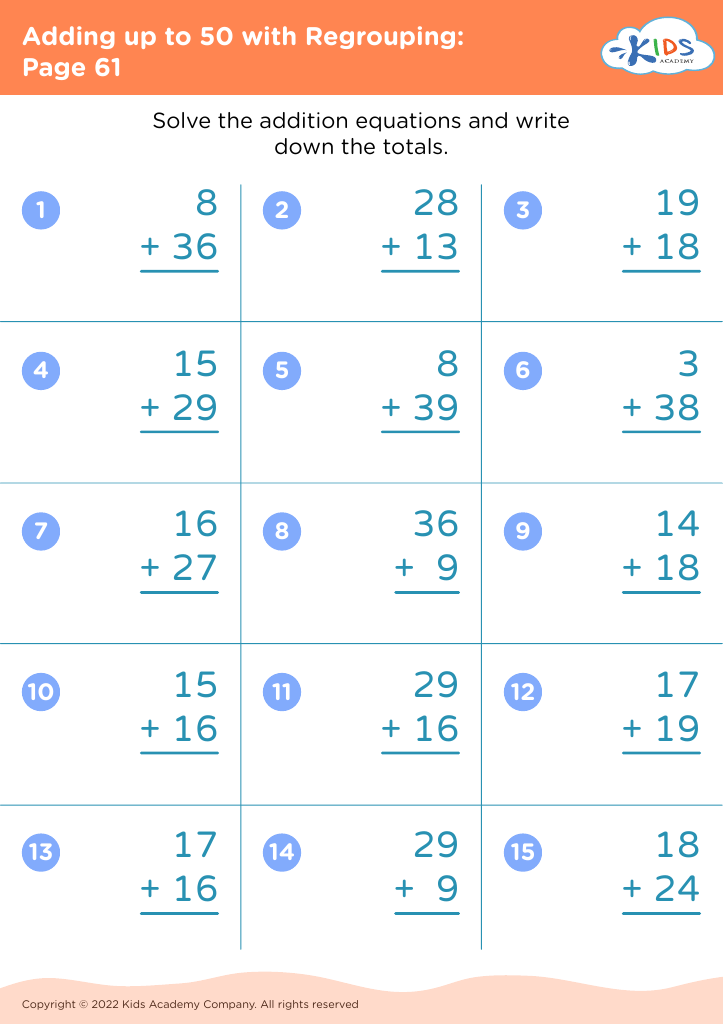
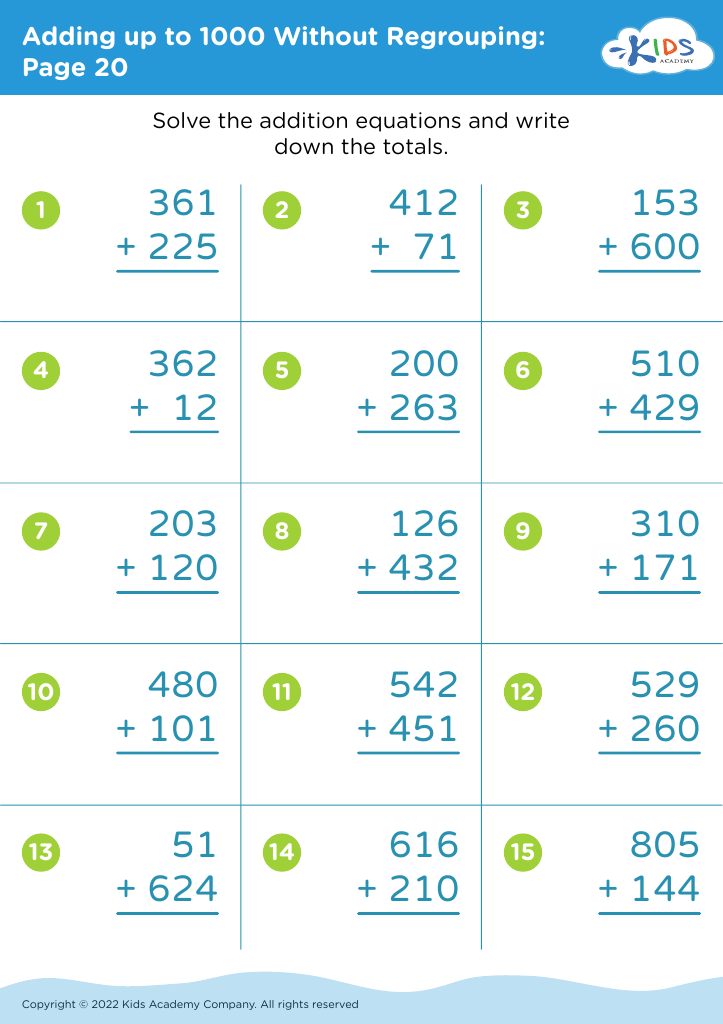
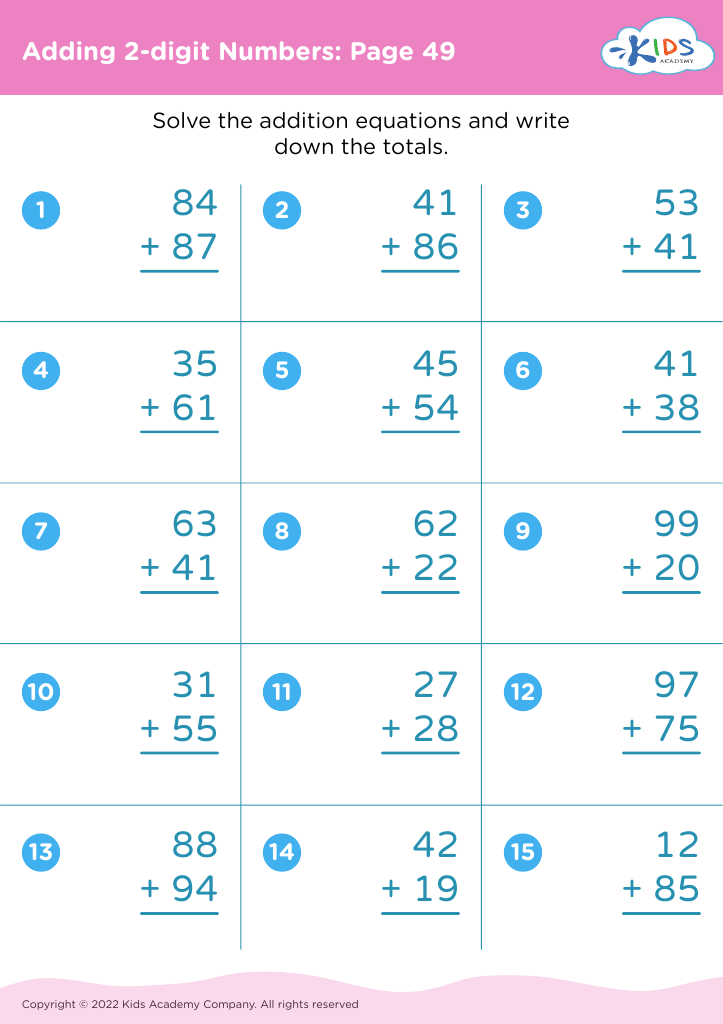
Boost young learners' math abilities with our "Practice Inference Skills Addition & Subtraction Worksheets" designed for ages 4-8. These engaging printables not only reinforce basic arithmetic but also encourage critical thinking by teaching kids to draw conclusions based on given data. Perfect for both classroom and home use, our worksheets combine fun themes with challenging problems to foster a love for math. Technologically designed for progressive skill-building, they ensure kids learn at their own pace while mastering key concepts. Equip your child with the tools to excel in math, build confidence, and develop essential inference skills today!








Parents and teachers should prioritize developing inference, addition, and subtraction skills in children aged 4-8 because these foundational abilities are crucial for both academic success and everyday functioning. During these early years, children's brains are particularly receptive to new information, and developing these skills can promote cognitive development and critical thinking.
Inference skills, the ability to make logical conclusions from available information, are essential for reading comprehension and overall learning. By cultivating these abilities early on, children can enhance their understanding of texts, follow multi-step instructions, and solve problems effectively—skills that are invaluable throughout their academic journeys and beyond.
Addition and subtraction are the bedrock of mathematical knowledge. Mastery of these basic arithmetic operations prepares children for more complex mathematical concepts encountered in higher grades. Practicing these skills enhances numerical fluency, promotes logical thinking, and can even boost self-esteem as children experience success in their learning endeavors.
These foundational skills extend beyond the classroom. Daily activities such as handling money, following schedules, and understanding measurements require solid inferencing and mathematical abilities. Equipping children with these tools from a young age means they enter their later education stages and adult lives with a robust toolkit for tackling diverse tasks and challenges, fostering both independence and confidence.








