Problem-solving ability Addition & Subtraction Worksheets for Ages 4-8
3 filtered results
-
From - To
Boost your child's problem-solving skills with our expertly designed Addition & Subtraction Worksheets for ages 4-8. These engaging worksheets are crafted to help young learners build a strong foundation in basic math while enhancing their critical thinking and analytical abilities. With a variety of fun and interactive exercises, children will improve their ability to tackle real-world problems confidently. Perfect for classroom use or at-home practice, these worksheets align with early education standards and make learning math an enjoyable adventure. Empower your child to succeed in math and beyond with our problem-solving focused resources!
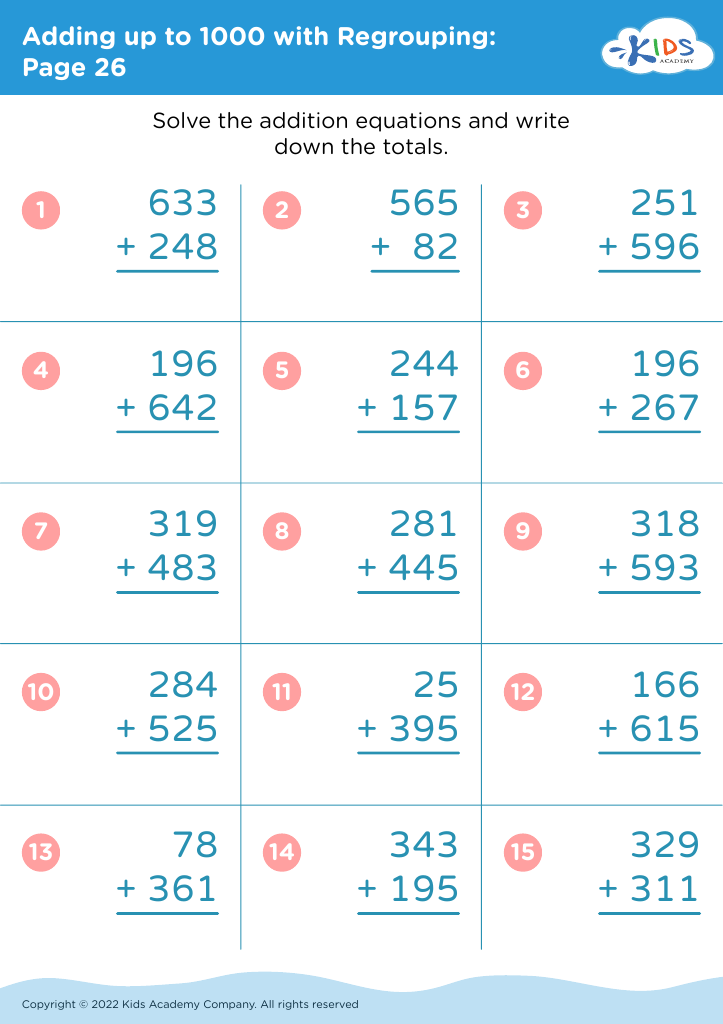
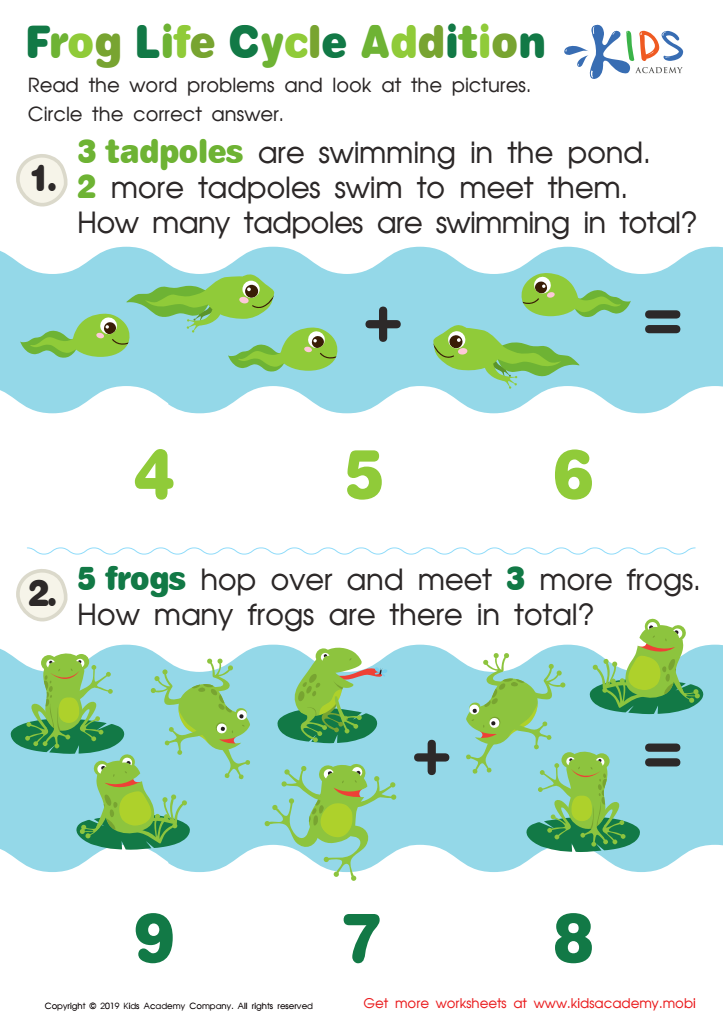
Frog Life Cycle Addition Worksheet
 Assign to My Students
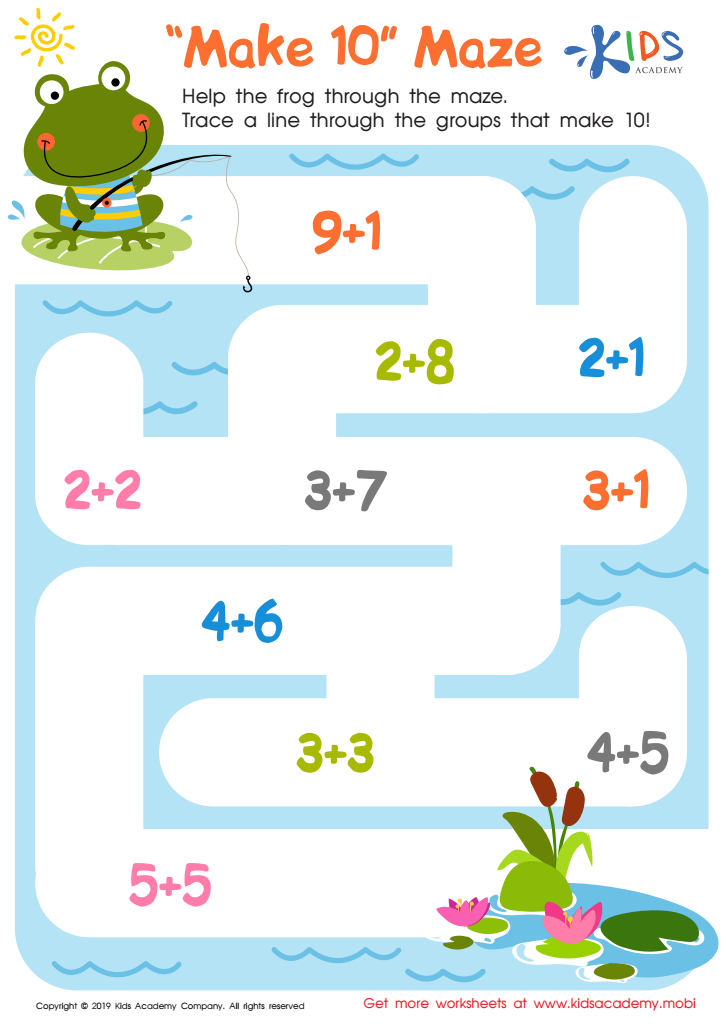
Make 10 Maze Worksheet








Problem-solving abilities, particularly in addition and subtraction, lay the foundation for children aged 4-8 to develop crucial mathematical and cognitive skills essential for their academic and everyday life success. Parents and teachers play a vital role in nurturing these abilities during early childhood when the brain is most receptive to learning and forming neural connections.
Mastery of addition and subtraction promotes logical thinking and enhances the ability to formulate strategies to solve various types of problems. It helps children grasp basic concepts such as number sense, sequence, and mathematical operations, which are building blocks for more complex math topics encountered in later grades.
Engagement in problem-solving activities also fosters critical thinking skills indispensible for decision-making and boosts confidence when faced with new challenges. It prepares children to tackle not only mathematical questions but also non-mathematical problems in everyday life, such as sharing, dividing, and managing resources efficiently.
Moreover, early exposure to such problem-solving tasks reinforces the value of persistence and adaptability, teaching the importance of trying different approaches until a solution is found. By prioritizing addition and subtraction problem-solving skills, parents and teachers help create a solid foundation for lifelong learning and resilience in children, empowering them to become competent, confident individuals.








